Performance Lab
Best Golf Ball by Swing Speed (85–95, 95–105, 105+): A Practical Fit Guide
Stop wasting money on the wrong golf balls. This no-nonsense guide breaks down the best golf ball by swing speed with real data and practical advice—not marketing hype. Find the perfect ball for your game and your budget.

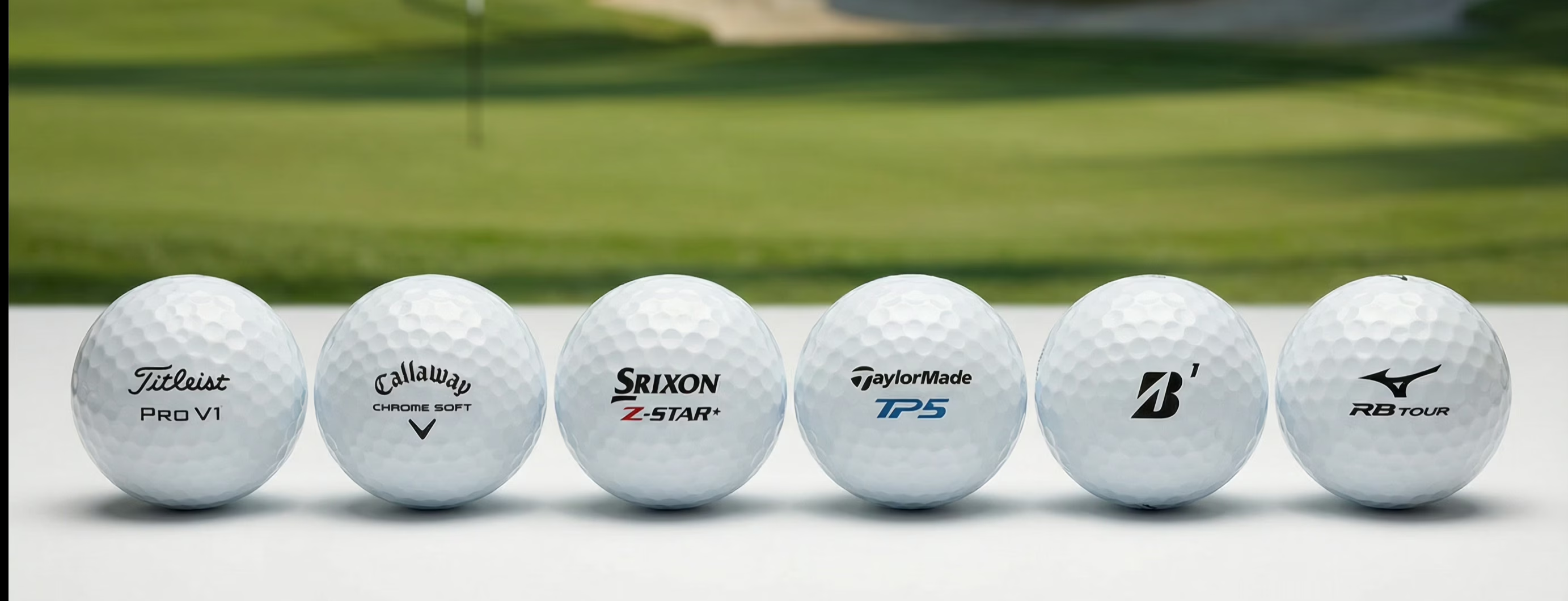
Let’s cut through the noise. The golf ball market is a billion-dollar industry built on convincing you that a $5 ball will fix your 20-handicap slice. It won’t. Most amateur golfers are playing the wrong ball—usually a premium tour ball they can’t compress, which costs them distance and money.
This is a practical fitting guide. We’re going to ignore the marketing and focus on what actually matters: compression, spin, and feel, matched to your swing speed. This guide will give you the best golf ball recommendations for your game, whether you swing 85 mph or 115 mph. No hype, just help. If you want you can read about The best golf balls for average golfers.
First, Let’s Be Honest: How to Estimate Your Driver Swing Speed
If you don’t know your swing speed, you’re just guessing. Before you spend a dime, get a realistic estimate. You don’t need a $20,000 launch monitor. Here are three simple ways to get a number.
The first is the Average Carry Distance Method, and it’s the easiest gut check. Go to a range, warm up, and hit 10 drivers. Throw out the worst two and the best two, and pace off the average carry distance of the remaining six. Be honest. Where do most of your drives land? Carries of 180–210 yards suggest you’re in the 85–95 mph range. Carries of 210–240 yards put you in the 95–105 mph range. Anything consistently over 240 yards and you’re likely in the 105+ mph category.
The second method is the Local Golf Shop Test. Walk into any big-box golf store or local shop with a simulator and ask if you can hit a few balls in their demo bay to “test a driver.” Most will let you. Hit 5–10 shots and look at the swing speed data. It’s free, and it’s accurate.
The third is the Free App Method. Apps like “Golf Swing Speed Analyzer” use your phone’s microphone to estimate speed based on the whoosh sound at impact. It’s not perfect, but it’s surprisingly close and a great starting point when you have no other option.
The Only 3 Things That Actually Matter: Compression, Launch, and Spin
Don’t get bogged down in dimple patterns or core infusions. Here’s what you actually need to know, in plain English.
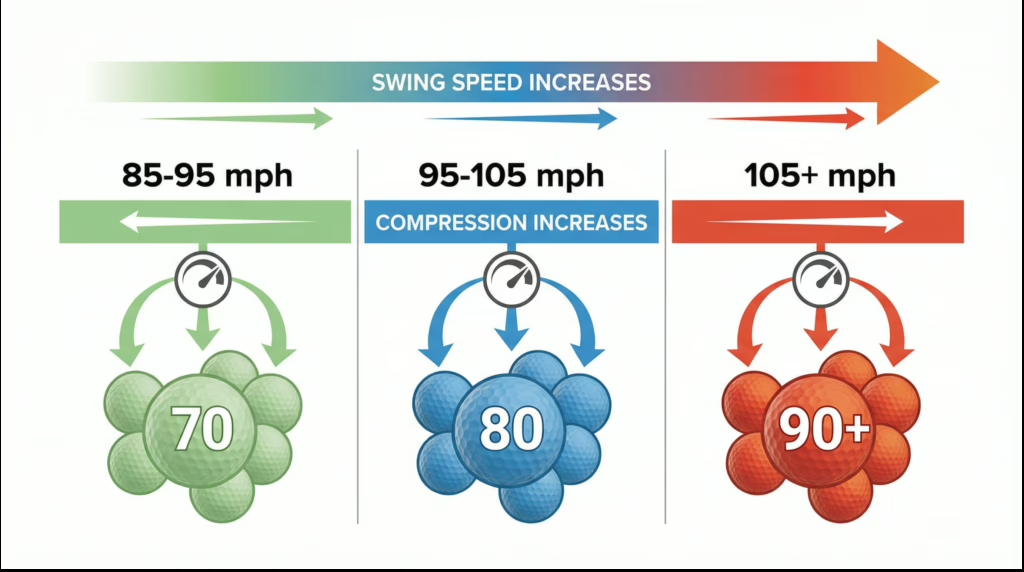
Compression is the “stiffness” of the ball. A lower compression ball (60–70) is softer and easier to squish at impact for slower swing speeds, which creates more distance. A higher compression ball (90+) requires a faster swing to activate the core and get maximum distance. Playing a ball with too much compression for your speed is like trying to hammer a nail with a pool noodle—you’re losing energy at the one moment it matters most.
Launch is the angle the ball takes off. Slower swing speeds generally need more help getting the ball in the air, so a ball that promotes a higher launch is beneficial. Faster swing speeds might want a more penetrating, lower launch to control trajectory and keep the ball out of the wind.
Spin is the big one, and it’s the most misunderstood. High spin is great for pros who want to stop a 6-iron on a dime. For most amateurs, high driver spin is a slice-amplifier that robs you of distance. The goal is low spin off the driver (for straighter shots and more roll) and high spin off the wedges (for stopping power on the greens). This is the holy grail of ball design, and it’s why the best balls in this guide are built around that dual-spin concept.
Quick Picks: Best Golf Ball by Swing Speed
| Swing Speed (mph) | Best Overall | Best Value | Best Feel (Short Game) | Notes |
| 85–95 | Titleist Tour Soft | Srixon Q-Star Tour | Callaway Chrome Soft | Prioritize low compression and high launch. |
| 95–105 | Titleist Tour Speed | TaylorMade Tour Response | Mizuno RB Tour | The sweet spot for most amateurs. Balanced performance is key. |
| 105+ | Titleist Pro V1 | Vice PRO PLUS | Bridgestone Tour B XS | You can handle tour-level compression. Focus on spin control. |
| Wind/Low Spin | Titleist AVX | — | — | The best choice for windy days or if you fight a slice/hook. |
Swing Speed Band: 85–95 mph (Driver Carry: 180–210 yards)

Your priority is getting the ball in the air with low spin to maximize distance and forgiveness. You need a ball you can actually compress. The balls in this band are specifically engineered for golfers who generate moderate swing speeds—they are not “lesser” balls. They are the right balls for your game.
Read: Why you don’t need new clubs to play better golf
Best Overall (85–95 mph): Titleist Tour Soft
One-sentence summary: The Tour Soft is the ideal all-around ball for the moderate-speed golfer who wants tour-level quality without tour-level compression requirements.
The Tour Soft’s large, fast core is engineered to be easy to compress, maximizing ball speed for swings in this range. Its 346-dimple design produces a penetrating flight with naturally low spin, which means straighter drives and fewer penalty strokes. The soft, grafted cover provides excellent feel and control around the greens—not as much spin as a urethane tour ball, but noticeably better than a basic distance ball.
The tradeoffs are real but minor. Golfers who generate a lot of spin naturally may find the cover doesn’t provide the short-game control they want. And faster swingers who creep above 100 mph may find the ball feels slightly mushy and over-compresses.
Who it’s for: The 90-mph golfer who wants an all-around performer that feels great and plays consistently.
Who should skip: Golfers on a tight budget who want urethane short-game spin, or anyone consistently swinging above 100 mph.
Lab Score: 92/100
| Category | Score |
| Driver Performance | 28/30 |
| Irons Performance | 23/25 |
| Wedge/Feel Performance | 23/25 |
| Durability | 9/10 |
| Value | 9/10 |
Check Price on Amazon
Best Value (85–95 mph): Srixon Q-Star Tour
One-sentence summary: The Q-Star Tour is the undisputed value champion, delivering a urethane cover and tour-level greenside spin at a fraction of the price of a Pro V1.
The Q-Star Tour’s low-compression (72) core is perfectly matched for moderate swing speeds, and the fact that it features a premium urethane cover at this price point is genuinely remarkable. Srixon’s “Spin Skin” coating increases friction on chips and pitches, giving you real stopping power on the greens. The tradeoff is slightly less raw distance off the driver compared to the Tour Soft, and the urethane cover will scuff more easily than an ionomer alternative.
Who it’s for: The budget-conscious golfer who refuses to sacrifice greenside spin and wants the most performance per dollar.
Who should skip: Players who prioritize maximum driver distance above all else, or who lose a lot of balls and need something more durable.
Lab Score: 89/100
| Category | Score |
| Driver Performance | 25/30 |
| Irons Performance | 24/25 |
| Wedge/Feel Performance | 24/25 |
| Durability | 6/10 |
| Value | 10/10 |
Check Price on Amazon
Best For Short-Game Feel (85–95 mph): Callaway Chrome Soft
One-sentence summary: The Chrome Soft delivers buttery-soft feel and tour-level greenside spin in a package that’s genuinely accessible for moderate swing speeds.
The Chrome Soft’s graphene-infused core provides a unique combination of low compression (75) with high resilience—it feels soft but still generates impressive ball speed. The thin urethane cover delivers exceptional spin and control on scoring shots, and the ball is optimized for high launch and low driver spin, making it forgiving for this swing speed range. The tradeoffs are a premium price tag and a feel that isn’t for everyone; some players prefer a firmer, more “clicky” response at impact.
Who it’s for: The feel-oriented player at this swing speed who wants the best possible short-game performance and doesn’t mind paying for it.
Who should skip: Golfers on a budget, or those who prefer a firmer ball feel.
Lab Score: 94/100
| Category | Score |
| Driver Performance | 28/30 |
| Irons Performance | 25/25 |
| Wedge/Feel Performance | 25/25 |
| Durability | 8/10 |
| Value | 8/10 |
Check Price on Amazon
Swing Speed Band: 95–105 mph (Driver Carry: 210–240 yards)
You’re in the sweet spot. You have enough speed to play a wide variety of balls, so the goal shifts from simply finding something you can compress to finding the best balance of distance, spin, and feel for your specific miss pattern. This is the range where the right ball choice can genuinely shave strokes.
Best Overall (95–105 mph): Titleist Tour Speed
One-sentence summary: The Tour Speed delivers Pro V1-like performance—speed, launch, and urethane spin—at a meaningfully lower price point.
Titleist reformulated the Tour Speed’s high-speed core to provide explosive distance, and the urethane cover offers excellent short-game spin that approaches (but doesn’t quite match) the Pro V1. The 346-dimple design ensures a consistent, penetrating flight. The tradeoffs are that it’s not quite as spinny around the greens as a Pro V1, and some players who prefer a very soft feel may find it slightly firm.
Who it’s for: The serious amateur in this speed range who wants tour-level performance without the tour-level price tag.
Who should skip: Players who need maximum greenside spin and are willing to pay for a Pro V1 to get it.
Lab Score: 95/100
| Category | Score |
| Driver Performance | 29/30 |
| Irons Performance | 24/25 |
| Wedge/Feel Performance | 24/25 |
| Durability | 9/10 |
| Value | 9/10 |
Check Price on Amazon
Best Value (95–105 mph): TaylorMade Tour Response
One-sentence summary: The Tour Response punches well above its weight with a 100% cast urethane cover—the same material used on TaylorMade’s premium TP5—at a mid-range price.
The Tour Response’s low-compression (70) core is easy to activate for this swing speed, and the “Speedmantle” layer increases ball speed and distance. The urethane cover is the real story here: it delivers genuine tour-level feel and spin at a price that makes it easy to recommend without hesitation. The tradeoffs are that it’s not as long off the driver as the Tour Speed, and the cover can scuff more easily than ionomer alternatives.
Who it’s for: The golfer who wants the feel of a tour ball without paying $50 per dozen.
Who should skip: Players who prioritize raw distance or who need a more durable cover.
Lab Score: 91/100
| Category | Score |
| Driver Performance | 26/30 |
| Irons Performance | 25/25 |
| Wedge/Feel Performance | 24/25 |
| Durability | 6/10 |
| Value | 10/10 |
Check Price on Amazon
Best For Short-Game Feel (95–105 mph): Mizuno RB Tour
One-sentence summary: Mizuno brings its legendary soft-iron craftsmanship to the golf ball, producing a tour-level performer with exceptional feel and a uniquely penetrating flight.
The RB Tour’s ultra-soft urethane cover provides incredible feel and spin on scoring shots, and the C-Dimple technology reduces drag for a more penetrating flight that cuts through the air efficiently. The high-energy core provides impressive ball speed. The tradeoffs are a higher price point and a lower flight that may not suit players who need help getting the ball airborne.
Who it’s for: The feel player in this speed range who trusts Mizuno craftsmanship and wants ultimate short-game control.
Who should skip: Golfers who need help getting the ball in the air, or those unfamiliar with Mizuno’s firmer feel profile.
Lab Score: 93/100
| Category | Score |
| Driver Performance | 27/30 |
| Irons Performance | 25/25 |
| Wedge/Feel Performance | 25/25 |
| Durability | 8/10 |
| Value | 8/10 |
Check Price on Amazon
Swing Speed Band: 105+ mph (Driver Carry: 240+ yards)
You have the speed to play any ball on the market. The challenge is no longer about compression—it’s about finding a ball that helps you control spin and trajectory, not just maximize distance. At this speed, a high-spin ball can amplify your misses dramatically.
Best Overall (105+ mph): Titleist Pro V1
One-sentence summary: The #1 ball in golf for a reason—the Pro V1 offers the ultimate combination of distance, spin control, and feel for high-speed players who can fully activate its high-gradient core.
The Pro V1’s high-gradient core (firmer on the outside) provides immense speed and lower spin on long shots, while the soft cast urethane cover delivers best-in-class greenside spin and control. It offers a penetrating mid-flight that is ideal for controlling the ball in the wind. The tradeoffs are the most expensive price tag on the market and the fact that if you don’t have the speed to compress it properly, you are simply wasting money.
Who it’s for: The serious golfer with a high swing speed who demands the best performance and is willing to pay for it.
Who should skip: Anyone swinging under 105 mph, or anyone on a budget.
Lab Score: 98/100
| Category | Score |
| Driver Performance | 30/30 |
| Irons Performance | 25/25 |
| Wedge/Feel Performance | 25/25 |
| Durability | 9/10 |
| Value | 9/10 |
Check Price on Amazon
Best Value (105+ mph): Vice PRO PLUS
One-sentence summary: Vice has built its brand on direct-to-consumer, tour-quality balls at a lower price, and the PRO PLUS is their flagship for high-speed players who want Pro V1x performance without the Pro V1x price.
The PRO PLUS features 4-piece construction with a cast urethane cover that produces complex performance similar to a Pro V1x—high spin, firm feel, and exceptional distance. The tradeoff is that you have to buy online, often in bulk, to get the best price, and the cover is not as durable as a Pro V1. But for the savings, most high-speed players find it an easy trade.
Who it’s for: The high-speed player who wants tour-level performance and is comfortable buying online.
Who should skip: Players who prefer to buy balls one dozen at a time from a pro shop, or who prioritize cover durability.
Lab Score: 92/100
| Category | Score |
| Driver Performance | 29/30 |
| Irons Performance | 24/25 |
| Wedge/Feel Performance | 23/25 |
| Durability | 6/10 |
| Value | 10/10 |
Check Price on Amazon
Best For Short-Game Feel (105+ mph): Bridgestone Tour B XS
One-sentence summary: Tiger Woods’ ball of choice, the Tour B XS is engineered for the ultimate feel player who wants maximum spin and control around the greens above all else.
The Tour B XS features Bridgestone’s REACTIV iQ cover—a “smart” urethane that acts firm on fast swings (for speed and distance) and soft on slower swings (for spin and feel). The result is exceptional greenside spin that allows for aggressive, confident pitches and chips. The tradeoff is that it’s slightly shorter off the driver compared to a Pro V1 or Pro V1x, and it carries a premium price tag.
Who it’s for: The high-speed feel player who prioritizes short-game wizardry and is willing to sacrifice a few yards off the tee for it.
Who should skip: Players who want the absolute longest ball off the tee.
Lab Score: 96/100
| Category | Score |
| Driver Performance | 28/30 |
| Irons Performance | 25/25 |
| Wedge/Feel Performance | 25/25 |
| Durability | 9/10 |
| Value | 9/10 |
Check Price on Amazon
The Specialist Pick: Best Wind / Low-Spin Ball (All Speeds)
Titleist AVX
One-sentence summary: If you play in windy conditions or fight a slice or hook, the AVX is your secret weapon—it’s the lowest-flying, lowest-spinning premium ball Titleist makes.
The AVX is engineered for one purpose: a low, penetrating, straight ball flight. Its firm core and flexible casing layer dramatically reduce spin on long shots, and the unique 348-catenary dimple pattern produces a piercing flight that cuts through wind rather than fighting it. The tradeoffs are significant: the AVX produces noticeably less greenside spin than a Pro V1 or Tour Speed, and the lower flight can be a disadvantage on holes that require a high-carry shot over a hazard.
Who it’s for: Windy-day golfers, players who fight a slice or hook, and anyone who wants a more boring, controlled ball flight.
Who should skip: Players who rely on high spin to hold greens, or those who need help getting the ball airborne.
Lab Score: 90/100
| Category | Score |
| Driver Performance (for its purpose) | 29/30 |
| Irons Performance | 22/25 |
| Wedge/Feel Performance | 21/25 |
| Durability | 9/10 |
| Value | 9/10 |
Check Price on Amazon
Common Mistakes Golfers Make Choosing a Ball
Most golfers make the same four mistakes, and they’re all expensive. First, they buy based on tour pro endorsements. You are not Scottie Scheffler. His needs are completely different from yours. Stop buying balls because you see them on TV. Second, they ignore compression. This is the #1 mistake. Playing a ball that’s too firm for your swing speed is costing you 10–15 yards off the tee. Be honest about your speed. Third, they believe a ball will fix a bad swing. A low-spin ball can help mitigate a slice, but it won’t cure it. That’s a swing path issue. A ball is a tool, not a magic wand. Fourth, they switch balls every round. Find a ball that works for you and stick with it. Playing a different model every week makes it impossible to develop feel and consistency, especially around the greens.
Frequently Asked Questions
Q: Is the idea that you have to “compress the ball” a myth?
No, it’s physics—but it’s widely misunderstood. Every golfer compresses the ball to some degree. The key is optimal compression. A slower swing compresses a high-compression ball less, meaning the energy transfer at impact is inefficient. Matching a softer ball to a slower swing creates a better energy transfer, resulting in higher ball speed and more distance. The myth is that “compression doesn’t matter.” It absolutely does, especially for golfers under 100 mph.
Q: Should I play a different ball in colder weather?
Yes, and this is a genuinely underrated adjustment. Cold air is denser, which increases drag and costs you distance. The ball itself also becomes firmer and less resilient in cold temperatures, effectively increasing its compression rating. A good rule of thumb is to switch to a ball with a compression rating about 10 points lower than what you’d play in the summer. If you play an 80-compression ball in July, try a 70-compression ball in November.
Q: Do premium balls really matter for high handicaps?
It depends on what you’re measuring. For driver distance, the answer is generally no—a high handicapper with a slow swing will often get more distance from a low-compression distance ball than a Pro V1. However, around the greens, the difference between a urethane cover and a cheap ionomer cover is very real. A premium urethane cover will spin significantly more on chips and pitches. Our recommendation for high handicappers: spend your money on a urethane-covered value ball like the Srixon Q-Star Tour or TaylorMade Tour Response. You get the best of both worlds without overpaying.