Game Improvement
The 30-Day Plan Guaranteed to Lower Your Handicap Before Spring
Get ready for the current season with a structured, professional approach to your game. Resident PGA Pro breaks down a comprehensive 30-day plan to sharpen your fundamentals, master the short game, and optimize your practice routines for lower scores this spring. Resulting in a lower handicap.

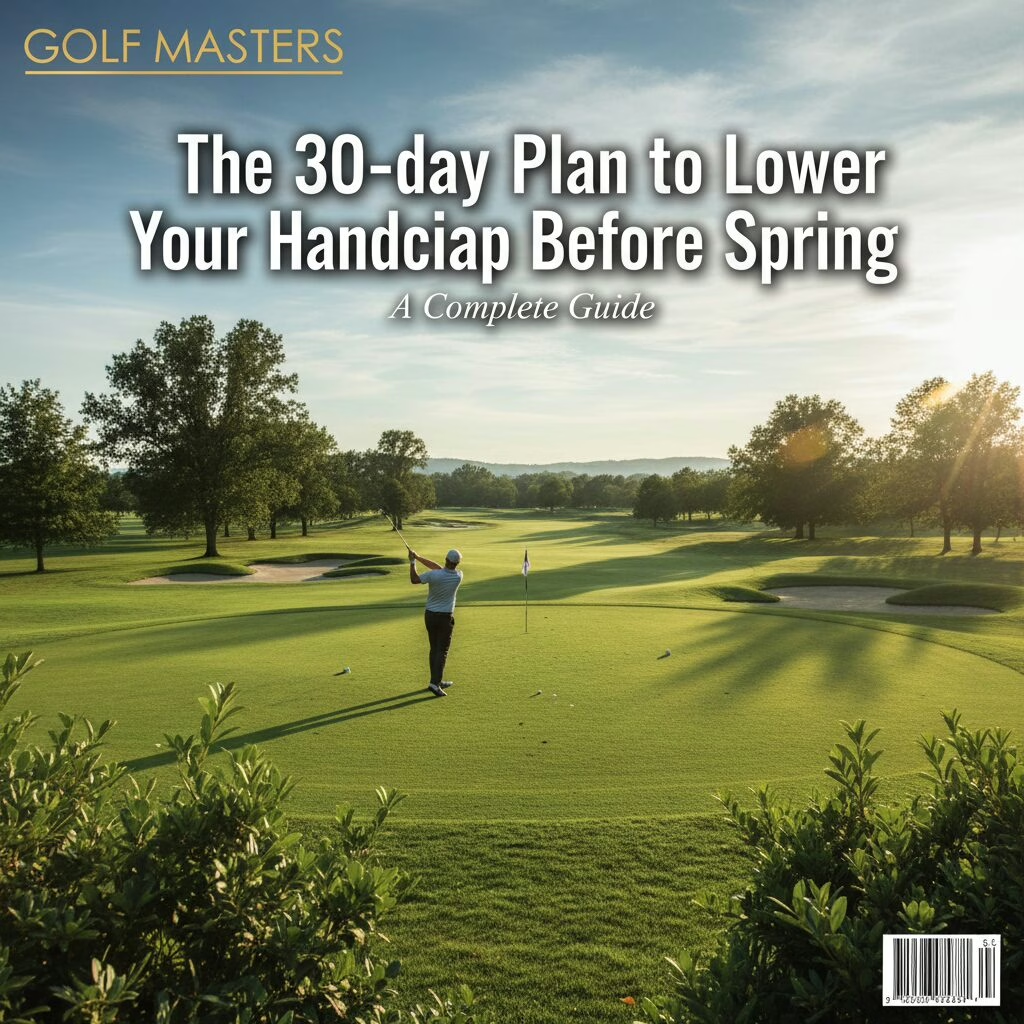
As the frost begins to retreat and the first signs of the current season emerge, every golfer feels that familiar itch to get back on the links and wants a lower handicap. However, most players make the mistake of heading straight to the first tee without a strategy, only to spend the first two months of the year shaking off the rust. I’ve seen it hundreds of times on the lesson tee: the frustration of high scores that could have been avoided with a bit of foresight. That is why I have developed the 30-day plan to help you sharpen your skills and lower your handicap before the spring season is in full swing. Let’s work through this together and ensure this is the year you finally break through your scoring plateaus.
The key is not necessarily hitting a thousand balls a day; it is about intentionality and focus. Most modern equipment is designed to be forgiving, but no driver or iron set can compensate for a lack of preparation. By following this structured approach, we are going to target the areas of your game that actually move the needle on the scorecard. We aren’t just practicing; we are training. This guide is designed to be accessible whether you are at the range, in your backyard, or even in your living room during a rainy afternoon. My goal as your resident PGA Pro is to provide you with the technical roadmap you need to start the season with total confidence.
Phase 1: Establishing the Foundation of the 30-Day Plan
The first ten days of our journey focus on the fundamentals that often go overlooked during the off-season. When we talk about game improvement, we have to start with the grip, posture, and alignment. If these three elements are off by even a fraction, your swing will naturally develop compensations to find the ball. During the first week of the 30-day plan, I want you to spend at least fifteen minutes a day in front of a mirror. Check your hand position—is your grip too strong or too weak? Ensure your spine angle is athletic and your weight is centered over the balls of your feet. These small adjustments are the bedrock of a repeatable, low-handicap swing.
In addition to static checks, we need to address your “feel” for the clubhead. I often tell my students that the hands are the only connection we have to the golf club, yet we rarely train them to be sensitive. Use the first phase of this plan to perform slow-motion swings. Focus on the transition at the top. Are you rushing the downswing? Modern equipment is lighter and faster than ever, which makes it easy to lose your rhythm. By slowing things down, you allow your brain to map out the correct sequence of motion. This isn’t the most exciting part of golf advice, but it is undoubtedly the most effective for long-term consistency.
Finally, we must address your mental approach to the upcoming season. Lowering your handicap requires a shift in how you view the course. Instead of trying to hit the “hero shot,” we are going to focus on proximity to the target and eliminating the dreaded “double-miss.” During these first ten days, take a look at your previous season’s statistics. Where did you lose the most strokes? Was it three-putting, or was it failing to get off the tee? Identifying your weaknesses now allows us to tailor the rest of our practice time toward the areas that will yield the highest return on investment.

Phase 2: Mastering the Scoring Zone for Handicap Improvement
Days eleven through twenty are dedicated to the short game, often referred to as the “scoring zone.” If you want to see a rapid decline in your handicap, this is where the magic happens. Statistics show that for the average amateur, over 60% of shots occur within 100 yards of the green. Therefore, our golf tips for this phase center on wedge play and putting. The key is to develop a “clock system” for your wedges. Imagine your lead arm is the hand of a clock; a 9-o’clock swing should produce a specific yardage, while a 10-o’clock swing produces another. Mastering these gaps is the fastest way to turn three shots into two.
When it comes to putting, we are focusing on two specific metrics: start line and speed control. You can have the best read in the world, but if you cannot start the ball on your intended line, the putt will never drop. I recommend the “gate drill” using two tees placed just wider than the ball. If you can consistently roll the ball through the gate from three feet, your stroke is technically sound. Speed control is equally vital. Practice long lag putts from thirty, forty, and fifty feet. Your goal isn’t necessarily to make them, but to leave yourself a stress-free second putt. Eliminating three-putts is the lowest-hanging fruit for any golfer looking to improve.
I remember a student of mine who was stuck at a 15-handicap for years. He spent all his time hitting drivers at the range. When we shifted his focus to the 30-day plan’s short game emphasis, his handicap dropped to a 10 within a single month. He didn’t hit the ball any further; he simply stopped wasting shots around the green. Here’s how you can do the same: spend 70% of your practice time on shots under 100 yards. It might not feel as satisfying as a 300-yard drive, but your scorecard will thank you when the spring tournaments begin. Focus on the fundamentals of a quiet lower body and a crisp strike with your wedges.
Phase 3: Tactical Range Work and the 30-Day Plan Finale
As we enter the final ten days of our program, it is time to transition back to the full swing with a tactical mindset. Many golfers go to the range and hit the same club to the same target repeatedly. This is known as blocked practice, and while it feels good, it doesn’t translate to the course. In the final stage of the 30-day plan, we utilize random practice. Every shot should have a different club, a different target, and a full pre-shot routine. This simulates the pressure and variety of an actual round of golf, ensuring that your swing is ready for the first tee box of the season.
During this phase, we also need to optimize your bag. Modern equipment provides an incredible amount of adjustability, and you should ensure your lofts and lies are suited for your current swing. If you haven’t had your clubs checked in a year, now is the time. Even a two-degree deviation in your irons can cause significant accuracy issues. This is practical golf advice that often goes ignored. While you are at the range, pay close attention to your shot shape. Don’t try to fight your natural tendency during this 30-day window; instead, learn to play with it. If you hit a predictable fade, aim down the left side and let it work back. Consistency beats perfection every single time.
The final three days of the plan should be spent “playing” your home course in your mind while at the range. Visualize the first hole—what club do you hit off the tee? Pull that club, go through your routine, and hit the shot. If you miss the fairway, visualize the recovery shot. This mental rehearsal bridges the gap between the practice tee and the competitive environment. By the time day thirty arrives, you shouldn’t feel like you are starting a new season; you should feel like you are simply continuing a momentum that has already been established. You’ve put in the work, and now it’s time to let the results speak for themselves.
The Importance of a Pre-Shot Routine
One of the most critical components of game improvement is the development of a rock-solid pre-shot routine. During the final phase of our plan, I want you to timing your routine. Whether it is two practice swings and a look, or a specific waggle, it needs to be identical every time. A consistent routine acts as a trigger for your subconscious, telling your body that it is time to perform. It calms the nerves and narrows your focus, which is essential when you’re standing over a difficult shot on the 18th hole with a career-best score on the line.
Tracking Your Progress and Staying Accountable
To truly see the benefits of this 30-day approach, you must track your data. I suggest keeping a small notebook or using a mobile app to record your practice sessions. Note how many times you successfully completed a drill or how many fairways you hit during your simulated rounds. Seeing your improvement on paper provides a psychological boost that is incredibly powerful. As today’s golfers, we have access to more data than ever before—use it to your advantage to refine your strategy and stay committed to the process.
Conclusion: Ready for the First Tee
Lowering your handicap doesn’t happen by accident; it happens through a deliberate, structured approach to the game. By following the 30-day plan, you have addressed the technical fundamentals, mastered the scoring zone, and prepared your mind for the tactical challenges of the course. Remember, the goal of this plan isn’t to build a perfect swing, but to build a functional one that holds up under pressure. Focus on the fundamentals, stay patient with your progress, and trust the work you’ve put in during this month of preparation.
As we head into the heart of the current season, keep these lessons in mind. Golf is a journey of constant refinement, and every session on the range is an opportunity to get better. I’m confident that if you’ve stuck to this routine, you’ll be seeing lower scores and more smiles on the course this spring. What are your favorite game improvement tips for the start of the season? Have you tried a structured practice plan like this before? Share your thoughts and your progress in the comments below—I’d love to hear how your game is coming along!
Looking to level up your Golf Cave Check out our Pro Shop