Entertainment
The Queens of the Links: How a 1920s Rivalry Forged the Modern Game
A New Look at the Match That Changed Everything.

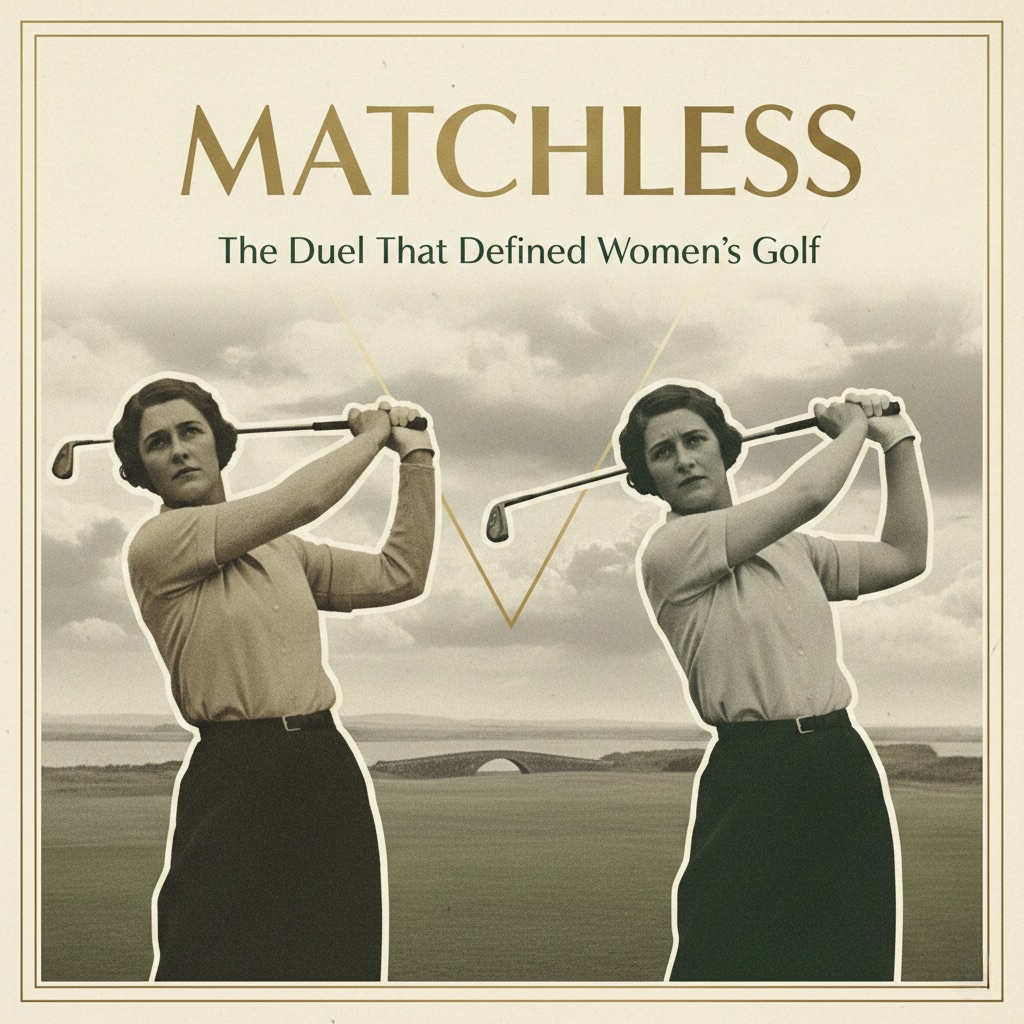
In the annals of sport, certain rivalries transcend the simple tabulation of wins and losses to become something more—a cultural flashpoint, a testament to human potential, or, in the case of Stephen Proctor’s meticulously researched new book, Matchless, a quiet revolution played out on the windswept links of Britain and America. Proctor, who has previously chronicled the early days of the game, here turns his lens toward the 1920s, an era he frames as the “transformative age for women’s golf”.
At the heart of the narrative are two women who stood as “Empresses of Golf”: the British technician Joyce Wethered and the American competitor Glenna Collett. To read Proctor’s account is to realize that Wethered and Collett were to their era what Jones and Hagen were to theirs—perhaps even more, given the societal “patriarchal world” they were navigating while suffragettes fought for the right to vote just a year before their most famous duels.
Proctor is at his best when reconstructing the high-stakes drama of the 1929 British Ladies’ Championship at St. Andrews. He captures the “frenzied scene” where businesses declared half-day holidays so the Scottish public could witness the final 18 holes. The match itself was a masterpiece of fluctuation: Collett went out in a “scintillating 34,” a score Bernard Darwin—the dean of golf writers—called “overwhelming golf worthy of any male champion”. Yet, Wethered’s “imperturbable temperament” allowed her to claw back from five down to secure a victory that Darwin eventually found himself “at a loss for words” to describe.
What makes Matchless particularly relevant for the modern reader is Proctor’s insistence on the sheer quality of the play. He reminds us that in 1925, Troon was set at 6,415 yards—longer than the setup for the 2024 U.S. Women’s Open a century later. Playing from these “back tees,” Wethered and Collett repeatedly posted scores in the mid-70s, marks that were “unthinkably low for women” at the time and competitive with the men’s Open Championship records of the era.

The book also serves as a vital historical bridge. Proctor traces the lineage of the women’s game back to 1738, when “Charming Sally” won a match at Bruntsfield Links while her husband carried her clubs. He highlights the indispensable work of Issette Pearson, the “despotic” force who founded the Ladies’ Golf Union in 1893 to establish a uniform code of rules and handicapping long before the men’s game achieved similar cohesion.
Proctor’s prose is elegiac, particularly when discussing the “enduring legacy” of these two women who lived to great ages—Collett to 85 and Wethered to 96—but never outlived the legend they created on the Old Course. He concludes by noting that their performance remains, even a century later, “the greatest women’s golf match ever played”.
For the historian, Matchless is a rigorous addition to the library; for the enthusiast, it is a stirring reminder that the “manifest genius” of the game knows no gender. Proctor has not just written a sports book; he has recovered a lost chapter of excellence that, like a perfectly struck iron shot, rings true long after the follow-through.
Pick up your copy of Matchless today.
“Matchless” by Stephen Proctor is published by Arena Sport, an imprint of
Birlinn Limited.
Rating: ★★★★½ out of 5
Ms. Lexi the Golf Guru is a golf enthusiast, instructor, and advocate for inclusion in the game. When she’s not on the course, she can usually be found with her nose in a book, because great stories, like great golf shots, can change everything.