Competitive Edge
The 5 Most Overrated Golf Tips (And What to Do Instead)
Stop following bad golf advice! The Golf Hacker debunks 5 overrated tips (keep your head down, swing easy, aim left) and shares what actually works for mid-handicappers.

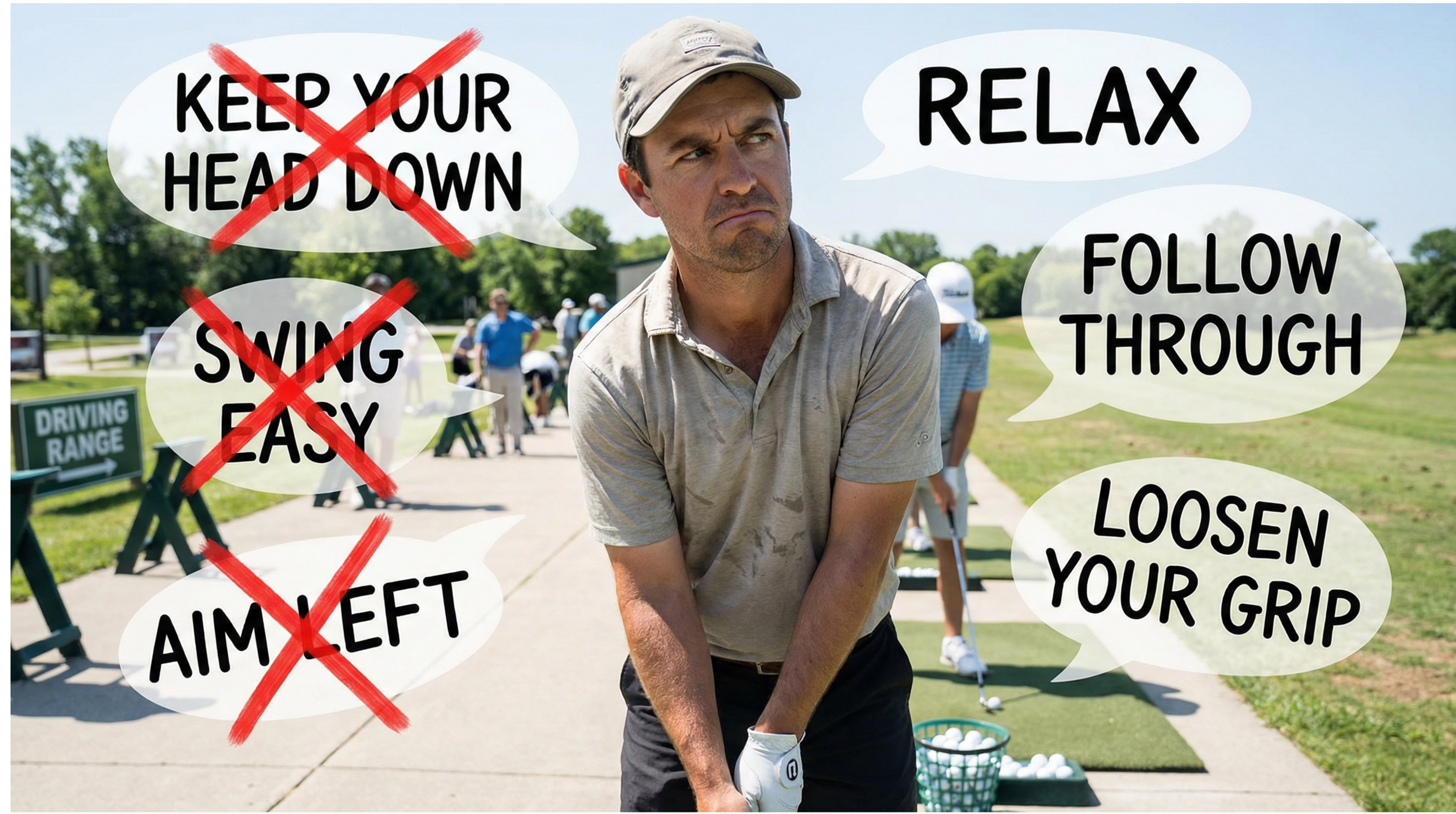
Let’s talk about bad golf advice. The golf world is drowning in it. Every magazine, every YouTube video, every well-meaning buddy at the range has a tip that’s supposed to transform your game. “Keep your head down.” “Swing easy.” “Grip it and rip it.” Most of it is garbage. Not because the people giving the advice are trying to mislead you, but because generic tips don’t work for specific problems. What helps a tour pro with a hundred-twenty-mile-per-hour swing speed might wreck a weekend warrior who barely breaks ninety. What fixes a hook won’t help a slice. And yet, we keep repeating the same tired advice like it’s gospel.
I’ve spent years trying every tip, drill, and swing thought imaginable. Some helped. Most didn’t. And a few actually made my game worse. So I’m here to save you some time and frustration by calling out the five most overrated golf tips I’ve encountered—and more importantly, telling you what to do instead. These aren’t just my opinions. These are lessons learned through trial, error, and way too many balls hit into the woods. Let’s get into it.
Why Generic Advice Fails Golfers
Before we dive into the specific tips, let’s talk about why so much golf advice falls flat. The problem is that golf instruction has become one-size-fits-all. Instructors, magazines, and influencers dish out tips without knowing anything about your swing, your tendencies, or your skill level. They’re throwing spaghetti at the wall and hoping something sticks.
But here’s the thing: golf swings are individual. Your body type, flexibility, strength, and coordination are different from mine. Your miss pattern is different. Your goals are different. So when someone tells you to “keep your left arm straight” or “turn your hips faster,” they’re making assumptions about your swing that might not be true. And if the advice doesn’t match your actual problem, it’s not just unhelpful—it can make things worse.
The best golf instruction is diagnostic. It identifies your specific issue and addresses it with a tailored solution. Generic tips skip the diagnosis and jump straight to the prescription. That’s why they fail. So as we go through these overrated tips, remember: the goal isn’t to bash people who give advice. The goal is to help you think more critically about what advice actually applies to you.
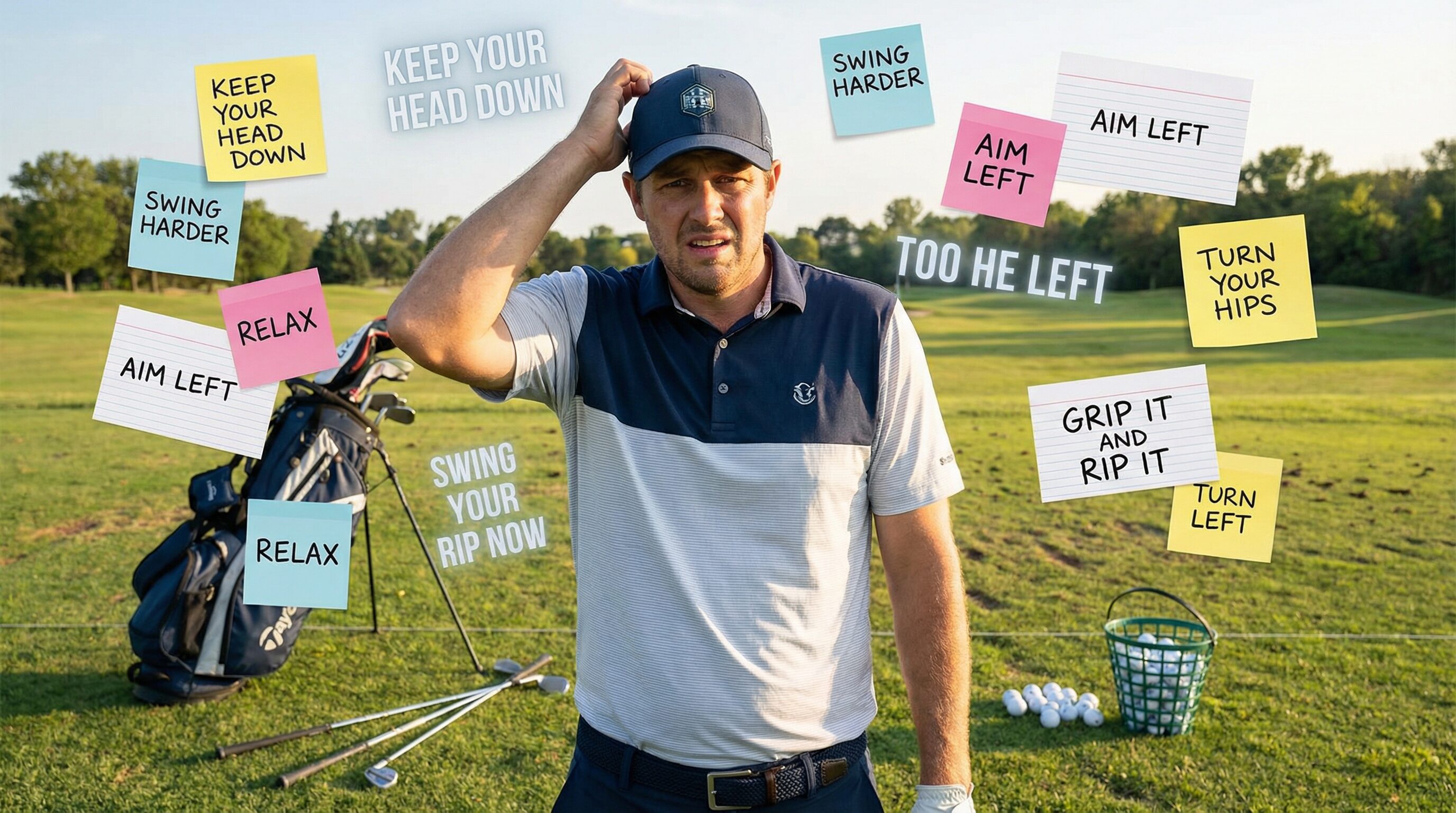
Overrated Golf Tip #1: “Keep Your Head Down” Ruins Your Swing (Do This Instead)
This is probably the most common piece of golf advice ever given, and it’s also one of the most damaging. How many times have you hit a bad shot and had someone say, “You looked up”? It’s become a reflex. Bad shot? Must have lifted your head. But here’s the truth: keeping your head rigidly down through impact doesn’t help most golfers. In fact, it often hurts.
When you focus on keeping your head down, you restrict your body’s natural rotation. Your shoulders can’t turn fully. Your hips get stuck. Your weight stays on your back foot. You end up with a cramped, restricted swing that produces weak, inconsistent contact. And ironically, trying to keep your head down often causes you to lift it anyway, because your body is fighting against an unnatural position.
Watch any tour pro in slow motion. Their head moves. Not wildly, but it moves. It rotates slightly during the backswing and follows the ball through impact. That’s natural. That’s efficient. The head isn’t an anchor—it’s part of a dynamic athletic motion.
What to Do Instead:
Focus on keeping your eyes on the ball, not your head down. There’s a difference. Your eyes can track the ball while your head rotates naturally with your body. This allows for a full, unrestricted turn and proper weight transfer. Practice making swings where you let your head rotate naturally. You’ll feel less restricted, generate more power, and make better contact. If you’re really worried about looking up too early, try this drill: after you hit the ball, keep your eyes on the spot where the ball was for a count of one before looking up. This trains you to stay down through impact without restricting your rotation.
Overrated Golf Tip #2: “Swing Easy” (Why This Advice Backfires)
“Swing easy” sounds like great advice. It’s calming. It’s zen. The problem is that it’s vague and often counterproductive. When most golfers try to “swing easy,” they decelerate through the ball. They get tentative. They lose rhythm and tempo. The result? Weak contact, inconsistent ball flight, and frustration.
The advice usually comes from a good place. Someone sees you swinging out of your shoes, losing your balance, and spraying balls all over the range. So they tell you to swing easy. But “easy” isn’t the same as “smooth” or “controlled.” Easy implies less effort, and less effort in golf usually means less speed, less compression, and worse results.
Tour pros don’t swing easy. They swing smooth. They swing with tempo. They swing with control. But they’re still generating tremendous speed through the ball. The difference is that their speed is efficient and well-timed, not wild and uncontrolled.
What to Do Instead:
Focus on tempo and balance, not effort level. A good tempo is the key to consistency. Try this: count “one” on your backswing and “two” on your downswing. The ratio should be about three-to-one—your backswing takes three times as long as your downswing. This creates a smooth, rhythmic motion that generates speed without feeling rushed or out of control.
As for balance, make it a rule: you should be able to hold your finish position for three seconds after every swing. If you can’t, you’re swinging too hard or too out of control. Work on finishing in balance, and your swing will naturally find the right amount of effort. You’ll generate plenty of speed, but it will be controlled speed—the kind that produces consistent, solid contact.


Overrated Golf Tip #3: “Grip It and Rip It” (The Truth About Power)
If you slice the ball, you’ve probably been told to aim left (for right-handed golfers) to compensate. This is terrible advice. It doesn’t fix your slice—it just accommodates it. And worse, it often makes your slice worse.
Here’s why: when you aim left, your brain knows the ball is going to curve right, so you subconsciously swing even more across the ball to get it started left. This creates an even steeper, more out-to-in swing path, which produces more sidespin and a bigger slice. You’re not fixing the problem; you’re reinforcing it. And now you’re also dealing with alignment issues that make it harder to hit straight shots even if you do fix your swing.
Aiming left to compensate for a slice is like putting a bucket under a leaky roof. Sure, it catches the water, but it doesn’t fix the leak. And eventually, the leak gets worse.
What to Do Instead:
Fix the root cause of your slice: an open clubface at impact relative to your swing path. The most common reason for an open clubface is a weak grip. Check your grip. When you look down at your hands, you should see two to three knuckles on your left hand (for right-handed golfers). If you only see one knuckle or none, your grip is too weak, and you’re going to struggle to square the clubface.
Strengthen your grip by rotating both hands slightly to the right on the club. This will help you close the clubface through impact and reduce your slice. Pair this with a focus on swinging more from the inside (imagine swinging out toward right field instead of pulling across your body), and you’ll start hitting straighter shots. It takes practice, but it’s a real fix, not a band-aid.
Overrated Tip #4: “Hit Down on the Ball”
“Hit down on the ball” is advice you’ll hear constantly, especially with irons. And to be fair, it’s not entirely wrong—you do want to make contact with the ball before the ground. But the way this tip is usually interpreted causes more problems than it solves.
When most golfers hear “hit down on the ball,” they think they need to chop at it. They get steep. They drive their hands down aggressively. They try to pound the ball into the turf. The result? Fat shots, thin shots, and a lot of frustration. They’re working harder, not smarter.
The reality is that good ball-first contact comes from proper swing mechanics, not from consciously trying to hit down. If your weight is shifting correctly and your swing path is on plane, you’ll naturally hit the ball first and then the ground. The divot happens as a byproduct of a good swing, not as the goal.
What to Do Instead:
Focus on weight transfer and low point control. Your low point—the lowest point of your swing arc—should be a few inches in front of the ball. This happens naturally when you shift your weight properly from your back foot to your front foot during the downswing.
Here’s a simple drill: place a tee in the ground a few inches in front of your ball. Your goal is to brush the ground where the tee is, not where the ball is. This trains you to move your low point forward, which creates the ball-first contact you’re looking for. You don’t have to think about hitting down. Just shift your weight, let your swing bottom out in front of the ball, and the contact will take care of itself.

Overrated Tip #5: “Keep Your Left Arm Straight”
The left arm straight tip (for right-handed golfers) is a classic. It’s been around forever, and it’s based on the idea that a straight left arm creates width and power in the swing. And again, there’s some truth to it. But the way it’s taught and practiced often creates more problems than it solves.
When golfers obsess over keeping their left arm perfectly straight, they create tension. Tension is the enemy of a good golf swing. A tense left arm restricts your shoulder turn, limits your backswing, and makes it harder to release the club through impact. You end up with a rigid, mechanical swing that lacks fluidity and speed.
Look at tour pros. Yes, their left arms are relatively straight at address and through most of the backswing. But they’re not locked. There’s a slight bend, and more importantly, there’s no tension. The arm is extended, not rigid. That’s a huge difference.
What to Do Instead:
Focus on extension, not rigidity. Your left arm should be comfortably extended, not locked straight. Think of it like reaching for something on a high shelf—your arm is extended, but there’s no tension. You’re not forcing it.
Here’s a good checkpoint: at the top of your backswing, your left arm should feel extended but relaxed. If you feel tension in your shoulder or elbow, you’re overdoing it. Let your arm bend slightly if that’s what feels natural. The goal is width and control, not a perfectly straight line. A relaxed, extended left arm will give you better rotation, more speed, and more consistent contact than a rigid, locked arm ever will.
How to Filter Golf Advice Going Forward
Now that we’ve debunked five overrated tips, let’s talk about how to evaluate golf advice in general. Because the truth is, there will always be more tips, more drills, and more “secrets” to better golf. How do you know what’s worth trying and what’s a waste of time?
1. Consider the Source
Who’s giving the advice? Is it a qualified instructor who’s seen your swing, or is it a random guy at the range who shoots a hundred and five? Context matters. The best advice is personalized. If someone is giving you a tip without knowing your swing, your tendencies, or your goals, take it with a grain of salt.
2. Ask: Does This Address My Specific Problem?
Generic advice rarely works. Before you try a new tip, ask yourself: does this address a problem I actually have? If you don’t slice the ball, advice about fixing a slice isn’t relevant. If you already have good tempo, being told to “slow down” won’t help. Focus on tips that target your specific weaknesses.
3. Test It, But Give It Time
Golf changes take time. If you try a new grip or a new swing thought, don’t expect immediate results. Give it a few range sessions. But also, don’t stick with something that clearly isn’t working. If a tip makes your ball flight worse after a fair trial, move on. Trust your results, not your hopes.
4. Prioritize Fundamentals Over Quick Fixes
The most valuable advice is usually the least sexy. Grip, stance, posture, alignment—these fundamentals matter more than any swing thought or magic drill. If your fundamentals are solid, everything else gets easier. If they’re not, no amount of tips will save you.
5. Record Your Swing
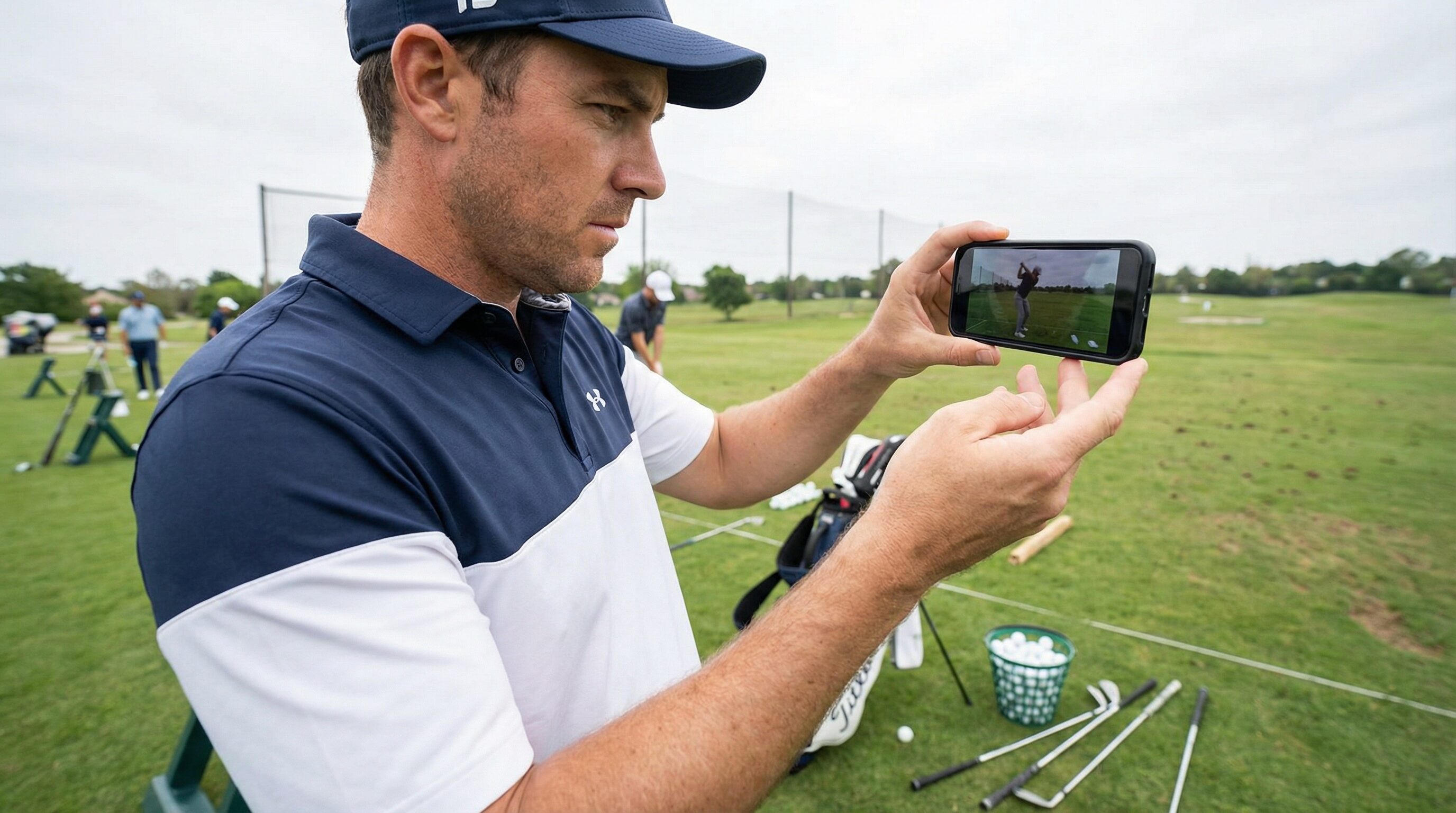
One of the best ways to filter advice is to see your swing for yourself. Record your swing on your phone. Watch it in slow motion. Compare it to what good swings look like. This gives you objective data. You’ll know if your head is actually moving too much, if your left arm is bending excessively, or if you’re really swinging out of control. Video doesn’t lie.
The Bottom Line: Think Critically, Swing Better
Golf instruction is full of well-meaning advice that doesn’t actually help most golfers. “Keep your head down,” “swing easy,” “aim left to fix your slice”—these tips sound good, but they’re either too vague, too generic, or just plain wrong for most players. The key to improving your game isn’t collecting more tips. It’s learning to think critically about the advice you receive and focusing on solutions that address your specific problems.
So the next time someone offers you a tip, ask yourself: does this make sense for my swing? Does it address a problem I actually have? Is it based on sound mechanics, or is it just conventional wisdom that’s been repeated so many times it sounds true? If the answer to any of those questions is no, feel free to ignore it. Your golf game will thank you.
And remember: the best tips are the ones that work for you. Not for tour pros. Not for your buddy who plays twice a year. For you. So stop wasting range time on overrated advice, start focusing on what actually matters, and go play better golf.