Gear Intelligence
The Best Golf Training Aids 2026: Actually Fix Your Swing
Not all training aids work. Gillmore tested the best golf training aids of 2026 for swing, putting, and speed—with real results and useful buying links.

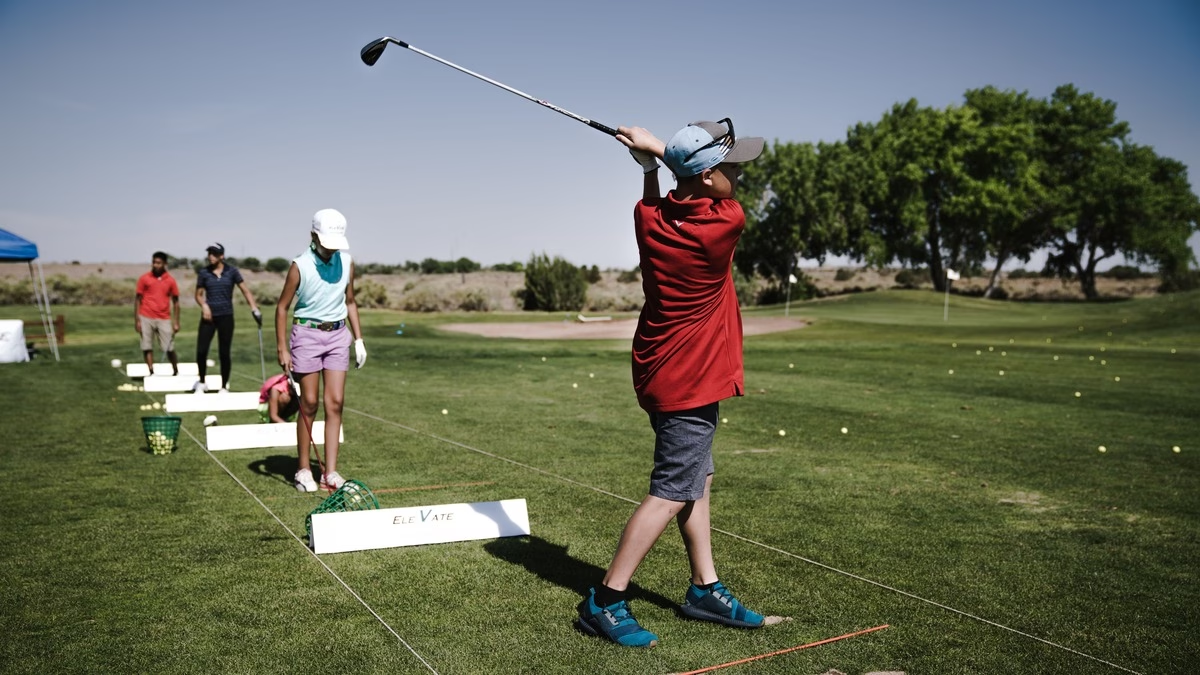
The best golf training aids 2026 can save you from another 100-ball range session that grooves the same miss. Most training aids are gimmicks—plastic gadgets that promise to fix your slice overnight but end up gathering dust in the garage. The useful ones are different. They provide clear feedback on swing plane, impact position, and speed, forcing your body to learn better movement patterns. Whether you are trying to break 90 or push past a swing-speed plateau, these are the tools that actually work.
Disclosure: This article contains affiliate links. If you buy through these links, ClickitGolf may earn a commission at no additional cost to you.
Do golf training aids actually work?
Yes—when the aid targets one diagnosed fault, supplies clear external feedback, and is used in short, repeated sessions. A 2024 systematic review of golf motor-learning research found that feedback design and practice structure can influence learning, but no gadget replaces sound coaching or representative ball-striking practice.
Quick Picks
| Pick | Best for | Price tier | Buy |
| The PlaneMate | Swing plane & transition | Premium | 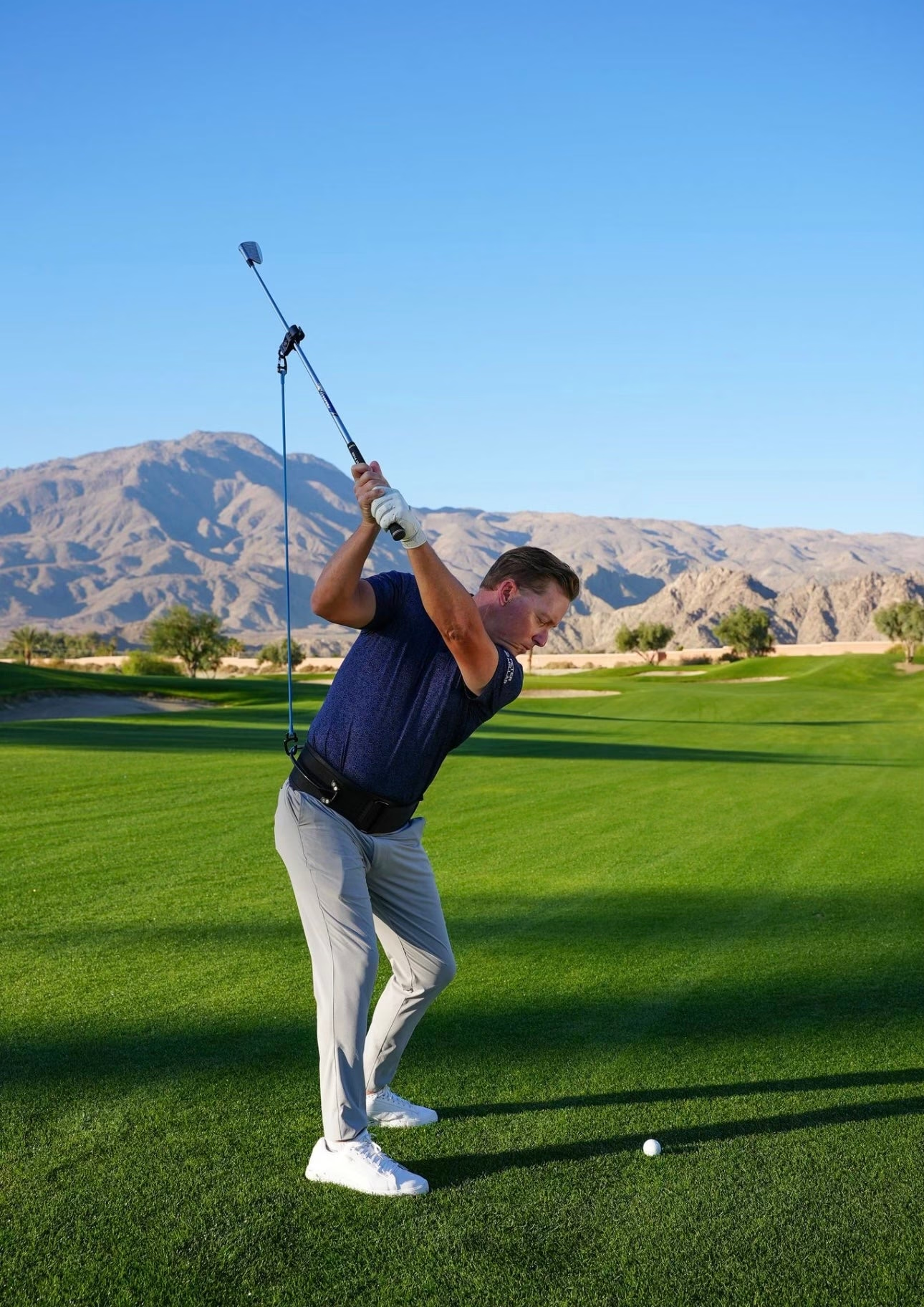 Buy Now Buy Now |
| IMPACT SNAP | Release & wrist angles | Mid-range | 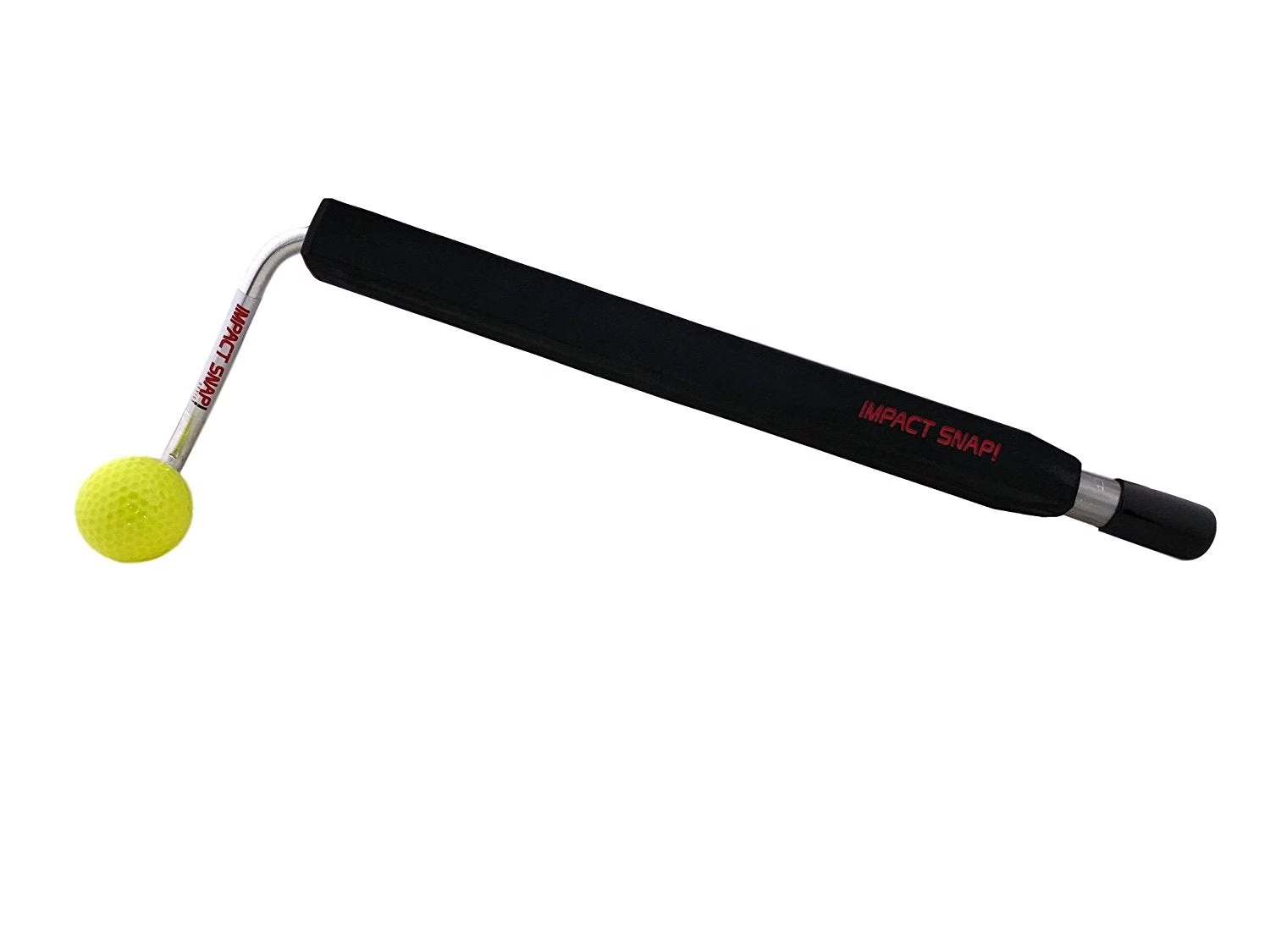 Buy Now Buy Now |
| Speed Sticks PRO | Clubhead speed gains | Premium | 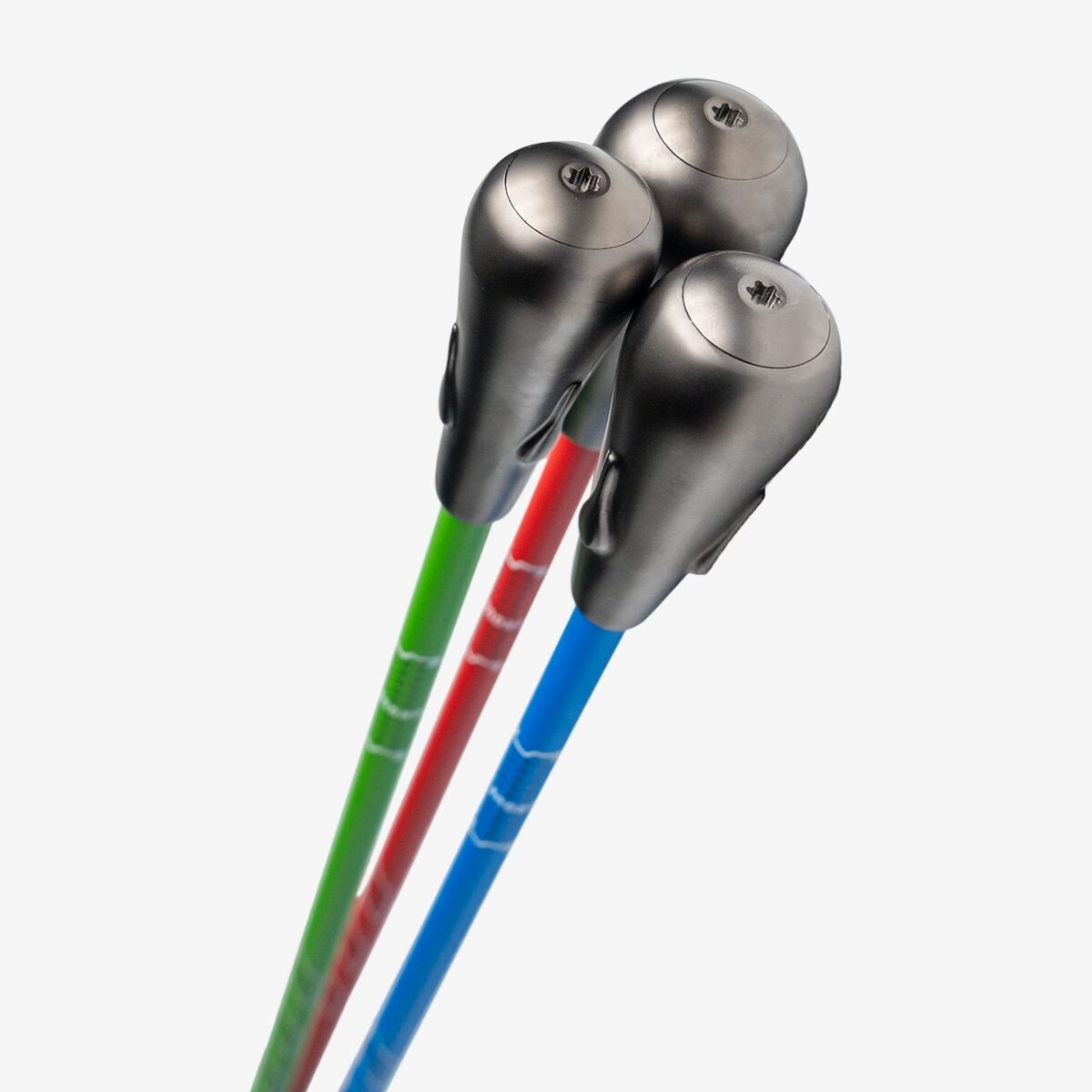 Buy Now Buy Now |
| PuttOUT Premium | Pace control & alignment | Budget | 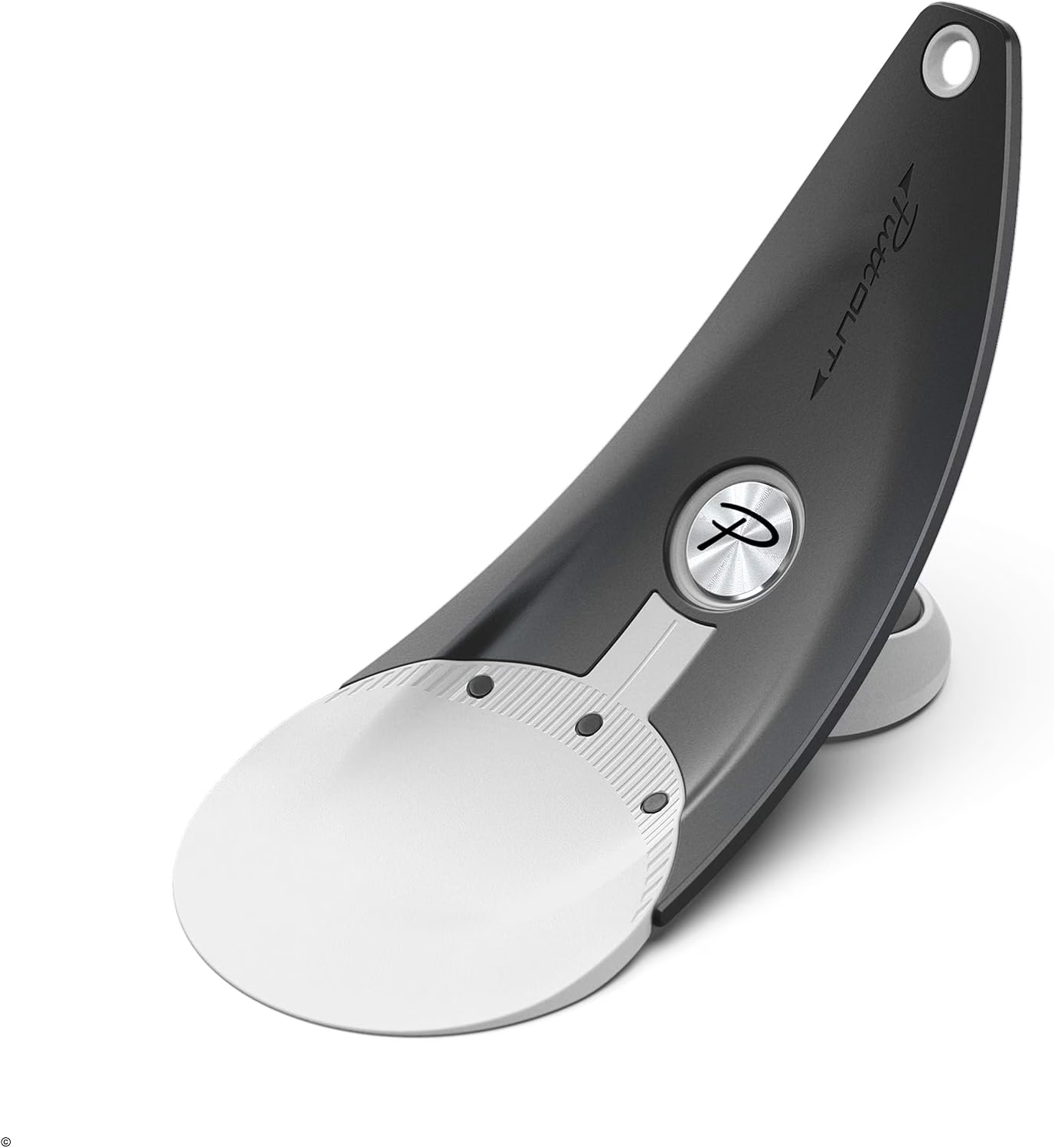 Buy Now Buy Now |
| Callaway Alignment Stix | Setup & ball position | Budget | 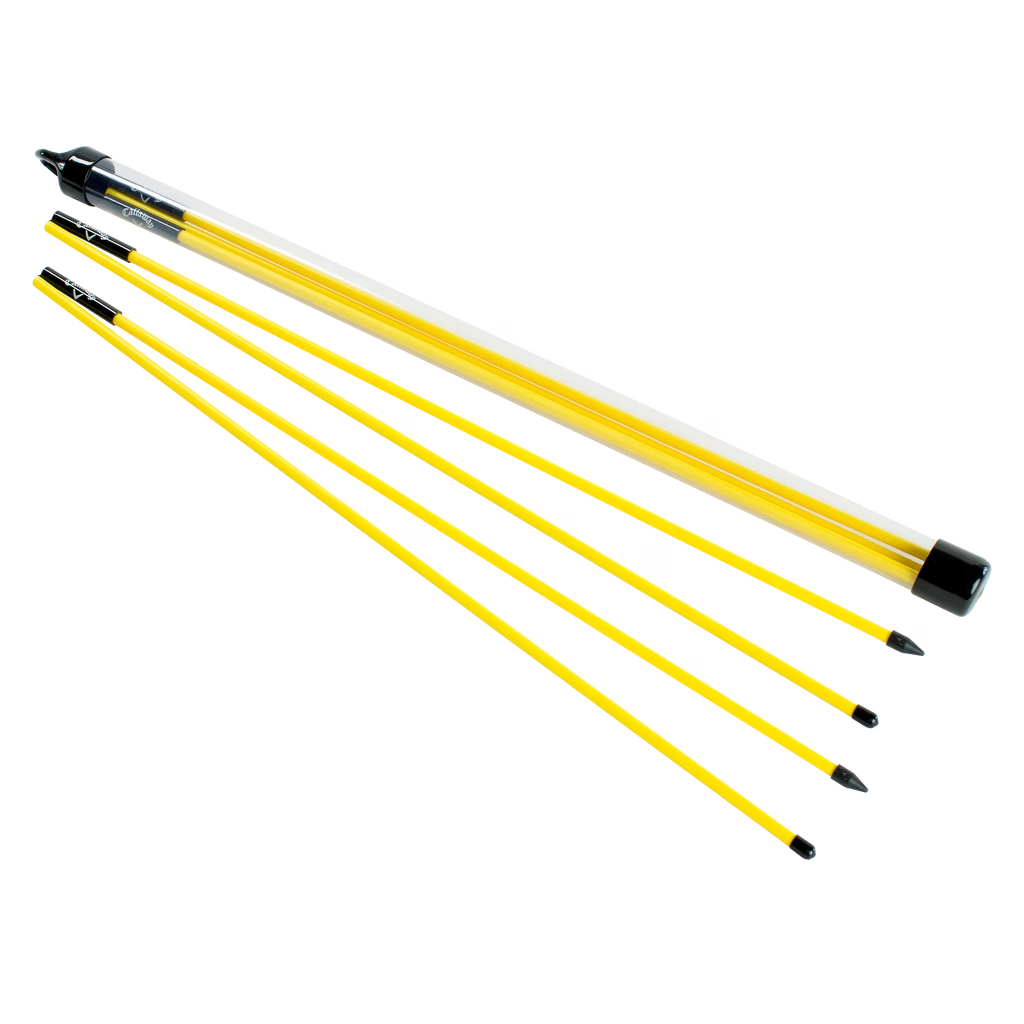 Buy Now Buy Now |
How We Chose and Evaluated
We evaluate training aids based on the ClickitGolf Lab Score, which averages five 1–10 sub-scores: Performance (does it fix the targeted flaw?), Forgiveness (is it easy to use correctly?), Feel (does it translate to a real golf swing?), Value (is it worth the investment?), and Looks (build quality and durability). We ignore manufacturer hype and focus on tools that provide immediate, actionable feedback.
9 Best Golf Training Aids 2026
1. Best Swing Plane Trainer: The PlaneMate
The PlaneMate forces you to feel the correct takeaway and transition. It uses resistance bands attached to a belt to guide your arms and club onto the proper plane.
Why It Works
- Provides physical resistance to prevent an inside takeaway.
- Encourages a shallowing move during the transition.
- Includes three interchangeable bands (Standard Pitch, Regular Flex, Pro Stiff) to scale with your progress.
Tradeoffs
- Bulky and awkward to wear initially.
- Requires commitment to the included 7-day protocol to see lasting results.
Who It’s For: Golfers who struggle with an over-the-top downswing or an inside takeaway.
Who Should Skip: Players looking for a quick fix without putting in structured practice time.
Lab Score: 9.2 (Performance: 10, Forgiveness: 8, Feel: 9, Value: 9, Looks: 10)
2. Best Impact Trainer: IMPACT SNAP
The IMPACT SNAP isolates the wrists and hands, teaching the correct release pattern. It features a weighted ball and a snapping mechanism that provides an audible click when you achieve the proper impact position.
Why It Works
- Trains the hands to lead the clubhead into impact, promoting compression.
- The audible “snap” provides instant confirmation of a correct release.
- Small and portable enough to use indoors year-round.
Tradeoffs
- Does not involve hitting a real golf ball, which can make transferring the feel difficult for some.
- Can be confusing to use without watching the instructional videos.
Who It’s For: Golfers who flip their wrists at impact or struggle with inconsistent contact.
Who Should Skip: Players who already compress the ball well and need help with macro body movements.
Lab Score: 8.8 (Performance: 9, Forgiveness: 7, Feel: 9, Value: 9, Looks: 10)
3. Best Speed Trainer: SuperSpeed Golf Speed Sticks PRO
Speed training is not about swinging harder; it is about training your nervous system to move faster. The Speed Sticks PRO system uses three weighted clubs (light, medium, heavy) and an overspeed protocol to unlock hidden clubhead speed.
Why It Works
- Uses proven overspeed training principles to increase neuromuscular reaction speed.
- The free app provides structured, easy-to-follow protocols.
- SuperSpeed reports an average 5% speed gain after six weeks when golfers follow its prescribed schedule; treat that as a manufacturer benchmark, not a guarantee.
Tradeoffs
- Requires a launch monitor (sold separately) to track progress accurately.
- Max-effort swings demand a proper readiness screen and warmup; Titleist Performance Institute recommends sufficient strength and mobility before overspeed training.
Who It’s For: Golfers whose clubhead speed has plateaued despite good mechanics.
Who Should Skip: Players with underlying mobility or strength deficits who are not ready for maximal-effort swings.
Lab Score: 8.8 (Performance: 10, Forgiveness: 8, Feel: 9, Value: 8, Looks: 9)
4. Best Putting Trainer: PuttOUT Premium Pressure Putt Trainer
The PuttOUT Premium is a simple but ruthless putting aid. Its parabolic ramp returns made putts the exact distance they would have rolled past the hole, while the micro-target catches only putts with perfect pace and line.
Why It Works
- Punishes deceleration and poor pace control immediately.
- The 4.25-inch base accurately replicates the size of a real golf hole.
- Folds flat for easy storage in your golf bag.
Tradeoffs
- Can be frustratingly difficult, especially on fast indoor mats.
- Requires a perfectly flat surface to ensure accurate feedback.
Who It’s For: Golfers who struggle with distance control or leave too many putts short.
Who Should Skip: Players who prefer alignment-heavy aids over pace-control tools.
Lab Score: 9.0 (Performance: 9, Forgiveness: 9, Feel: 9, Value: 10, Looks: 8)
5. Best Alignment Tool: Callaway Alignment Stix
Alignment sticks are the most basic and essential training aid in golf. The Callaway Alignment Stix are durable, shock-corded steel rods that help you verify your setup, ball position, and swing path.













Why It Works
- Provides a clear visual reference for target lines and foot positioning.
- Versatile enough to be used for full swings, chipping, and putting drills.
- Includes a convenient storage tube that fits easily in your bag.
Tradeoffs
- Does not provide dynamic feedback during the swing itself.
- Requires you to know which drills to set up for your specific flaws.
Who It’s For: Every golfer, regardless of skill level.
Who Should Skip: No one. If you do not own alignment sticks, you are guessing.
Lab Score: 9.0 (Performance: 9, Forgiveness: 10, Feel: 8, Value: 10, Looks: 8)
6. Best Tempo Trainer: SKLZ Gold Flex Golf Swing Trainer
The SKLZ Gold Flex uses an exaggerated flex shaft and a weighted head to smooth out your transition and improve tempo. It is a staple on driving ranges for a reason.
Why It Works
- The flexible shaft forces a slight pause at the top, fighting the urge to rush the downswing.
- The weighted head provides a low-impact stretch for pre-round warmups.
- Encourages a flatter swing plane, which helps combat a slice.
Tradeoffs
- Does not provide specific feedback on clubface control or impact position.
- The heavy weight can mask poor sequencing if swung incorrectly.
Who It’s For: Golfers with a quick, jerky transition or those needing a reliable warmup tool.
Who Should Skip: Players whose primary issue is clubface control rather than tempo.
Lab Score: 8.6 (Performance: 8, Forgiveness: 9, Feel: 8, Value: 9, Looks: 9)
7. Best Balance Trainer: Orange Whip Trainer
The Orange Whip is the original counterbalanced tempo trainer. Its patented design features a weighted orange ball at the end of a highly flexible shaft, with a counterweight in the grip.
Why It Works
- The counterbalance stabilizes the swing and provides immediate feedback on balance and rhythm.
- Any wobble during the swing instantly highlights poor sequencing.
- Excellent for core fitness and golf-specific flexibility.
Tradeoffs
- Can feel heavy and fatiguing during extended practice sessions.
- The premium price tag is higher than some competing tempo trainers.
Who It’s For: Golfers struggling with balance, rhythm, or a steep downswing.
Who Should Skip: Players looking strictly for a speed-building tool.
Lab Score: 9.0 (Performance: 9, Forgiveness: 9, Feel: 9, Value: 8, Looks: 10)
8. Best Low-Point Trainer: Divot Board
The Divot Board provides instant, visual feedback on exactly where your club strikes the turf. Its sequined surface reveals whether your strike was fat, thin, or pure, and indicates your swing path.
Why It Works
- Eliminates the guesswork of ground contact without needing a launch monitor.
- Can be used indoors or outdoors, with or without a golf ball.
- Highlights swing path tendencies (in-to-out vs. out-to-in) clearly.
Tradeoffs
- The sequin pad is a consumable item that requires replacement after 1,000–3,000 swings.
- Sits slightly above the ground, requiring you to choke down on the club to compensate.
Who It’s For: Golfers who struggle with fat or thin shots and need to dial in their low point.
Who Should Skip: Players who already compress the ball cleanly and consistently.
Lab Score: 8.8 (Performance: 10, Forgiveness: 8, Feel: 8, Value: 9, Looks: 9)
9. Best Putting Mirror: EyeLine Golf Classic Putting Mirror
The EyeLine Golf Classic Putting Mirror is a fundamental tool for checking your setup. It provides a clear reflection to verify your eye position, shoulder alignment, and putter face angle.
Why It Works
- Ensures your eyes are correctly positioned over the ball for accurate reading.
- Helps square the putter face to your intended target line.
- Includes slots for tees to create a stroke restrictor gate.
Tradeoffs
- Primarily an indoor or practice-green tool; not something you use during a round.
- The large size makes it slightly less portable than smaller mirror options.
Who It’s For: Golfers who struggle with starting putts on the correct line or inconsistent setup.
Who Should Skip: Players who have perfect alignment but struggle exclusively with pace control.
Lab Score: 8.8 (Performance: 9, Forgiveness: 9, Feel: 9, Value: 9, Looks: 8)
Buying Guide: How to Choose a Training Aid
When selecting a training aid, the most critical factor is identifying the specific flaw you need to correct. Do not buy a speed trainer if you cannot consistently find the center of the clubface. Start by addressing setup and alignment (using tools like the Callaway Alignment Stix or EyeLine Mirror). Once your foundation is solid, move to impact and low-point control (IMPACT SNAP, Divot Board). Only after you can strike the ball consistently should you focus on adding speed (Speed Sticks PRO).
How to Build a Home Practice Kit Without Wasting Money
Start with the PuttOUT Premium (about $30), Callaway Alignment Stix (about $25), and the SKLZ Gold Flex (about $50). That core kit is roughly $105 before tax and covers putting pace, setup, tempo, and warmup. Practice putts on a flat, tightly woven carpet until you add a mat. If strike location is the bigger problem, swap the Gold Flex for the roughly $100 Divot Board; the total remains near $155. Verify current prices before publishing.
[SIDED POLL: “Which training aid has helped your game the most?”]
Want more golf tips every Friday? Join over 350,000 golfers — subscribe to The 19th Hole Newsletter → clickitgolf.com/newsletter
FAQ
Do golf training aids actually work?
Yes, but only when the aid supplies immediate, actionable feedback and the golfer uses it consistently. The best golf training aids 2026 targets specific faults—IMPACT SNAP for wrist release, for example, or the PlaneMate for swing plane—instead of promising a universal cure. Confirm the diagnosis before repeating the drill.
How often should I use speed training sticks?
A typical SuperSpeed protocol takes 10–15 minutes, three days per week. Leave recovery time between sessions, warm up thoroughly, and stop if mechanics deteriorate or discomfort appears. Golfers with strength or mobility limitations should complete a readiness assessment before making maximum-effort swings.
Can I use the PlaneMate indoors?
Yes. The PlaneMate works indoors for slow-motion rehearsals, short pitch motions, and isometric holds. Full-speed swings require adequate ceiling height and clearance from walls, lights, furniture, and other people. Begin with the lightest band and follow the supplied progression before increasing resistance.
What is the best training aid for beginners?
Alignment sticks are the best starting point for most beginners because setup, aim, and ball position shape every swing that follows. They are inexpensive and versatile. A beginner who cannot identify the cause of a miss should pair them with a lesson rather than buying a complicated movement trainer.
How long does a Divot Board last?
The manufacturer estimates that a Divot Board feedback pad handles roughly 1,000–3,000 swings. Steeper strikes and repeated heavy contact shorten its life. Replacement pads are available, so the board itself is not disposable; budget for that consumable cost if it becomes a regular practice tool.
Which golf training aid should I buy first?
Start with the aid that exposes your most expensive miss. Alignment sticks suit golfers who guess at setup, the Divot Board suits inconsistent contact, and a putting mirror suits poor start-line control. If you cannot name the fault, spend the money on a lesson before buying hardware.
Can a golf training aid make my swing worse?
Yes. An aid can reinforce the wrong compensation when the golfer misdiagnoses the fault, performs the drill incorrectly, or chases a position that does not fit the intended ball flight. Film a baseline swing, use one aid at a time, and periodically confirm the change with a qualified coach.
Final Recommendation: The Best Golf Training Aids 2026
The best golf training aids 2026 has to offer are the ones that force you to change your movement patterns. Our top overall recommendation is The PlaneMate. While it requires a significant investment of both money and time, no other tool provides such comprehensive, undeniable feedback on the takeaway and transition—the two areas where most amateur swings fall apart. If you commit to the protocol, it will fundamentally improve how you strike the golf ball.
Internal Links:
•best golf ball by swing speed (HUB)
•golf balls for 95–105 mph swing speed
Follow ClickitGolf for more independent gear reviews, practice plans, and swing analysis.
References
[1] The Effectiveness of Motor Learning in Golf: A Systematic Review
[2] The Safe Way to Train Fast: Determining Your Readiness for Overspeed Training
[3] Divot Board — Official Product Specifications
[4] SuperSpeed Golf Speed Sticks PRO — Official Product Specifications