Field & Culture
You Know Your Golf Score. Do You Know Where Your Important Family Documents Are?
Would your family know where your important family documents are? A golfer’s quick check, a four-step plan, and a free FamVault starter guide.


SPONSORED BY FAMVAULT
You know your handicap, your favorite clubs, and probably your last 20 rounds. But do you know where your will, insurance policies, and investment statements are? If something happened to you tomorrow, could anyone find your important family documents?
We spend hours getting ready for the next round. New grips, range balls, the group text about tee times. Life’s unexpected moments get a lot less prep.
A medical emergency. A sudden loss. Or simply getting your affairs in order. In every case, organized information makes life a lot easier for the people you care about.
What’s Your Family Preparedness Score?
Just like golf, knowing your score is the first step toward improving it. FamVault’s Family Preparedness Scorecard takes about five minutes. You answer 14 yes-or-no questions across three areas, and every yes earns points toward a score out of 100.
- Legal documents: Do you have a current, signed will? Has it been reviewed in the last five years?
- Financial records: Are your beneficiary designations current? Are your digital accounts listed with access instructions?
- Family readiness: Does at least one family member know where all your documents are?
Then you get your rating. Score 90 or better and you’re playing to scratch. Under 50 and your family is At Risk. Most families land in between, solid in one area and exposed in another. The goal isn’t a perfect round. It’s progress.
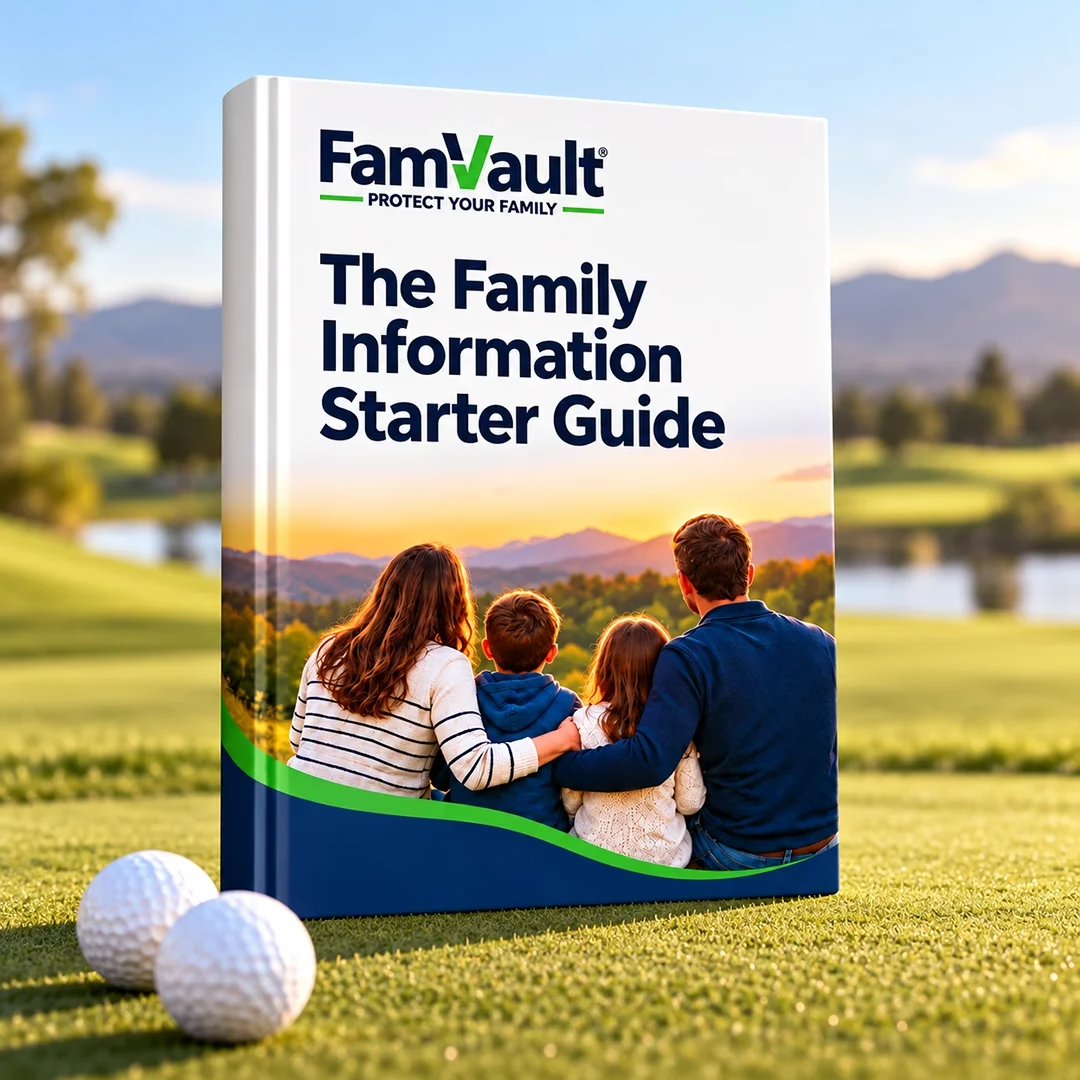
The scorecard comes inside FamVault’s free Family Information Starter Guide, along with checklists for your documents, accounts, and key contacts.

Don’t Forget About Your Life Outside the Course
For golfers, the list runs past wills and bank accounts.
Who handles your club membership? Where are the receipts for your custom-fit irons, your signed pin flags, or the deposit on next spring’s buddies golf trip? Would your family know who to call?














If you just packed the bag away using our winter gear reset, you already know where everything is. Write it down while it’s fresh.
These details seem small today. They get big fast when someone else has to manage your affairs.

How to Organize Important Family Documents in Four Steps
Getting organized doesn’t have to be overwhelming. Start here:
- Gather the paperwork. Will or trust, powers of attorney, healthcare directives, deeds, and insurance policies.
- List accounts and contacts. Include your attorney, accountant, and financial advisor.
- Pick your people. Choose the family members or trusted individuals who may need access, and tell them where to look.
- Review it every year. Update after any big life change, like retirement, a move, or selling a business.
Want a second reference? The National Institute on Aging publishes a solid checklist of documents to prepare for the future.
How FamVault Helps
FamVault gives individuals and families one secure place to organize, protect, and access important family documents and information.
Upload estate documents, financial records, emergency contacts, and personal details. Then appoint trusted users, such as family members, your attorney, or your financial advisor, so the right people can get in when it matters.
ClickitGolf readers get an exclusive 25% discount on FamVault, plus the free Family Information Starter Guide, a set of practical checklists for gathering what your family will need.
With the holidays coming, Thanksgiving dinner is a natural time to start the conversation.
You prepare for every round. Why not prepare for what matters most?
FAQ: Organizing Important Family Documents
What important family documents should I keep organized?
Start with your will or trust, powers of attorney, healthcare directives, insurance policies, account statements, deeds and titles, recent tax returns, and a list of key contacts. Golfers should add club memberships, high-value equipment, and upcoming travel bookings.
Where should I store important family documents?
Somewhere secure that the right people can reach when needed. Many families keep originals in a fireproof safe or with their attorney and keep organized digital copies in a secure vault like FamVault.
Who should have access to my important documents?
The people who would step in for you: a spouse or partner, adult children, your executor, and professionals like your attorney or financial advisor. FamVault lets you appoint trusted users so access is set before it is needed.
How often should I update my family documents?
At least once a year, and after any major life change such as retirement, marriage, divorce, a move, a new grandchild, or selling a business.
What is the Family Preparedness Scorecard?
A five-minute self-assessment from FamVault. You answer 14 yes-or-no questions on legal documents, financial records, and family readiness, then total your points for a rating from Excellent to At Risk. It is included in the free Family Information Starter Guide.
What is the FamVault Family Information Starter Guide?
A free guide from FamVault with the Family Preparedness Scorecard, practical checklists, and simple steps for identifying and gathering essential documents. Download it here.
This article is sponsored by FamVault.
Want more golf every Friday? Join 800,000+ golfers on The 19th Hole. Subscribe here.
Follow ClickitGolf on Instagram and Facebook @clickitgolf, on X @Clickit_Golf, and on TikTok @clickitgolfofficial.