Performance Lab
How to Play Golf in the Heat: Summer Tips Every Golfer Need
Heat kills your golf game before you realize it. Our PGA Pro’s guide to hydration, pacing, equipment adjustments, and mental focus in summer rounds.

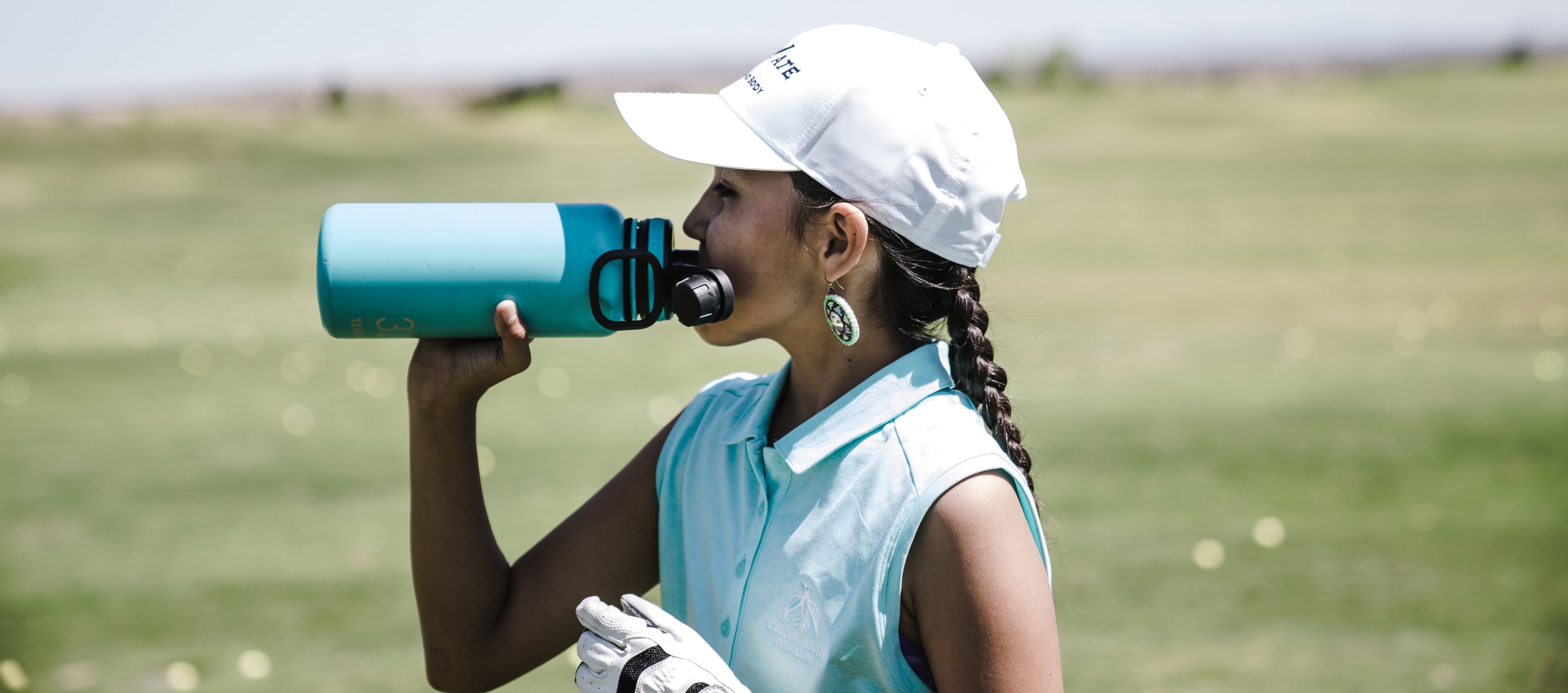
How to play golf in the heat is a decision-making exercise, not a toughness contest. On a 92-degree afternoon, the player who manages fluid, shade, pace, and yardage can protect the same swing while the rest of the group begins giving shots away by the turn. Golf in August is brutal. Here is how to keep a clear head and still post a number you will want to sign for.
Disclosure: This article contains affiliate links. If you buy through these links, Clickit Golf may earn a commission at no additional cost to you.
The problem most golfers face in summer heat
Heat takes the small things first: the glove goes slick, the cart-path walk feels longer, and the routine that normally settles you starts to feel like work. Direct sun, humidity, still air, dehydration, poor acclimatization, medications, and health conditions all raise heat-stress risk.
Tired golfers rush decisions. They skip a yardage check, attack the wrong pin, or grab a club from memory. Reduce the load early. If you feel faint, confused, seriously unwell, or are getting worse, stop, move to a cool area, and get prompt help.
How to play golf in the heat: 10 practical tips
1. Set a hydration schedule before the first tee
Drink before the round, then keep the bottle where you can reach it. CDC/NIOSH’s broad guidance for moderate activity in heat is 8 ounces every 15–20 minutes for activity lasting under two hours. For golf, take several deliberate swallows on each tee box and as you leave each green, then adjust for sweat rate, humidity, body size, and pace.
Do not wait for thirst to become the plan. Refill at the turn; steady small drinks beat trying to catch up on the 10th tee.
2. Add electrolytes when you are sweating for hours
Water remains the foundation. But a four-hour round in heavy heat can mean several hours of sustained sweating, and the CDC recommends a sports drink with balanced electrolytes in that situation. Keep one in the bag for the back nine or a long walk rather than treating it as compulsory for every casual nine.
Alternate water with an electrolyte drink. Skip alcohol and the big caffeine-and-sugar swing. If a condition or medication affects fluid or sodium intake, follow your clinician’s guidance.
3. Choose a tee time that gives your score a chance
The earliest practical tee time is usually the sharpest hot-weather play. You get lower temperatures, less cumulative sun, and greens that have not spent all afternoon baking. Late afternoon can work after the heat breaks, but check daylight before assuming the final stretch will be relaxed.
Check temperature and heat index the night before. If you have not played in real heat recently, ease in; CDC/NIOSH describes acclimatization as gradual exposure over seven to 14 days.
4. Use a cooling towel before you feel cooked
Wet the towel, wring it so it is not dripping on your shirt, and rotate it across the back of the neck, forearms, or inside of the elbows as you ride between shots. Re-wet it at a water station when the cooling sensation fades.
The FROGG TOGGS Chilly Pad Cooling Towel is the straightforward value option: its hyper-evaporative material is designed to retain water while staying dry to the touch. It will not make a dangerous day safe, but it gives you a simple cooling reset between shots.
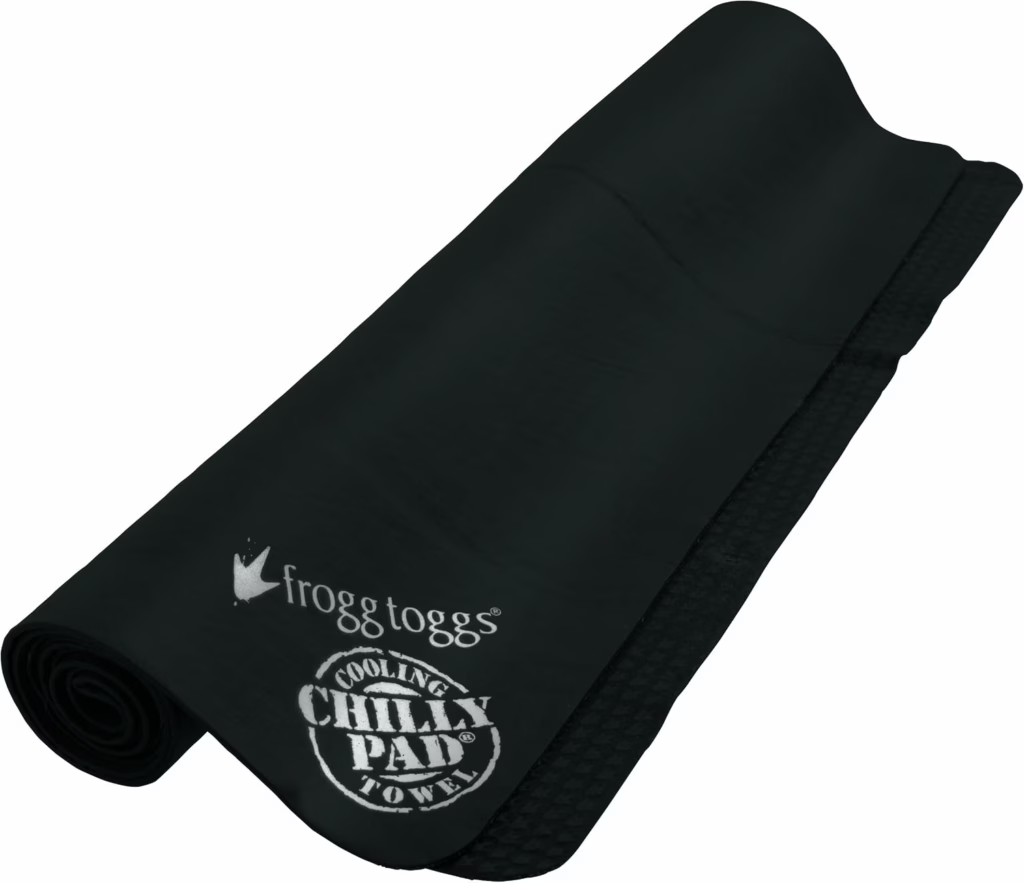
Cooling towel for playing golf in the heat, FROGG TOGGS Chilly Pad.













5. Cover your arms without feeling wrapped up
Light UV arm sleeves can make more sense than repeatedly applying sunscreen to exposed forearms. They reduce direct sun exposure, help keep sweat off the hands, and can feel comfortable once lightly damp. Test the seam position at the range first; sleeves that bind through impact are not helping.
The Aegend Sun Protection Cooling Arm Sleeves Compression are a value reference product with a stated UPF 50+ rating. Pack a neutral pair and a backup if you walk. If the compression feel bothers you, use a lightweight long-sleeve sun shirt instead.
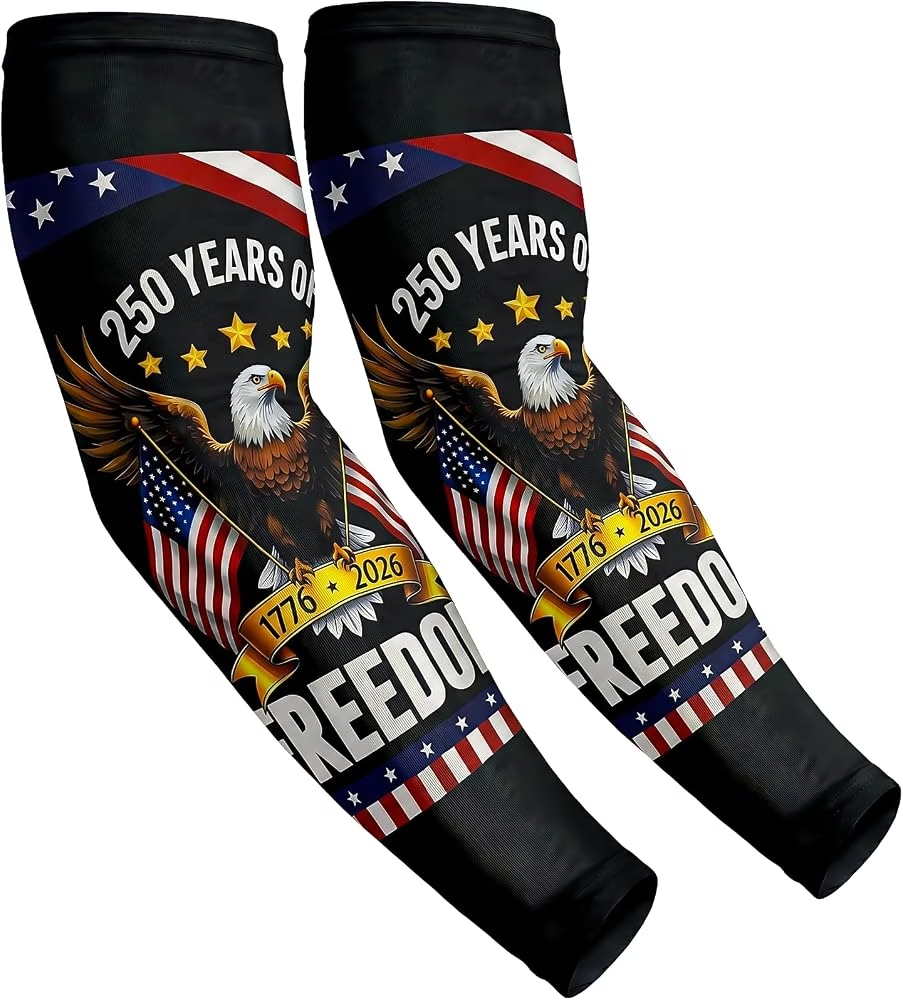
UPF arm sleeves for golf in hot weather, Aegend cooling arm sleeves.
6. Treat cart shade as course-management equipment
A cart offers recovery only if you use its shade. Park on the shaded side where practical and sit under the canopy while checking yardage or waiting. Walkers can use trees, an umbrella, and every legal pocket of shade. CDC/NIOSH recommends more rest as temperature, humidity, sunshine, and lack of air movement rise.
7. Recalibrate warm-weather yardages
Warm air is less dense than cold air, so temperature can influence ball flight. But do not announce that you get a full extra club every August. Titleist says temperature’s isolated effect is difficult to pin down; wind, firmness, elevation, ball temperature, and strike quality also matter.
Use the first three holes to audit carry numbers. When the pin sits between clubs, choose the conservative club and a controlled swing. Keep balls out of a sweltering trunk or exposed cart basket; extreme heat can affect performance.
8. Change the grip routine before sweat changes the clubface
A wet glove tempts golfers to squeeze harder. Carry two or three gloves, rotate them, and keep a small dry towel for hands and grips. Dry the hand before the glove goes back on, then make the same light-pressure grip you would make in April.
9. Shorten the pre-shot routine, not the commitment
Cut the extra waggle, second walk around the putt, and repeated yardage confirmation—not the decision itself. Get the number, choose shape and conservative miss, then step in and go. Faster helps only if you preserve clarity.
10. Recover after the last putt instead of adding more heat
Move into air conditioning or shade, keep drinking, eat a normal meal, and change out of saturated clothing. If you felt unusually wiped out, dizzy, cramped, or ill, skip the range. That recovery also helps tomorrow’s golf.
The compact hot-weather golf kit
Keep the kit compact enough that it stays in the bag. The towel is the article’s one affiliate recommendation; the bottle and sleeves are CMS product references.
Item What it does Editorial product reference CMS media file Cooling towel Provides a repeatable cooling reset FROGG TOGGS Chilly Pad Cooling Towel frogg_toggs_chilly_pad_amazon.jpg Insulated bottle Keeps planned fluids cold through the back nine Hydro Flask 32 Oz Wide Flex Chug Cap Travel Bottle hydro_flask_32oz_amazon.jpg UV sleeves Reduces direct sun exposure on the arms Aegend Sun Protection Cooling Arm Sleeves Compression aegend_arm_sleeves_amazon.jpg 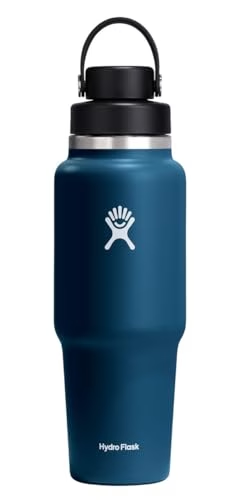
Insulated water bottle for playing golf in the heat, Hydro Flask 32-ounce travel bottle.
How to play golf in the heat without losing your focus
The direct answer: drink on a schedule, build shade and cooling breaks before you feel desperate, simplify each decision, and verify warm-weather yardages early. A normal four-hour round can become a prolonged outdoor effort, so reduce avoidable physical and mental load rather than proving you can ignore it.
The common mistake is waiting for discomfort to start the plan. The better player puts the bottle in reach, brings a towel, adjusts the tee time where possible, and lets a clear routine carry the round. That is how to play golf in the heat and still have attention left for the shots that decide your score.
Quick recap
| Before the round | During the round | After the round |
| Check the forecast; pack water, electrolyte option, towel, spare gloves, and a small snack. | Drink deliberately, use shade, manage sweat, verify yardages, and shorten the routine without rushing. | Cool down, rehydrate, eat, change clothes, and stop if you feel unwell. |
Frequently asked questions
How much water should I drink while golfing in hot weather?
Use a schedule instead of thirst alone. CDC/NIOSH’s broad guidance for moderate activity in heat is 8 ounces every 15–20 minutes for activity under two hours, but needs vary with conditions and sweat rate. For golf, steady small drinks on each hole are more practical than trying to catch up at the turn.
Do I need electrolytes for an 18-hole round?
Not always. Water is sufficient for many rounds, but a balanced electrolyte drink is sensible when you are sweating heavily for several hours. Start with water, then use electrolytes strategically through a long, hot round. Do not turn every drink into sugar or use a sports drink as permission to ignore hydration.
Do golf balls fly farther in hot weather?
Warm air is less dense than cold air, which can influence ball flight, but there is no universal summer-yardage number. Use warm-up and early-round shots to calibrate your own carry distances. Keep balls away from extreme heat too, because storage temperature can affect how consistently a ball performs.
Is it better to walk or ride when it is very hot?
Riding usually makes it easier to carry fluids and recover in cart shade, but it is not automatic protection. A prepared walker using shade, water, a towel, and a sensible pace can be better off than a rider who ignores those tools. Let conditions and how you feel decide the choice.
Can a cooling towel really help on the course?
A cooling towel cannot replace hydration, shade, or sensible scheduling. Its value is a quick, repeatable cooling cue between shots. Wet it, wring it, place it on the neck or forearms, and re-wet it as needed. Use the towel as support equipment, not as a reason to stay out when you feel ill.
When should I stop playing because of heat?
Stop immediately if you feel faint, confused, seriously unwell, or symptoms are worsening; move into a cool place and seek prompt assistance. Do not finish a hole because you are one up, playing well, or do not want to hold up the group. Health matters more than a completed scorecard.
Continue your ball-fitting work
As you test warm-weather carry numbers, use our guide to the best golf ball by swing speed to keep fit decisions anchored in your real delivery. Players in that range can also compare the best golf balls for 95–105 mph swing speed before changing models.
Want more golf tips every Friday? Join over 400,000 golfers — subscribe to The 19th Hole Newsletter → clickitgolf.com/newsletter
Follow ClickitGolf on social for practical course-management ideas, tested gear intelligence, and summer-round advice that holds up on the 16th tee.
References
[1] CDC/NIOSH, “Workplace Recommendations: Heat Stress”
[2] CDC/NIOSH, “Heat Stress and Workers”
[3] FROGG TOGGS Chilly Pad product listing
[4] Aegend Sun Protection Cooling Arm Sleeves product listing
[5] Titleist Learning Lab, “Temperature and Golf Ball Performance”