Performance Lab
How to Practice Golf at Home: 10 Drills You Can Do Without a Course
The Golf Hacker’s 10 best drills for how to practice golf at home — no course needed. From putting mats to mirror drills, get better between rounds.

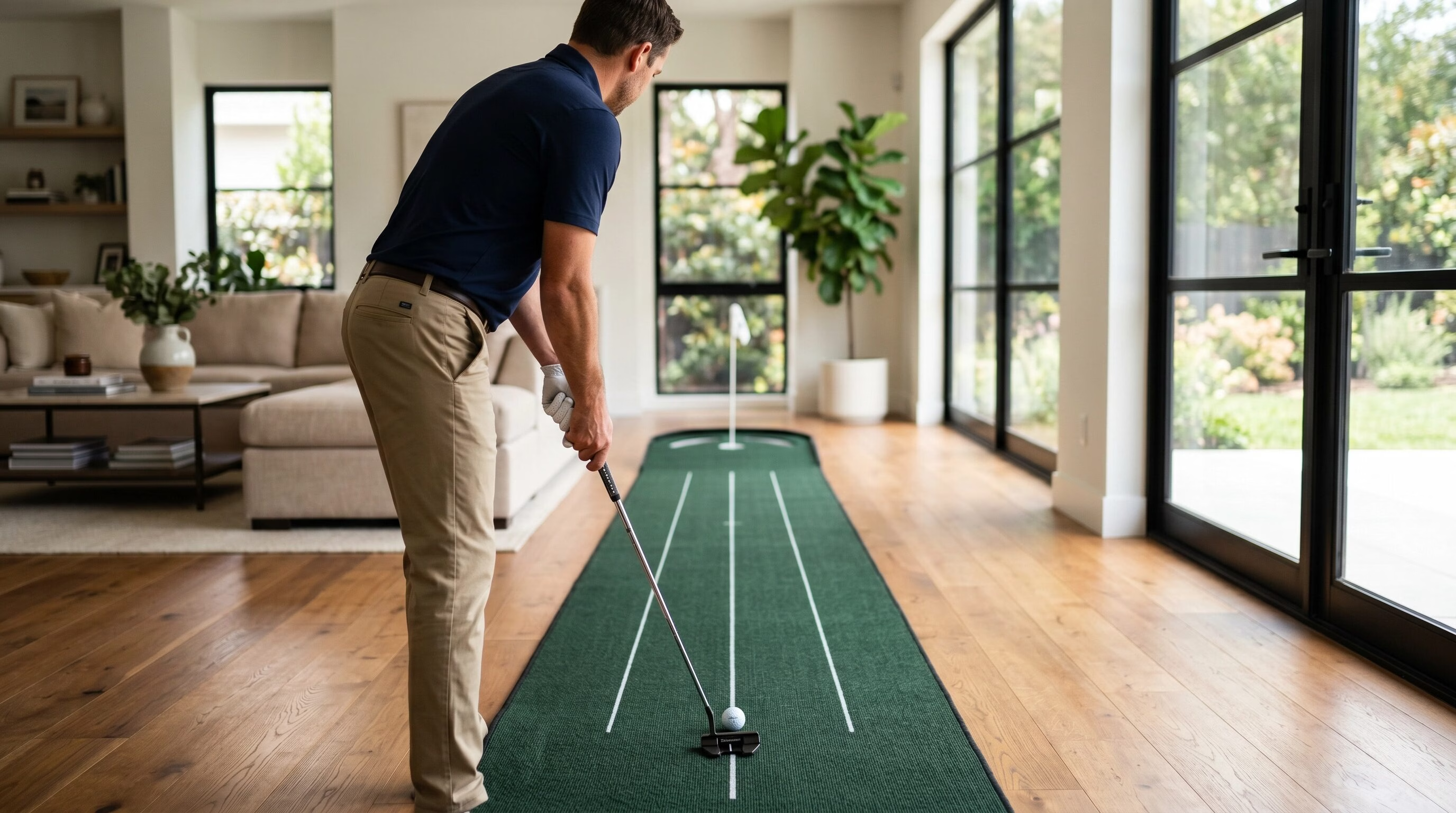
If you’re anything like me, you love the game passionately, but sometimes you just don’t have the time to get to the course. That’s why figuring out how to practice golf at home is the ultimate game-changer for the weekend hacker. I’ve lost three balls on the first hole more times than I care to admit, but the secret to getting better isn’t just grinding it out on the range — it’s what you do in your living room, garage, or backyard between rounds. The pros don’t stop working when they leave the course. Neither should you.
Disclosure: This article contains affiliate links. If you buy through these links, ClickitGolf may earn a commission at no additional cost to you.
Quick Picks: Essential At-Home Practice Gear
| Product | Best For | Lab Score |
| Perfect Practice Putting Mat | Putting Drills | 9.2/10 |
| Rukket Pop-Up Golf Net | Full Swings | 8.9/10 |
| SKLZ Gold Flex | Swing Tempo | 9.0/10 |
| Garmin Approach R10 | Launch Monitor | 8.8/10 |
| PuttOut Pressure Putt Trainer | Putting Precision | 9.5/10 |
| GoSports Foam Golf Balls | Indoor Practice | 8.5/10 |
| Orange Whip Trainer | Swing Mechanics | 9.3/10 |
| Callaway Chip-Shot Net | Chipping Practice | 8.7/10 |
| EyeLine Golf Putting Mirror | Alignment | 9.1/10 |
How We Chose These Products
I’ve tested countless gadgets in my living room, garage, and backyard over the years. The gear recommended here has survived my errant swings and actually helped me stop three-putting (most of the time). We evaluated each product on three criteria: durability under real-world use, ease of setup (because if it takes 15 minutes to assemble, you’ll never use it), and measurable impact on your game. This isn’t stuff that looks good in a catalog. It’s the gear that a weekend hacker can actually use to shave strokes off their scorecard without needing a country club membership.
Product Cards
1. Perfect Practice Putting Mat
Summary: The gold standard for indoor putting practice, featuring a continuous ball return and alignment tracks that keep your stroke honest.
Why It Works:
•The auto ball return keeps you in a rhythm without constantly fetching the ball.
•Printed alignment lines give you instant feedback on your path and face angle.
•The slight uphill incline at the far end forces you to hit a firm, committed putt.
Tradeoffs:
•Takes up a decent amount of floor space — measure before you buy.
•The wood finish can get scratched if you’re careless with your putter.
Who It’s For: Anyone who is three-putting more than twice a round and wants to build a consistent stroke at home.
Who Should Skip: Golfers with very limited indoor space or those who prefer a more compact solution.
Lab Score: 9.2/10
2. Mumpprce Pop-Up Golf Net
Summary: A heavy-duty, portable hitting net that can handle full driver swings in your backyard or garage without flinching.
Why It Works:
•Extremely durable netting material that holds up to repeated full-swing contact.
•The pop-up design means you can have it ready to hit in under two minutes.
•The large catching area reduces the fear of shanking one through the drywall.
Tradeoffs:
•Folding it back up can be tricky the first few times — watch the included video.
•Needs to be anchored securely if used outside in any kind of wind.
Who It’s For: Golfers who want to hit real balls at home and have a garage or backyard with adequate space.
Who Should Skip: Apartment dwellers or anyone without a space at least 10 feet deep.
Lab Score: 8.9/10
3. SKLZ Gold Flex
Summary: A weighted swing trainer designed to improve tempo, strength, and flexibility through the feeling of exaggerated lag.
Why It Works:
•Forces you to feel what a proper lag position actually is.
•Excellent for pre-round warmups when you can’t hit balls.
•Smooths out a jerky, rushed transition at the top of the backswing.
Tradeoffs:
•Doesn’t provide any clubface awareness feedback.
•The weight can feel heavy for players with limited upper body strength.
Who It’s For: Golfers fighting a quick, out-of-sync swing who need to feel the correct sequence.
Who Should Skip: Players who are strictly looking for impact and ball-flight feedback.
Lab Score: 9.0/10
4. Garmin Approach R10
Summary: A portable, relatively affordable launch monitor that pairs with your smartphone to deliver real data from your home net sessions.
Why It Works:
•Provides club path, face angle, ball speed, and launch angle data.
•Includes a virtual simulator for playing home courses on your phone.
•Compact enough to throw in your bag and take to the range.
Tradeoffs:
•Requires a minimum distance behind the ball to read shots accurately.
•Indoor spin numbers can occasionally be finicky without ideal lighting.
Who It’s For: Data-driven golfers building a serious home net setup who want to know what their swing is actually doing.
Who Should Skip: Golfers on a tight budget who just want to swing without data.
Lab Score: 8.8/10














5. PuttOut Pressure Putt Trainer
Summary: A scientifically shaped target that rejects bad putts and holds the perfect putt in its micro-target — brutally honest feedback in a compact package.
Why It Works:
•Teaches perfect pace by only accepting a putt that would finish 18 inches past the hole.
•Highly addictive — you’ll find yourself doing “just one more” for 30 minutes.
•Folds flat to fit in your golf bag for on-course warmups.
Tradeoffs:
•Can be frustratingly difficult at first, which is the whole point.
•Works best on a proper putting mat rather than thick carpet.
Who It’s For: Golfers who struggle with distance control and need a training tool that doesn’t lie to them.
Who Should Skip: Those looking for a full mat setup with a ball return.
Lab Score: 9.5/10
6. GoSports Foam Golf Balls
Summary: Dense foam balls that mimic real ball flight without the risk of property damage — the essential tool for any indoor practice session.
Why It Works:
•Completely safe for indoor use, even around windows and flat-screen TVs.
•Provide enough directional feedback to tell you if you hit a slice or a hook.
•Highly durable and won’t leave marks on walls or floors.
Tradeoffs:
•The feel off the clubface is noticeably different from a real golf ball.
•Wind affects them significantly outdoors, limiting their usefulness outside.
Who It’s For: Indoor chippers and anyone practicing with a net who wants a safe alternative to real balls.
Who Should Skip: Purists who demand authentic ball-flight feedback — use a launch monitor with real balls for that.
Lab Score: 8.5/10
7. Orange Whip Trainer
Summary: The original flexible shaft swing trainer designed to help you find your natural swing rhythm and build a more athletic, balanced motion.
Why It Works:
•Forces you to swing in balance — any lunge or sway and the weighted ball throws you off.
•Doubles as a core and flexibility workout.
•Provides immediate feedback if your tempo is rushed or out of sequence.
Tradeoffs:
•Premium price tag for what is essentially a training aid.
•The full-length version can be challenging to swing in low-ceiling spaces.
Who It’s For: Golfers looking to build a fluid, athletic swing with better balance and tempo.
Who Should Skip: Budget-conscious buyers — the SKLZ Gold Flex delivers similar benefits at a lower price point.
Lab Score: 9.3/10
8. Callaway Chip-Shot Net
Summary: A collapsible chipping net with multiple target pockets that makes backyard and indoor short game practice genuinely fun.
Why It Works:
•Three distinct targets force you to vary your trajectory and landing zone.
•Pops up in seconds and folds flat for easy storage.
•Works perfectly with foam balls for indoor use.
Tradeoffs:
•Lightweight design means it can blow over easily outside in the wind.
•The smaller size means errant chips will miss the net entirely — which is actually good feedback.
Who It’s For: Golfers looking to sharpen their short game at home without needing a full practice green.
Who Should Skip: Beginners who need a larger backstop while they develop basic contact.
Lab Score: 8.7/10
9. EyeLine Golf Putting Mirror
Summary: A simple acrylic mirror that ensures your eyes and shoulders are perfectly aligned over the ball — used by countless touring professionals.
Why It Works:
•Provides instant visual feedback on your setup and eye position.
•Includes slots for tees to create a built-in putter gate drill.
•Lightweight and easy to use on any flat surface.
Tradeoffs:
•Needs to be used on a flat, hard surface for accurate feedback.
•The acrylic surface can get scratched if stored loosely in your bag.
Who It’s For: Anyone whose putting setup drifts over time and needs a reliable reference point to reset their fundamentals.
Who Should Skip: Golfers who have already confirmed their eye position is consistently correct.
Lab Score: 9.1/10
Buying Guide: How to Build Your At-Home Practice Setup
When you are figuring out how to practice golf at home, you need to be realistic about two things: your space and your biggest weakness on the course.
Assess your space first. If you live in a small apartment, a 10-foot putting mat and a full-swing net aren’t going to coexist peacefully with your furniture. Focus on small, portable aids like the PuttOut trainer or the EyeLine putting mirror. If you have a garage with high ceilings, you can start looking at nets, hitting mats, and even a launch monitor.
Identify your biggest weakness. If you are three-putting three times a round, spend your money on a premium putting mat and the PuttOut trainer. If you are slicing the driver out of bounds on the first hole (speaking from personal experience), invest in a swing trainer like the Orange Whip or a net to hit foam balls into while working on your path.
Prioritize ease of use above everything else. If a training aid takes 15 minutes to set up, you will use it exactly once. The best at-home golf gear is the stuff you can leave set up or deploy in under 60 seconds. Friction is the enemy of consistent practice.
Why Practicing Golf at Home Actually Works
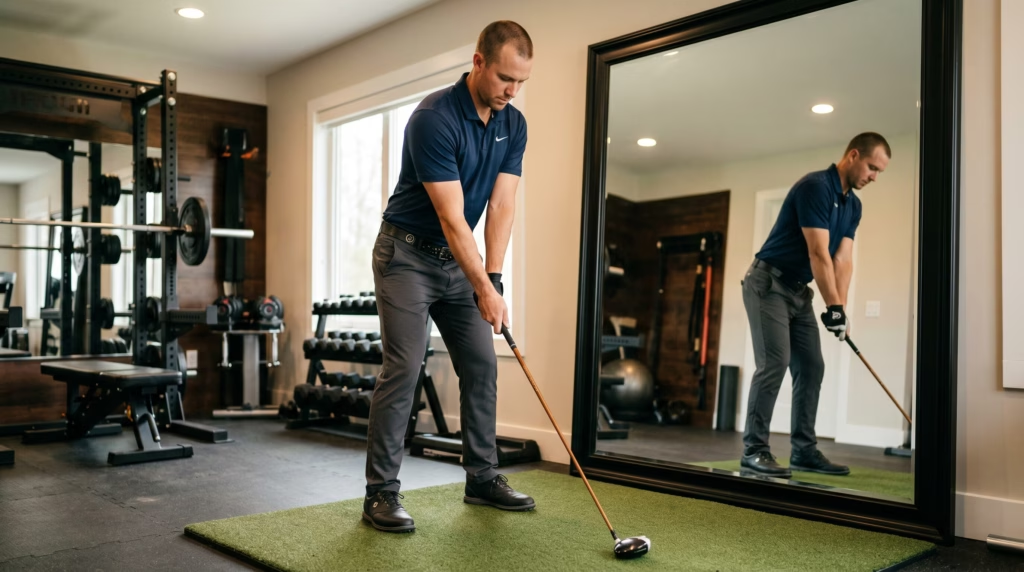
golfer practicing golf swing in front of mirror at home
Look, I get it. Hitting balls into a net in your garage isn’t the same as watching your drive soar over a fairway bunker on a crisp Saturday morning. But here’s the secret that most weekend hackers miss: practicing golf at home is about repetition and muscle memory, not ball flight. It’s about doing the boring stuff — grip, posture, alignment — so you don’t have to think about it on the first tee.
When you are standing over a crucial 4-footer to save bogey, you don’t want to be consciously thinking about your eye position or your putter path. You want those fundamentals ingrained from hours of quiet, focused work on the living room rug. Research consistently shows that motor skills are developed through repetition, and those reps don’t care whether you’re on a championship putting green or a carpet in your den.
How to Practice Golf at Home: Setup (What You Need)
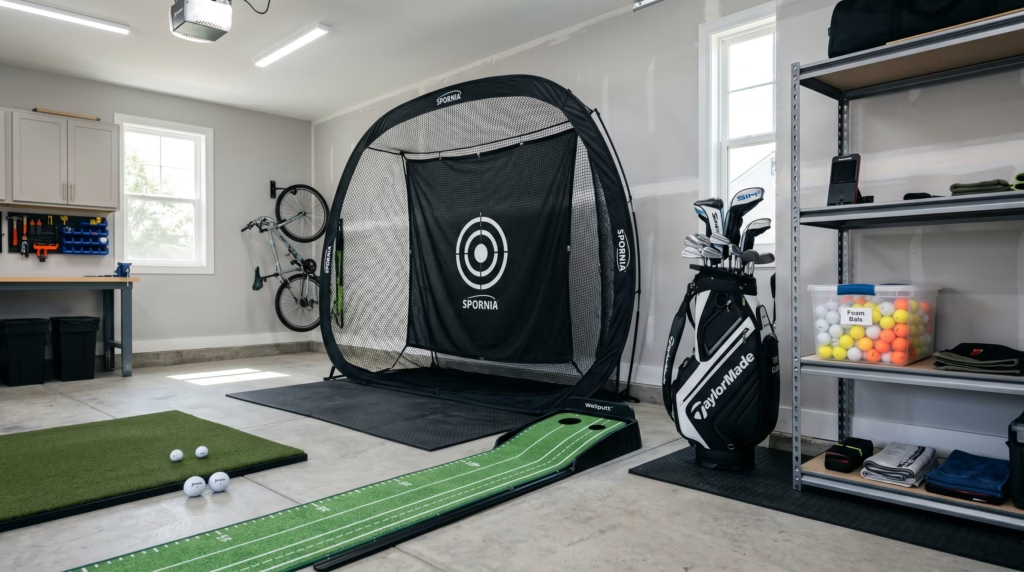
home golf practice setup with hitting net and putting mat in garage
You don’t need a $50,000 simulator to get meaningfully better. You need a mirror, a piece of carpet (or a dedicated putting mat), and maybe a pop-up net if you have a backyard or garage. The key is setting up a space where you can leave your gear out and accessible. If you have to spend 20 minutes assembling a net before you can take a single swing, you are never going to use it consistently. Make it frictionless. Leave the putter on the mat. Leave the foam balls in a basket by the net. The easier it is to start, the more often you will.
How to Practice Golf at Home: Putting Drills (Drills 1–3)
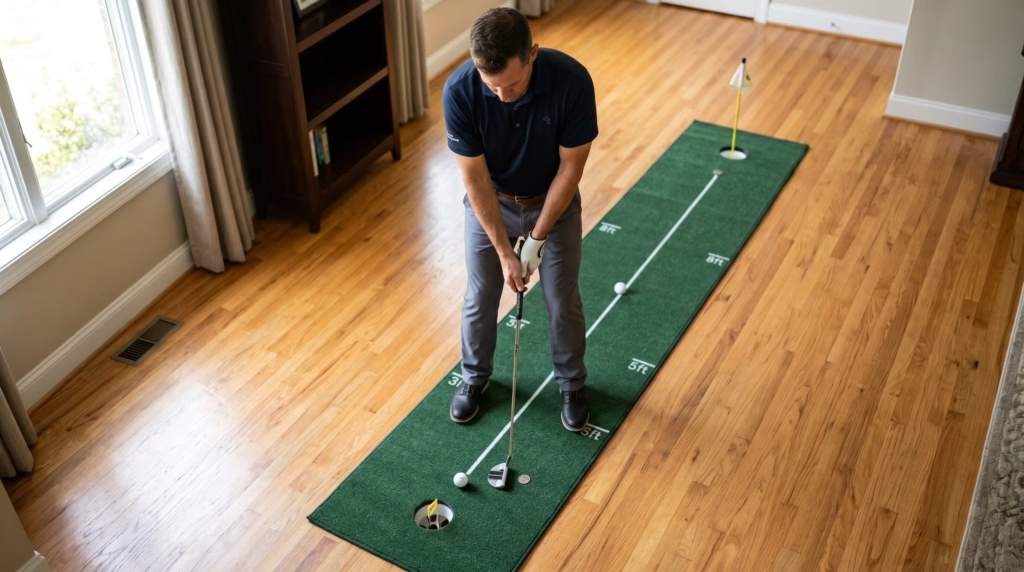
putting drill with coin on indoor putting mat
Drill 1: The Coin Drill
Place a quarter on your putting mat or carpet, about three feet from a target. Putt a ball directly over the coin. The goal here isn’t to hole a putt — it’s to start the ball on your intended line. If the ball rolls cleanly over the coin, your face was square at impact. If it misses left or right, your face was open or closed. Simple, free, and brutally effective.
Drill 2: The Gate Drill
Set up two heavy books (or coffee mugs) just slightly wider than your putter head, creating a gate. Practice making strokes without clipping either object. This enforces a square, on-path stroke. If you clip a mug, your path is wandering. Do this for five minutes a day and your stroke will tighten up noticeably within a week.
Drill 3: The Metronome Drill
Download a free metronome app on your phone. Set it to 70–80 BPM. Practice syncing your backstroke to the first beat and your through-stroke to the second. This builds a smooth, repeatable tempo, which is the single biggest factor in distance control. Inconsistent tempo is the real reason most golfers three-putt.
How to Practice Golf at Home: Chipping Drills (Drills 4–6)
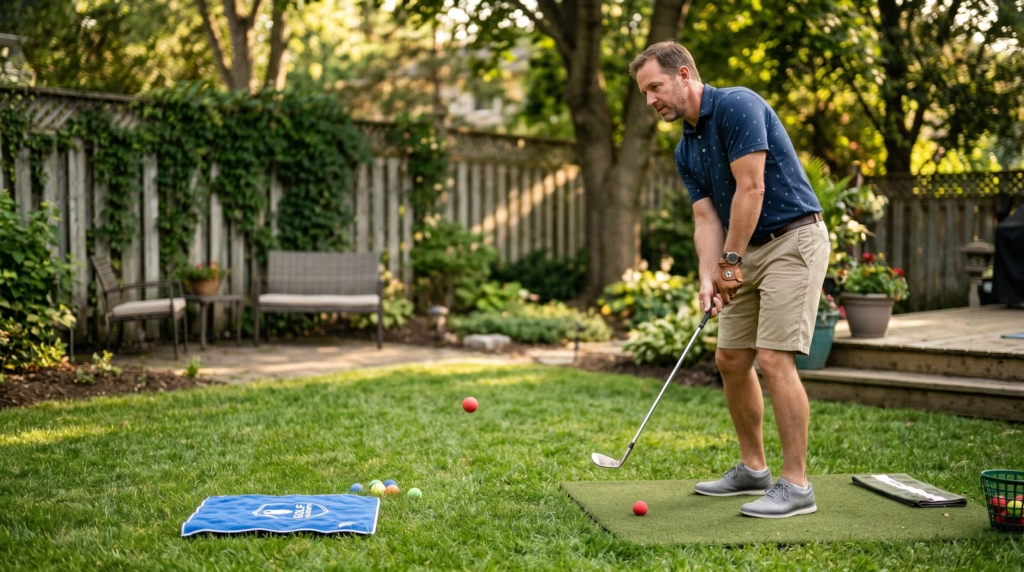
golfer practicing chipping drill in backyard with towel landing zone
Drill 4: The Towel Landing Zone
Toss a towel on the floor or lawn across the room (use foam balls for this indoors, please — your spouse will thank you). Practice trying to land the ball directly on the towel. This shifts your focus from the hole to the landing spot, which is exactly how the best short-game players in the world think. Pick a landing spot, commit to it, and let the ball run out.
Drill 5: The Wall Drill
Stand with your backside about an inch from a wall. Make your chipping motion. If your backside touches the wall, you’re swaying backward instead of rotating. A proper chipping motion keeps your weight forward and your body rotating around a stable spine. This eliminates the dreaded chunked chip that comes from hanging back and flipping at the ball.
Drill 6: The Coin Pinch
Place a coin on the carpet. Try to “pinch” the coin with the leading edge of your wedge, making a descending, crisp contact. This trains you to hit down on the ball rather than scooping it. Scooping is the enemy of consistent chipping. Pinching is the solution.
How to Practice Golf at Home: Swing Drills (Drills 7–9)
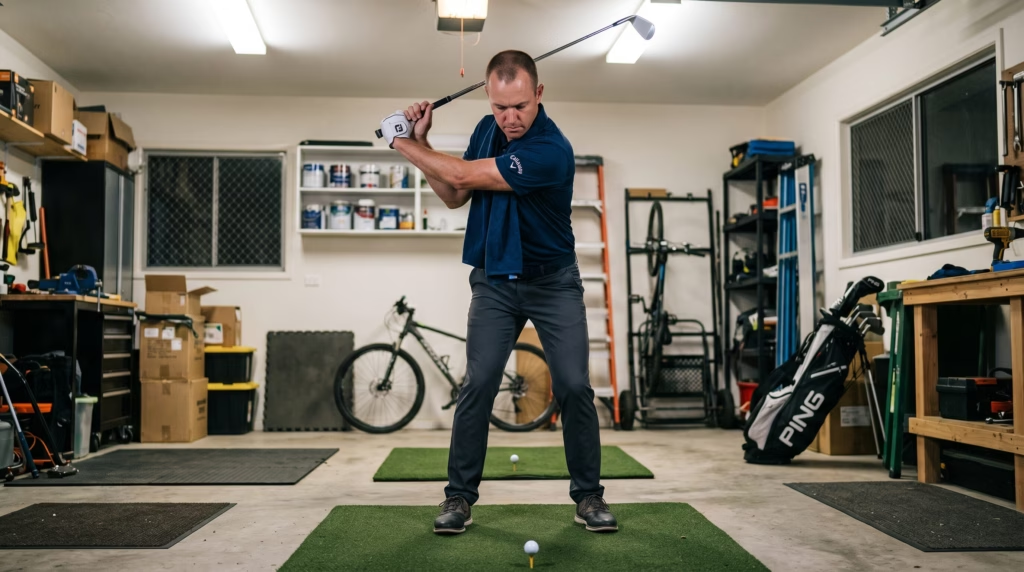
golfer performing swing drill in garage with towel under arms
Drill 7: The Mirror Check
Stand in front of a full-length mirror. Practice your setup, focusing on your grip, posture, and alignment. Check your position at the top of the backswing and at impact. The mirror never lies about your posture. Most golfers are shocked by how different their actual setup looks compared to what they feel they are doing. This is the cheapest and most effective swing drill in existence.
Drill 8: The Towel Under the Arms
Place a small towel across your chest, tucked firmly under both armpits. Make half-swings without dropping the towel. This keeps your arms connected to your body rotation and stops you from getting “handsy” — the root cause of most inconsistent ball-striking. If the towel drops, your arms are disconnecting from your turn.
Drill 9: The Slow-Motion Swing
Take your 7-iron and make a swing that takes a full 60 seconds from address to finish. This sounds simple. It is not. Slowing your swing down to this pace exposes every flaw, balance issue, and hitch in your mechanics. It also forces you to feel each position consciously, which accelerates the process of making those positions automatic.
How to Practice Golf at Home: The Mental Game (Drill 10)
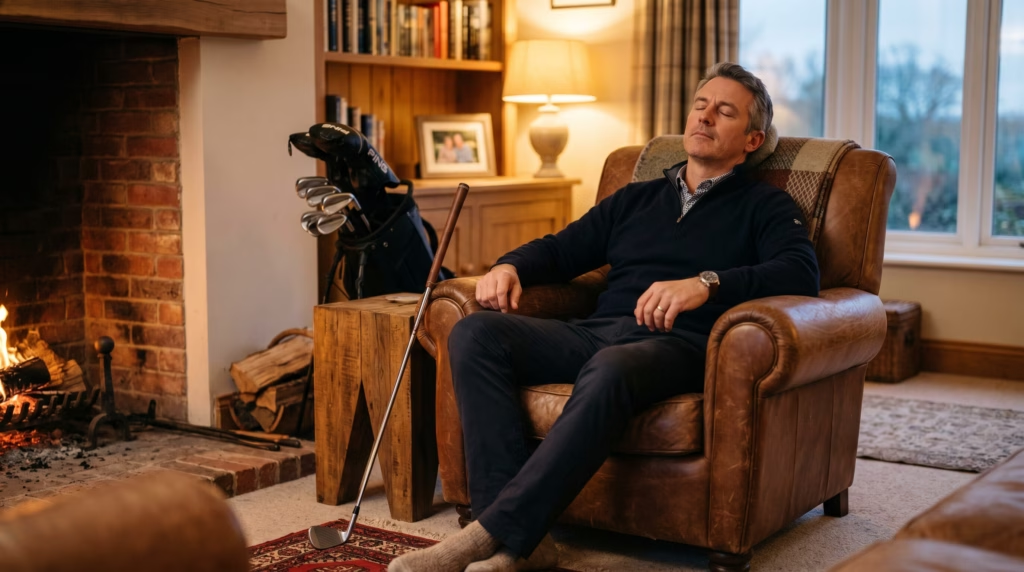
golfer visualizing golf shots at home in armchair
Drill 10: Visualization and Routine
Sit in your favorite chair, close your eyes, and play your favorite course in your head — shot by shot, hole by hole. Visualize every shot in detail: the flight, the bounce, the roll. Include your full pre-shot routine. It sounds a little out there, but mental reps genuinely count. Your brain processes vividly imagined motor sequences in ways that are remarkably similar to actual physical practice. Tour pros have used visualization as a core part of their preparation for decades. You can do it from your couch.
Building Your At-Home Practice Routine
Don’t try to do all 10 drills in one day. That’s a great way to burn out and abandon the whole thing by Thursday. Instead, pick two putting drills and one swing drill. Spend 15 minutes a day. Rotate through the drills across the week so you’re touching every part of your game. Consistency beats marathon sessions every single time.
The Golf Hacker way is about finding a way to get it done, no matter what. You don’t need perfect conditions. You need a putter, a mat, and 15 minutes. That’s how to practice golf at home — and that’s how you show up on Saturday ready to actually play instead of just hoping for the best.
FAQ Section
Can I really improve my golf swing at home without hitting balls?
Absolutely. Repetition of proper mechanics — grip, posture, alignment, tempo — without the pressure of ball flight is incredibly effective. The mirror drill and slow-motion swing drill alone can transform your setup.
Do I need to hit real golf balls for at-home practice?
Not at all. Foam balls or wiffle balls are ideal for indoor chipping and net practice. Save the real balls for when you have a launch monitor or are outdoors.
What is the best indoor putting mat for home practice?
The Perfect Practice mat is our top recommendation for its ball return and alignment aids, but the PuttOut trainer is the best value for pure stroke improvement.
How much space do I need for an indoor hitting net?
You need enough room to swing your longest club safely without hitting anything. A space roughly 10 feet wide, 10 feet tall, and 10 feet deep is the minimum for a driver swing.
Is a launch monitor worth it for home practice?
If you have the budget, yes. Even an affordable option like the Garmin Approach R10 provides valuable feedback on club path and face angle that you simply cannot get from hitting into a net blindly.
How often should I practice at home?
Fifteen to twenty minutes a day, three to four times a week, is the sweet spot. Short, consistent sessions beat long, irregular ones every time.
Final Recommendation
Stop making excuses about not having time for the course. Grab a putting mat, clear some space in the garage, and start putting in the reps. The golfer who practices how to practice golf at home with intention and consistency is the one who shows up on Saturday with a tighter stroke, a more repeatable swing, and a lot less embarrassment on the first hole. Trust me — I’ve been that guy on the first tee, and I’ve been the guy who put in the work at home. The difference is real.
Related Reading
•The 5 Fundamentals Golf Swing Basics You Must Know
•How to Stop Three-Putting: 7 Drills That Actually Work
•How to Read Greens Like a Pro: Complete Guide
•The Ultimate Spring Golf Checklist: 10 Things to Do Right Now