Competitive Edge
How to Read Greens Like a Pro: Complete Guide
Want to drain more putts? Learn how to read greens like a pro with this step-by-step guide covering slope, grain, speed, and the 3-point routine.

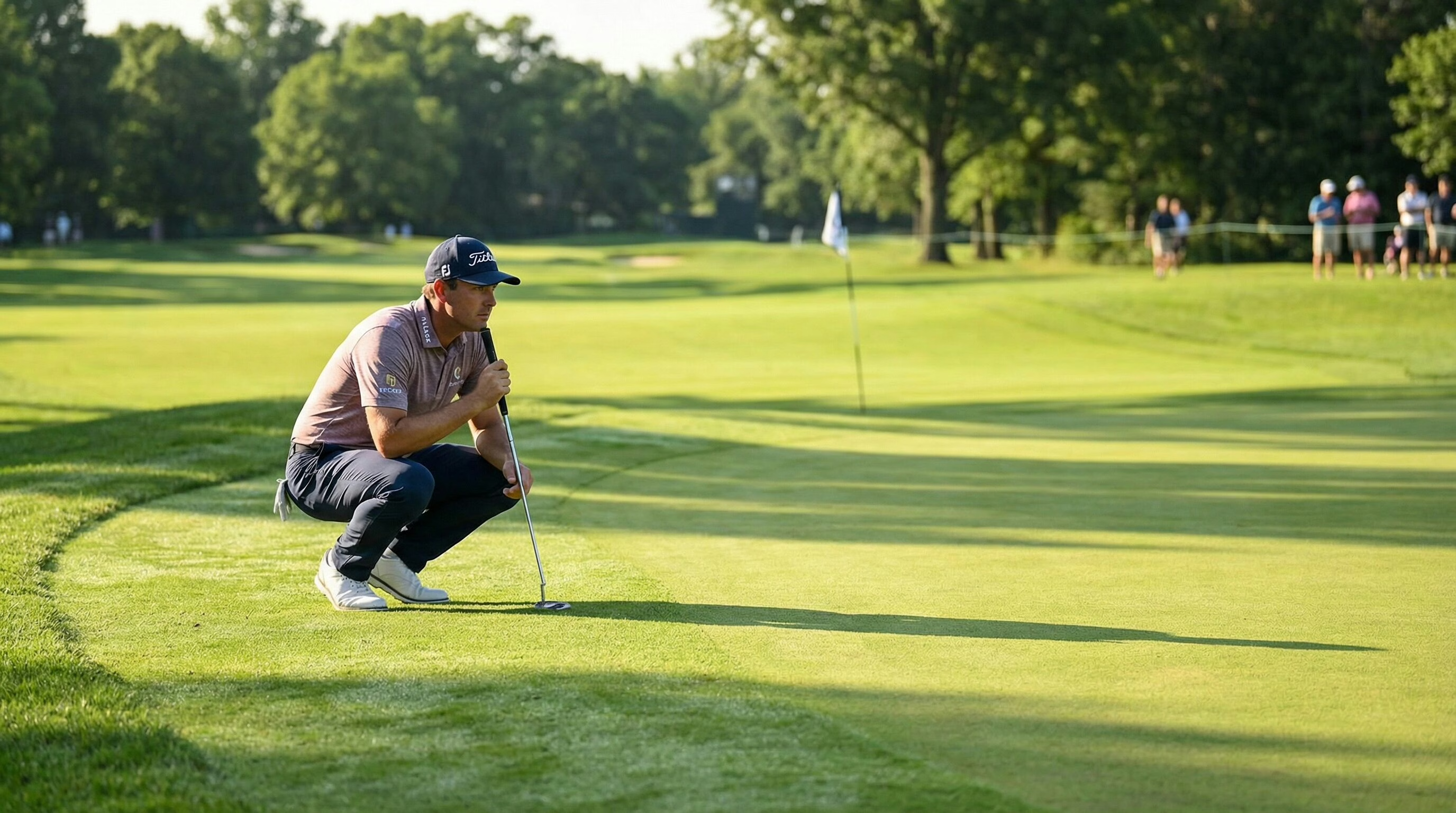
If you want to stop giving away strokes on the putting surface, you need to learn how to read greens like a pro. As the Resident PGA Pro here at ClickitGolf, I see it every single day on the lesson tee: golfers with perfectly functional putting strokes who simply cannot figure out where the ball is going to go. They hit a great putt, watch it miss by two feet, and immediately blame their mechanics. The truth? Their stroke was fine. Their read was terrible.
Reading greens is not a mystical art form reserved for Tour players and caddies who have walked the same course for twenty years. It is a systematic process of gathering information and applying it to the putt in front of you. In this guide, I am going to walk you through the exact framework I teach my students. We will cover how to identify slope, how to factor in grain, how to adjust for green speed, and how to build a repeatable routine that you can trust under pressure.
Why Reading Greens Is the #1 Skill Most Golfers Ignore
Most amateur golfers spend hours on the practice green working on their stroke mechanics. They buy new putters, change their grip, and obsess over their alignment. But when it comes to reading greens, their entire process consists of standing behind the ball for three seconds, guessing that it breaks “a little left,” and hitting it.
This is a massive mistake. You can have the most fundamentally sound putting stroke in the world, but if you are aiming at the wrong target, you are going to miss. Reading greens is the foundation of good putting. It dictates your aim point, which in turn dictates the speed you need to hit the putt. If your read is wrong, your speed will be wrong, and your stroke will have to compensate.
When you learn how to read greens correctly, you eliminate the guesswork. You step over the ball with conviction, knowing exactly what the putt is going to do. This confidence frees up your stroke, allowing you to make a smooth, aggressive pass at the ball. If you want to lower your scores, stop worrying about your stroke and start focusing on your reads. And if three-putting is a recurring problem, check out Stop Wasting Strokes: 5 Simple Drills to Kill the Dreaded 3-Putt for a direct complement to what you are about to learn.
How to Read Greens: Start with the Big Picture
The biggest mistake I see amateurs make when reading greens is getting tunnel vision. They walk straight to their ball, stare at the three feet of grass between their ball and the hole, and try to figure out the break.
To read greens like a pro, you have to start with the big picture. Your read should begin before you even step onto the putting surface. As you are walking up to the green, take a look at the surrounding terrain. Where is the high point? Where is the low point? Water always flows to the lowest point, and your golf ball will do the same.
Look for obvious features like hills, mounds, or bodies of water. If there is a large hill on the right side of the green and a pond on the left, you can bet that the general slope of the green is going to be from right to left. This macro-level read gives you a baseline expectation for what the putt should do. Once you have the big picture, you can start zooming in on the specific details of your putt.

How to Read Greens: Identifying Slope and Break
Once you have a general sense of the green’s overall tilt, it is time to identify the specific slope and break of your putt. The most effective way to do this is to look at the putt from multiple angles.
Start by standing behind your ball, looking down the line toward the hole. This is your primary read. Look for the high side and the low side of the putt. If the right side of the putt looks higher than the left side, the putt is going to break from right to left.
Next, walk to the low side of the putt — the side the ball will break toward — and look at the putt from the side. This angle gives you the best perspective on the severity of the slope. Is it a gentle, sweeping break, or a sharp, severe break?
Finally, walk behind the hole and look back toward your ball. This reverse angle often reveals subtle slopes that you might have missed from behind the ball. By combining the information from these three angles, you can build a complete mental picture of the putt’s slope and break.
Angle What It Reveals Behind the ball Overall break direction (high side vs. low side) Low side of the putt Severity of the slope Behind the hole Subtle secondary slopes and final break 
How to Read Greens: Reading the Grain
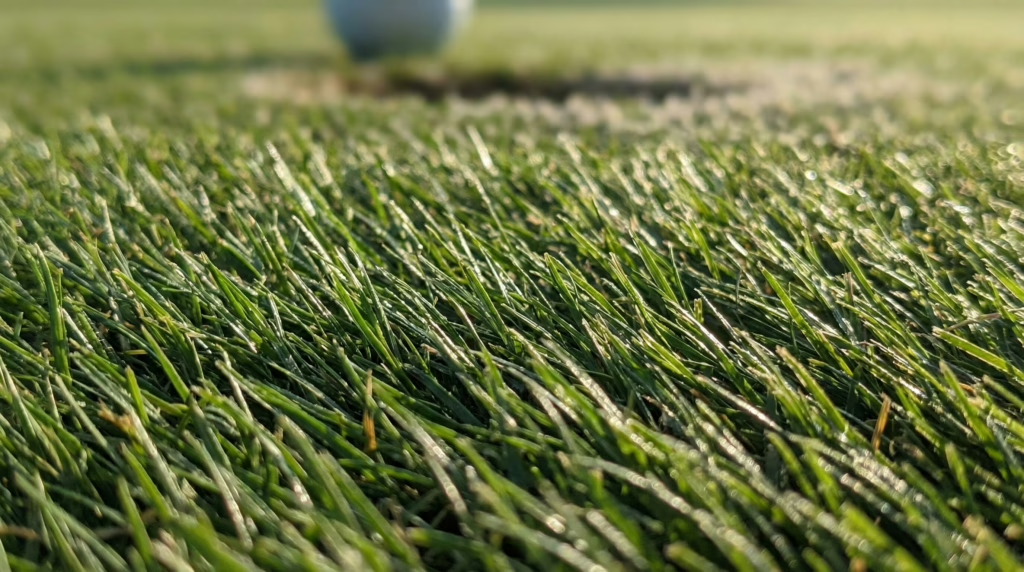
If you play golf in the southern United States or in tropical climates, you have to factor grain into your reads. Grain refers to the direction that the blades of grass are growing. Bermuda grass, in particular, has a very strong grain that can significantly affect the speed and break of your putts.
There are a few simple ways to read the grain. First, look at the color of the grass. If the grass looks shiny and light green, you are putting down-grain (with the grain). The ball will roll faster and break less. If the grass looks dark and dull, you are putting into the grain. The ball will roll slower and break more.
You can also look at the cup itself. The side of the cup where the grass looks ragged or worn down is the direction the grain is growing. If the ragged edge is on the left side of the cup, the grain is growing from right to left, and your putt will break more in that direction.














Finally, pay attention to the late afternoon sun. The grass will naturally grow toward the setting sun. Factoring grain into your reads takes practice, but it is an essential skill if you want to putt well on Bermuda greens.
How to Read Greens: Adjusting for Green Speed
Your read is only as good as your speed control. The speed at which you hit the putt dictates how much it will break. A putt hit firmly will hold its line and break less, while a putt hit softly will take more of the break.
When reading greens, you have to decide what speed you are going to hit the putt before you finalize your read. I teach my students to visualize the ball dying into the hole — entering the cup at a speed where it would only roll a few inches past if it missed. This “die speed” maximizes the effective size of the hole and ensures that you will not have a stressful comebacker if you miss.
Once you have committed to a speed, you can finalize your read. If you are putting downhill, the ball will be rolling slower as it approaches the hole, meaning it will take more of the break. You need to aim higher and play more break on downhill putts. Conversely, on uphill putts, the ball will be rolling faster, so it will take less break. Aim closer to the hole and play less break.
Putt Type Ball Speed at Hole Break to Play Downhill Slow More break — aim higher Uphill Fast Less break — aim closer to hole Flat Consistent Standard break Downhill + Grain Very slow Maximum break — aim well above hole 
How to Read Greens: The 3-Point Check Routine
To consistently read greens well, you need a repeatable routine. I recommend the 3-Point Check Routine. It is simple, efficient, and ensures that you gather all the necessary information without overcomplicating the process.
Point 1: The Macro Read. As you walk up to the green, identify the high point and the low point. Get a general sense of the overall tilt of the green. This takes five seconds and requires zero extra time because you should be doing it while your playing partners are hitting.
Point 2: The Apex. Stand behind your ball and identify the apex of the break — the highest point on the curve that the ball will travel. This is your aim point. Visualize the path the ball will take from your putter face, through the apex, and into the hole. The apex is not the hole. It is the point above the hole where the ball will begin to curve downward. Aim your putter face at the apex, not the hole.
Point 3: The Speed Check. Walk to the low side of the putt and assess the slope to determine your speed. Visualize the ball rolling along your intended line and dying into the hole.
Once you have completed the 3-Point Check, step over the ball, align your putter face to your apex, and make a confident stroke. Trust your read and accept the result. This routine is the same framework used by elite tour caddies. It works because it is systematic, not because it is complicated.
How to Read Greens Faster Without Slowing Down Play
One of the biggest complaints about modern golf is the pace of play, and overly deliberate green reading is a major culprit. You do not need to spend five minutes stalking a putt like a tour pro to get a good read. In fact, over-reading a putt often leads to second-guessing and tension. For a broader look at keeping things moving on the course, The Etiquette Guide Every Golfer Needs (But Nobody Teaches) covers pace of play in detail.
You can read greens faster without sacrificing accuracy by doing your work while others are playing. While your playing partners are hitting their approach shots or lining up their putts, you should be doing your macro read and identifying the general slope. By the time it is your turn to putt, you should already have a good idea of what the putt is going to do.
All that is left is to step behind the ball, identify your apex, and execute your 3-Point Check. A good green reading routine should take no more than 15 to 20 seconds. Be decisive, trust your instincts, and hit the putt.
Reading greens is a skill that requires practice and observation. The next time you are on the practice green, don’t just hit putts aimlessly. Pick a hole with some slope, go through the 3-Point Check Routine, and see how accurately you can predict the break. With time and repetition, you will learn how to read greens like a pro, and you will start draining more putts. Pair this skill with the fundamentals covered in The 5 Golf Fundamentals That Never Go Out of Style and you will have the complete package. And if you are heading into a new season, The Ultimate Spring Golf Checklist: 10 Things to Do Right Now is the perfect place to make sure your entire game is dialed in.
Practice your putting at home and learn about speed and control
Frequently Asked Questions
Q: How do I read a putt that has multiple breaks?
A: Focus on the last six feet before the hole. That is where the ball is traveling at its slowest, and where the break has the most influence. Read the final section first, then work backward to determine your starting line.
Q: Should I read from behind the ball or behind the hole?
A: Both. Start behind the ball for your primary read, then check from behind the hole for a secondary confirmation. The low-side view gives you the best sense of slope severity.
Q: How does rain affect green reading?
A: Wet greens are slower and the ball will break less. Grain has almost no effect on wet greens. Play less break and hit the putt more firmly than you normally would.
Q: What is the “fall line” and how do I use it?
A: The fall line is the straight uphill or downhill line through the hole. Any putt that starts on the fall line will not break. Any putt that starts to the left or right of the fall line will break toward the fall line. Finding the fall line first simplifies every other read on that green.
Q: How do I know if I am misreading greens or misexecuting my stroke?
A: Record your putts on video. If the ball starts on your intended line but misses the hole, your read was off. If the ball starts off your intended line, your stroke is the issue.
Q: Does the time of day affect how greens read?
A: Yes. Greens are typically slower in the morning due to dew and faster in the afternoon after they have dried out and been mowed. Grain also becomes more pronounced as the day goes on and the grass grows.
Related Reading
•Stop Wasting Strokes: 5 Simple Drills to Kill the Dreaded 3-Putt
•The 5 Golf Fundamentals That Never Go Out of Style
•The Ultimate Spring Golf Checklist: 10 Things to Do Right Now
•The Etiquette Guide Every Golfer Needs (But Nobody Teaches)