Performance Lab
How to Stop Three-Putting: 7 Drills That Actually Work
The Resident PGA Pro shares 7 proven drills to show you how to stop three-putting for good, covering distance control, green reading, and your pre-putt routine.


If you want to know how to stop three-putting, you first have to understand the pain of the dreaded three-putt. You hit a beautiful drive down the middle of the fairway. You stick your approach shot to 35 feet. You’re feeling great, thinking about a birdie, and then — disaster strikes. You blast the first putt eight feet past the hole, miss the comebacker, and walk off the green with a bogey that feels like a double. It’s the ultimate momentum killer. As a PGA Professional, I see amateurs throw away countless strokes on the greens every single week. The good news? You don’t need a perfect stroke to eliminate three-putts. You just need a better system. Today, I’m giving you the exact instruction you’d get in a $200 lesson, completely free. We’re going to cover the real reasons you’re struggling and the seven drills that will actually fix the problem.
Why Three-Putts Happen (It’s Not What You Think)
Most amateur golfers believe they three-putt because they can’t read greens or because their stroke is flawed. While those things certainly matter, they aren’t the primary culprits. The reality is that the vast majority of three-putts happen because of poor distance control. If you leave a 40-foot putt three feet short, you have a very high percentage chance of making the next one. If you leave it eight feet short — or blast it eight feet past — your chances plummet.
The second major issue is a lack of center-face contact. Just like with your driver or irons, hitting the ball off the toe or heel of the putter drastically reduces ball speed. You might make the perfect read and take the perfect length stroke, but if you mishit the putt, it’s going to come up woefully short. To stop three-putting, we have to fix your speed control and your strike — and the seven drills below address both.

How to Stop Three-Putting: Fix Your Speed Control First
Before we even look at a hole, we need to calibrate your speed. When you get to the practice green before a round, ignore the cups entirely. Drop three balls and putt toward the fringe. Your goal is to get the ball to stop as close to the edge of the fringe as possible without rolling into the longer grass.
This drill removes the pressure of “making” a putt and forces your brain to focus entirely on feel and distance. Do this from 10, 20, and 30 feet. Once you can consistently lag the ball to the fringe, you’ve calibrated your internal speedometer for the day’s green speeds. This is the single most impactful thing you can do before a round, and almost nobody does it.
How to Stop Three-Putting: The 3-Foot Circle Drill
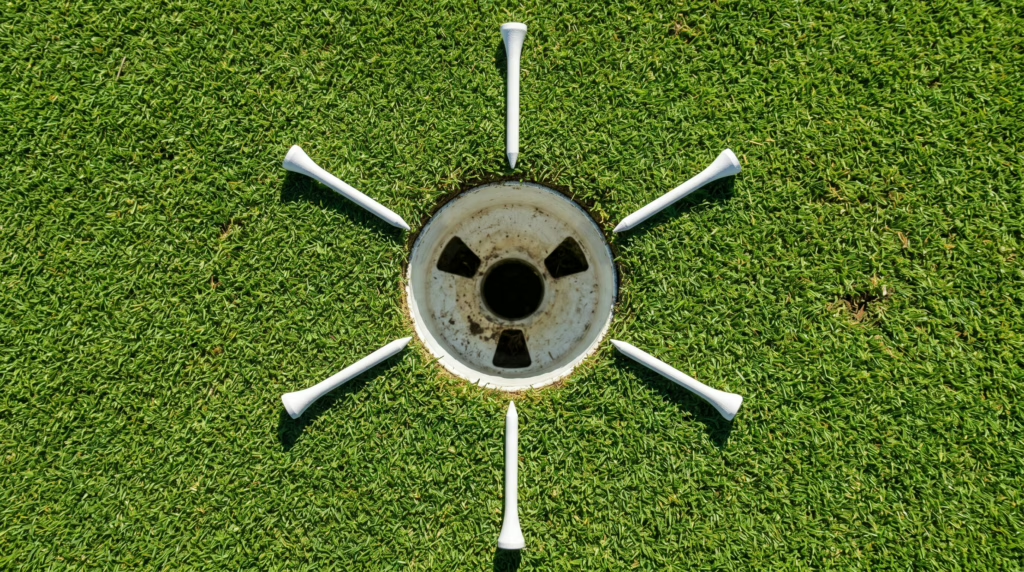
This is a classic for a reason. If you want to eliminate three-putts, you have to become automatic from inside three feet. Take six tees and place them in a circle around a hole, each exactly three feet away.
Start at one tee and work your way around the circle. The rule is simple but brutal: if you miss one, you have to start over. You cannot leave the practice green until you make all six in a row. This drill builds confidence under pressure. When you face a three-footer on the course to save par, it will feel routine because you’ve already made dozens of them in practice under the pressure of starting over.
How to Stop Three-Putting: The Gate Drill
Remember what I said about center-face contact? The Gate Drill is how we fix it. Find a straight, flat putt of about five feet. Place your putter head behind the ball, and push two tees into the green — one just outside the toe of the putter, and one just outside the heel.
Now, hit putts through the “gate.” If your stroke is erratic, your putter will clip one of the tees. This drill forces you to deliver the putter square and strike the ball out of the center of the face. Better strikes equal predictable distance, and predictable distance eliminates three-putts. This drill works equally well on a practice mat at home with a ruler or two pencils as the gate.

How to Stop Three-Putting: The Ladder Drill
The Ladder Drill is the ultimate test of distance control. Place a tee at 10 feet, 20 feet, 30 feet, and 40 feet from a hole. Start at the 10-foot tee and hit a putt. Your goal is to leave it within a three-foot circle of the hole. If you succeed, move back to the 20-foot tee.
If you fail at any distance, you have to start over at 10 feet. This drill simulates the varying lengths of lag putts you’ll face on the course and forces you to adjust your stroke length and tempo accordingly. Most golfers are shocked to discover how dramatically they need to change their stroke to cover 40 feet versus 10 feet. The Ladder Drill makes that adjustment automatic.
How to Stop Three-Putting: The Pre-Putt Routine
A consistent pre-putt routine is non-negotiable for eliminating three-putts. Watch any PGA Tour player, and you’ll see they execute the exact same sequence before every single putt. A routine calms your nerves, focuses your mind, and triggers your body to execute the stroke without overthinking.














Your routine doesn’t have to be complicated. A simple, effective sequence looks like this: read the putt from behind the ball, take two practice strokes while looking at the hole to feel the distance, step in, align the putter face to your intended start line, look at the hole one final time, and pull the trigger. Whatever your routine is, do it every time — on the practice green and on the course. Consistency in process leads to consistency in performance.

How to Stop Three-Putting: The Look-at-the-Hole Drill
If you struggle with distance control, try hitting putts while looking at the hole instead of the ball. This will feel strange at first, but it works wonders for your feel. When you throw a ball to a friend, you don’t look at your hand — you look at your target. Your brain naturally calculates the distance and tells your arm how hard to throw. Putting works the same way.
By looking at the hole during the stroke, you free up your athletic instincts and let your brain dictate the speed rather than your mechanical mind. Spend 10 minutes on this drill before your next round and you’ll be surprised how much more natural your lag putting feels.
How to Stop Three-Putting: 7 Quick-Win Tips
Beyond the drills above, here are seven quick adjustments you can make immediately to start reducing your three-putt count.
Tip What It Fixes Aim for a 3-foot circle, not the hole Reframes lag putting as a zone target, not a make-or-miss Slow down your backstroke Prevents deceleration through the ball Keep your head still until the ball is gone Eliminates the “peek” that pushes putts off line Grip the putter lighter Improves feel and reduces tension in the hands Read every putt from the low side Gives you the truest view of the break Calibrate on the practice green before every round Adjusts your speed to that day’s green conditions Practice short putts under pressure The 3-Foot Circle Drill makes tap-ins automatic
Common Mistakes
The biggest mistake amateurs make when trying to stop three-putting is focusing too much on mechanics and not enough on feel. Putting is an art, not a science. If you are standing over a 40-foot putt thinking about your wrist angle or your takeaway path, you are going to hit a terrible putt.
Another common error is practicing the wrong distances. Banging 15-footers on the practice green for an hour won’t help you on the course. You need to practice lag putting (30-plus feet) and short putts (inside five feet). Those are the two distances that dictate whether you two-putt or three-putt. Everything in between will take care of itself.
Quick Recap
To stop three-putting, you must prioritize distance control over line. Calibrate your speed before the round using the Fringe Drill, ensure center-face contact using the Gate Drill, and make short putts automatic with the 3-Foot Circle Drill. Build a consistent pre-putt routine, and stop obsessing over mechanics when you’re on the course. Trust your feel, commit to the process, and the three-putts will disappear.
FAQ: How to Stop Three Putting
How many putts per round is considered good?
For a mid-handicap amateur, averaging 32 to 34 putts per round is a solid benchmark. PGA Tour professionals average around 29 putts per round. If you’re averaging more than 36, distance control should be your immediate priority.
Should I look at the ball or the hole when putting?
Traditionally, you look at the back of the ball at address. However, looking at the hole during practice — or even on the course for lag putts — can significantly improve your distance control and feel by engaging your natural athletic instincts.
Why do I always leave my long putts short?
This is almost always caused by a decelerating stroke or a mishit off the toe or heel of the putter. Make sure you are accelerating through the ball and striking it from the center of the putter face. The Gate Drill will help you fix this immediately.
Is it better to be long or short on a putt?
On long lag putts, it doesn’t matter as long as you are within a three-foot circle. On shorter putts, it is generally better to be slightly past the hole, as a putt left short has a 0% chance of going in. The old saying “never up, never in” applies from inside 10 feet.
How long should my pre-putt routine take?
A good routine should take no more than 15 to 20 seconds once it is your turn to play. Be decisive, trust your read, and hit the putt. Paralysis by analysis is one of the leading causes of missed putts at every level.
What is the single most important fundamental in putting?
Speed control. You can misread a putt by a foot, but if your speed is perfect, you’ll have a tap-in. If you read it perfectly but hit it 10 feet past, you’re in serious trouble. Distance control is the foundation of great putting.
Related reading:
•How to Read Greens Like a Pro: A Step-by-Step Guide
•The 5 Fundamentals Golf Swing Basics You Must Know
•The Ultimate Spring Golf Checklist: 10 Things to Do Right Now