Gear Intelligence
Best Golf Drivers for High Handicappers 2026: Tested & Ranked
We tested the best golf drivers for high handicappers in 2026. Here are the 7 most forgiving options ranked by distance, forgiveness, and value.

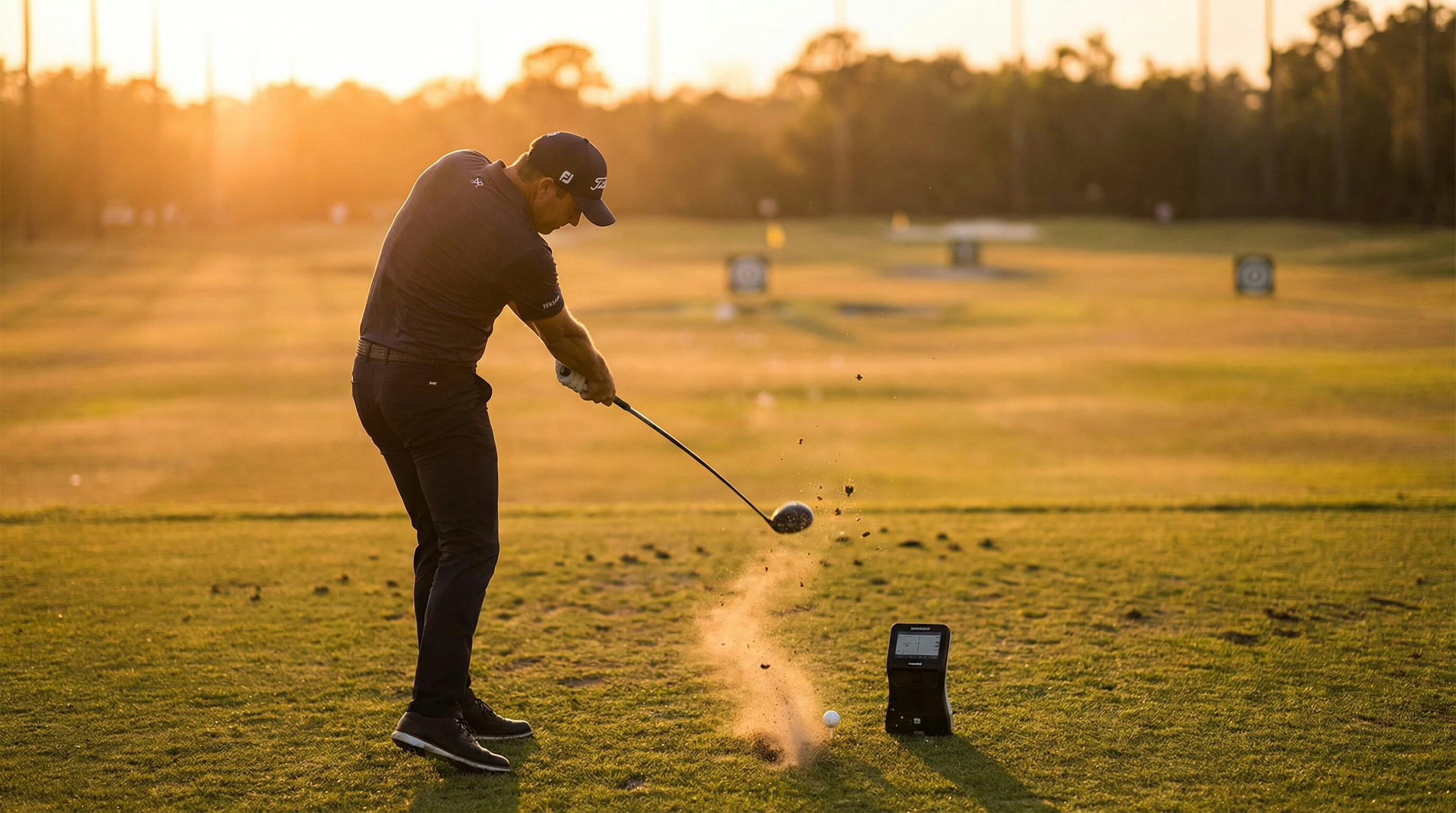
Finding the best golf drivers for high handicappers isn’t about chasing the absolute longest drive on a launch monitor — it’s about finding the club that keeps you in play when your swing inevitably falls apart. I’m Gillmore, and I test golf equipment for a living. Every year, manufacturers roll out a new batch of drivers with fancy acronyms, space-age materials, and promises of 15 extra yards. My job is to cut through the marketing BS and tell you what actually works.
If you’re shooting in the 90s or 100s, you don’t need a tour-level driver that punishes you for missing the center of the face by a millimeter. You need a driver that acts like a safety net — maximum forgiveness, a massive sweet spot, and technology that actively fights your slice.
After putting the entire 2026 driver class through the wringer, I can confidently say that the gap between the best and the rest has widened. Here is the no-nonsense guide to the drivers that will actually help you shoot lower scores this year.
What Makes the Best Golf Drivers for High Handicappers?
Before you drop $650 on a new big stick, you need to understand what you’re actually paying for. The best golf drivers for high handicappers all share four critical design elements. If a driver doesn’t deliver on these, it doesn’t belong in your bag.
Forgiveness (MOI)
You’ll hear the term MOI — Moment of Inertia — thrown around constantly. In plain English, MOI measures how much the clubhead twists when you hit the ball off the toe or the heel. A higher MOI means the club stays more stable on bad swings. For 2026, the benchmark for maximum forgiveness is the 10K MOI threshold. If you struggle with consistency, you want a driver that pushes this limit hard.
Large Sweet Spot
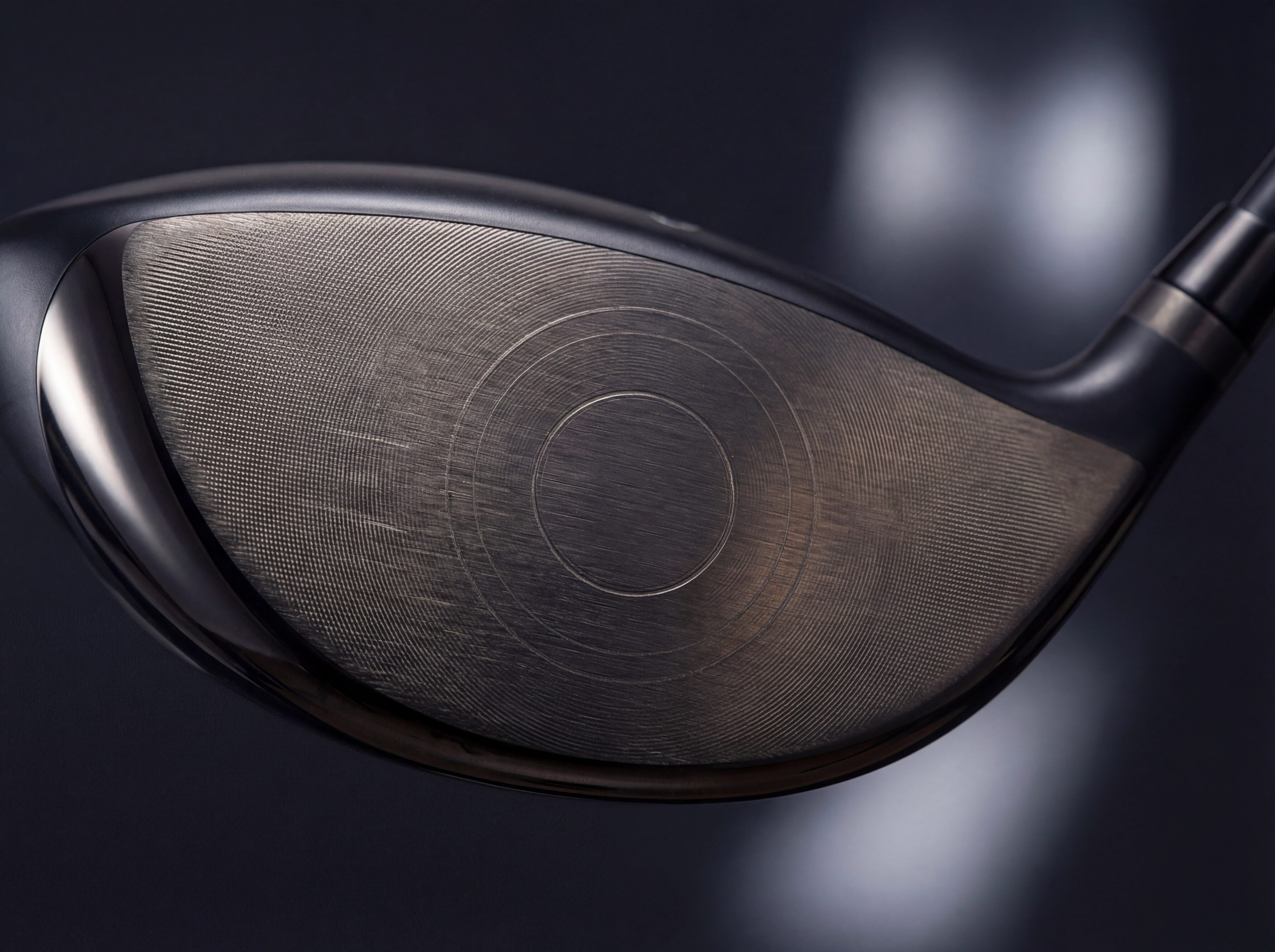
Modern drivers are all 460cc (the maximum legal size), but they don’t all have the same effective sweet spot. High-handicap drivers use variable face thickness and AI-designed face mapping to expand the area that delivers maximum ball speed. When you miss the dead center — and you will — a large sweet spot ensures the ball still gets out there instead of nose-diving into the rough.
Draw Bias
Let’s be honest: the vast majority of high handicappers fight a slice. A slice is caused by an open clubface relative to your swing path at impact. Draw-biased drivers feature internal weighting concentrated in the heel of the club. This extra weight helps the toe rotate faster through the hitting zone, making it easier to square the face and turn that weak slice into a playable fade — or even a straight ball.
Low Spin
While high handicappers generally need some spin to keep the ball airborne, excessive side-spin is the enemy of distance and accuracy. When you come across the ball with an open face, you impart massive amounts of destructive side-spin. Drivers designed with optimized spin profiles help neutralize that, resulting in straighter, more penetrating ball flights that find more fairways.
Best Golf Drivers for High Handicappers 2026: Our Top 7 Picks
We put the 2026 driver class through rigorous on-course and launch monitor testing. Here are the 7 models that genuinely deliver on their promises of forgiveness and distance for the everyday golfer.
Driver Best For Swing Speed Price PING G440 K Overall top pick 85–105 mph $1,083 TaylorMade Qi4D Max Accuracy & consistency 80–95 mph $649 Callaway Quantum Max D Slice fighters 75–90 mph $649 Cobra OPTM Max-K Tightest dispersion 85–100 mph $599 Wilson Dynapwr Max+ High launch, slower speeds 70–85 mph $499 PXG Lightning Max 10K+ Reliable fairway finder 80–95 mph $599 Tour Edge Exotics Max Best overall value All speeds $499
1. PING G440 K Driver
PING has always been the king of forgiveness, and the G440 K is their magnum opus. Replacing the legendary G430 Max 10K, this driver introduces a new 32-gram adjustable back weight that makes it incredibly stable on heel and toe strikes alike. It’s not the flashiest driver on the rack, but it is undeniably the straightest.
•Best for: Moderate to fast swing speeds (85–105 mph)
•What we love: Unmatched stability on off-center strikes; the ball simply wants to go straight, even when you don’t deserve it.
•One drawback: The new blue colorway on the crown won’t appeal to every traditionalist.
•Price range: ~$1,083
2. TaylorMade Qi4D Max Driver
TaylorMade’s Qi4D Max is a massive, confidence-inspiring driver that looks like it can’t miss. They’ve significantly improved the sound and feel from the previous generation, replacing the firm, dull thud with a powerful, satisfying crack. The large, rounded footprint frames the ball beautifully and delivers rock-solid high-MOI performance with impressively tight spin readings.
•Best for: Moderate swing speeds (80–95 mph)
•What we love: The oversized footprint at address makes you feel like you can swing out of your shoes without missing the face.
•One drawback: Performance gains over the previous Qi10 Max are incremental rather than transformative.
•Price range: ~$649
3. Callaway Quantum Max D Driver
If your slice is destroying your scorecard, this is your weapon. The Quantum Max D features aggressive internal heel weighting that actively fights the right miss. Despite the heavy draw bias, it retains incredible ball speeds thanks to Callaway’s new Tri-Force Face and AI-optimized face mapping technology. It is arguably the most effective slice-killer on the market this year.













•Best for: Slower to moderate swing speeds (75–90 mph) who battle a severe slice.
•What we love: The internal weighting and face design work together to close the face — no matter how hard you try to leave it open.
•One drawback: The grey accents look a bit cheap compared to Callaway’s premium Triple Diamond models.
•Price range: ~$649
4. Cobra OPTM Max-K Driver
Cobra is claiming the OPTM Max-K is the most stable driver in golf, boasting a combined three-axis MOI of 13K. In our testing, the dispersion was the tightest of any driver in this group. It features a premium aesthetic with subtle red accents, sits perfectly square at address, and the FutureFit 33 hosel gives you extensive loft and lie adjustability to dial in your setup.
•Best for: Moderate to fast swing speeds (85–100 mph)
•What we love: Exceptional resistance to twisting; off-center hits feel remarkably solid and stay on line.
•One drawback: Ball speed is marginally slower than the PING or Callaway on dead-center strikes — a small but real trade-off.
•Price range: ~$599
5. Wilson Dynapwr Max+ Driver
Wilson is quietly making some of the best value equipment in golf, and the Dynapwr Max+ is their first true entry into the super high-MOI category. It features a massive 26g flippable rear weight that lets you dial in your preferred shot shape, and the AI-driven PKR-360 face technology optimizes ball speed across the entire face. It is incredibly easy to launch high into the air.
•Best for: Slower swing speeds (70–85 mph) who need help with launch and carry distance.
•What we love: The difference in feel between a well-struck and an off-center strike is minimal — exactly what a high handicapper needs.
•One drawback: The alignment aid and heel strip visuals are a bit busy and can be distracting at address.
•Price range: ~$499
6. PXG Lightning Max 10K+ Driver
PXG built the Lightning Max 10K+ specifically to deliver maximum stability without sacrificing distance. It retains the signature matte black and carbon fiber look that PXG is known for, and the head shape is pleasantly modern and powerful-looking at address. It is a highly reliable, high-launch driver that keeps you in the short grass with impressive consistency.
•Best for: Moderate swing speeds (80–95 mph)
•What we love: Incredible ball speed retention on off-center hits; mishits genuinely feel like center strikes.
•One drawback: The feel at impact is a bit hollow and “clicky” compared to its rivals — a divisive characteristic.
•Price range: ~$599
7. Tour Edge Exotics Max Driver
Tour Edge continues to punch well above its weight class. The Exotics Max delivers 10K MOI forgiveness and an 18g sliding weight for customization, all while coming in $150 cheaper than the big three brands. It’s a workhorse driver that simply performs, and the improved feel and acoustics over the previous E725 model make it a genuine upgrade.
•Best for: All swing speeds looking for maximum value without sacrificing performance.
•What we love: Premium forgiveness and adjustability at a price point that leaves money in your pocket for a lesson.
•One drawback: The branding and logo design lack the premium shelf appeal of competitors.
•Price range: ~$499
Best Golf Drivers for High Handicappers: Best Budget Pick Under $300
Tour Edge Hot Launch E525
If you refuse to spend $500+ on a golf club, I respect that completely. The Tour Edge Hot Launch E525 is the undisputed king of the budget category, coming in right around $250. It doesn’t have the carbon fiber crowns or sliding weights of the premium models, but it has exactly what a high handicapper needs: a massive footprint, extreme heel weighting to fight a slice, and a shallow face that makes it incredibly easy to launch. It proves you don’t need to take out a second mortgage to find a fairway.
Best Golf Drivers for High Handicappers: Best Premium Pick
Titleist GT2 Driver
Titleist used to be known exclusively as a brand for scratch golfers and tour pros. The GT2 shatters that reputation. While it carries a premium price tag of $649, it justifies the cost with exquisite feel, classic clean aesthetics, and a proprietary Matrix Polymer crown that pushes weight low and back for maximum forgiveness. It is the most user-friendly driver Titleist has ever made. If you want a driver that looks like a traditional player’s club but packs the hidden forgiveness of a game-improvement model, the GT2 is the ultimate premium choice.

How We Tested the Best Golf Drivers for High Handicappers
At ClickitGolf, we don’t just read press releases and regurgitate marketing claims. We put these clubs in the hands of actual golfers.
Our testing protocol for high-handicap drivers focuses heavily on off-center performance. We use Foresight GC3 launch monitors to track ball speed, launch angle, spin rates, and dispersion. But more importantly, we intentionally hit balls off the toe and the heel to see how each club reacts. A driver that goes 280 yards when struck perfectly but snap-hooks into the woods on a bad swing is useless to a 20-handicap.
We evaluate each driver based on its ability to retain ball speed on mishits, its effectiveness at reducing slice spin, and how easy it is to get the ball airborne. The drivers that made this list are the ones that consistently turned disastrous swings into playable results. That’s the only metric that matters for this category.
Best Golf Drivers for High Handicappers: FAQs
Should a high handicapper use a 9-degree or 10.5-degree driver?
Almost universally, high handicappers should opt for 10.5 degrees of loft or higher — even 12 degrees is a legitimate choice. More loft increases backspin, which helps keep the ball airborne longer for slower swing speeds. More critically, higher loft reduces the effect of side-spin, meaning a 10.5-degree driver will slice significantly less than a 9-degree driver with the same swing.
Can a new driver actually fix my slice?
A driver cannot fix a fundamentally flawed swing path, but a draw-biased driver can absolutely mitigate the damage. By placing more weight in the heel, the clubface naturally wants to close faster through impact. This can turn a 30-yard slice into a manageable 10-yard fade, keeping you in the fairway and in the hole.
Is it worth paying $600+ for a new driver?
If you are playing a driver that is more than five years old, upgrading to a 2026 model will yield noticeable improvements in forgiveness and ball speed retention. However, if you are on a strict budget, models like the Tour Edge Hot Launch E525 provide roughly 85% of the performance at less than half the price of a flagship driver.
Should I get custom fitted for a driver?
Yes, without question. Even the most forgiving driver head won’t perform optimally if it’s attached to the wrong shaft. A custom fitting will ensure you have the correct shaft flex, weight, and length to match your specific swing speed and transition. It is the single best investment a high handicapper can make in their equipment.
What loft should a high handicapper use?
Most high handicappers benefit from 10.5 to 12 degrees of loft. The higher the loft, the more the driver helps get the ball airborne and the less it amplifies side-spin. Don’t let ego talk you into a 9-degree driver — it will cost you fairways and distance.
What swing speed is considered a high handicapper?
Most high handicappers swing between 70 and 90 mph with the driver. If you fall into this range, prioritize drivers with lighter shafts (50–60g), higher loft (10.5–12°), and maximum MOI. All seven drivers on this list are appropriate for this speed range.
Related reading:
•Best Golf Balls for High Handicappers