Performance Lab
How to Hit a Draw on Command a Practical Guide
Learn how to hit a draw in golf with our step-by-step guide. Master the inside-out swing path and grip changes to hit powerful, controlled draws and start drawing the ball today.


Hitting a draw is the ultimate status symbol for amateur golfers — it means you have finally conquered the slice. If you want to learn how to hit a draw on command, you need to understand the relationship between your clubface and your swing path. As your Resident PGA Pro, I see players struggle with this daily on the lesson tee. They try to steer the ball left with their shoulders or flip their wrists in panic, only to produce a weak, diving hook. Today, I am going to show you the exact setup adjustments and swing mechanics required to hit a powerful, controlled draw.
The Problem Most Golfers Face: Why You Slice Instead of Draw
Most golfers spend their entire playing careers fighting a slice. The root cause is almost always the same: an over-the-top, out-to-in swing path combined with an open clubface. When your club travels from outside the target line to inside the target line, and the face is pointing to the right of that path, the physics of impact dictate that the ball will spin left-to-right.
If you want to stop slicing and start drawing, you have to reverse that equation. You need the clubhead to approach the ball from the inside, and you need the clubface to be slightly closed relative to that path. The ball starts roughly where the clubface is pointing at impact, and it curves away from the swing path. If you are struggling to control your driver specifically, it might be worth looking into equipment that helps square the face — check out our guide to the best golf drivers for slicers to see if technology can assist your transition.
Step-by-Step Fix: How to Hit a Draw in Golf
The secret to hitting a draw is that much of the work is done before you even start your backswing. By altering your grip and your setup, you naturally encourage the inside-out path required to turn the ball right-to-left.
Step 1: The Grip Adjustment
If your grip is too weak — hands rotated toward the target — the clubface will naturally open during the swing, making a draw nearly impossible. To hit a draw, you need to strengthen your grip slightly.
Rotate both hands away from the target (to the right for a right-handed golfer). When you look down at your lead hand, you should be able to clearly see two or three knuckles. The “V” formed by your thumb and forefinger on both hands should point toward your trailing shoulder. This stronger grip makes it much easier to naturally close the clubface through impact without having to consciously manipulate your wrists.
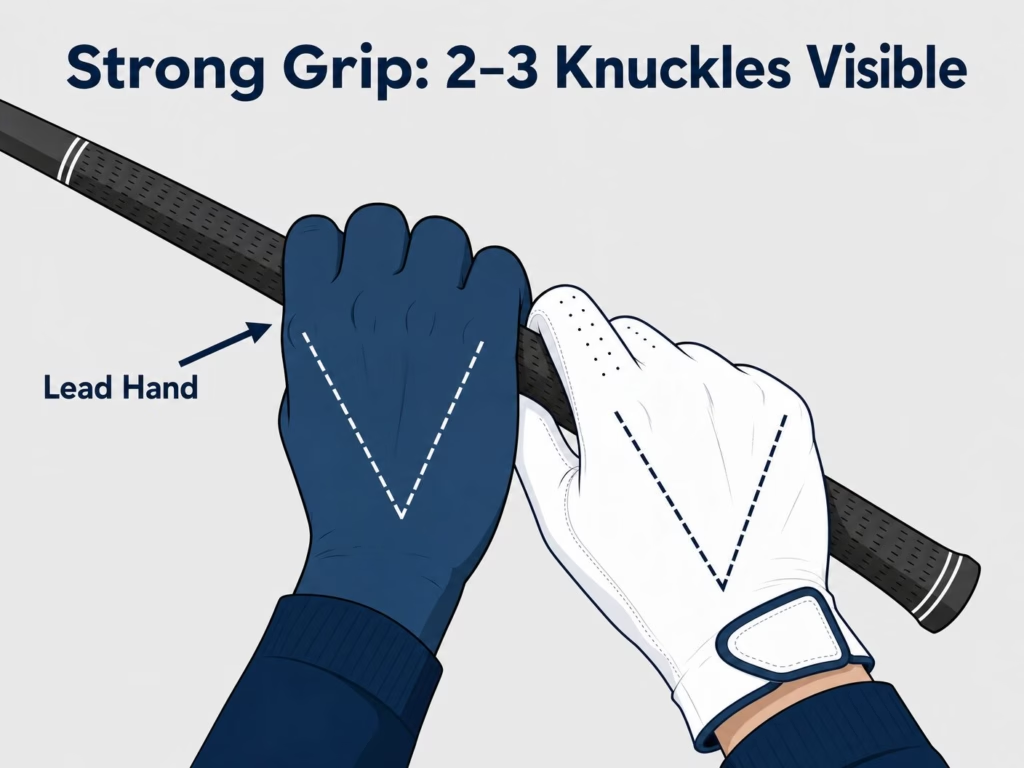
The strong grip: rotate both hands away from the target until 2–3 knuckles are visible on the lead hand. The V-shapes point toward the trailing shoulder.
Step 2: The Setup and Alignment to Hit a Draw
To hit a draw, you need an inside-out swing path. The easiest way to promote this path without completely rebuilding your swing is to adjust your alignment at address.
Close your stance slightly. Aim your feet, hips, and shoulders slightly to the right of your ultimate target. This closed alignment gives your arms room to drop to the inside on the downswing and swing out toward the right. Next, position the golf ball slightly further back in your stance than normal — perhaps half an inch. Moving the ball back ensures you strike it earlier in the swing arc, while the clubhead is still traveling from the inside to the outside.
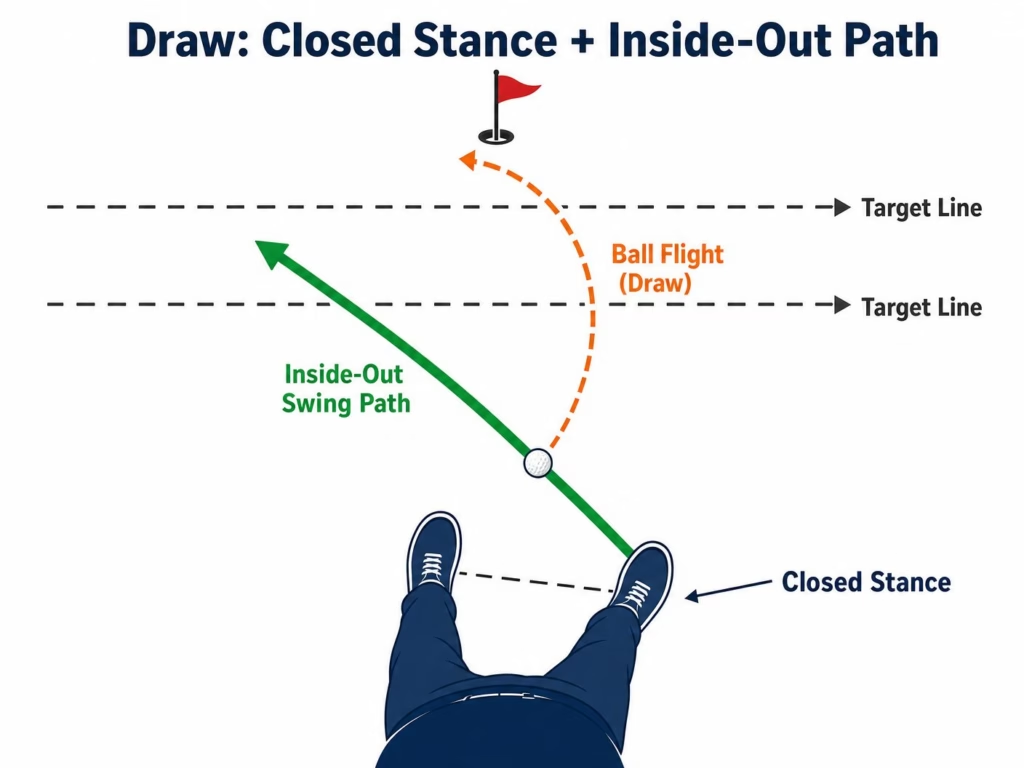
The overhead view: a closed stance (feet aimed right of target) naturally promotes the inside-out path. The ball starts right of the target — where the face points — and curves back left.
Step 3: The Inside-Out Swing Path
With your stronger grip and closed stance, you are now set up to swing from the inside. During the transition from backswing to downswing, your goal is to drop the club into the “slot.”
Instead of starting the downswing by throwing your shoulders and arms toward the ball — the classic over-the-top move — let your arms drop naturally as your lower body shifts weight to your lead foot. Feel like you are swinging out toward right field. If your body is aimed right and you swing along your body line, you will naturally produce an inside-out swing path.














Step 4: Clubface Control at Impact
This is the critical piece of the puzzle. For a proper push-draw — the most desirable type of draw — the clubface must be closed relative to your swing path, but open relative to the target line at impact.
Because your path is moving out to the right, a clubface that is slightly open to the target line will ensure the ball starts to the right. Because that same clubface is closed relative to your aggressive inside-out path, the ball will spin back to the left, drawing perfectly toward the target. If you need a refresher on how impact positions dictate ball flight, review the 5 fundamentals of the golf swing.
Draw vs Fade: Understanding the Difference
When discussing a draw vs a fade, it is important to understand that neither shot is inherently superior — they are simply different tools for different situations. A draw curves from right to left (for a right-handed player) and typically flies slightly lower with less spin, leading to more roll-out upon landing. A fade curves from left to right, flying slightly higher with more spin, allowing it to land softer on firm greens.
Draw Fade Ball Flight Right-to-left curve Left-to-right curve Clubface at Impact Closed to path, open to target Open to path, closed to target Spin Rate Lower Higher Landing More roll-out Softer stop Best For Distance, wind penetration Control, firm greens
The best players in the world can hit both on command. If you have already mastered the draw and want to add the other shot shape to your arsenal, read our complete guide on how to hit a fade on command.
Practice Drills to Consistently Hit a Draw
Reading about the mechanics is one thing; feeling them is another. Use these two drills on the driving range to ingrain the inside-out path required for a draw.
The Headcover Drill
Place a headcover or an empty water bottle just outside the golf ball, slightly behind it relative to the target line. If you make your normal, out-to-in slice swing, you will hit the headcover before you hit the ball. To avoid the object, you are forced to swing the club from the inside. This provides immediate, physical feedback on your swing path. Most students feel the correct path within five swings of this drill.
The Angled Tee Drill
Push a tee into the ground just outside the golf ball, angling it so it points outward to the right along your desired inside-out path. Use this tee as a visual guide. As you swing down, try to make your clubhead follow the angle of the tee through impact. This visual cue helps your brain understand the direction the club needs to travel to produce a draw, without requiring any conscious manipulation of your hands.
Common Mistakes When Learning to Hit a Draw
When you change your swing path and clubface relationship, you are going to hit some bad shots while you adjust. Understanding your misses is the fastest way to correct them.
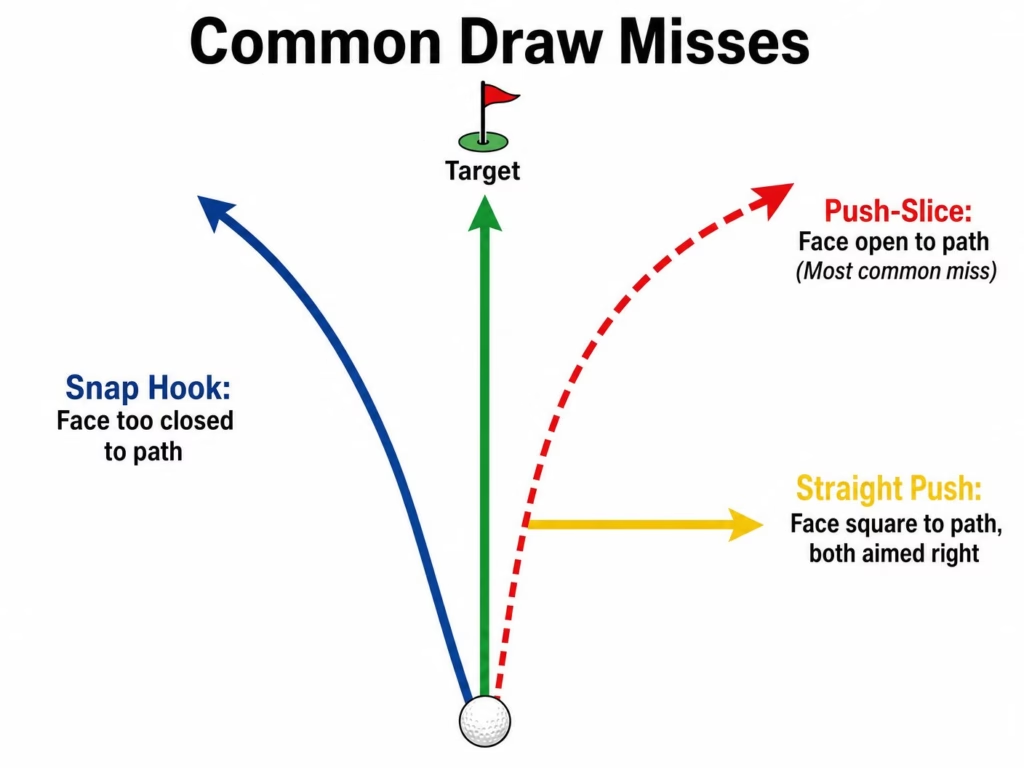
The three most common misses when learning to draw — and what each one tells you about your face-to-path relationship.
The most common mistake is the push-slice. This happens when you successfully swing from the inside-out, but your clubface is open relative to that path. The ball starts right because the face is pointing right, and then it curves further right because the face is open to the path. The fix is to ensure your grip is strong enough and that you are releasing the clubhead through impact.
The second miss is the straight push. In this scenario, your clubface is perfectly square to your inside-out path. Because both the face and the path are aimed to the right, there is no face-minus-path differential — no curve is produced. The ball simply flies straight to the right. To fix this, you must allow the clubface to close slightly relative to your path through the hitting zone.
Finally, you might encounter the snap hook. This occurs when your clubface is severely closed relative to your path. The ball dives sharply to the left with a low, hot trajectory. If this happens, weaken your grip slightly or focus on holding the face a touch more stable through impact.
Quick Recap
Learning how to hit a draw requires three fundamental changes working in concert. Strengthen your grip so you see two or three knuckles on your lead hand. Close your stance by aiming your body slightly to the right of the target. Swing along your body line to create an inside-out path, ensuring the clubface is slightly closed to that path — but still open to the target line — at impact. The ball will start right and curve back to the center every time.
FAQ
How do I hit a draw in golf?
To hit a draw in golf, strengthen your grip by rotating your hands away from the target until you see 2–3 knuckles on your lead hand, close your stance slightly, and swing from the inside-out. Ensure your clubface is slightly closed relative to your swing path but open to the target line at impact. The ball will start right and curve left.
Does a draw go further than a fade?
Modern launch monitor data shows the distance difference is minimal and widely overstated. A draw typically launches with slightly lower spin and may roll out a bit more after landing, but the carry distance gap is small — often less than five yards. Choosing between the two should come down to course management, not distance.
Should high handicappers try to hit a draw?
Yes. Even if you do not use it on the course immediately, practicing the draw teaches you how to control the clubface and swing from the inside — which is the ultimate cure for a slice. Understanding the mechanics of a draw will make you a better ball-striker regardless of which shot shape you ultimately prefer.
What is an inside-out swing path?
An inside-out swing path occurs when the clubhead approaches the golf ball from inside the target line and travels outward across the target line through impact. This path is essential for hitting a draw. The opposite — outside-in — is what produces a slice or a fade.
Mastering the draw takes time and repetition, but the reward is a powerful, penetrating ball flight that cuts through the wind and finds the fairway. Trust your setup, swing aggressively to the right, and let the physics of the clubface do the work. The fundamentals of the draw — grip, stance, path — are the same ones that underpin every great ball-striker who has ever played the game.
Internal Links:
•How to Hit a Fade on Command — the companion piece to this guide
•The 5 Fundamentals of the Golf Swing — the foundation every draw requires
•Best Golf Drivers for Slicers — equipment that helps while you work on your path