Performance Lab
Golf Fitness: The 20-Minute Workout That Adds Distance to Every Club
Add distance to every club with our Resident PGA Pro’s 20-minute golf fitness workout. No home gym required — just resistance bands and 20 minutes a day.


A golf fitness workout does not require a barbell rack or a Bryson-sized physique. It requires twenty focused minutes that teach your hips to produce force, your trunk to transfer it, and your shoulders to stay organized while the club accelerates. Do it two or three times weekly to build a more athletic platform for speed—without promising a fixed number of extra yards.
Disclosure: This article contains affiliate links. If you buy through these links, ClickitGolf may earn a commission at no additional cost to you.
Why a golf fitness workout starts with hips and trunk control
You do not need to look like Bryson to hit it like Bryson. You need to understand where speed begins. In a sound swing, force starts in the ground, travels through the feet and legs, turns the pelvis, passes through the trunk, and finally reaches the club. The clubhead is the final link in the chain, not the first engine.
The glutes help you load and push; the core limits energy leaks as the hips, rib cage, and arms move in sequence. The lats connect torso to lead arm, and the forearms manage the handle. That is why this plan prioritizes hip strength, anti-rotation, controlled rotation, balance, shoulder stability, and grip.
Rotate through the hips and upper back, not by cranking through the low back. The low back is a stability region in this circuit. Stop any movement that causes sharp or worsening pain. Golfers with current pain, recent surgery, unresolved dizziness, or a clinician-imposed exercise restriction should seek individualized guidance before starting.
Can a golf fitness workout add distance to every club?
A golf fitness workout can support more speed by improving the strength, balance, and force transfer behind your swing, but it cannot promise a fixed distance gain. Club delivery, contact quality, mobility, equipment, recovery, and practice still decide what shows up on the course. Build the physical base, then train your swing on the range.
The 20-minute golf fitness workout: two efficient rounds
Start with two sessions on non-consecutive days. Spend two minutes marching, making arm circles, and rehearsing easy hip hinges and upper-back turns. Then complete two eight-minute rounds: 45 seconds of work, 15 seconds to change stations, and a two-minute reset. Choose resistance you can control.
Segment Prescription Time Movement prep March, arm circles, hip hinges, thoracic turns 2 minutes Circuit round 1 Eight stations; 45 seconds on, 15 seconds to transition 8 minutes Reset Water, anchor check, and a form reset 2 minutes Circuit round 2 Repeat the same eight stations 8 minutes
1. Hip hinge / deadlift pattern
Stand hip-width, soften the knees, and push the hips back. Keep ribs stacked over the pelvis, hands on the thighs, and shins nearly vertical. Feel the hamstrings load, then squeeze the glutes to stand tall. Do eight to 12 controlled reps. Avoid turning it into a squat or rounding your back.
2. Pallof press: anti-rotation core work
Anchor a band at sternum height and stand sideways in an athletic stance. Brace, press straight out, pause, and return. Keep torso and belt buckle square against the band’s pull. Complete eight to 12 reps per side. TPI recommends resistance that permits trunk and pelvis alignment. If your shoulder hikes or hips drift, step closer.
3. Resistance-band rotation
Set the anchor at chest height and begin side-on with both hands near the trail hip. Turn chest and hips together to a compact finish, then reverse under control. Train equal repetitions in both directions. Use light tension, keep both feet grounded, and stop before the low back supplies the turn. Think hips initiate, rib cage follows, arms carry the handle.
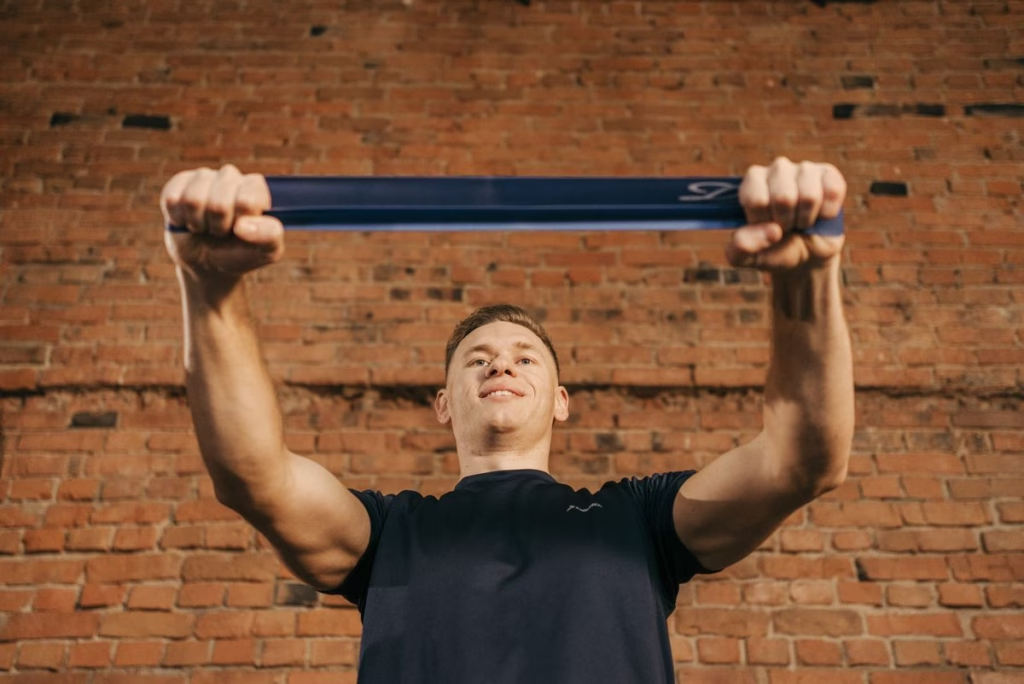
4. Single-leg RDL: balance plus hip strength
Hold a wall, chair back, or lightly planted club for support. Put weight into one foot, unlock that knee, and let the free leg reach behind as the torso tips from the hip. Return by squeezing the standing-side glute. Do six to 10 reps per side. Keep the pelvis level; if the knee collapses inward or hips open, shorten the range.
5. Band pull-through
Anchor a band low behind you and walk out to light tension. Reach the hips back with handles near the upper thighs, then squeeze the glutes to stand tall. The hands travel with the hips; they do not pull you upright. Aim for 10 reps. Do not lean back or flare the ribs. Use only a closed, sturdy door that pulls shut away from you.














6. Push-up variation for shoulder stability
Choose a wall, counter, bench, knees-down, or full push-up that lets you keep one line from head to heel or knee. Lower with elbows roughly 30 to 45 degrees from the body and press away until the shoulder blades finish slightly apart. Work for six to 12 reps. If the low back sags or shoulders shrug, raise the hands.
7. Side plank with rotation
Start on your forearm with the elbow beneath the shoulder. Bend the lower knee if needed or stack the feet to progress. Lift the hips into a straight line, reach the top arm beneath the rib cage, then open back up. Work 20 seconds per side. Prioritize the plank: keep the neck long and pelvis elevated.
8. Wrist curls and reverse curls
Support a light dumbbell, hammer, or band handle across your thigh. With the palm up, curl the hand toward the forearm; with the palm down, lift the knuckles. Complete 10 to 15 reps each way per arm. Keep the movement small and shoulder quiet. This is grip endurance and control, not a forearm-pump contest.
The gear that makes a golf strength workout at home practical
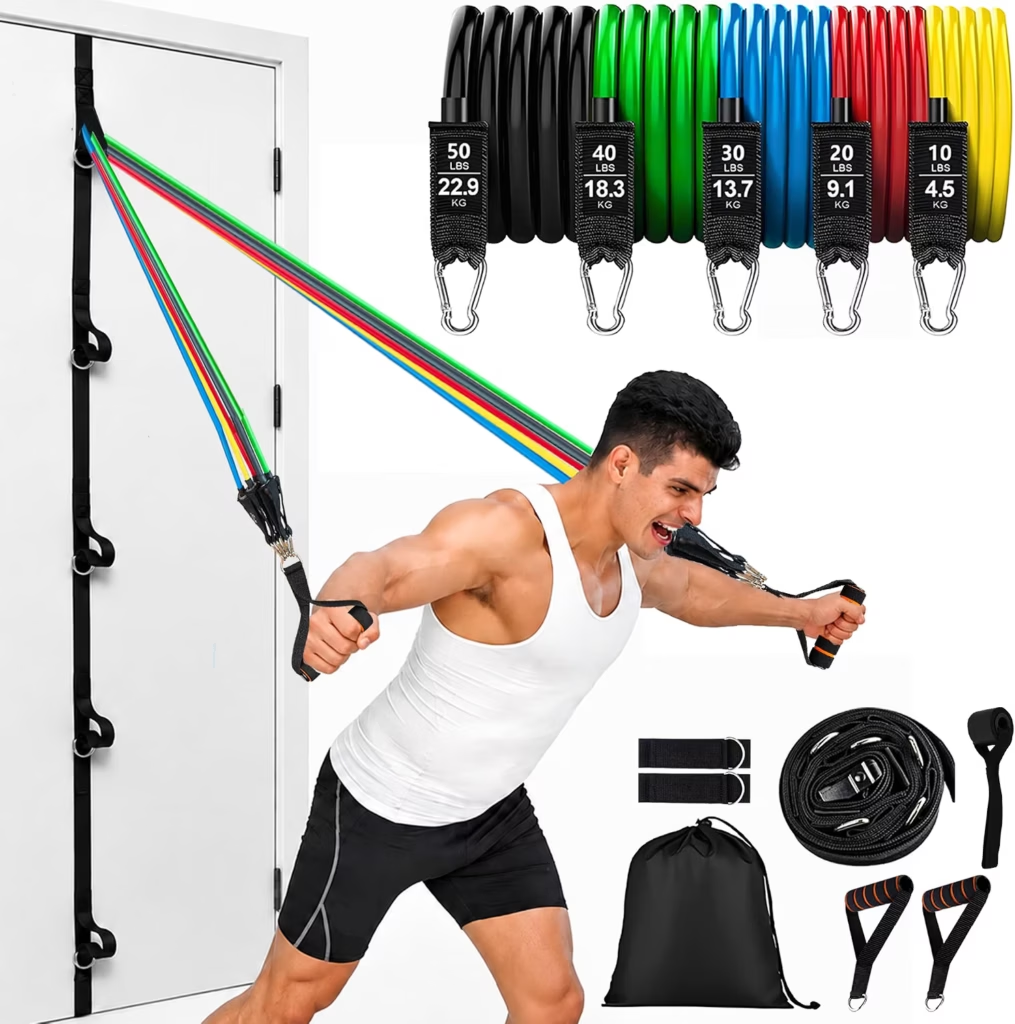
A band kit with handles and a secure door anchor covers the Pallof press, rotation, and pull-through. Begin lighter than your ego suggests, and inspect the tubing and anchor before every session.
Recommended equipment: Resistance Bands Set with Handles and Door Anchor for Full Body Workout
A medium-firm foam roller is optional for a brief, comfortable warm-up around the upper back and glutes; it is not a substitute for moving dynamically. If you want a suspension-training upgrade later, the TRX All-In-One Home Gym System is a legitimate alternative, not a requirement.
Optional equipment: Yes4All Medium Firm Round PE Foam Roller 12, 18, 24, 36 Inches for Pilates, Yoga, Stretching, Balance & Core Exercises · TRX All-In-One Home Gym System
When to train relative to your round
Do the complete golf fitness workout after a round, on a non-golf day, or several hours before an important tee time. A strength circuit immediately before play can leave an inexperienced golfer more fatigued than prepared. Before you play, you want readiness, not a workout.
Use a five- to 10-minute dynamic warm-up instead: brisk walking, easy hinges, gentle thoracic turns, arm circles, and progressively faster practice swings. In a 30-player study, a dynamic warm-up improved measured driving distance and six-iron carry; it also improved accuracy in that sample. That supports dynamic preparation, not a universal yardage promise.
Common mistakes and a quick recap
Do not treat every rep like a max-effort swing. Build positions first. Do not use a band that forces you to twist, lean, or shrug. Train both directions, keep swing practice separate from resistance work, and stop if pain appears.
Do this Avoid this Train hips, trunk control, rotation, balance, shoulder stability, and grip. Searching for a magic exercise or a guaranteed distance gain. Use light-to-moderate resistance and repeat the circuit twice. Letting the band pull your pelvis or shoulders out of position. Perform the full session two or three times weekly. Treating the full circuit as a pre-round warm-up. Use dynamic movements before playing. Forcing rotation through a painful low back.
Golf fitness workout FAQ
How often should I do this golf fitness workout?
Begin with two non-consecutive sessions weekly. After three or four weeks, add a third only if your joints feel good and form remains crisp. Consistency beats one punishing circuit followed by two weeks off.
Should I do this 20-minute golf workout before I play?
Not as written, especially if you are new to strength work. Save the circuit for later or another day. Before a round, use a brief dynamic warm-up and progress from easy practice swings to game-speed swings.
Can beginners do a golf strength workout at home?
Yes. Use a wall-supported single-leg RDL, incline push-up, short side plank, and light band. The first session should feel almost too easy. Form, balance, and pain-free movement are the entry requirements.
What resistance-band tension should golfers use?
Use the lightest band that makes the last reps deliberate without changing posture. On a Pallof press or rotation, it should challenge the trunk without pulling you sideways. If you cannot pause cleanly, reduce tension or step closer.
Will resistance-band exercises improve swing speed?
They can build the strength and control that support an efficient swing, especially alongside coaching and golf practice. They do not replace technical instruction, centered contact, mobility, or recovery. Treat them as physical preparation.
Build the engine, then use it
This golf fitness workout is deliberately unglamorous: hinge well, brace, rotate with control, stand on one leg, and organize the grip. That is why it belongs in your week. Build a body that can produce speed more often, not one heroic gym-ball flight.
Use that more repeatable speed to make smarter equipment decisions. Start with our practical guide to the best golf ball by swing speed, then see the best golf balls for 95–105 mph swing speed if your driver belongs in that window.
Want more golf tips every Friday? Join over 395,000 golfers — subscribe to The 19th Hole Newsletter → clickitgolf.com/newsletter
Follow ClickitGolf on social for weekly Performance Lab drills, practical gear intelligence, and on-course decisions that lower scores.