Gear Intelligence
Best Golf Wedges for Mid Handicappers
Best golf wedges for mid handicappers, ranked by bounce, grind, and gapping. Build a smarter short-game setup before you buy. Read the 2026 fit guide.

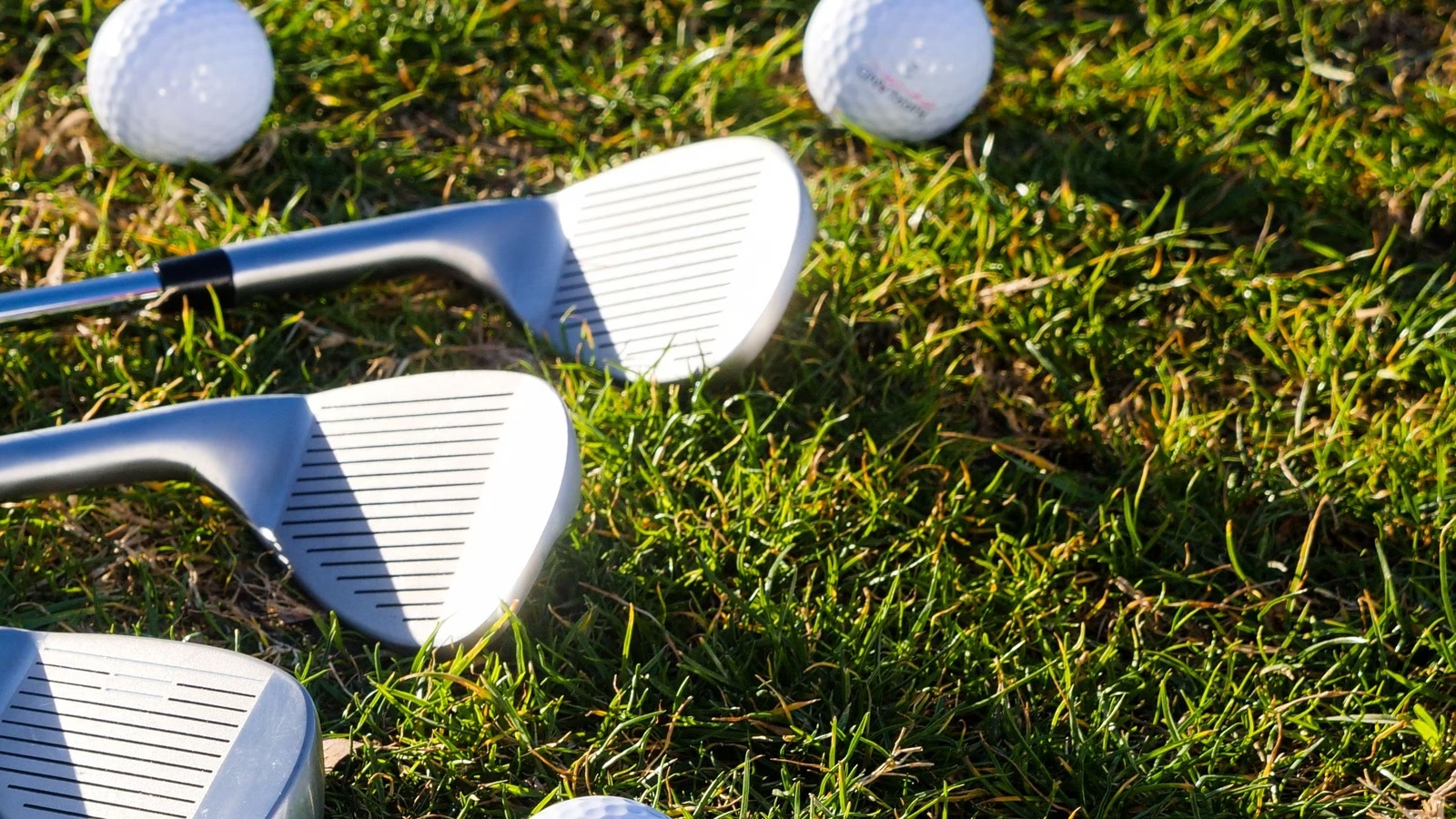
Best golf wedges for mid handicappers are rarely found by buying the same three lofts your playing partner carries. Most mid handicappers own three wedges they never gapped, plus a sand wedge whose sole is wrong for their turf. The result is predictable: a 15-yard distance hole, a club that digs, and a short game that feels harder than it should. Fix the setup first, then pick the head.
Disclosure: This article contains affiliate links. If you buy through these links, ClickitGolf may earn a commission at no additional cost to you.
Best golf wedges for mid handicappers: quick picks
| Pick | Best for | Price tier | Buy |
|---|---|---|---|
| Titleist Vokey SM11 | Best overall fit range | $$ | Check price on Amazon |
| PING s259 | Most balanced sole option | $$ | Check price on Amazon |
| TaylorMade Milled Grind 5 | Soft feel, broad sole choices | $$ | Check price on Amazon |
| Callaway Opus SP | Controlled flight for precise strikers | $$ | Check price on Amazon |
| Cleveland RTX 6 ZipCore | Straightforward mid-bounce setup | $$ | Check price on Amazon |
Each is a right-handed starting candidate, not a prescription. Verify handedness, loft, bounce, grind, shaft, and availability before buying. The right 56-degree wedge fills your distance gap and matches the way the club enters the ground.
How we chose the best golf wedges for mid handicappers
A wedge must land full shots in repeatable distance windows, then move through grass or sand without the leading edge stabbing into the ground. We prioritized current families with published loft, bounce, and grind matrices, then compared independent review evidence and verified owner feedback where available.
We scored these on published specs, independent testing data, and verified owner feedback rather than our own launch-monitor sessions. Our Lab Score averages Performance, Forgiveness, Feel, Value, and Looks, and every component is tied to stated evidence. Where the evidence was not comparable, we say so rather than inventing a number.
What is wedge bounce, and why does it matter?
Bounce is the angle between a wedge’s leading edge and the ground when the club rests naturally at address. It is the part of the sole that keeps the club from digging too deeply. Higher bounce gives a steep player or soft-course player more skid and forgiveness. Lower bounce lets a shallow player get under the ball from firm, tight turf. For most mid handicappers, mid bounce is the sensible first comparison, not an automatic final choice.
What your turf tells you
Soft turf and a steep attack want high bounce. If your divot is deep, the fairways are soft, or the bunkers are fluffy, a wider sole is protection. Start by testing 12 to 14 degrees of bounce in your sand-wedge loft.
Firm turf and a shallow attack want low bounce. If you sweep the ball and play tight lies, a 6 to 8 degree sole can sit closer to the ground. Low bounce is a lie-and-delivery decision. The PGA TOUR Superstore’s bounce and grind guide uses the same steep-versus-shallow starting point.

Grind is the shape that makes bounce usable
Bounce is the number. Grind is the sole shape around it. A full sole is stable on square-faced shots. Heel, toe, or trailing-edge relief lets the face open without lifting the leading edge too much. That adds shot variety, but asks more of your strike.
Most mid handicappers should carry one conservative full-shot wedge and one more versatile greenside wedge. In Vokey, that can mean F in the gap wedge and S or D in the sand wedge. PING’s S grind is a similarly sound all-around starting point. Save highly relieved low-bounce soles for a fitter’s confirmation.
How to gap golf wedges from your pitching wedge
Start with the actual loft stamped on your pitching wedge. Modern pitching wedges can be far stronger than the 46 or 47 degrees many golfers picture. Write down that number, then build down in roughly four to six degree steps, checking carry distances on a launch monitor or the range. Titleist’s wedge guidance also uses four to six degree loft gaps as a general starting framework.
Pitching wedge loft Common next wedges Who it suits What to check 44 to 45 degrees 50, 54, 58 Three added wedges with a strong pitching wedge Make sure the 50 is a reliable full-shot club 46 to 47 degrees 52, 56, 60 Traditional three-wedge progression Confirm the 60 earns its bag slot 48 degrees 52, 56, 58 or 60 Players who prefer a tighter top gap Keep loft gaps and carry gaps aligned
Do not build a bag by loft alone. A 54-degree full sole can fly and react differently from a narrow, relieved 54-degree sole. Hit full shots first, then use the 56 or 58 degree club for sand, soft lies, and the shots that cost strokes.
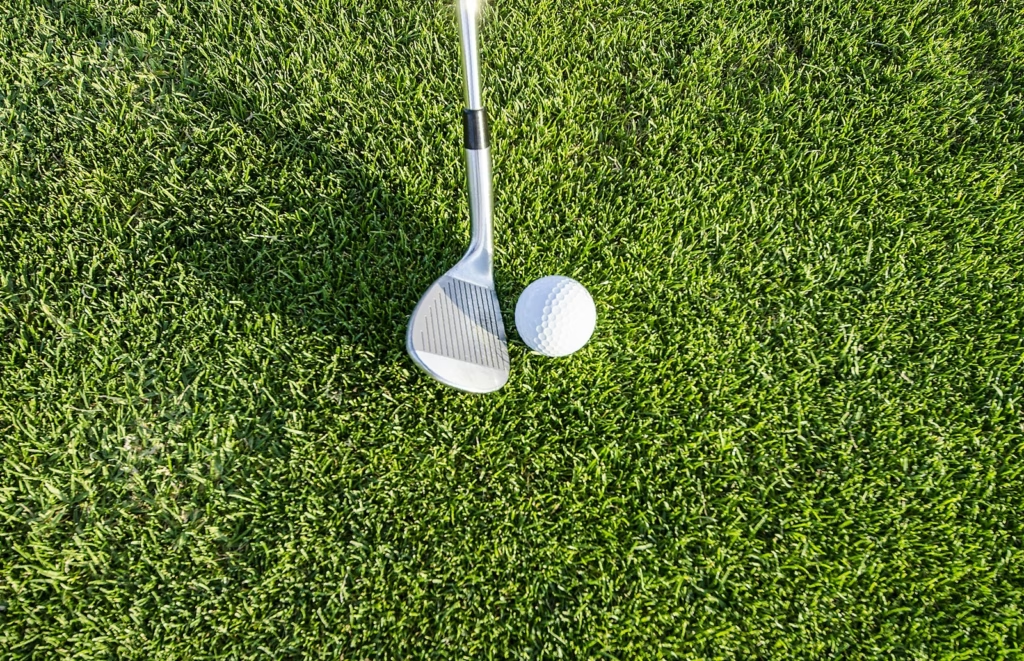
1. Titleist Vokey SM11, best overall for fit range
The Vokey SM11 is the best overall pick because it gives a mid handicapper meaningful sole choices without forcing a single tour recipe. The F grind is a full-sole, full-shot option. The S grind adds a narrowed sole with trailing-edge relief. D and K options bring more bounce protection for steeper delivery, soft turf, and soft sand.
- Why it works: Six official grinds let a player separate full-shot duty from greenside duty.
- Why it works: Independent testing found controlled launch and predictable shots when contact stayed in the intended face area.
- Why it works: An independent six-month reviewer reported consistent flight and a soft, solid feel in a 50.08 F, 54.10 S, 58.08 M setup.
- Tradeoff: It is a tour-style wedge, not a club that erases large mishits.
- Tradeoff: The number of options makes a blind online purchase risky.
Who it is for: The mid handicapper willing to map pitching-wedge loft, divot depth, and typical turf before choosing.
Who should skip: The player who wants maximum help on frequent heavy or thin strikes.
Lab Score 8.3. Performance 9.0, from independent controlled-flight and spin observations. Forgiveness 7.0, from the reviewer’s mishit caution. Feel 9.0, from the six-month reviewer account. Value 7.5, from breadth of fit options in the premium tier. Looks 9.0, from four available finishes and compact traditional shaping.













2. PING s259, best all-around sole starting point
PING’s s259 is the easy recommendation for the player who wants a sensible middle ground. Its S grind is designed for a wide range of players and conditions, with mid bounce for square, full shots plus heel and trailing-edge relief. That makes a 56 S-12 a logical conversation starter, not a final fitting prescription.
- Why it works: PING offers 25 loft-and-grind combinations across six grinds.
- Why it works: Golf Monthly measured strong 50-yard pitch spin retention in its review and found the flight controlled.
- Why it works: An independent review described surprisingly forgiving performance for a compact wedge.
- Tradeoff: The compact head and straighter leading edge will not suit every eye.
- Tradeoff: Owner feedback included both praise for feel and isolated build-quality complaints.
Who it is for: A mid handicapper with neutral delivery who plays mixed conditions.
Who should skip: A player who already knows they are very steep in soft turf, where the H or W grind comparison deserves more attention.
Lab Score 8.3. Performance 8.5, from independent pitch-spin and controlled-flight observations. Forgiveness 8.0, from independent reviewer feedback. Feel 8.5, from an independent soft-yet-responsive assessment. Value 8.0, from the broad configuration matrix. Looks 8.5, from the documented clean compact shape and two finishes.
3. TaylorMade Milled Grind 5, best for soft feel
TaylorMade’s MG5 is the pick for the player who values a forged feel but still needs a sole that can work across normal conditions. The SB grind uses four-way camber for an array of swing styles and turf conditions. In the middle of the bag, 54.12 SB or 56.12 SB is the right place to begin the conversation.
- Why it works: The SB sole is TaylorMade’s all-around grind, while HB gives the steeper player a high-bounce option.
- Why it works: Independent tester reports cite repeatable spin and carry, stable balance, and strong turf interaction.
- Why it works: Independent testing also described a soft, silky feel.
- Tradeoff: Testers noted a small sweet spot and limited forgiveness next to game-improvement wedges.
- Tradeoff: Regional availability messaging was inconsistent when checked, so confirm stock.
Who it is for: The mid handicapper whose contact is generally reliable and who wants a versatile conventional sole.
Who should skip: The player who often hits the turf first and needs a cavity-back-style safety net.
Lab Score 8.2. Performance 8.5, from independent spin and carry consistency reports. Forgiveness 7.5, from small-sweet-spot tester feedback. Feel 9.0, from independent soft-feel assessments. Value 7.5, from premium-tier positioning and sole breadth. Looks 8.5, from the documented raw-face aesthetic.
Check the TaylorMade Milled Grind 5 on Amazon
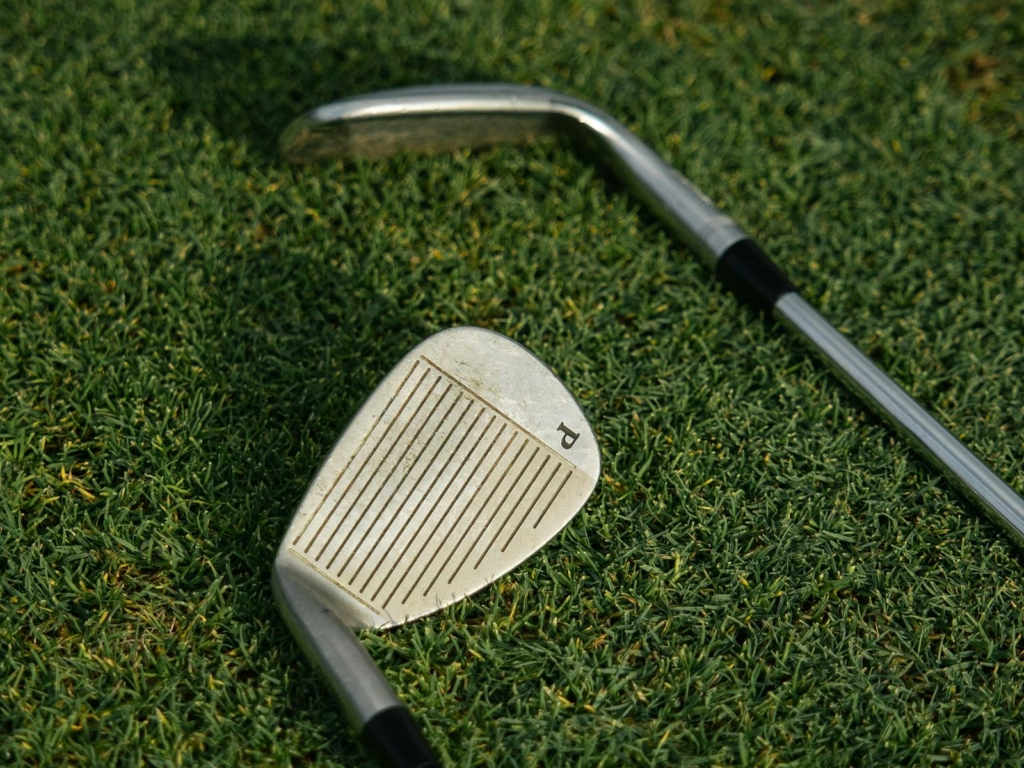
4. Callaway Opus SP, best for controlled flight
The Opus SP has a compact, tour-preferred profile and a serious grind menu. Callaway’s 56-degree head is available in 8-degree C, 10-degree S, 12-degree X, and 14-degree W versions. The safe first look is the 56.10 S. A player who digs or plays soft turf should put the 56.14 W beside it before deciding.
- Why it works: The official matrix provides useful bounce separation within the same loft.
- Why it works: Independent reviewers reported high, consistent spin and a low, controlled trajectory.
- Why it works: The W grind is specifically positioned for steep players and soft conditions.
- Tradeoff: Independent reviews found little true forgiveness and more demanding contact on tight turf.
- Tradeoff: The compact tour shape is less reassuring for a player who wants a wide sole at address.
Who it is for: A mid handicapper who values flight control, finds the middle of the face reasonably often, and will match grind to course.
Who should skip: A golfer trying to solve recurring heavy contact through the head alone.
Lab Score 8.8. Performance 9.0, from independent spin and flight observations. Forgiveness 7.0, from independent tight-lie cautions. Feel, no comparable published evidence. Value 7.5, from the deep official grind matrix. Looks 9.0, from documented compact tour shaping.
5. Cleveland RTX 6 ZipCore, best straightforward mid-bounce option
Cleveland’s RTX 6 ZipCore is the current verified ZipCore family. Its Mid grind is a 10-degree, V-shaped sole intended for average divots and neutral attack. That is exactly the type of straightforward starting point most mid handicappers need before they chase specialty relief grinds.
- Why it works: The official Mid option matches average conditions, average divots, and neutral attack.
- Why it works: Independent testing reported spin above that publication’s test average and a compact left-right dispersion.
- Why it works: Full, 12-degree configurations offer an easier next step for soft turf or larger divots.
- Tradeoff: The independent test evidence is from the RTX 6 launch cycle, not a current 2026 robot comparison.
- Tradeoff: A full component-by-component evidence base was not available.
Who it is for: The mid handicapper who wants a simple 54 or 56 degree Mid configuration as a fitting baseline.
Who should skip: The player looking for a highly relieved sole to play open-face shots from firm turf.
Lab Score 8.2. Performance 8.5, from independent RTX 6 spin and dispersion testing. Forgiveness 8.0, from the manufacturer’s neutral-attack Mid and soft-turf Full sole mapping.
Check the Cleveland RTX 6 ZipCore on Amazon
When a wedge fitting is worth the money
A wedge fitting is worth it when your home course presents repeated lies, your pitching wedge is 45 degrees or stronger, or the same loft produces both fat and thin contact. It also helps when a 56-degree wedge works from sand but not from fairway turf. Those are sole-interaction clues, not proof that your technique is broken.
Bring your pitching wedge, your current wedges, and a clear account of where you play. A fitting checks carry gaps, attack angle, divot depth, and leading-edge position when you open the face. Use the Vokey wedge selector to prepare, then validate the choice on real turf or with a qualified fitter.
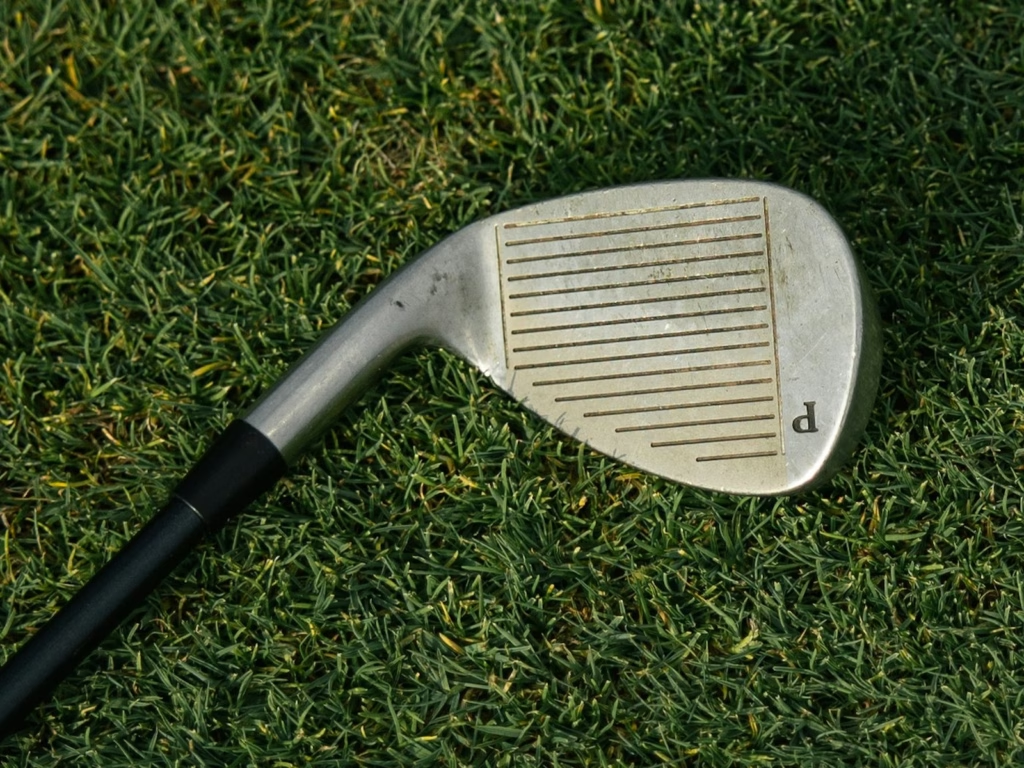
Final recommendation: start with fit, then buy the Vokey SM11
The best golf wedges for mid handicappers begin with loft gaps and turf interaction, not a brand logo. For the broadest route from a conservative full-shot sole to a higher-bounce greenside option, choose the Vokey SM11. Build from your pitching wedge down, then move to S, D, or K grinds only when your turf and delivery call for more bounce.
Before you make any wedge change, make sure the rest of your bag still makes sense. Use our golf ball by swing speed guide to match the ball to your setup, compare iron forgiveness in our guide to forgiving golf irons, and read our golf training aids guide if contact is the underlying issue. A capable golf app will log real carry numbers instead of leaving you to estimate them.
Frequently asked questions
What bounce should a mid handicapper use on a 56-degree wedge?
Most mid handicappers should begin by comparing a mid-bounce 56-degree wedge, often around 10 degrees, with a higher-bounce alternative if they take deep divots or play soft turf. The right answer depends on attack angle, bunker sand, and typical fairway firmness. A fitting or side-by-side turf test beats choosing by handicap alone.
Should mid handicappers carry a 60-degree wedge?
A 60-degree wedge earns its place only if it fills a useful loft gap and you can make reliable contact with it. Players with a 46-degree pitching wedge may prefer 52, 56, and 60 degrees. With a stronger pitching wedge, a 50, 54, and 58 setup creates cleaner full-shot gaps and less complexity.
Is high bounce better for a mid handicapper?
High bounce is better when your delivery is steep, your divots are deep, or your regular course has soft turf and fluffy bunkers. It helps the sole resist digging. It is not automatically better for every mid handicapper. On very firm turf, a shallow player may find a lower-bounce option easier to strike cleanly.
How do I know if my wedge grind is wrong?
Your grind may be wrong if the leading edge repeatedly digs on ordinary lies, if open-face shots sit awkwardly above the ground, or if your wedge works from sand but fails from fairway turf. Watch divot depth and where you play most often. Those clues matter more than copying a tour player’s configuration.
How many wedges should a mid handicapper carry?
Three specialty wedges beyond a pitching wedge suit many mid handicappers, because that creates workable full-shot gaps while leaving room for the rest of the bag. Some players need only two, especially if their set includes a strong gap wedge. Choose the count from measured carry gaps, not from a standard bag template.
Are cavity-back wedges better for mid handicappers?
Cavity-back wedges can be a better choice for a player who needs more help on full shots or regularly misses the center of the face. Traditional compact wedges offer more sole and grind choices. The better category is the one that produces cleaner contact from the lies you actually face.
How often should I replace my golf wedges?
Replace a wedge when groove and face wear reduce the control you need, or when the sole and loft setup no longer fit your bag. Frequency depends on practice volume, sand exposure, and cleaning habits. Compare launch, carry, and stopping behavior against a known good wedge rather than replacing on a calendar.
Want more golf every Friday? Join 800,000+ golfers on The 19th Hole. Subscribe here.