Gear Intelligence
How To Know When To Get A Club Fitting
Is a professional club fitting the secret to lower scores or just an expensive distraction? The Golf Hacker breaks down when it’s actually worth the investment and when you should save your cash for lessons and used gear.

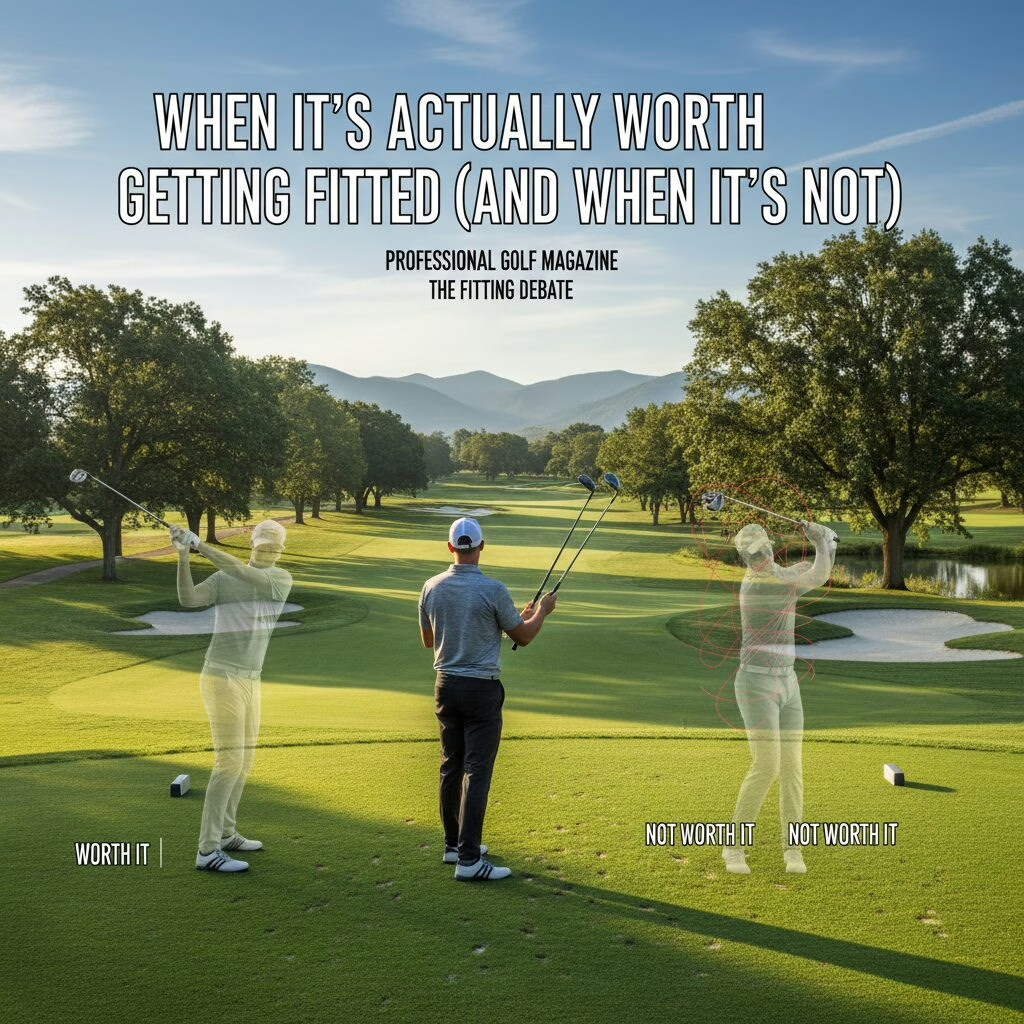
Look, I’m not going to pretend I haven’t spent hours staring at the latest $600 drivers like they’re the missing piece of my soul. We’ve all been there, standing in the middle of a big-box golf store, listening to the rhythmic thwack of someone in the hitting bay, wondering if a professional club fitting is the magic pill that finally cures our slice. But here’s the deal: golf marketing is designed to make you feel like your current gear is a collection of prehistoric sticks. The truth about when it’s actually worth dropping the extra cash on a club fitting is a bit more complicated than the sales guy wants you to believe. If you’re shooting 110 and can’t find the face of the club consistently, a custom-tuned stiff shaft isn’t going to save you—it’s just going to make your misses more expensive.
Let’s be honest, most of us are out here grinding with a swing that changes more often than the weather. One day we’re channeling our inner Rory, and the next we’re hitting hosel-rockets that threaten the safety of the beverage cart. In this guide, I want to break down the golf hacks of gear acquisition. We’re going to look at the cold, hard reality of custom fitting. Trust me on this, I’ve wasted enough money on “tour-spec” gear that I had no business swinging to know where the line is drawn. We’ll explore the specific scenarios where a fitting is a game-changer and the times when you’re better off spending that money on a bucket of balls and a lesson from the local pro.
Understanding When It’s Actually Time to Upgrade
The first thing we need to address is the “new shiny object” syndrome. We see a pro on TV hoisting a trophy with a specific brand of irons, and suddenly our perfectly functional cavity backs feel like they’re made of lead. But when it’s actually a matter of performance rather than ego, the signs are usually in your ball flight. If you are consistently hitting the ball well but seeing a flight that doesn’t match your effort—think ballooning shots that die in the wind or a persistent low hook despite a decent path—then your equipment might be fighting you. Modern equipment is incredibly forgiving, but it’s not sentient. It can’t fix a fundamental swing flaw, but it can stop punishing you for a swing that’s actually decent.
Here’s a simple rule of thumb: if you’ve reached a point where your handicap has plateaued for six months and your “good” shots aren’t yielding the results they used to, you’re in the club fitting zone. I remember when I finally got fitted for a driver after years of playing a hand-me-down from my uncle. I thought I was just a short hitter. Turns out, I was playing a shaft that was way too soft for my aggressive (read: chaotic) transition. The fitting didn’t give me a new swing, but it gave me a tool that didn’t buckle under the pressure of my mistakes. That’s one of the best golf tips I can give: stop trying to adapt your body to the club; make the club adapt to you once you have a repeatable motion.
However, if you’re still in the phase where you’re topping every third shot, a fitting is a waste of your Saturday. You need a consistent impact point before a launch monitor can tell you anything useful. If the data points are scattered all over the screen like a Jackson Pollock painting, the computer can’t find a baseline to optimize. Save that fitting fee for a three-pack of lessons. Once you can hit the center of the face at least 60% of the time, then we can talk about loft, lie angles, and spin rates.
The Myth of the ‘Standard’ Club
One of the biggest golf hacks the industry doesn’t talk about is that “standard” doesn’t actually exist. Every manufacturer has a different idea of what a standard length, loft, and lie should be. A 7-iron from one brand might be an inch longer or two degrees stronger than a 7-iron from another. This is where when it’s actually beneficial to get checked out comes into play. If you are exceptionally tall or on the shorter side, playing off-the-rack clubs is like trying to run a marathon in shoes two sizes too small. You’ll make it to the finish line, but it’s going to be miserable and you’re going to develop some nasty habits along the way.
I once played with a guy who was 6’4” and using standard-length clubs he bought at a garage sale. He had to hunch over so much he looked like he was trying to find a lost contact lens in the grass. By the back nine, his back was screaming, and his swing was a mess of compensations. A simple static club fitting—measuring your wrist-to-floor height—can tell you if you need your clubs lengthened or shortened. This isn’t even a full “performance fitting,” but it’s a crucial piece of golf advice for anyone who doesn’t fit the “average” mold. You can’t build a consistent swing on a foundation of poor posture caused by ill-fitting tools.
Static vs. Dynamic Club Fitting
It’s important to distinguish between the two. A static fitting is just measurements. A dynamic fitting involves you actually hitting balls while a professional (or a very smart computer) tracks what the ball and club are doing. For the average hacker, a static fitting is often enough to get you 90% of the way there. If you’re budget-conscious, look for shops that offer free static checks when you buy grips or minor accessories. It’s a low-cost way to ensure you aren’t fighting physics before you even take a backswing.
When It’s Actually Worth A Club Fitting For Your Short Game
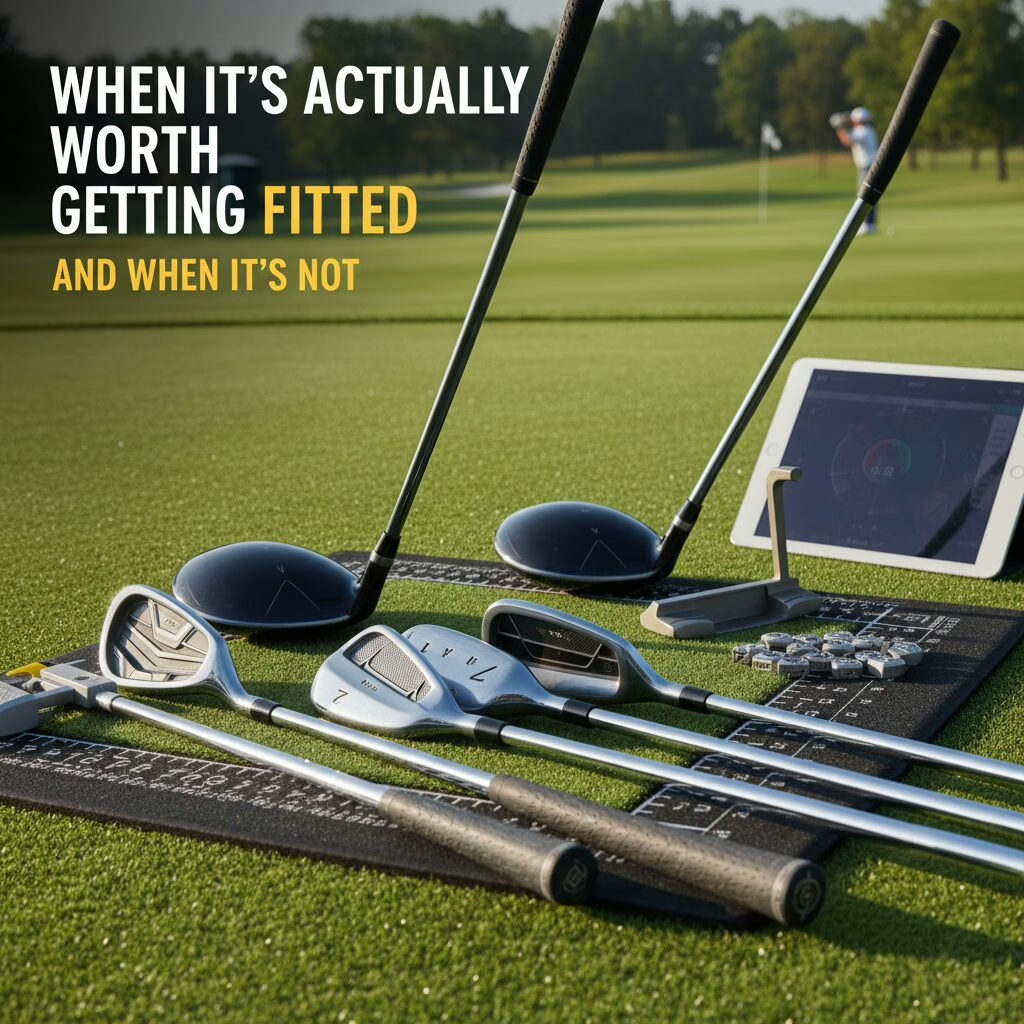
We all want the 300-yard drive, but let’s be real: we live and die by the wedge and the putter. This is an area where most amateurs completely ignore fitting, and it’s arguably where it matters most. Think about it—you use your putter on almost every single hole. If the lie angle of your putter is off, the face might be slightly open or closed at impact even if you make a perfect stroke. This is when it’s actually worth spending an hour with a specialist. A putter fitting can reveal if you need a blade or a mallet based on your stroke arc. I used to pull every putt left until I realized my putter was too long, forcing my hands into a position that shut the face.
Wedges are another story. Most of us just grab a 52, 56, and 60 degree off the shelf and call it a day. But “bounce” is the most misunderstood word in golf. Depending on whether you play at a course with firm, tight lies or lush, soft turf, the bounce on your wedges can be the difference between a crisp chip and a chunked disaster. Getting fitted for wedges isn’t just about distance; it’s about how the club interacts with the ground. If you’re a “digger” who takes big divots, you need more bounce. If you’re a “picker,” you need less. This kind of golf advice can save you three to five strokes a round effortlessly.
Is it worth the $100 club fitting fee? If you’re serious about breaking 90, yes. The short game is about precision and feel. If your equipment is working against the physics of your local turf, you’re playing with a handicap you didn’t ask for. Plus, a putter fitting is usually cheaper than a driver fitting and the results show up on the scorecard immediately. It’s the ultimate budget-friendly move for the golfer who wants to see real improvement without rebuilding their entire swing from scratch.
The ‘Used Club’ Hack: Club Fitting on a Budget
Here’s a secret from The Golf Hacker’s playbook: you don’t have to buy brand-new $1,200 irons to benefit from a fitting. One of my favorite golf hacks is to go get a professional fitting to find out your specs—shaft lean, lie angle, shaft flex, and weight—and then go hunt for those exact specs on the used market. There are thousands of clubs from two or three years ago sitting in warehouses and garages that match your needs perfectly. You get the benefit of the data without the “new car smell” price tag that depreciates the moment you hit your first range ball.
Modern launch monitors like Trackman and GCQuad are incredible, but they don’t care if the club you’re swinging was made in 2026 or 2023. The physics of launch angle and spin remain the same. If a fitter tells you that you need a 65-gram stiff shaft with a mid-launch profile, you can find that in a dozen different models from the last five years. Don’t let the marketing hype convince you that when it’s actually time to get fitted, you have to buy the latest release. Use the fitting as a diagnostic tool for your game, not just a shopping trip.
Also, don’t be afraid to ask for your data. You paid for the club fitting session; that data belongs to you. Take a photo of the spec sheet. This allows you to be a savvy consumer. You can check secondary markets, look for sales, or even see if a local club builder can retro-fit your current set to those specs. Often, a simple lie-angle adjustment on your current irons (which usually costs about $5 per club) can produce the same results as a brand-new set of custom irons. That’s the kind of value we like to see.
There are many ways to get a club fitting. Stay tuned for more on this subject and check out this really cool modern tech from Groove Golf.
Conclusion: Making the Call
At the end of the day, deciding when it’s actually worth getting fitted comes down to your goals and your consistency. If you’re out there once a month just to drink a few beers and escape the house, don’t sweat the specs. Just enjoy the walk. But if you’re grinding at the range, watching YouTube drills until 2 AM, and genuinely trying to shave strokes off your game, equipment that fits your body is a non-negotiable. It removes the doubt from your mind. When you stand over a shot knowing the club is built for your swing, you can focus on the target instead of wondering if the ball is going to balloon into the wind.
Remember, a fitting isn’t a cure for a bad swing, but it is a cure for bad results on good swings. Start with the putter, move to the wedges, and only tackle the big sticks once you have a swing you can rely on. What are your experiences with club fitting? Did it actually change your game, or did you find it was mostly hype? Share your stories in the comments below—I want to know if that $500 driver actually kept you in the fairway or if it’s just a shiny new way to find the woods!