Connect with us

Performance Lab

Best Golf Ball by Swing Speed (85–95, 95–105, 105+): A Practical Fit Guide

Stop wasting money on the wrong golf balls. This no-nonsense guide breaks down the best golf ball by swing speed with real data and practical advice—not marketing hype. Find the perfect ball for your game and your budget.

Avatar photo

Published

on

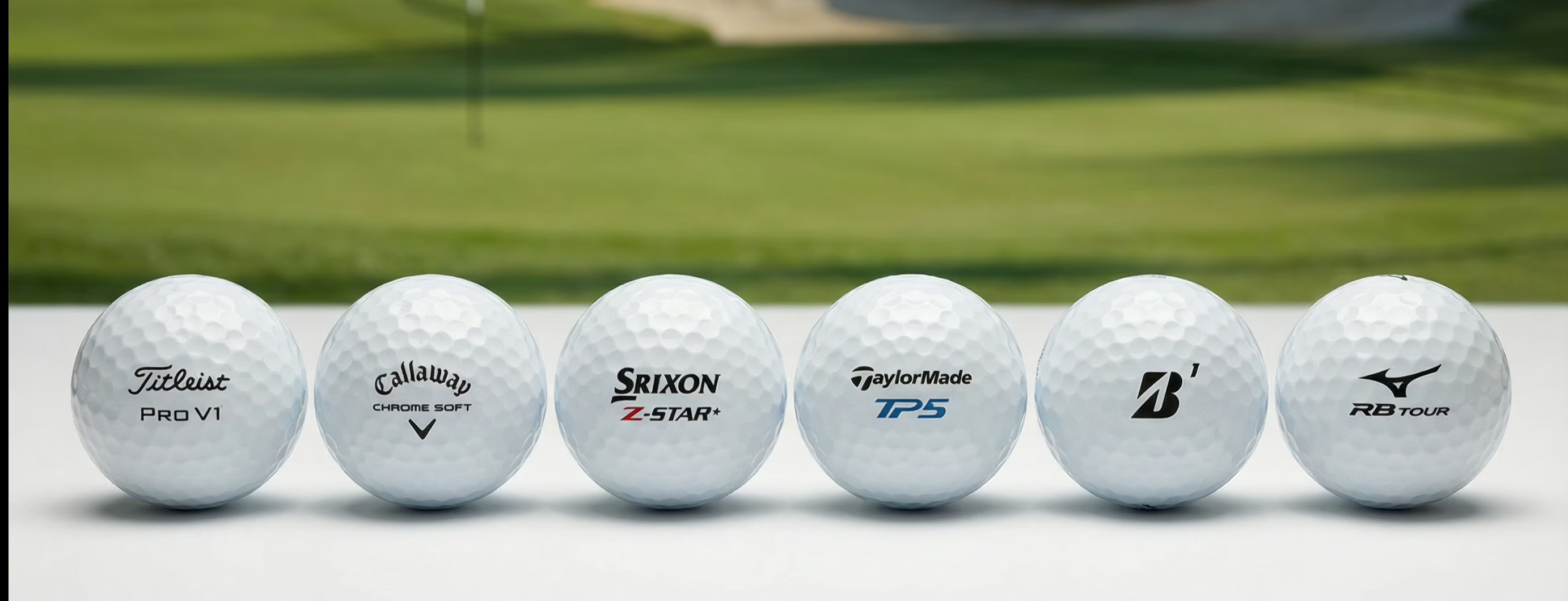
A lineup of premium golf balls from Titleist, Callaway, Srixon, TaylorMade, Bridgestone, and Mizuno on a white surface with a golf course in the background
Affiliate Disclosure: Some links in this article are affiliate links. If you purchase through them, ClickItGolf may earn a small commission at no extra cost to you. We only recommend products we’ve tested or thoroughly researched.

Let’s cut through the noise. The golf ball market is a billion-dollar industry built on convincing you that a $5 ball will fix your 20-handicap slice. It won’t. Most amateur golfers are playing the wrong ball—usually a premium tour ball they can’t compress, which costs them distance and money.

This is a practical fitting guide. We’re going to ignore the marketing and focus on what actually matters: compression, spin, and feel, matched to your swing speed. This guide will give you the best golf ball recommendations for your game, whether you swing 85 mph or 115 mph. No hype, just help. If you want you can read about The best golf balls for average golfers.

First, Let’s Be Honest: How to Estimate Your Driver Swing Speed

If you don’t know your swing speed, you’re just guessing. Before you spend a dime, get a realistic estimate. You don’t need a $20,000 launch monitor. Here are three simple ways to get a number.

The first is the Average Carry Distance Method, and it’s the easiest gut check. Go to a range, warm up, and hit 10 drivers. Throw out the worst two and the best two, and pace off the average carry distance of the remaining six. Be honest. Where do most of your drives land? Carries of 180–210 yards suggest you’re in the 85–95 mph range. Carries of 210–240 yards put you in the 95–105 mph range. Anything consistently over 240 yards and you’re likely in the 105+ mph category.

The second method is the Local Golf Shop Test. Walk into any big-box golf store or local shop with a simulator and ask if you can hit a few balls in their demo bay to “test a driver.” Most will let you. Hit 5–10 shots and look at the swing speed data. It’s free, and it’s accurate.

The third is the Free App Method. Apps like “Golf Swing Speed Analyzer” use your phone’s microphone to estimate speed based on the whoosh sound at impact. It’s not perfect, but it’s surprisingly close and a great starting point when you have no other option.

The Only 3 Things That Actually Matter: Compression, Launch, and Spin
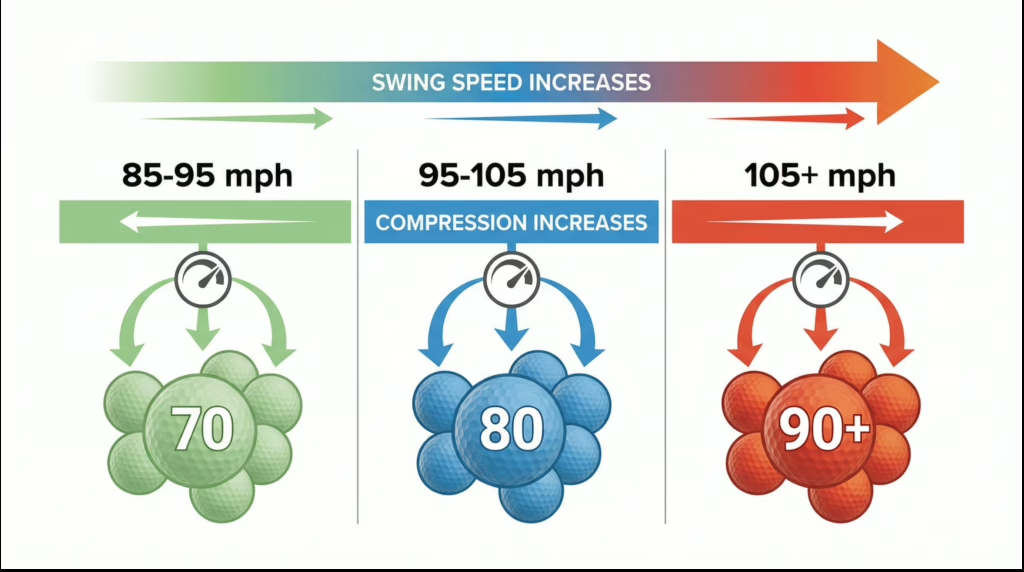
golf ball compression chart

Don’t get bogged down in dimple patterns or core infusions. Here’s what you actually need to know, in plain English.

Compression is the “stiffness” of the ball. A lower compression ball (60–70) is softer and easier to squish at impact for slower swing speeds, which creates more distance. A higher compression ball (90+) requires a faster swing to activate the core and get maximum distance. Playing a ball with too much compression for your speed is like trying to hammer a nail with a pool noodle—you’re losing energy at the one moment it matters most.

Launch is the angle the ball takes off. Slower swing speeds generally need more help getting the ball in the air, so a ball that promotes a higher launch is beneficial. Faster swing speeds might want a more penetrating, lower launch to control trajectory and keep the ball out of the wind.

Spin is the big one, and it’s the most misunderstood. High spin is great for pros who want to stop a 6-iron on a dime. For most amateurs, high driver spin is a slice-amplifier that robs you of distance. The goal is low spin off the driver (for straighter shots and more roll) and high spin off the wedges (for stopping power on the greens). This is the holy grail of ball design, and it’s why the best balls in this guide are built around that dual-spin concept.

Quick Picks: Best Golf Ball by Swing Speed

Swing Speed (mph)Best OverallBest ValueBest Feel (Short Game)Notes
85–95Titleist Tour SoftSrixon Q-Star TourCallaway Chrome SoftPrioritize low compression and high launch.
95–105Titleist Tour SpeedTaylorMade Tour ResponseMizuno RB TourThe sweet spot for most amateurs. Balanced performance is key.
105+Titleist Pro V1Vice PRO PLUSBridgestone Tour B XSYou can handle tour-level compression. Focus on spin control.
Wind/Low SpinTitleist AVXThe best choice for windy days or if you fight a slice/hook.

Swing Speed Band: 85–95 mph (Driver Carry: 180–210 yards)

golf ball swing speed

Your priority is getting the ball in the air with low spin to maximize distance and forgiveness. You need a ball you can actually compress. The balls in this band are specifically engineered for golfers who generate moderate swing speeds—they are not “lesser” balls. They are the right balls for your game.

Read: Why you don’t need new clubs to play better golf

Best Overall (85–95 mph): Titleist Tour Soft

One-sentence summary: The Tour Soft is the ideal all-around ball for the moderate-speed golfer who wants tour-level quality without tour-level compression requirements.

The Tour Soft’s large, fast core is engineered to be easy to compress, maximizing ball speed for swings in this range. Its 346-dimple design produces a penetrating flight with naturally low spin, which means straighter drives and fewer penalty strokes. The soft, grafted cover provides excellent feel and control around the greens—not as much spin as a urethane tour ball, but noticeably better than a basic distance ball.

The tradeoffs are real but minor. Golfers who generate a lot of spin naturally may find the cover doesn’t provide the short-game control they want. And faster swingers who creep above 100 mph may find the ball feels slightly mushy and over-compresses.

Who it’s for: The 90-mph golfer who wants an all-around performer that feels great and plays consistently.

Who should skip: Golfers on a tight budget who want urethane short-game spin, or anyone consistently swinging above 100 mph.

Lab Score: 92/100

CategoryScore
Driver Performance28/30
Irons Performance23/25
Wedge/Feel Performance23/25
Durability9/10
Value9/10

Check Price on Amazon

Best Value (85–95 mph): Srixon Q-Star Tour

One-sentence summary: The Q-Star Tour is the undisputed value champion, delivering a urethane cover and tour-level greenside spin at a fraction of the price of a Pro V1.

The Q-Star Tour’s low-compression (72) core is perfectly matched for moderate swing speeds, and the fact that it features a premium urethane cover at this price point is genuinely remarkable. Srixon’s “Spin Skin” coating increases friction on chips and pitches, giving you real stopping power on the greens. The tradeoff is slightly less raw distance off the driver compared to the Tour Soft, and the urethane cover will scuff more easily than an ionomer alternative.

Who it’s for: The budget-conscious golfer who refuses to sacrifice greenside spin and wants the most performance per dollar.

Who should skip: Players who prioritize maximum driver distance above all else, or who lose a lot of balls and need something more durable.

Lab Score: 89/100

CategoryScore
Driver Performance25/30
Irons Performance24/25
Wedge/Feel Performance24/25
Durability6/10
Value10/10

Check Price on Amazon

Best For Short-Game Feel (85–95 mph): Callaway Chrome Soft

One-sentence summary: The Chrome Soft delivers buttery-soft feel and tour-level greenside spin in a package that’s genuinely accessible for moderate swing speeds.

The Chrome Soft’s graphene-infused core provides a unique combination of low compression (75) with high resilience—it feels soft but still generates impressive ball speed. The thin urethane cover delivers exceptional spin and control on scoring shots, and the ball is optimized for high launch and low driver spin, making it forgiving for this swing speed range. The tradeoffs are a premium price tag and a feel that isn’t for everyone; some players prefer a firmer, more “clicky” response at impact.

Who it’s for: The feel-oriented player at this swing speed who wants the best possible short-game performance and doesn’t mind paying for it.

Who should skip: Golfers on a budget, or those who prefer a firmer ball feel.

Lab Score: 94/100

CategoryScore
Driver Performance28/30
Irons Performance25/25
Wedge/Feel Performance25/25
Durability8/10
Value8/10

Check Price on Amazon

Swing Speed Band: 95–105 mph (Driver Carry: 210–240 yards)

You’re in the sweet spot. You have enough speed to play a wide variety of balls, so the goal shifts from simply finding something you can compress to finding the best balance of distance, spin, and feel for your specific miss pattern. This is the range where the right ball choice can genuinely shave strokes.

Best Overall (95–105 mph): Titleist Tour Speed

One-sentence summary: The Tour Speed delivers Pro V1-like performance—speed, launch, and urethane spin—at a meaningfully lower price point.

Titleist reformulated the Tour Speed’s high-speed core to provide explosive distance, and the urethane cover offers excellent short-game spin that approaches (but doesn’t quite match) the Pro V1. The 346-dimple design ensures a consistent, penetrating flight. The tradeoffs are that it’s not quite as spinny around the greens as a Pro V1, and some players who prefer a very soft feel may find it slightly firm.

Who it’s for: The serious amateur in this speed range who wants tour-level performance without the tour-level price tag.

Who should skip: Players who need maximum greenside spin and are willing to pay for a Pro V1 to get it.

Lab Score: 95/100

CategoryScore
Driver Performance29/30
Irons Performance24/25
Wedge/Feel Performance24/25
Durability9/10
Value9/10

Check Price on Amazon

Best Value (95–105 mph): TaylorMade Tour Response

One-sentence summary: The Tour Response punches well above its weight with a 100% cast urethane cover—the same material used on TaylorMade’s premium TP5—at a mid-range price.

The Tour Response’s low-compression (70) core is easy to activate for this swing speed, and the “Speedmantle” layer increases ball speed and distance. The urethane cover is the real story here: it delivers genuine tour-level feel and spin at a price that makes it easy to recommend without hesitation. The tradeoffs are that it’s not as long off the driver as the Tour Speed, and the cover can scuff more easily than ionomer alternatives.

Who it’s for: The golfer who wants the feel of a tour ball without paying $50 per dozen.

Who should skip: Players who prioritize raw distance or who need a more durable cover.

Lab Score: 91/100

CategoryScore
Driver Performance26/30
Irons Performance25/25
Wedge/Feel Performance24/25
Durability6/10
Value10/10

Check Price on Amazon

Best For Short-Game Feel (95–105 mph): Mizuno RB Tour

One-sentence summary: Mizuno brings its legendary soft-iron craftsmanship to the golf ball, producing a tour-level performer with exceptional feel and a uniquely penetrating flight.

The RB Tour’s ultra-soft urethane cover provides incredible feel and spin on scoring shots, and the C-Dimple technology reduces drag for a more penetrating flight that cuts through the air efficiently. The high-energy core provides impressive ball speed. The tradeoffs are a higher price point and a lower flight that may not suit players who need help getting the ball airborne.

Who it’s for: The feel player in this speed range who trusts Mizuno craftsmanship and wants ultimate short-game control.

Who should skip: Golfers who need help getting the ball in the air, or those unfamiliar with Mizuno’s firmer feel profile.

Lab Score: 93/100

CategoryScore
Driver Performance27/30
Irons Performance25/25
Wedge/Feel Performance25/25
Durability8/10
Value8/10

Check Price on Amazon

Swing Speed Band: 105+ mph (Driver Carry: 240+ yards)

You have the speed to play any ball on the market. The challenge is no longer about compression—it’s about finding a ball that helps you control spin and trajectory, not just maximize distance. At this speed, a high-spin ball can amplify your misses dramatically.

Best Overall (105+ mph): Titleist Pro V1

One-sentence summary: The #1 ball in golf for a reason—the Pro V1 offers the ultimate combination of distance, spin control, and feel for high-speed players who can fully activate its high-gradient core.

The Pro V1’s high-gradient core (firmer on the outside) provides immense speed and lower spin on long shots, while the soft cast urethane cover delivers best-in-class greenside spin and control. It offers a penetrating mid-flight that is ideal for controlling the ball in the wind. The tradeoffs are the most expensive price tag on the market and the fact that if you don’t have the speed to compress it properly, you are simply wasting money.

Who it’s for: The serious golfer with a high swing speed who demands the best performance and is willing to pay for it.

Who should skip: Anyone swinging under 105 mph, or anyone on a budget.

Lab Score: 98/100

CategoryScore
Driver Performance30/30
Irons Performance25/25
Wedge/Feel Performance25/25
Durability9/10
Value9/10

Check Price on Amazon

Best Value (105+ mph): Vice PRO PLUS

One-sentence summary: Vice has built its brand on direct-to-consumer, tour-quality balls at a lower price, and the PRO PLUS is their flagship for high-speed players who want Pro V1x performance without the Pro V1x price.

The PRO PLUS features 4-piece construction with a cast urethane cover that produces complex performance similar to a Pro V1x—high spin, firm feel, and exceptional distance. The tradeoff is that you have to buy online, often in bulk, to get the best price, and the cover is not as durable as a Pro V1. But for the savings, most high-speed players find it an easy trade.

Who it’s for: The high-speed player who wants tour-level performance and is comfortable buying online.

Who should skip: Players who prefer to buy balls one dozen at a time from a pro shop, or who prioritize cover durability.

Lab Score: 92/100

CategoryScore
Driver Performance29/30
Irons Performance24/25
Wedge/Feel Performance23/25
Durability6/10
Value10/10

Check Price on Amazon

Best For Short-Game Feel (105+ mph): Bridgestone Tour B XS

One-sentence summary: Tiger Woods’ ball of choice, the Tour B XS is engineered for the ultimate feel player who wants maximum spin and control around the greens above all else.

The Tour B XS features Bridgestone’s REACTIV iQ cover—a “smart” urethane that acts firm on fast swings (for speed and distance) and soft on slower swings (for spin and feel). The result is exceptional greenside spin that allows for aggressive, confident pitches and chips. The tradeoff is that it’s slightly shorter off the driver compared to a Pro V1 or Pro V1x, and it carries a premium price tag.

Who it’s for: The high-speed feel player who prioritizes short-game wizardry and is willing to sacrifice a few yards off the tee for it.

Who should skip: Players who want the absolute longest ball off the tee.

Lab Score: 96/100

CategoryScore
Driver Performance28/30
Irons Performance25/25
Wedge/Feel Performance25/25
Durability9/10
Value9/10

Check Price on Amazon

The Specialist Pick: Best Wind / Low-Spin Ball (All Speeds)

Titleist AVX

One-sentence summary: If you play in windy conditions or fight a slice or hook, the AVX is your secret weapon—it’s the lowest-flying, lowest-spinning premium ball Titleist makes.

The AVX is engineered for one purpose: a low, penetrating, straight ball flight. Its firm core and flexible casing layer dramatically reduce spin on long shots, and the unique 348-catenary dimple pattern produces a piercing flight that cuts through wind rather than fighting it. The tradeoffs are significant: the AVX produces noticeably less greenside spin than a Pro V1 or Tour Speed, and the lower flight can be a disadvantage on holes that require a high-carry shot over a hazard.

Who it’s for: Windy-day golfers, players who fight a slice or hook, and anyone who wants a more boring, controlled ball flight.

Who should skip: Players who rely on high spin to hold greens, or those who need help getting the ball airborne.

Lab Score: 90/100

CategoryScore
Driver Performance (for its purpose)29/30
Irons Performance22/25
Wedge/Feel Performance21/25
Durability9/10
Value9/10

Check Price on Amazon

Common Mistakes Golfers Make Choosing a Ball

Most golfers make the same four mistakes, and they’re all expensive. First, they buy based on tour pro endorsements. You are not Scottie Scheffler. His needs are completely different from yours. Stop buying balls because you see them on TV. Second, they ignore compression. This is the #1 mistake. Playing a ball that’s too firm for your swing speed is costing you 10–15 yards off the tee. Be honest about your speed. Third, they believe a ball will fix a bad swing. A low-spin ball can help mitigate a slice, but it won’t cure it. That’s a swing path issue. A ball is a tool, not a magic wand. Fourth, they switch balls every round. Find a ball that works for you and stick with it. Playing a different model every week makes it impossible to develop feel and consistency, especially around the greens.

Frequently Asked Questions

Q: Is the idea that you have to “compress the ball” a myth?

No, it’s physics—but it’s widely misunderstood. Every golfer compresses the ball to some degree. The key is optimal compression. A slower swing compresses a high-compression ball less, meaning the energy transfer at impact is inefficient. Matching a softer ball to a slower swing creates a better energy transfer, resulting in higher ball speed and more distance. The myth is that “compression doesn’t matter.” It absolutely does, especially for golfers under 100 mph.

Q: Should I play a different ball in colder weather?

Yes, and this is a genuinely underrated adjustment. Cold air is denser, which increases drag and costs you distance. The ball itself also becomes firmer and less resilient in cold temperatures, effectively increasing its compression rating. A good rule of thumb is to switch to a ball with a compression rating about 10 points lower than what you’d play in the summer. If you play an 80-compression ball in July, try a 70-compression ball in November.

Q: Do premium balls really matter for high handicaps?

It depends on what you’re measuring. For driver distance, the answer is generally no—a high handicapper with a slow swing will often get more distance from a low-compression distance ball than a Pro V1. However, around the greens, the difference between a urethane cover and a cheap ionomer cover is very real. A premium urethane cover will spin significantly more on chips and pitches. Our recommendation for high handicappers: spend your money on a urethane-covered value ball like the Srixon Q-Star Tour or TaylorMade Tour Response. You get the best of both worlds without overpaying.

Continue Reading
Advertisement
ADVERTISEMENT

ADVERTISEMENT

PING Hoofer

ADVERTISEMENT

ADVERTISEMENT

ADVERTISEMENT

ADVERTISEMENT

ADVERTISEMENT

ADVERTISEMENT

ADVERTISEMENT

ADVERTISEMENT

ADVERTISEMENT

ADVERTISEMENT

ADVERTISEMENT

ADVERTISEMENT

ADVERTISEMENT

ADVERTISEMENT

ADVERTISEMENT

ADVERTISEMENT

ADVERTISEMENT

ADVERTISEMENT

ADVERTISEMENT

ADVERTISEMENT

ADVERTISEMENT

ADVERTISEMENT

ADVERTISEMENT

ADVERTISEMENT

ADVERTISEMENT

ADVERTISEMENT

ADVERTISEMENT

ADVERTISEMENT

ADVERTISEMENT

ADVERTISEMENT

ADVERTISEMENT

ADVERTISEMENT

ADVERTISEMENT

Click to comment

Leave a Reply

Your email address will not be published. Required fields are marked *

Game Improvement

The 30-Day Plan Guaranteed to Lower Your Handicap Before Spring

Get ready for the current season with a structured, professional approach to your game. Resident PGA Pro breaks down a comprehensive 30-day plan to sharpen your fundamentals, master the short game, and optimize your practice routines for lower scores this spring. Resulting in a lower handicap.

Avatar photo

Published

on

The 30-day Plan to Lower Your Handicap Before Spring: A Complete Guide - professional golf photography for The 30-Day Plan to Lower Your Handicap Before Spring

As the frost begins to retreat and the first signs of the current season emerge, every golfer feels that familiar itch to get back on the links and wants a lower handicap. However, most players make the mistake of heading straight to the first tee without a strategy, only to spend the first two months of the year shaking off the rust. I’ve seen it hundreds of times on the lesson tee: the frustration of high scores that could have been avoided with a bit of foresight. That is why I have developed the 30-day plan to help you sharpen your skills and lower your handicap before the spring season is in full swing. Let’s work through this together and ensure this is the year you finally break through your scoring plateaus.

The key is not necessarily hitting a thousand balls a day; it is about intentionality and focus. Most modern equipment is designed to be forgiving, but no driver or iron set can compensate for a lack of preparation. By following this structured approach, we are going to target the areas of your game that actually move the needle on the scorecard. We aren’t just practicing; we are training. This guide is designed to be accessible whether you are at the range, in your backyard, or even in your living room during a rainy afternoon. My goal as your resident PGA Pro is to provide you with the technical roadmap you need to start the season with total confidence.

Phase 1: Establishing the Foundation of the 30-Day Plan

The first ten days of our journey focus on the fundamentals that often go overlooked during the off-season. When we talk about game improvement, we have to start with the grip, posture, and alignment. If these three elements are off by even a fraction, your swing will naturally develop compensations to find the ball. During the first week of the 30-day plan, I want you to spend at least fifteen minutes a day in front of a mirror. Check your hand position—is your grip too strong or too weak? Ensure your spine angle is athletic and your weight is centered over the balls of your feet. These small adjustments are the bedrock of a repeatable, low-handicap swing.

In addition to static checks, we need to address your “feel” for the clubhead. I often tell my students that the hands are the only connection we have to the golf club, yet we rarely train them to be sensitive. Use the first phase of this plan to perform slow-motion swings. Focus on the transition at the top. Are you rushing the downswing? Modern equipment is lighter and faster than ever, which makes it easy to lose your rhythm. By slowing things down, you allow your brain to map out the correct sequence of motion. This isn’t the most exciting part of golf advice, but it is undoubtedly the most effective for long-term consistency.

Finally, we must address your mental approach to the upcoming season. Lowering your handicap requires a shift in how you view the course. Instead of trying to hit the “hero shot,” we are going to focus on proximity to the target and eliminating the dreaded “double-miss.” During these first ten days, take a look at your previous season’s statistics. Where did you lose the most strokes? Was it three-putting, or was it failing to get off the tee? Identifying your weaknesses now allows us to tailor the rest of our practice time toward the areas that will yield the highest return on investment.

ADVERTISEMENT

ADVERTISEMENT

ADVERTISEMENT

ADVERTISEMENT

ADVERTISEMENT

ADVERTISEMENT

ADVERTISEMENT

ADVERTISEMENT

ADVERTISEMENT

ADVERTISEMENT

ADVERTISEMENT

ADVERTISEMENT

ADVERTISEMENT

ADVERTISEMENT

PING Hoofer

ADVERTISEMENT

ADVERTISEMENT

ADVERTISEMENT

ADVERTISEMENT

ADVERTISEMENT

ADVERTISEMENT

ADVERTISEMENT

ADVERTISEMENT

ADVERTISEMENT

ADVERTISEMENT

ADVERTISEMENT

ADVERTISEMENT

ADVERTISEMENT

ADVERTISEMENT

ADVERTISEMENT

ADVERTISEMENT

ADVERTISEMENT

ADVERTISEMENT

ADVERTISEMENT

ADVERTISEMENT

ADVERTISEMENT

Phase 2: Mastering the Scoring Zone for Handicap Improvement

Days eleven through twenty are dedicated to the short game, often referred to as the “scoring zone.” If you want to see a rapid decline in your handicap, this is where the magic happens. Statistics show that for the average amateur, over 60% of shots occur within 100 yards of the green. Therefore, our golf tips for this phase center on wedge play and putting. The key is to develop a “clock system” for your wedges. Imagine your lead arm is the hand of a clock; a 9-o’clock swing should produce a specific yardage, while a 10-o’clock swing produces another. Mastering these gaps is the fastest way to turn three shots into two.

When it comes to putting, we are focusing on two specific metrics: start line and speed control. You can have the best read in the world, but if you cannot start the ball on your intended line, the putt will never drop. I recommend the “gate drill” using two tees placed just wider than the ball. If you can consistently roll the ball through the gate from three feet, your stroke is technically sound. Speed control is equally vital. Practice long lag putts from thirty, forty, and fifty feet. Your goal isn’t necessarily to make them, but to leave yourself a stress-free second putt. Eliminating three-putts is the lowest-hanging fruit for any golfer looking to improve.

I remember a student of mine who was stuck at a 15-handicap for years. He spent all his time hitting drivers at the range. When we shifted his focus to the 30-day plan’s short game emphasis, his handicap dropped to a 10 within a single month. He didn’t hit the ball any further; he simply stopped wasting shots around the green. Here’s how you can do the same: spend 70% of your practice time on shots under 100 yards. It might not feel as satisfying as a 300-yard drive, but your scorecard will thank you when the spring tournaments begin. Focus on the fundamentals of a quiet lower body and a crisp strike with your wedges.

Phase 3: Tactical Range Work and the 30-Day Plan Finale

As we enter the final ten days of our program, it is time to transition back to the full swing with a tactical mindset. Many golfers go to the range and hit the same club to the same target repeatedly. This is known as blocked practice, and while it feels good, it doesn’t translate to the course. In the final stage of the 30-day plan, we utilize random practice. Every shot should have a different club, a different target, and a full pre-shot routine. This simulates the pressure and variety of an actual round of golf, ensuring that your swing is ready for the first tee box of the season.

During this phase, we also need to optimize your bag. Modern equipment provides an incredible amount of adjustability, and you should ensure your lofts and lies are suited for your current swing. If you haven’t had your clubs checked in a year, now is the time. Even a two-degree deviation in your irons can cause significant accuracy issues. This is practical golf advice that often goes ignored. While you are at the range, pay close attention to your shot shape. Don’t try to fight your natural tendency during this 30-day window; instead, learn to play with it. If you hit a predictable fade, aim down the left side and let it work back. Consistency beats perfection every single time.

The final three days of the plan should be spent “playing” your home course in your mind while at the range. Visualize the first hole—what club do you hit off the tee? Pull that club, go through your routine, and hit the shot. If you miss the fairway, visualize the recovery shot. This mental rehearsal bridges the gap between the practice tee and the competitive environment. By the time day thirty arrives, you shouldn’t feel like you are starting a new season; you should feel like you are simply continuing a momentum that has already been established. You’ve put in the work, and now it’s time to let the results speak for themselves.

The Importance of a Pre-Shot Routine

One of the most critical components of game improvement is the development of a rock-solid pre-shot routine. During the final phase of our plan, I want you to timing your routine. Whether it is two practice swings and a look, or a specific waggle, it needs to be identical every time. A consistent routine acts as a trigger for your subconscious, telling your body that it is time to perform. It calms the nerves and narrows your focus, which is essential when you’re standing over a difficult shot on the 18th hole with a career-best score on the line.

Tracking Your Progress and Staying Accountable

To truly see the benefits of this 30-day approach, you must track your data. I suggest keeping a small notebook or using a mobile app to record your practice sessions. Note how many times you successfully completed a drill or how many fairways you hit during your simulated rounds. Seeing your improvement on paper provides a psychological boost that is incredibly powerful. As today’s golfers, we have access to more data than ever before—use it to your advantage to refine your strategy and stay committed to the process.

Conclusion: Ready for the First Tee

Lowering your handicap doesn’t happen by accident; it happens through a deliberate, structured approach to the game. By following the 30-day plan, you have addressed the technical fundamentals, mastered the scoring zone, and prepared your mind for the tactical challenges of the course. Remember, the goal of this plan isn’t to build a perfect swing, but to build a functional one that holds up under pressure. Focus on the fundamentals, stay patient with your progress, and trust the work you’ve put in during this month of preparation.

As we head into the heart of the current season, keep these lessons in mind. Golf is a journey of constant refinement, and every session on the range is an opportunity to get better. I’m confident that if you’ve stuck to this routine, you’ll be seeing lower scores and more smiles on the course this spring. What are your favorite game improvement tips for the start of the season? Have you tried a structured practice plan like this before? Share your thoughts and your progress in the comments below—I’d love to hear how your game is coming along!

Looking to level up your Golf Cave Check out our Pro Shop

Continue Reading

Blog

The 5 Most Overrated Golf Tips (And What to Do Instead)

Stop following bad golf advice! The Golf Hacker debunks 5 overrated tips (keep your head down, swing easy, aim left) and shares what actually works for mid-handicappers.

Avatar photo

Published

on

Bad Golf Advice

Let’s talk about bad golf advice. The golf world is drowning in it. Every magazine, every YouTube video, every well-meaning buddy at the range has a tip that’s supposed to transform your game. “Keep your head down.” “Swing easy.” “Grip it and rip it.” Most of it is garbage. Not because the people giving the advice are trying to mislead you, but because generic tips don’t work for specific problems. What helps a tour pro with a hundred-twenty-mile-per-hour swing speed might wreck a weekend warrior who barely breaks ninety. What fixes a hook won’t help a slice. And yet, we keep repeating the same tired advice like it’s gospel.

I’ve spent years trying every tip, drill, and swing thought imaginable. Some helped. Most didn’t. And a few actually made my game worse. So I’m here to save you some time and frustration by calling out the five most overrated golf tips I’ve encountered—and more importantly, telling you what to do instead. These aren’t just my opinions. These are lessons learned through trial, error, and way too many balls hit into the woods. Let’s get into it.

Why Generic Advice Fails Golfers

Before we dive into the specific tips, let’s talk about why so much golf advice falls flat. The problem is that golf instruction has become one-size-fits-all. Instructors, magazines, and influencers dish out tips without knowing anything about your swing, your tendencies, or your skill level. They’re throwing spaghetti at the wall and hoping something sticks.

But here’s the thing: golf swings are individual. Your body type, flexibility, strength, and coordination are different from mine. Your miss pattern is different. Your goals are different. So when someone tells you to “keep your left arm straight” or “turn your hips faster,” they’re making assumptions about your swing that might not be true. And if the advice doesn’t match your actual problem, it’s not just unhelpful—it can make things worse.

The best golf instruction is diagnostic. It identifies your specific issue and addresses it with a tailored solution. Generic tips skip the diagnosis and jump straight to the prescription. That’s why they fail. So as we go through these overrated tips, remember: the goal isn’t to bash people who give advice. The goal is to help you think more critically about what advice actually applies to you.

A frustrated golfer on the range surrounded by conflicting advice written on notecards, looking confused and overwhelmed.

Overrated Golf Tip #1: “Keep Your Head Down” Ruins Your Swing (Do This Instead)

This is probably the most common piece of golf advice ever given, and it’s also one of the most damaging. How many times have you hit a bad shot and had someone say, “You looked up”? It’s become a reflex. Bad shot? Must have lifted your head. But here’s the truth: keeping your head rigidly down through impact doesn’t help most golfers. In fact, it often hurts.

When you focus on keeping your head down, you restrict your body’s natural rotation. Your shoulders can’t turn fully. Your hips get stuck. Your weight stays on your back foot. You end up with a cramped, restricted swing that produces weak, inconsistent contact. And ironically, trying to keep your head down often causes you to lift it anyway, because your body is fighting against an unnatural position.

Watch any tour pro in slow motion. Their head moves. Not wildly, but it moves. It rotates slightly during the backswing and follows the ball through impact. That’s natural. That’s efficient. The head isn’t an anchor—it’s part of a dynamic athletic motion.

What to Do Instead:

Focus on keeping your eyes on the ball, not your head down. There’s a difference. Your eyes can track the ball while your head rotates naturally with your body. This allows for a full, unrestricted turn and proper weight transfer. Practice making swings where you let your head rotate naturally. You’ll feel less restricted, generate more power, and make better contact. If you’re really worried about looking up too early, try this drill: after you hit the ball, keep your eyes on the spot where the ball was for a count of one before looking up. This trains you to stay down through impact without restricting your rotation.

Overrated Golf Tip #2: “Swing Easy” (Why This Advice Backfires)

“Swing easy” sounds like great advice. It’s calming. It’s zen. The problem is that it’s vague and often counterproductive. When most golfers try to “swing easy,” they decelerate through the ball. They get tentative. They lose rhythm and tempo. The result? Weak contact, inconsistent ball flight, and frustration.

The advice usually comes from a good place. Someone sees you swinging out of your shoes, losing your balance, and spraying balls all over the range. So they tell you to swing easy. But “easy” isn’t the same as “smooth” or “controlled.” Easy implies less effort, and less effort in golf usually means less speed, less compression, and worse results.

Tour pros don’t swing easy. They swing smooth. They swing with tempo. They swing with control. But they’re still generating tremendous speed through the ball. The difference is that their speed is efficient and well-timed, not wild and uncontrolled.

What to Do Instead:

Focus on tempo and balance, not effort level. A good tempo is the key to consistency. Try this: count “one” on your backswing and “two” on your downswing. The ratio should be about three-to-one—your backswing takes three times as long as your downswing. This creates a smooth, rhythmic motion that generates speed without feeling rushed or out of control.

As for balance, make it a rule: you should be able to hold your finish position for three seconds after every swing. If you can’t, you’re swinging too hard or too out of control. Work on finishing in balance, and your swing will naturally find the right amount of effort. You’ll generate plenty of speed, but it will be controlled speed—the kind that produces consistent, solid contact.

ADVERTISEMENT

ADVERTISEMENT

ADVERTISEMENT

ADVERTISEMENT

ADVERTISEMENT

ADVERTISEMENT

ADVERTISEMENT

PING Hoofer

ADVERTISEMENT

ADVERTISEMENT

ADVERTISEMENT

ADVERTISEMENT

ADVERTISEMENT

ADVERTISEMENT

ADVERTISEMENT

ADVERTISEMENT

ADVERTISEMENT

ADVERTISEMENT

ADVERTISEMENT

ADVERTISEMENT

ADVERTISEMENT

ADVERTISEMENT

ADVERTISEMENT

ADVERTISEMENT

ADVERTISEMENT

ADVERTISEMENT

ADVERTISEMENT

ADVERTISEMENT

ADVERTISEMENT

ADVERTISEMENT

ADVERTISEMENT

ADVERTISEMENT

ADVERTISEMENT

ADVERTISEMENT

ADVERTISEMENT

ADVERTISEMENT

A golfer demonstrating a smooth, balanced finish position, holding the pose confidently.

Overrated Golf Tip #3: “Grip It and Rip It” (The Truth About Power)

If you slice the ball, you’ve probably been told to aim left (for right-handed golfers) to compensate. This is terrible advice. It doesn’t fix your slice—it just accommodates it. And worse, it often makes your slice worse.

Here’s why: when you aim left, your brain knows the ball is going to curve right, so you subconsciously swing even more across the ball to get it started left. This creates an even steeper, more out-to-in swing path, which produces more sidespin and a bigger slice. You’re not fixing the problem; you’re reinforcing it. And now you’re also dealing with alignment issues that make it harder to hit straight shots even if you do fix your swing.

Aiming left to compensate for a slice is like putting a bucket under a leaky roof. Sure, it catches the water, but it doesn’t fix the leak. And eventually, the leak gets worse.

What to Do Instead:

Fix the root cause of your slice: an open clubface at impact relative to your swing path. The most common reason for an open clubface is a weak grip. Check your grip. When you look down at your hands, you should see two to three knuckles on your left hand (for right-handed golfers). If you only see one knuckle or none, your grip is too weak, and you’re going to struggle to square the clubface.

Strengthen your grip by rotating both hands slightly to the right on the club. This will help you close the clubface through impact and reduce your slice. Pair this with a focus on swinging more from the inside (imagine swinging out toward right field instead of pulling across your body), and you’ll start hitting straighter shots. It takes practice, but it’s a real fix, not a band-aid.

Overrated Tip #4: “Hit Down on the Ball”

“Hit down on the ball” is advice you’ll hear constantly, especially with irons. And to be fair, it’s not entirely wrong—you do want to make contact with the ball before the ground. But the way this tip is usually interpreted causes more problems than it solves.

When most golfers hear “hit down on the ball,” they think they need to chop at it. They get steep. They drive their hands down aggressively. They try to pound the ball into the turf. The result? Fat shots, thin shots, and a lot of frustration. They’re working harder, not smarter.

The reality is that good ball-first contact comes from proper swing mechanics, not from consciously trying to hit down. If your weight is shifting correctly and your swing path is on plane, you’ll naturally hit the ball first and then the ground. The divot happens as a byproduct of a good swing, not as the goal.

What to Do Instead:

Focus on weight transfer and low point control. Your low point—the lowest point of your swing arc—should be a few inches in front of the ball. This happens naturally when you shift your weight properly from your back foot to your front foot during the downswing.

Here’s a simple drill: place a tee in the ground a few inches in front of your ball. Your goal is to brush the ground where the tee is, not where the ball is. This trains you to move your low point forward, which creates the ball-first contact you’re looking for. You don’t have to think about hitting down. Just shift your weight, let your swing bottom out in front of the ball, and the contact will take care of itself.

A golfer demonstrating proper weight transfer with a tee drill, showing the low point ahead of the ball.

Overrated Tip #5: “Keep Your Left Arm Straight”

The left arm straight tip (for right-handed golfers) is a classic. It’s been around forever, and it’s based on the idea that a straight left arm creates width and power in the swing. And again, there’s some truth to it. But the way it’s taught and practiced often creates more problems than it solves.

When golfers obsess over keeping their left arm perfectly straight, they create tension. Tension is the enemy of a good golf swing. A tense left arm restricts your shoulder turn, limits your backswing, and makes it harder to release the club through impact. You end up with a rigid, mechanical swing that lacks fluidity and speed.

Look at tour pros. Yes, their left arms are relatively straight at address and through most of the backswing. But they’re not locked. There’s a slight bend, and more importantly, there’s no tension. The arm is extended, not rigid. That’s a huge difference.

What to Do Instead:

Focus on extension, not rigidity. Your left arm should be comfortably extended, not locked straight. Think of it like reaching for something on a high shelf—your arm is extended, but there’s no tension. You’re not forcing it.

Here’s a good checkpoint: at the top of your backswing, your left arm should feel extended but relaxed. If you feel tension in your shoulder or elbow, you’re overdoing it. Let your arm bend slightly if that’s what feels natural. The goal is width and control, not a perfectly straight line. A relaxed, extended left arm will give you better rotation, more speed, and more consistent contact than a rigid, locked arm ever will.

How to Filter Golf Advice Going Forward

Now that we’ve debunked five overrated tips, let’s talk about how to evaluate golf advice in general. Because the truth is, there will always be more tips, more drills, and more “secrets” to better golf. How do you know what’s worth trying and what’s a waste of time?

1. Consider the Source

Who’s giving the advice? Is it a qualified instructor who’s seen your swing, or is it a random guy at the range who shoots a hundred and five? Context matters. The best advice is personalized. If someone is giving you a tip without knowing your swing, your tendencies, or your goals, take it with a grain of salt.

2. Ask: Does This Address My Specific Problem?

Generic advice rarely works. Before you try a new tip, ask yourself: does this address a problem I actually have? If you don’t slice the ball, advice about fixing a slice isn’t relevant. If you already have good tempo, being told to “slow down” won’t help. Focus on tips that target your specific weaknesses.

3. Test It, But Give It Time

Golf changes take time. If you try a new grip or a new swing thought, don’t expect immediate results. Give it a few range sessions. But also, don’t stick with something that clearly isn’t working. If a tip makes your ball flight worse after a fair trial, move on. Trust your results, not your hopes.

4. Prioritize Fundamentals Over Quick Fixes

The most valuable advice is usually the least sexy. Grip, stance, posture, alignment—these fundamentals matter more than any swing thought or magic drill. If your fundamentals are solid, everything else gets easier. If they’re not, no amount of tips will save you.

5. Record Your Swing

One of the best ways to filter advice is to see your swing for yourself. Record your swing on your phone. Watch it in slow motion. Compare it to what good swings look like. This gives you objective data. You’ll know if your head is actually moving too much, if your left arm is bending excessively, or if you’re really swinging out of control. Video doesn’t lie.

A golfer reviewing their swing on a smartphone, using video analysis to evaluate their mechanics.

The Bottom Line: Think Critically, Swing Better

Golf instruction is full of well-meaning advice that doesn’t actually help most golfers. “Keep your head down,” “swing easy,” “aim left to fix your slice”—these tips sound good, but they’re either too vague, too generic, or just plain wrong for most players. The key to improving your game isn’t collecting more tips. It’s learning to think critically about the advice you receive and focusing on solutions that address your specific problems.

So the next time someone offers you a tip, ask yourself: does this make sense for my swing? Does it address a problem I actually have? Is it based on sound mechanics, or is it just conventional wisdom that’s been repeated so many times it sounds true? If the answer to any of those questions is no, feel free to ignore it. Your golf game will thank you.

And remember: the best tips are the ones that work for you. Not for tour pros. Not for your buddy who plays twice a year. For you. So stop wasting range time on overrated advice, start focusing on what actually matters, and go play better golf.

Continue Reading

Drills

How to Practice Golf When You Don’t Have Time

Busy golfer? Learn how to practice golf effectively in just 15 minutes. Proven drills, at-home practice tips, and range prioritization strategies for time-starved players.

Avatar photo

Published

on

Week5 article1 featured efficient practice
Affiliate Disclosure: Some links in this article are affiliate links. If you purchase through them, ClickItGolf may earn a small commission at no extra cost to you. We only recommend products we’ve tested or thoroughly researched.

I hear it all the time from my students: “I’d love to practice more, but I just don’t have the time.” Between work, family obligations, and everything else life throws at you, finding two or three hours to spend at the range can feel impossible. And I get it. Most of my students are busy professionals, parents, or both. They’re juggling meetings, school pickups, and a hundred other responsibilities. The idea of carving out significant practice time feels like a luxury they can’t afford.

Here’s the good news: you don’t need hours of practice to improve your golf game. In fact, some of the most effective practice sessions I’ve seen have been short, focused, and intentional. The key isn’t how much time you spend practicing—it’s how you use the time you have. In this article, I’m going to show you how to practice golf effectively even when you’re short on time. We’ll cover efficient practice frameworks, at-home drills you can do in minutes, and how to prioritize your limited range time for maximum impact.

The Myth of Long Practice Sessions

Let’s start by dispelling a common myth: the belief that you need long practice sessions to improve. Many golfers think that unless they can spend two hours at the range, there’s no point in practicing at all. This all-or-nothing mindset is one of the biggest obstacles to improvement for busy golfers.

The truth is that short, focused practice sessions are often more effective than long, unfocused ones. When you only have fifteen or twenty minutes, you’re forced to be intentional about what you work on. You can’t afford to waste time mindlessly hitting balls. You have to have a plan, execute it, and move on. This kind of deliberate practice—where you’re working on specific skills with clear goals—is exactly what drives improvement.

Research in skill acquisition supports this. Studies have shown that shorter, more frequent practice sessions often lead to better retention and skill development than longer, less frequent ones. Your brain learns more effectively when you practice regularly, even if each session is brief. Think of it like learning a language: fifteen minutes of focused practice every day is more effective than cramming for three hours once a week.

So if you’re a busy golfer who can only squeeze in short practice sessions, you’re actually in a better position than you might think. The key is to make those sessions count. Let’s talk about how to do that.

A busy professional golfer in business casual attire practicing putting in their office during a break, showing that practice can fit into any schedule.

The 15-Minute Practice Framework

When you only have fifteen minutes to practice, structure is everything. You need a clear plan that focuses on the skills that will have the biggest impact on your scores. Here’s a framework I use with my time-starved students, and it works remarkably well.

3 Golf Practice Drills for Busy Players

Minutes 1-5: Putting (Speed Control)

Start with putting, specifically speed control. This is the most important skill in golf, and it’s also one of the easiest to practice in a short time frame. Set up two balls at different distances from the hole—one at ten feet, one at twenty feet. Your goal is simple: get both balls to finish within three feet of the hole. Don’t worry about making putts; focus entirely on controlling your speed.

Get the prefect practice putting mat

Why speed control? Because it’s the foundation of good putting. If you can consistently control your speed, you’ll make more putts and dramatically reduce three-putts. And unlike reading greens, which requires experience and feel, speed control is a mechanical skill you can develop through deliberate practice.

Minutes 6-10: Chipping (One Landing Spot)

Next, move to chipping. Set up three balls at different distances from the green—say, five yards, ten yards, and fifteen yards. Pick a single landing spot on the green, about three feet onto the putting surface. Your goal is to land all three balls on that spot, regardless of where you’re chipping from.

This drill teaches you to control trajectory and distance by adjusting your swing length and club selection. It’s a fundamental skill that will save you strokes around the green. And because you’re working with a specific target and a clear goal, you’ll see improvement quickly.

Get the Champkey chipping set

Minutes 11-15: Full Swing (One Specific Focus)

Finally, spend five minutes on your full swing, but here’s the key: work on only one specific element. Maybe it’s your takeaway, your weight shift, or your follow-through. Pick one thing, and focus on it exclusively for those five minutes. Hit five to seven balls, paying attention only to that one element.

This kind of focused practice is far more effective than hitting thirty balls with no particular goal. You’re training your body to make a specific movement pattern, and you’re doing it with intention. Over time, these small improvements add up to significant changes in your swing.

That’s it. Fifteen minutes, three skills, clear goals. If you can do this three or four times a week, you’ll see noticeable improvement in your game. The key is consistency and focus. You’re not trying to fix everything at once—you’re working on specific skills that matter most.

A golfer practicing chipping in their backyard with a target, demonstrating efficient at-home practice.

At-Home Drills You Can Do in Minutes

One of the best things about golf is that you can practice many of the most important skills at home, without ever going to a range or course. Here are some at-home drills that take just a few minutes but deliver real results.

Putting Mat Routine (5 Minutes)

If you don’t have a putting mat, get one. It’s one of the best investments you can make for your golf game. A good putting mat allows you to work on your stroke mechanics, alignment, and speed control from the comfort of your home.

Here’s a simple five-minute routine: Set up three balls at three feet, six feet, and nine feet from the hole. Start with the three-footer. Make five putts in a row before moving to the six-footer. Then make three putts in a row from six feet before moving to nine feet. If you miss at any point, start over from the beginning.

ADVERTISEMENT

ADVERTISEMENT

ADVERTISEMENT

ADVERTISEMENT

ADVERTISEMENT

ADVERTISEMENT

ADVERTISEMENT

PING Hoofer

ADVERTISEMENT

ADVERTISEMENT

ADVERTISEMENT

ADVERTISEMENT

ADVERTISEMENT

ADVERTISEMENT

ADVERTISEMENT

ADVERTISEMENT

ADVERTISEMENT

ADVERTISEMENT

ADVERTISEMENT

ADVERTISEMENT

ADVERTISEMENT

ADVERTISEMENT

ADVERTISEMENT

ADVERTISEMENT

ADVERTISEMENT

ADVERTISEMENT

ADVERTISEMENT

ADVERTISEMENT

ADVERTISEMENT

ADVERTISEMENT

ADVERTISEMENT

ADVERTISEMENT

ADVERTISEMENT

ADVERTISEMENT

ADVERTISEMENT

ADVERTISEMENT

This drill builds both skill and mental toughness. It forces you to focus on every putt, because one miss means starting over. And because you’re working from home, you can do this while watching TV, before bed, or during a work break.

Mirror Work (3 Minutes)

Stand in front of a full-length mirror with a club in your hands. Go through your setup routine: grip, stance, posture, alignment. Check each element carefully. Are your hands in the right position? Is your spine angle correct? Are your feet aligned properly?

Then make slow-motion swings, watching yourself in the mirror. Focus on one element at a time—maybe your backswing plane or your hip rotation. This kind of visual feedback is incredibly valuable. You’re training your body to feel what correct positions look like, and you’re building muscle memory without hitting a single ball.

Balance Drill (2 Minutes)

Good balance is essential for a consistent golf swing, and you can work on it anywhere. Stand on one leg and make slow, controlled practice swings. Hold your finish position for three seconds. This drill strengthens your stabilizer muscles and improves your body awareness.

Do ten swings on each leg. It sounds simple, but it’s surprisingly challenging, and it will make a noticeable difference in your swing stability on the course.

Grip Check (1 Minute)

Once a day, pick up a club and check your grip. Make sure your hands are in the correct position, with the right amount of pressure. This might seem trivial, but grip issues are one of the most common problems I see in amateur golfers, and they’re also one of the easiest to fix. By checking your grip daily, you’re reinforcing good habits and preventing bad ones from creeping in.

These at-home drills don’t require much time or space, but they’re incredibly effective. The key is to do them regularly. Even five minutes a day will make a difference over time.

A golfer using a putting mat in their living room, showing how practice can be integrated into daily home life.

Range Prioritization: How to Practice Golf Efficiently with Limited Time

When you do make it to the range, you need to use your time wisely. Many golfers waste their range sessions by hitting ball after ball with no clear purpose. They’re there for an hour, but they’re not actually practicing—they’re just hitting balls. If you’re short on time, you can’t afford to do that.

Here’s how to prioritize your range time for maximum impact.

Start with Short Game (Always)

If you only have thirty minutes at the range, spend at least half of it on your short game. I know this isn’t as fun as hitting drivers, but it’s where you’ll see the fastest improvement. Work on chipping, pitching, and bunker play. These are the shots that save strokes, and they’re also the shots that most golfers neglect.

Set specific goals for your short game practice. For example: “I’m going to chip ten balls and get at least seven of them within three feet of the hole.” Having a clear target makes your practice more effective and gives you immediate feedback on your progress.

Focus on One Club at a Time

When you move to full swings, resist the urge to hit every club in your bag. Instead, pick one or two clubs and work with them exclusively. Maybe it’s your seven-iron and your driver. Hit ten balls with each, focusing on a specific goal—maybe it’s hitting a consistent draw, or maybe it’s improving your contact.

By limiting the number of clubs you use, you’re giving yourself more repetitions with each one. This leads to better learning and more consistent improvement.

End with Your Favorite Shot

Always end your range session by hitting a few balls with your favorite club, executing your favorite shot. This could be a smooth seven-iron or a high fade with your three-wood. The point is to finish on a positive note, with confidence and good feels. This mental boost will carry over to your next round.

Track Your Results

Bring a small notebook or use your phone to track your practice results. Write down what you worked on, how many balls you hit, and what you noticed. This doesn’t have to be elaborate—just a few notes. Over time, you’ll be able to see patterns and track your progress, which is incredibly motivating.

A golfer at the driving range with a notebook, tracking their practice results and staying focused on specific goals.

How to Measure Progress When Time Is Limited

One of the challenges of practicing in short bursts is that progress can feel slow or hard to measure. You’re not spending hours at the range, so you might not see dramatic improvements from one session to the next. But that doesn’t mean you’re not getting better. You just need to know what to look for.

Track Small Wins

Instead of focusing on big outcomes like lowering your handicap, focus on small, measurable wins. Did you make more putts from six feet this week than last week? Did you hit more greens in regulation during your last round? Did you avoid three-putting? These small improvements are signs that your practice is working.

Keep a simple log of these wins. It doesn’t have to be fancy—just a note in your phone or a page in a notebook. Over time, you’ll see that these small wins add up to significant improvement.

Use On-Course Performance as Your Guide

Ultimately, the goal of practice is to play better golf. So pay attention to your on-course performance. Are you getting up and down more often? Are you hitting more fairways? Are you making better decisions? These are the metrics that matter.

Don’t get too caught up in how your swing looks or feels on the range. What matters is how you perform when it counts. If your scores are improving and you’re playing more consistent golf, your practice is working—even if it’s only fifteen minutes at a time.

Celebrate Consistency, Not Perfection

Finally, remember that improvement in golf is about consistency, not perfection. You’re not trying to hit every shot perfectly. You’re trying to eliminate the big misses and play more solid, reliable golf. If you’re hitting fewer terrible shots and making fewer big numbers on your scorecard, you’re improving. That’s worth celebrating.

Making Practice a Habit

The real secret to improving when you’re short on time is making practice a habit. It doesn’t have to be a big production. It doesn’t have to take hours. It just has to be consistent.

Here are some strategies to help you build a practice habit, even when you’re busy.

Schedule It Like a Meeting

If practice is important to you, treat it like any other commitment. Put it on your calendar. Maybe it’s fifteen minutes every morning before work, or maybe it’s twenty minutes on your lunch break. Whatever it is, schedule it and protect that time.

Attach It to an Existing Routine

One of the easiest ways to build a new habit is to attach it to something you’re already doing. For example, if you always have coffee in the morning, make a few practice putts while your coffee brews. If you watch TV in the evening, do some mirror work or balance drills during commercial breaks. By linking practice to an existing routine, you’re more likely to stick with it.

Lower the Barrier to Entry

Make it as easy as possible to practice. Keep a putter and a few balls in your office. Keep a wedge and a chipping net in your garage. The easier it is to practice, the more likely you are to do it. Remove the friction, and you’ll practice more.

Focus on Enjoyment

Finally, remember that practice should be enjoyable. If you’re dreading it, you won’t stick with it. So find ways to make it fun. Challenge yourself with games and drills. Track your progress and celebrate your wins. Invite a friend to practice with you. The more you enjoy practice, the more you’ll do it, and the better you’ll get.

The Bottom Line: Quality Over Quantity

If there’s one thing I want you to take away from this article, it’s this: when it comes to practice, quality matters more than quantity. You don’t need hours at the range to improve your golf game. You just need focused, intentional practice that targets the skills that matter most.

Fifteen minutes of deliberate practice—working on putting, chipping, or a specific element of your swing—is far more valuable than an hour of mindless ball-hitting. And the beauty of short practice sessions is that they’re sustainable. You can fit them into your busy life without feeling overwhelmed or guilty about taking time away from other responsibilities.

So if you’re a busy golfer who loves the game but struggles to find time to practice, I encourage you to try the fifteen-minute framework. Pick a few at-home drills. Prioritize your short game when you make it to the range. Track your progress and celebrate your small wins. Over time, you’ll see real improvement in your game—not because you spent more time practicing, but because you practiced smarter.

Golf is a lifelong game, and improvement doesn’t happen overnight. But with consistent, focused practice—even in small doses—you can continue to get better, no matter how busy your life gets. And that’s something worth making time for.

Continue Reading

Trending