Connect with us

Blog

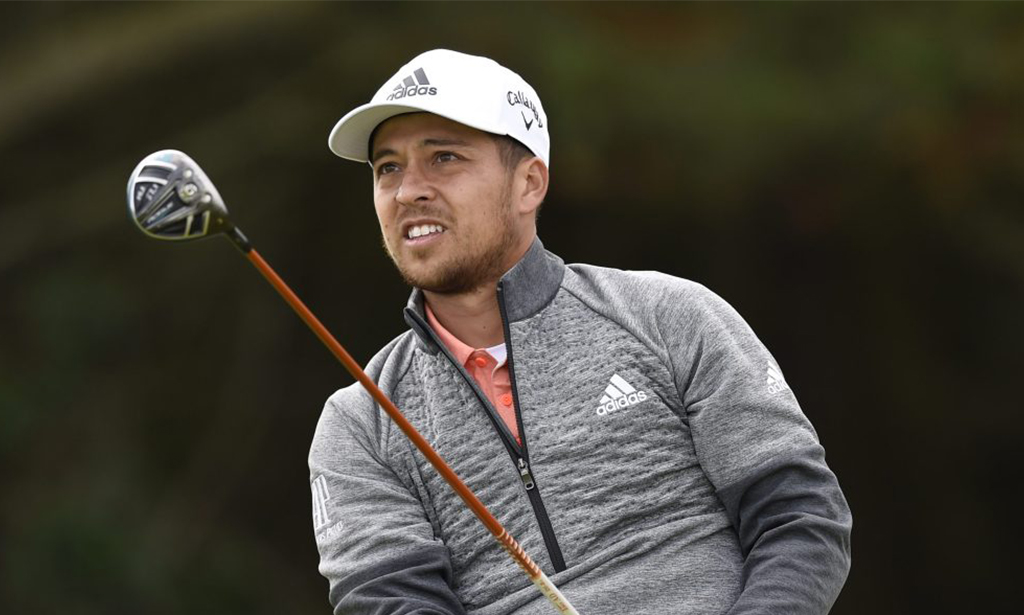
Schauffele Talks Winning Money From Phil Mickelson

Avatar photo

Published

on

There are a lot of great gambling stories that come from the PGA Tour that start with “So, I was playing with Phil Mickelson…”
 
It just so happens Xander Schauffele has a very good story that also helped to propel Mickelson to last month’s unlikely PGA Championship victory.
 
The story was a few weeks in the making as Mickelson referenced the money rounds he and Xander would play during quarantine last week at the Charles Schwab Classic. Asked about his belief in himself, Mickelson launched into a response that said his opportunity to play with the young stars of the PGA Tour had a big impact on his confidence.
 
“A big thing for me in getting things turned around has been the opportunity to play with a lot of good, young players, and so just prior to Innisbrook I had a chance to play with Rory McIlroy and Rickie Fowler at The Grove in Florida and I had a chance to play a lot of golf in the last year and a half with Charley Hoffman and Xander Schauffele in San Diego and that’s made a big difference for me,” Mickelson said.
 
Mickelson credited Schaufelle’s calm demeanor and course management skills as inspirational, something that set him apart and allowed him to be one of the top-10 players in the world at the time. Even more impressive, Mickelson said, was the way in which Schauffele would beat him.
 
“I remember a year ago almost to the day where I was playing a few rounds at the Farms with Xander, and we played a match and he went out and shot 64 and I’m like, ‘Wow, all right, you gave me a pretty good beating. Let’s do this again.’ So, a few days later went and played again and he shot 63. I’m like, ‘Wow, okay. Let me try one more time.’
 
“So we go out next time and he shoots 62 and on a 220-yard par-3, I had to press and hit one four feet and he makes a hole-in-one. I went back and talked to Amy and I’m like, ‘I don’t know how I’m going to beat this guy. He’s probably playing the best of any player in the world right now.’”


With a fresh Phil story brewing, the golf media was itching to talk to Schauffele this week at the Memorial Tournament, the No. 5 player in the world’s next start since Mickelson brought up his quarantine match prowess.
 
After a few questions about the course changes at Muirfield Village, his excitement for the U.S. Open in his hometown and some PGA Championship retrospectives, the Phil questions came fast and furious with Schauffele playing a bit of a humble role.
 
“We started playing a lot over during quarantine. We didn’t really have anything else to do, it was the only way for us to get out of the house,” he began. “So obviously the mood of the rounds were great just because we’re out and about versus being stuck indoors.
 
“I was playing really good golf. To be completely honest, Phil was playing probably some of the worst golf he’s played. Obviously, the course being narrow and sort of strategic didn’t really fit his eye. So I took full advantage of him not playing well and me playing really well during that time stretch.”
 
Pressed on his ace after Mickelson hit it to four feet, Schauffele added some color to Phil’s rather benign telling of it.
 
“He tried to quick-trigger it. He pressed,” Schauffele said. “And the walk back to the 16th tee is like 80 yards or a hundred yards and we were jawing each other on the 15th green. I won the hole, he pressed, and then he quickly went back to the tee to tee off and it’s one of the harder par-3s on the course. And he wasn’t supposed to hit first and of course, he hits first and hits it to four feet or so.
 
“I’m letting him know that I could make him re-hit, since it’s match play, but since he was getting his butt kicked, I figured I would let him hit it to four feet and not make him re-hit. But it was just funny. I wasn’t really a guy to make too many holes-in-one and I kind of pulled a 6-iron toward the water a little bit, fell right in line with the pin and then trickled in.
 
“There’s a little mound behind the tee box — and he just sat there looking down at the ground, shaking his head, he just didn’t really know what to do with himself. So I found that pretty entertaining.”
 
As for the stakes and what Phil lost over the course of those three rounds, Schauffele declined to give a specific amount saying, “That’s not for me to say. They’re much larger than most games, I can tell you that.”
 
However, thanks to some previous stories, we can safely assume that Phil was losing somewhere in the neighborhood of $2,500 per match.
 
 
By Chris Chaney on Clubhouse.SwingU

Continue Reading
Advertisement

Blog

Unveiling the History and Symbolism of Iconic Golf Trophies

Golf is a sport steeped in tradition, prestige, and class. From the lush greens of the course to the meticulously designed clubs, each aspect of the game exudes a sense of history and elegance.

Avatar photo

Published

on

Golf is a sport steeped in tradition, prestige, and class. From the lush greens of the course to the meticulously designed clubs, each aspect of the game exudes a sense of history and elegance. Among these elements, golf trophies – the coveted prizes of the tournament – hold a special place. These iconic awards not only represent the winning golfer’s skill and determination but also carry a rich history and meaningful symbolism. In this article, we’ll delve into the story behind some of the most iconic golf trophies and what they symbolize, offering a unique perspective on this beloved sport.

The Claret Jug: The Open Championship

The Claret Jug, officially known as The Golf Champion Trophy, is awarded to the winner of The Open Championship, one of the four major championships in professional golf. The trophy, first presented in 1873, replaced the original prize of a red leather belt with silver buckle.

Its design is based on the medieval ‘claret jugs’ used to serve wine. The symbolism here lies in the association of the jug with a time-honored tradition, reflecting the essence of the tournament itself. The names of all the previous winners are inscribed on the jug, creating a tangible link to the history of the sport.

The Green Jacket: The Masters Tournament

ADVERTISEMENT

At The Masters Tournament, one of the most prestigious events in golf, the winner is honored with a distinctive green jacket. The tradition began in 1937 when members of the Augusta National Golf Club wore green jackets to distinguish themselves from the crowd.

The symbolism of the Green Jacket is twofold. Firstly, it represents membership of an exclusive club, as only winners of The Masters or members of the Augusta National Golf Club are entitled to wear it. Secondly, the green color reflects the lush, pristine condition of the golf course, a crucial aspect of the sport.

The Wanamaker Trophy: PGA Championship

The Wanamaker Trophy, awarded to the winner of the PGA Championship, is named after Rodman Wanamaker, who played a significant role in establishing the Professional Golfers’ Association of America. It’s one of the largest trophies in professional golf, standing nearly 2.5 feet tall and weighing 27 pounds.

The size and weight of the Wanamaker Trophy symbolize the magnitude and prestige of the tournament it represents. Moreover, engraved on its silver surface are the names of past champions, honoring the legacy of the game.

The U.S. Open Trophy

The U.S. Open Trophy, awarded to the winner of the U.S. Open, dates back to 1895. The trophy was destroyed in a fire in 1946 and had to be recreated from photographs of the original.

The trophy is a sterling silver cup, adorned with elaborate ornamentation. The names of previous winners are engraved on the base, acknowledging the tournament’s rich history. The trophy represents the pinnacle of achievement in American golf, symbolizing the grit and determination required to prevail in one of the sport’s most challenging competitions.

Golf trophies are more than just symbols of individual triumph; they are embodiments of the rich history, tradition, and enduring spirit of the game. From the Claret Jug’s reflection of time-honored tradition to the Green Jacket’s symbolization of exclusivity and pristine golfing conditions, each trophy carries a unique story and meaning. These iconic awards, while coveted for their prestige, also serve as a timeless reminder of the sport’s enduring allure and the unforgettable moments that define golf history.

Continue Reading

Blog

The Most Dramatic Final-Day Finishes in Major Sports Tournaments

Many sports have some nail bitting finishes. Robert Greenfield recaps some major final day finishes in sports history.

Avatar photo

Published

on

The final day of major sports tournaments often delivers an exhilarating end to the competition that keeps fans on the edge of their seats. There’s no better testament to the suspense and drama of sports than those last-minute turnarounds, nail-biting finishes, and underdog triumphs that define the beauty of competition. This article will take you on a thrilling journey through some of the most dramatic final-day finishes in major sports tournaments, reminding us all why we love sports in the first place.

    1. The Miracle of Istanbul – 2005 UEFA Champions League Final

The 2005 UEFA Champions League Final between Liverpool and AC Milan is etched in the annals of football history as one of the most dramatic comebacks ever witnessed. AC Milan, boasting a star-studded lineup, went into halftime with a seemingly unassailable 3-0 lead. However, Liverpool had other plans. In a six-minute spell after halftime, the Reds staged an incredible comeback to level the match at 3-3, eventually winning the game on penalties. The victory was a testament to the never-say-die spirit of Liverpool and the unpredictability of football.

    1. The “Shot Heard ‘Round the World” – 1951 National League Pennant Playoff

In baseball’s history, few moments match the drama of the 1951 National League Pennant Playoff. The New York Giants and the Brooklyn Dodgers were facing off in a three-game playoff to determine the National League champion. In the bottom of the ninth inning of the decisive third game, with the Giants trailing 4-2, Bobby Thomson hit a game-winning three-run homer off Dodgers pitcher Ralph Branca. This legendary moment, known as the “Shot Heard ‘Round the World,” is one of the most iconic in baseball history.

ADVERTISEMENT

    1. The 1999 Ryder Cup “Battle of Brookline”

The 33rd Ryder Cup, held at The Country Club in Brookline, Massachusetts, saw one of the greatest comebacks in the history of golf. The United States trailed Europe 10-6 heading into the final day, but in a stunning display of determination and skill, the American team clawed back to win 14.5-13.5. The victory, known as the “Battle of Brookline,” is still celebrated as a pivotal moment in golf history.

    1. The 1980 “Miracle on Ice”

One of the most dramatic moments in the history of ice hockey came during the 1980 Winter Olympics. The heavily favored Soviet Union team was expected to sweep the gold, but the underdog United States team had different plans. In a game filled with tension and drama, the U.S. team defeated the Soviets 4-3 in a match now known as the “Miracle on Ice.” This victory is not only iconic in the sport of ice hockey but also a significant moment in American sports history.

  1. The 2019 Cricket World Cup Final

The final of the 2019 Cricket World Cup between England and New Zealand was filled with unprecedented drama and suspense. Both teams ended their innings tied on 241 runs, leading to a Super Over – cricket’s version of a tiebreaker. Incredibly, the Super Over also ended in a tie, with both teams scoring 15 runs. England was ultimately declared the winner on the basis of a boundary countback rule, marking their first-ever World Cup victory.

Conclusion

The unpredictability, suspense, and drama are what make sports so captivating. These dramatic final-day finishes remind us of the thrilling highs and lows that come with the world of competitive sports. As fans, we live for these moments, cherishing the unexpected triumphs and heartbreaking defeats. The next time you find yourself watching the final day of a major sports tournament, remember these historic moments and brace yourself for the potential drama that could unfold.

Continue Reading

Blog

Weather and the Game: The Undeniable Influence of Elements on Championship Outcomes

Learn how weather affects different championship outcomes.

Avatar photo

Published

on

landscape, nature, oilseed rape, field, agriculture, rural, panorama, spring, grain, clouds, heaven, expanse, fields, cloudy, sun, blue, weather, green, yellow, meadow, hill, weather mood, idyllic, in the green, free space, growth, harvest, graze, homeland, bavaria, agriculture, spring, spring, spring, spring, spring, weather

Introduction

As a sports enthusiast, you might have noticed that weather plays a significant role in sporting events, particularly in championships. From the power of a baseball pitch to the course of a golf ball, from the strength of a football kick to the stride of a marathon runner – the elements can influence each of these and more. In this article, we delve into the fascinating intersection of meteorology and sports, examining how weather conditions can make or break a championship game.

The Impact of Weather on Different Sports

Whether it’s football, baseball, golf, tennis, or marathon, each sport faces unique challenges when it comes to weather. Let’s delve into the specifics:

Football and Weather Elements

ADVERTISEMENT

Football is a sport that’s played in almost all weather conditions except for severe ones like lightning storms. However, weather elements have a significant impact on the game.

    1. Rain: A wet field makes the ball slippery, impacting players’ ability to handle, pass, or kick the ball accurately. Rain can also make the field muddy, affecting the players’ ability to move swiftly.
    2. Wind: Strong wind can alter the trajectory of the ball, affecting passes and kicks.
    3. Cold: Extremely cold temperatures can affect players’ physical performance and endurance, while also making the ball harder and more challenging to catch.

Baseball and Weather Elements

Baseball is another sport where weather conditions can significantly influence the outcome.

    1. Wind: The direction and speed of the wind can affect the trajectory and distance a baseball travels.
    2. Humidity: High humidity can make the ball denser, potentially reducing its bounce and speed.
    3. Temperature: Low temperatures can make the ball harder, affecting its bounce and the players’ ability to grip and hit it effectively.

Golf, Tennis, and Marathons

Weather conditions play an equally crucial role in golf, tennis, and marathons.

    1. Wind: In golf, the wind can alter the ball’s direction and distance. In tennis, wind can affect ball control, altering serves and volleys.
    2. Temperature: Extreme heat can affect a marathon runner’s performance significantly, leading to dehydration and exhaustion.
    3. Rain: In golf, a wet course can slow down the ball, while in tennis, a wet court can make the ball bounce irregularly.

Case Studies: Weather Influencing Championship Outcomes

This section presents some examples of games where weather conditions significantly influenced the outcome.

  1. The “Ice Bowl” (1967): The NFL Championship game between the Green Bay Packers and the Dallas Cowboys, often referred to as the “Ice Bowl,” witnessed one of the coldest conditions in NFL history, affecting players’ performance and the final outcome.
  2. The “Windy City” World Series (1945): The World Series game between the Chicago Cubs and Detroit Tigers was so affected by the wind that it changed the trajectory of the baseball multiple times, influencing the game’s final score.
  3. Wimbledon Championships (2019): The final match between Novak Djokovic and Roger Federer was played with the Centre Court’s roof closed due to rain, limiting the natural elements’ effects and perhaps altering the match’s dynamics.

Conclusion

The impact of weather on sports is an exciting field of study, revealing how the natural elements influence games and championships. From altering the trajectory of a ball to affecting a player’s physical performance, weather can indeed be a game-changer. As fans and enthusiasts, understanding these influences can add another layer of excitement and anticipation to our favorite sports.

So the next time you attend or watch a game, remember to check the weather forecast. It might just give you a sneak peek into the game’s possible outcome!

Continue Reading

Trending

Click here to get all the latest golf news

Close