Blog
The Unwritten Rules Every Golfer Should Know About Etiquette
Learn the essential golf etiquette rules that will make you a welcome playing partner on any course. Master these unwritten rules of golf.


There’s an old saying in golf that the game reveals character, and nowhere is this more evident than in how a golfer conducts themselves on the course. Golf etiquette isn’t just about following rules – it’s about respect, consideration, and preserving the traditions that make golf the gentleman’s (and gentlewoman’s) game it has always been.
I learned this lesson early in my golf journey during a round at a prestigious private club where I was a guest. I was so focused on trying to play well and impress my host that I completely forgot about basic etiquette. I walked across putting lines, failed to repair ball marks, and generally acted like someone who had never set foot on a golf course before. My host was gracious about it, but I could tell I had embarrassed both of us. That experience taught me that how you play golf is just as important as how well you play golf.
Golf etiquette exists for practical reasons. It keeps the game moving at a reasonable pace, protects the course conditions for everyone who follows, and ensures that all players can enjoy their round without unnecessary distractions or frustrations. But beyond the practical aspects, etiquette is what separates golf from other sports and maintains the unique culture and traditions that make the game special.
The beauty of golf etiquette is that it’s largely based on common sense and consideration for others. If you approach each situation by asking yourself, “What would I want other golfers to do in this situation?” you’ll usually arrive at the correct etiquette choice. However, there are specific guidelines and traditions that every golfer should know, whether you’re playing your first round or your thousandth.
Understanding and following proper golf etiquette will make you a welcome playing partner at any course, from your local municipal track to the most exclusive private clubs. It shows respect for the game, the course, and your fellow golfers. More importantly, it helps ensure that everyone can enjoy their round and that the course remains in good condition for those who follow.
In this comprehensive guide, we’ll explore the essential elements of golf etiquette, from the moment you arrive at the course until you shake hands on the 18th green. These aren’t arbitrary rules designed to make golf stuffy or intimidating – they’re time-tested guidelines that help everyone enjoy the game more fully.
Starting Your Round Right
The first tee sets the tone for your entire round, and proper tee box etiquette establishes you as a considerate golfer from the very beginning. Arriving at your tee time is the foundation of good golf etiquette. Being late doesn’t just affect you – it can throw off the entire day’s schedule for the golf course and create delays that ripple through every group behind you.
Plan to arrive at the course at least 30 minutes before your tee time. This gives you time to check in, warm up, and be ready to play when your time comes. If you’re running late due to circumstances beyond your control, call the pro shop immediately to let them know. Most courses will try to accommodate you if they have advance notice, but showing up 10 minutes late without warning is inconsiderate to everyone involved.
The honor system on the first tee is traditionally determined by handicap, with the lowest handicap player teeing off first. However, many casual groups simply decide among themselves or use a random method like flipping a tee. What matters most is that everyone agrees on the order before anyone hits.
Once the teeing order is established, maintain it throughout the round unless the group decides to play “ready golf” to speed up pace. The player with the lowest score on the previous hole has the honor on the next tee. In case of ties, the player who had the honor on the previous tee retains it.
Silence during others’ shots is perhaps the most fundamental rule of golf etiquette. When someone is preparing to hit or is in their swing, everyone else should be quiet and still. This means no talking, no practice swings, no rattling of clubs or tees, and no movement in the player’s peripheral vision. The concentration required for golf is intense, and even small distractions can significantly affect performance.

Position yourself appropriately when others are hitting. Stand where you can see the shot but are not in the player’s line of sight or directly behind them. Generally, this means standing to the side and slightly behind the person hitting. Never stand directly in front of someone who is hitting, even if you’re well out of range – it’s distracting and potentially dangerous.
Be ready to play when it’s your turn. This means having your club selected, your ball teed up, and your pre-shot routine ready to begin as soon as the previous player has finished and moved away from the tee. Waiting until it’s your turn to start thinking about club selection or to begin looking for your ball is a sure way to slow down the group.
Keep your practice swings to a minimum and take them in an appropriate location. One or two practice swings are usually sufficient, and they should be taken to the side of the tee box, not directly behind the ball where they might damage the tee area. Some golfers take so many practice swings that they’re tired before they actually hit the ball.
Keeping the Game Moving
Pace of play is perhaps the most critical aspect of golf etiquette, and it’s where many golfers unknowingly create problems for themselves and others. A round of golf should take approximately four hours for a foursome, though this can vary depending on course conditions, difficulty, and the skill level of the players.
The key to good pace of play is being ready to hit when it’s your turn. This preparation begins while others are playing their shots. Use the time while others are hitting to assess your lie, select your club, determine yardage, and plan your shot. By the time it’s your turn to play, you should be ready to step up and execute.
Walking or riding efficiently between shots is crucial for maintaining pace. If you’re walking, move at a brisk pace between shots. If you’re riding in a cart, follow cart path rules and position the cart so you can quickly access your clubs and continue to the next shot. Don’t drive the cart to one player’s ball, wait for them to hit, then drive to the other player’s ball – this wastes valuable time.
The “ready golf” concept has become increasingly popular as a way to speed up play without sacrificing the traditional honor system. Ready golf means that the player who is ready to hit goes ahead and plays, regardless of who technically has the honor. This is particularly useful on par-3s where everyone is hitting from the same tee, or when one player is significantly delayed in getting ready.
Lost ball procedures can significantly slow down pace of play if not handled properly. The rules allow five minutes to search for a lost ball, but in the interest of pace of play, many golfers limit their search to two or three minutes. If you think your ball might be lost or out of bounds, play a provisional ball to save time. This allows you to continue play without having to return to the tee if your original ball isn’t found.
Be aware of the group behind you and let them play through if you’re holding them up. If the group behind you is consistently waiting for you to clear before they can hit, and there’s a gap between your group and the group ahead of you, it’s courteous to invite the faster group to play through. This is especially important if there’s a significant skill difference between the groups.
When playing through, do so efficiently and courteously. Thank the group that’s letting you through, play quickly, and don’t hold up their play any more than necessary. Once you’ve played through, maintain an appropriate pace so you don’t create the same problem with the next group ahead.
Respecting the Most Delicate Areas
The area around the green requires special attention to etiquette because it’s where the course is most delicate and where small inconsiderations can have the biggest impact on other players’ experiences. The putting green is the most carefully maintained part of any golf course, and it deserves special respect and care.
Never walk across another player’s putting line. The line between a player’s ball and the hole is sacred territory in golf. Walking on this line can leave footprints or create small depressions that can affect the roll of the ball. Always walk around putting lines, even if it means taking a longer route to your ball or the flagstick.
Repairing ball marks is not just good etiquette – it’s essential for course maintenance. When your ball lands on the green, it often creates a small depression called a ball mark. Use a ball mark repair tool or a tee to gently lift the depressed area back to surface level, then smooth it with your putter. A properly repaired ball mark will heal within 24 hours, while an unrepaired mark can take weeks to recover and may leave a permanent scar.
The general rule is to repair your own ball mark plus one other that you find on the green. This helps ensure that the greens remain smooth and true for everyone. Some golfers make it a habit to repair several ball marks on each green, which is greatly appreciated by course maintenance staff and fellow golfers.
Flagstick etiquette has evolved with recent rule changes, but courtesy remains important. Players can now leave the flagstick in while putting, but if someone requests that it be removed, honor that request. When tending the flagstick for another player, hold it firmly to prevent it from rattling in the wind, and remove it promptly once the ball is struck.
When removing the flagstick, place it gently on the green where it won’t interfere with anyone’s line or be in the way of foot traffic. Don’t drop it or throw it, as this can damage the green. Replace the flagstick carefully when everyone has finished putting, ensuring it’s straight and properly seated in the hole.
Be mindful of where you place your golf bag or cart around the green. Keep them off the putting surface and away from the next tee to avoid interfering with other groups. Many courses have designated areas for bags and carts near each green – use these when available.
Being the Golfer Others Want to Play With
Golf etiquette isn’t about being stuffy or overly formal – it’s about being considerate, respectful, and helping everyone enjoy their round. When you follow proper etiquette, you’re contributing to the positive atmosphere that makes golf special and ensuring that the traditions of the game continue for future generations.
The golfers who are most welcome on any course are those who understand that golf is as much about how you conduct yourself as it is about how well you play. You don’t need to be a scratch golfer to be a great playing partner, but you do need to be someone who respects the game, the course, and your fellow players.
Remember that golf etiquette is learned through experience and observation. Don’t be afraid to ask questions if you’re unsure about proper protocol in a particular situation. Most golfers are happy to help newcomers learn the ropes, and showing that you care about doing things correctly is always appreciated.
The next time you’re on the course, pay attention to how your actions affect others and how you can contribute to everyone’s enjoyment of the round. Good etiquette becomes second nature with practice, and once it does, you’ll find that you enjoy the game even more because you’re playing it the way it was meant to be played.



Blog
The Queens of the Links: How a 1920s Rivalry Forged the Modern Game
A New Look at the Match That Changed Everything.


In the annals of sport, certain rivalries transcend the simple tabulation of wins and losses to become something more—a cultural flashpoint, a testament to human potential, or, in the case of Stephen Proctor’s meticulously researched new book, Matchless, a quiet revolution played out on the windswept links of Britain and America. Proctor, who has previously chronicled the early days of the game, here turns his lens toward the 1920s, an era he frames as the “transformative age for women’s golf”.
At the heart of the narrative are two women who stood as “Empresses of Golf”: the British technician Joyce Wethered and the American competitor Glenna Collett. To read Proctor’s account is to realize that Wethered and Collett were to their era what Jones and Hagen were to theirs—perhaps even more, given the societal “patriarchal world” they were navigating while suffragettes fought for the right to vote just a year before their most famous duels.
Proctor is at his best when reconstructing the high-stakes drama of the 1929 British Ladies’ Championship at St. Andrews. He captures the “frenzied scene” where businesses declared half-day holidays so the Scottish public could witness the final 18 holes. The match itself was a masterpiece of fluctuation: Collett went out in a “scintillating 34,” a score Bernard Darwin—the dean of golf writers—called “overwhelming golf worthy of any male champion”. Yet, Wethered’s “imperturbable temperament” allowed her to claw back from five down to secure a victory that Darwin eventually found himself “at a loss for words” to describe.
What makes Matchless particularly relevant for the modern reader is Proctor’s insistence on the sheer quality of the play. He reminds us that in 1925, Troon was set at 6,415 yards—longer than the setup for the 2024 U.S. Women’s Open a century later. Playing from these “back tees,” Wethered and Collett repeatedly posted scores in the mid-70s, marks that were “unthinkably low for women” at the time and competitive with the men’s Open Championship records of the era.

The book also serves as a vital historical bridge. Proctor traces the lineage of the women’s game back to 1738, when “Charming Sally” won a match at Bruntsfield Links while her husband carried her clubs. He highlights the indispensable work of Issette Pearson, the “despotic” force who founded the Ladies’ Golf Union in 1893 to establish a uniform code of rules and handicapping long before the men’s game achieved similar cohesion.
Proctor’s prose is elegiac, particularly when discussing the “enduring legacy” of these two women who lived to great ages—Collett to 85 and Wethered to 96—but never outlived the legend they created on the Old Course. He concludes by noting that their performance remains, even a century later, “the greatest women’s golf match ever played”.
For the historian, Matchless is a rigorous addition to the library; for the enthusiast, it is a stirring reminder that the “manifest genius” of the game knows no gender. Proctor has not just written a sports book; he has recovered a lost chapter of excellence that, like a perfectly struck iron shot, rings true long after the follow-through.
Pick up your copy of Matchless today.
“Matchless” by Stephen Proctor is published by Arena Sport, an imprint of
Birlinn Limited.
Rating: ★★★★½ out of 5
Ms. Lexi the Golf Guru is a golf enthusiast, instructor, and advocate for inclusion in the game. When she’s not on the course, she can usually be found with her nose in a book, because great stories, like great golf shots, can change everything.
Blog
The Ultimate Guide to Buying Used Golf Clubs
Save money and play better golf with our ultimate guide to buying used golf clubs. Learn where to find the best deals and what to look for to build a quality bag on a budget.

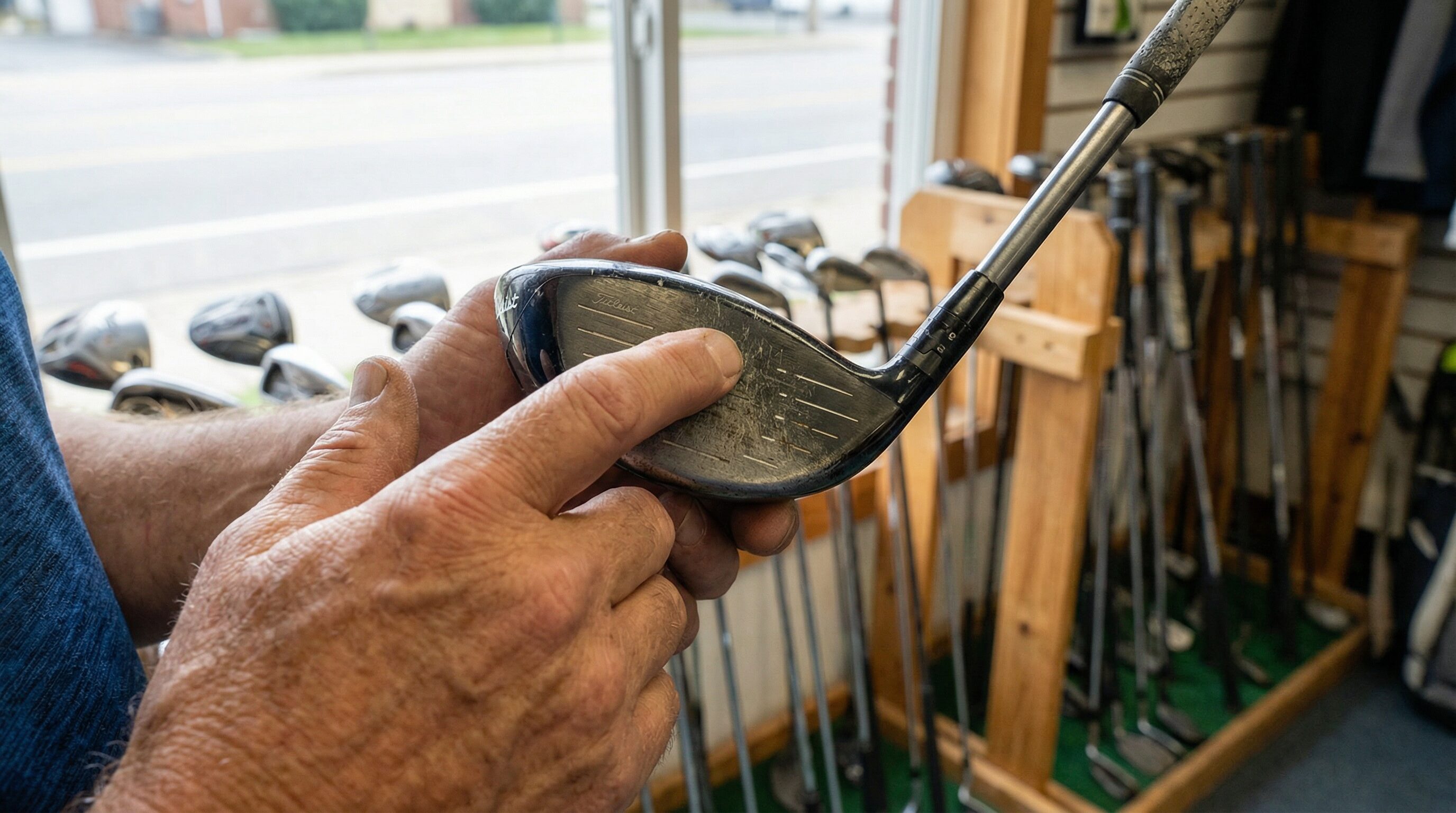
Let’s be honest, golf can be an expensive hobby. Between green fees, balls, and the latest and greatest gear, the costs can add up quickly. But what if I told you that you could build a high-performing bag without breaking the bank? The secret lies in the world of used golf clubs. In this guide, we’ll explore the ins and outs of buying used clubs, helping you find fantastic deals on quality equipment.
Why Buy Used? The Smart Golfer’s Advantage
Besides the obvious cost savings, buying used golf clubs has several other benefits. For one, you can often get clubs that are only a season or two old for a fraction of their original price. This means you can play with premium technology without the premium price tag. Additionally, buying used is a great way to experiment with different brands and models to find what truly works for your game without a major financial commitment.
Where to Find the Best Deals on Used Golf Clubs
Navigating the second-hand market can be tricky, but there are several reputable places to find great deals on used clubs.
Online Retailers
Websites like Callaway Pre-Owned, GlobalGolf, and 2nd Swing are fantastic resources. They offer a massive selection of clubs from all major brands, and they often provide detailed descriptions and condition ratings. Plus, they usually offer a trial period or return policy, which takes a lot of the risk out of buying online.
Local Golf Shops and Play It Again Sports
Don’t overlook your local golf shops. Many of them have a used club section, and the staff can often provide valuable insights and recommendations. Similarly, stores like Play It Again Sports can be a goldmine for used equipment, especially for beginner and intermediate players.

eBay and Facebook Marketplace
For the truly adventurous bargain hunter, eBay and Facebook Marketplace can offer some of the best deals. However, be prepared to do your homework. Scrutinize the pictures, ask the seller questions, and be wary of deals that seem too good to be true. Always check the seller’s ratings and reviews before making a purchase.

What to Look For When Buying Used Clubs
When you’re inspecting a potential purchase, here are a few key things to look for:
•Grips: Check for excessive wear, cracking, or slickness. Worn-out grips will need to be replaced, which can add to the overall cost.
•Shafts: Inspect the shafts for any dents, dings, or signs of rust. These can affect the club’s performance and durability.
•Clubfaces: Look for any major dings, deep scratches, or excessive wear on the grooves. Minor cosmetic blemishes are fine, but significant damage can impact how the ball comes off the face.
•Authenticity: Be cautious of counterfeit clubs, especially when buying from individual sellers. If a deal seems too good to be true, it probably is. Stick to reputable sellers and be wary of clubs with blurry logos or unusual paint fills.
The Hacker’s Playbook for Buying Used
•Know Your Specs: Before you start shopping, have a general idea of what you’re looking for in terms of shaft flex, loft, and club model.
•Be Patient: Don’t rush into a purchase. The used club market is constantly changing, so be patient and wait for the right deal to come along.
•Don’t Be Afraid to Haggle: Especially when buying from individual sellers, don’t be afraid to negotiate on the price.
Buying used golf clubs is a smart way to save money and build a bag that you love. With a little bit of research and a keen eye for detail, you can find some incredible deals on high-quality equipment. Have you had success buying used clubs? Share your best finds in the comments below!

It’s a scenario every golfer knows intimately: you’ve just striped a perfect drive down the middle of the fairway, only to follow it up with a chunked iron shot that barely advances the ball. Frustration mounts, your focus shatters, and the rest of the hole—and perhaps the round—unravels. While we often blame our swing mechanics for these inconsistencies, the true culprit frequently lies between our ears. Research consistently shows that the mental game accounts for a staggering 70-90% of performance in golf . Yet, despite its monumental importance, studies reveal that only about 14% of golfers regularly practice their mental skills .
This article is designed to change that. We will explore the critical role of psychology in golf, break down the most common mental errors that sabotage your scores, and provide you with professional-grade techniques and practical drills to build an unshakeable mental game. By the end, you will have a clear roadmap to not only lower your handicap but also to find more joy and resilience on the course.
Why the Mental Game is Your Most Important Club
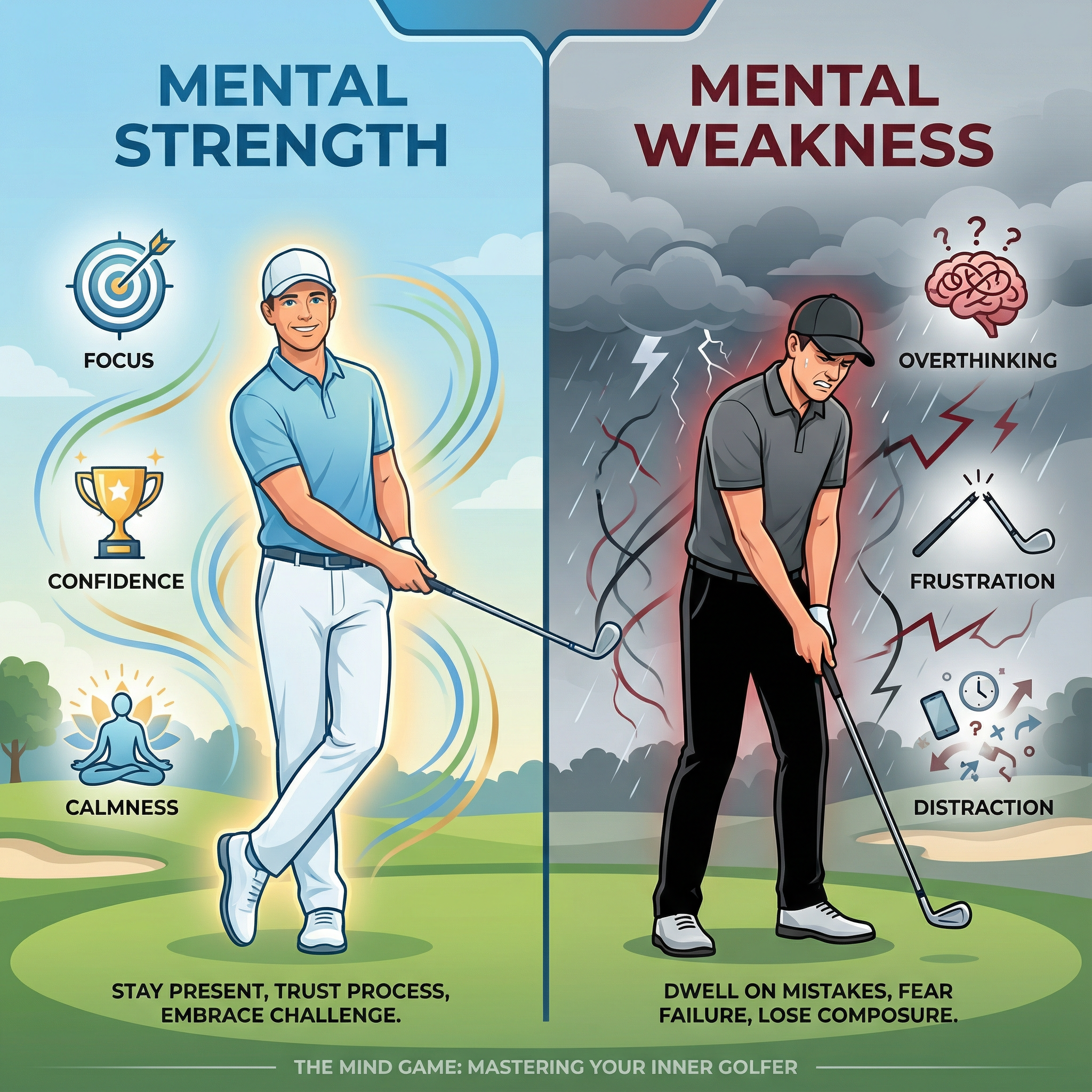
In golf, a quiet mind is a powerful asset. Your mental and emotional state directly influences your physical capabilities. When you are calm, focused, and confident, your body is relaxed, and your swing can flow freely and naturally. Conversely, when you are anxious, angry, or distracted, your muscles tighten, your coordination suffers, and your swing mechanics break down. This isn’t just a feeling; it’s a physiological reality. Negative emotions trigger a fight-or-flight response, which is fundamentally at odds with the fine motor control required for a successful golf shot .
A 2025 systematic review on mental fatigue in golf further highlights this connection. The research found that prolonged mental exertion during a round directly leads to a decline in performance, affecting everything from driving distance and iron accuracy to, most significantly, putting . Every decision, every calculation, and every moment of frustration depletes your cognitive resources, making it harder to execute shots as the round progresses. Mastering the mental game is therefore not just about thinking positively; it’s about efficiently managing your mental energy.
The 5 Mental Mistakes Costing You Strokes (and How to Fix Them)
Based on extensive analysis of amateur golfers, sports psychologists have identified several recurring mental errors. Here are five of the most common, along with strategies to overcome them, adapted from the work of mental game coach David MacKenzie .
Mental Mistake Description The Fix 1. Analyzing Your Swing Constantly dissecting your mechanics on the course, trying to “fix” your swing mid-round. Trust the swing you brought. The course is for playing, the range is for practicing. Focus on your target and let your body execute. If you need a swing thought, use a simple rhythm cue like “one-two-three.” 2. Obsessing Over Score Tying your emotional state to your score on every hole, leading to a rollercoaster of feelings. Focus on the process, not the outcome. Your goal for each shot should be to execute your routine flawlessly. The score will take care of itself. 3. Negative Self-Talk Berating yourself after a bad shot, which lowers confidence and increases tension. Become your own best caddy. After a poor shot, offer yourself the same encouragement you would a friend. Develop a post-shot routine that involves acknowledging the feeling, taking a deep breath, and moving on. 4. Vague Targeting Aiming for a general area like “the fairway” or “the green” instead of a specific point. Pick the smallest possible target. Top professionals aim at incredibly precise spots, like a specific tree branch or a single blade of grass. This sharpens focus and improves accuracy. 5. Neglecting Your Routine Lacking a consistent pre-shot and post-shot routine, leading to inconsistent mental preparation and reaction. Make your routine your primary goal. A well-defined routine is your mental armor against pressure. It ensures you are committed to every shot and can handle any outcome.
Building an Unshakeable Mental Game: Pro-Level Techniques
Top professional golfers are masters of the mental game. They employ specific techniques to stay focused, confident, and resilient under immense pressure. Here are a few you can incorporate into your own game.
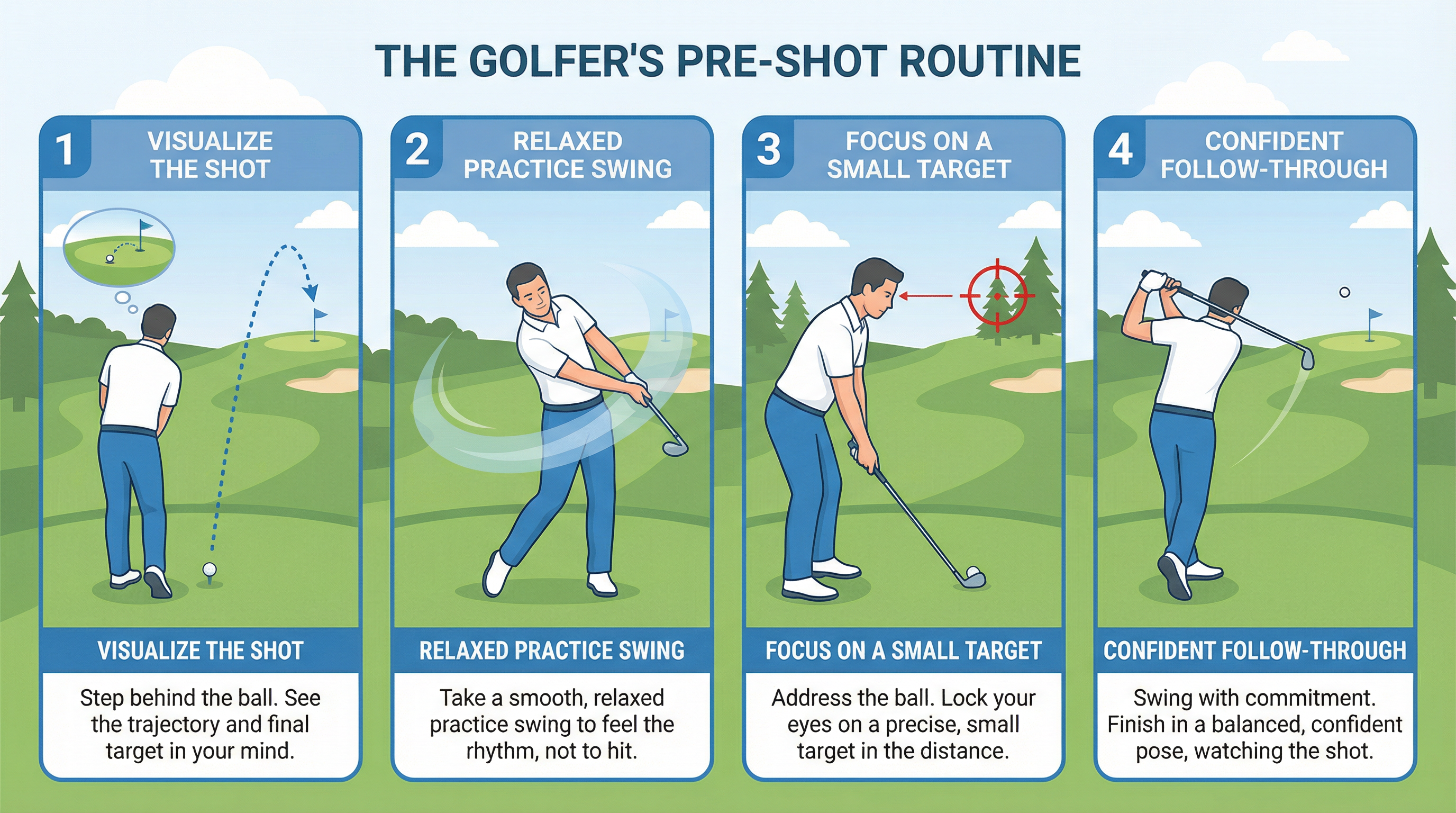
The Power of a “Pre-Shot Creation”
Instead of a rigid, robotic pre-shot routine, think of it as a “pre-shot creation.” This concept, inspired by the approach of players like Tiger Woods, reframes the process as an artistic and imaginative one . Rather than just going through the motions, you should feel the shot, engage your senses, and become genuinely interested in the unique puzzle each shot presents. This fosters a state of deep presence and curiosity, quieting the analytical mind.
Tiger Woods worked extensively with navy psychologist Dr. Jay Brunza early in his career, developing what he called “game training.” Woods emphasized the importance of bringing attention to “THIS SHOT in THIS moment” and described feeling the shot in his fingers rather than relying solely on visualization. At his best, Woods found a way to be immensely interested in each shot, playing from a position of curiosity rather than anxiety .
Mastering Your Mind: Awareness Over Control
One of the biggest paradoxes in golf psychology is that trying to control your thoughts often backfires. Telling yourself “don’t hit it in the water” only makes the water a more prominent feature in your mind . The key is not to suppress negative thoughts but to change your relationship with them through mindfulness and awareness. Acknowledge the thought without judgment, and then gently guide your focus back to your target and your breathing. The best players don’t have fewer negative thoughts; they are simply more skilled at not letting them take over.
Research shows that the average person has approximately 70,000 thoughts per day, with more than two-thirds being negative . The difference between elite golfers and amateurs is not the quantity of negative thoughts but how they respond to them. Elite players have developed the skill of awareness—noticing thoughts without becoming entangled in them—allowing the thoughts to pass like clouds in the sky.
Breathe Like a Champion
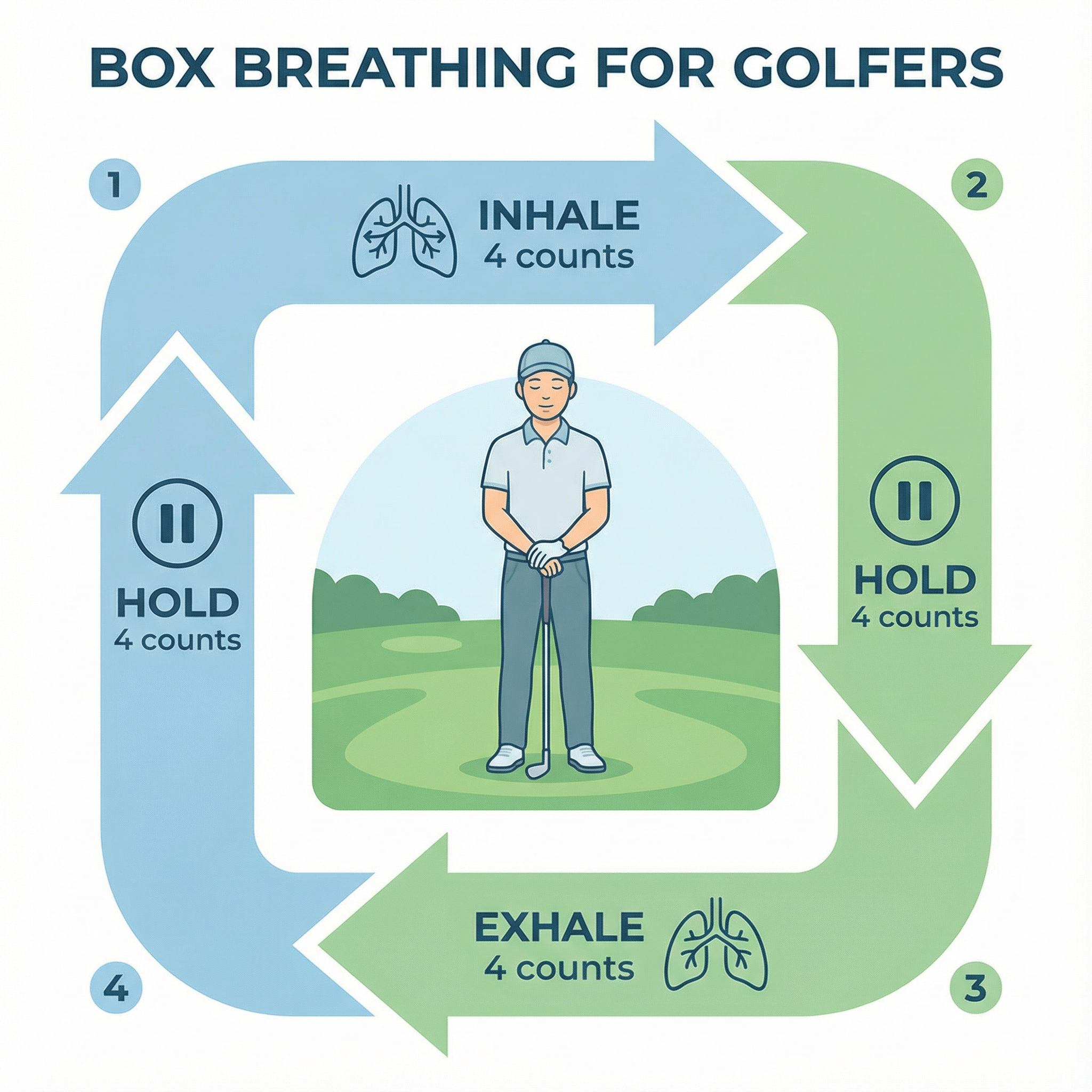
Breathing is one of the most powerful and simple tools for managing your physiological state. When you feel pressure mounting, your breathing becomes shallow and rapid. By consciously slowing it down, you can signal to your nervous system that it’s time to calm down. A popular and effective technique is Box Breathing:
1.Inhale slowly for a count of four.
2.Hold your breath for a count of four.
3.Exhale slowly for a count of four.

4.Hold your breath for a count of four.
Repeating this cycle just a few times can significantly lower your heart rate and reduce muscle tension, allowing you to approach the shot from a state of calm focus .
The Science Behind Mental Training
Recent research validates what professional golfers have known intuitively for decades. A brain training study conducted with UCLA Golf demonstrated remarkable results: participants increased their greens in regulation by 12% and decreased three-putts per round by 9.7%. Perhaps most impressively, these improvements were sustained eight weeks after the training concluded . This demonstrates that mental skills, like physical skills, can be trained and improved with consistent practice.
A 2024 neuroscience study revealed that expert golfers exhibit distinct brain activity patterns during successful putts compared to unsuccessful ones. The research emphasized that mental preparation—not just physical technique—is the key differentiator between making and missing putts . This finding underscores the importance of developing a consistent mental routine before every shot.
Putting It Into Practice: Drills for a Stronger Mind
Improving your mental game requires consistent practice, just like your swing. Here are a few drills you can incorporate into your routine:
Pressure Putting Drill: Place three balls at 3, 6, and 9 feet from the hole. You must make all three in a row to complete the drill. If you miss, you start over. This simulates pressure and forces you to focus on your routine for each putt. As you improve, increase the difficulty by adding more balls or extending the distances.
Mindfulness on the Range: During your practice sessions, take a few moments between shots to simply be present. Feel the grip in your hands, notice the breeze, and listen to the sounds around you. This trains your ability to stay in the present moment, which is essential for peak performance on the course.
Post-Round Journaling: After each round, take five minutes to write down one thing you did well mentally and one mental challenge you faced. This builds self-awareness and helps you identify patterns in your mental game. Over time, you will notice recurring themes that you can address in your practice.
Target Practice with Consequences: On the range, pick a specific target for every shot—not just a general area. If you miss your target, perform a small penalty like five push-ups or hitting the next shot with your opposite hand. This adds consequences to your practice, making it more similar to on-course conditions where every shot matters.
Key Takeaways for Your Next Round
As you prepare for your next round, keep these fundamental principles in mind:
Trust over control. The more you try to consciously control your swing, the more tension you create. Trust the swing you have practiced and let your body execute naturally.
Process over outcome. Make your pre-shot routine your primary goal for every shot. When you focus on executing your process flawlessly, good scores follow naturally.
Awareness over suppression. You cannot eliminate negative thoughts, but you can change your relationship with them. Notice them, acknowledge them, and gently return your focus to the present moment.
Precision over generality. Always pick the smallest possible target. This sharpens your focus and gives your subconscious mind a clear objective.
Compassion over criticism. Treat yourself with the same kindness and encouragement you would offer a playing partner. Negative self-talk only compounds mistakes and drains your confidence.
Conclusion
The journey to mastering the mental game of golf is ongoing, but it is one of the most rewarding pursuits in the sport. By understanding the profound impact of your mind on your performance, recognizing common mental errors, and consistently practicing proven psychological techniques, you can unlock a new level of consistency, resilience, and enjoyment on the golf course. Remember, the next time you step onto the tee, your most powerful tool isn’t in your bag—it’s in your head. The difference between a good round and a great round often comes down to how well you manage the six inches between your ears.
Start small. Pick one technique from this article—perhaps developing a consistent pre-shot routine or practicing Box Breathing before important shots—and commit to it for your next three rounds. Track your progress, notice the changes, and gradually incorporate additional mental skills into your game. The mental game is not a quick fix, but a lifelong practice that will serve you well both on and off the course.
References
[1] NeuroTrackerX. (2023, December 1). Why Golf Performance is 90% Mental.
[2] McCarthy, P. (2025, November 8). The Mental Game of Golf: Pro Secrets You Haven’t Heard Before.
[3] Colorado Senior Golfers’ Association. The Brain Game – Spring Edition.
[4] McCarthy, P. (2025, November 8). The Mental Game of Golf: Pro Secrets You Haven’t Heard Before.
[5] Pan, X., et al. (2025). Mental fatigue in golf: A systematic review. PLOS ONE.
[7] Mind Caddie. (2025, November 9). Tiger Woods’ Mental Strategies.
[9] MyTPI. Mental Game: Brain Training Study With UCLA Golf.
[10] PsyPost. (2024, August 15). Golf: New neuroscience study reveals the secrets of better putting.
- Advertisment



How to Play in the Wind: A Hacker’s Survival Guide

The Queens of the Links: How a 1920s Rivalry Forged the Modern Game

The Ultimate Guide to Buying Used Golf Clubs




-
 Product Review6 years ago
The Perfect Practice Putting Mat Review by Jason Tenzer
-
 Blog5 years ago
Loophole Rule Offers PGA Tour Pros a Mulligan
-
Blog5 years ago
2021 Buyer’s Guide: The Top 10 Value Golf Balls For Distance & Feel
-
Blog5 years ago
Golf Marriage Counselor
-
 Blog6 years ago
9 Biggest Chokes Of The Past Decade
-
 Product Review6 years ago
THE ADJUSTABLE IRONS: WALKING STICKS GOLF CLUBS
-
Blog5 years ago
What Your Golf Clubs Say About You
-

 News1 month ago
The latest news in golf