Golf Hacks
Get Your Golf Gear in Shape with These 5 Easy Tips
So you’re stuck at home and you’ve already binge-watched “The Office” for the third time — in the last week. It’s safe to assume everyone is going a little stir-crazy as we continue to embrace social distancing. And with some courses hitting pause on daily play, it’s becoming increasingly difficult to get your outdoor golf fix — unless your name is Padraig Harrington — which leads to a lot of time milling around the house trying trick shots, all in the name of #PlayingThrough. We get it.
Other than your wedges and putter, the rest of your golf clubs (and bag) aren’t getting a lot of love these days, but that doesn’t mean you have to forget about them entirely. It’s about this time every year when much of the country is counting down the hours until the Masters, that you likely get your bag out and start doing an inventory check as the days get longer, and opportunities to play become more frequent.
You could wait until coronavirus retreats to do the inventory check, or you could just go ahead and do it now. Let’s be honest, what else are you going to do? Hop on another video conference call? No thanks.
Instead, consider taking a few minutes out to follow these five simple gear tips to ensure everything in your bag is in good working order before you hit the course.
1. Check your grips
Want to know what isn’t fun? Taking a huge rip at the ball and watching the club twist or even fly out of your hands at impact. Could it have something to do with how you hold the club? Sure. But you might also want to check out your handles to see if they’re still in playing condition.
The golf grip is constantly overlooked during the early season tune-up. Golf Pride data shows the average usage for a set of grips is roughly 40-60 rounds — and, yes, practice sessions count as one round — which means you should be replacing your grips every year or two if playing regularly. On average, it’ll run you somewhere between $70-$140 depending on the grip you choose.
If your grips are starting to look slick or rip at the base, it’s probably time to change them out. Or you could consider the idea of using sandpaper to temporarily bring your grips back to life.
Another tip? If you don’t want to buy grips on the regular, wash them every so often with a scrub brush and mild detergent to remove the oils and sweat from your hands that break down the rubber. After giving them a good scrub, dry off the grip with a clean towel.

2. Clean the grooves
I was taught from an early age to always keep the grooves on your irons and wedges clean. (Thanks, Dad!) It’s a simple task that requires you to have a wet towel on hand during the round to clean off the face after each shot. It takes a couple seconds.
But chances are you aren’t cleaning off the grooves after each shot. All that dirt and grass currently caked in the grooves of your lob wedge is a problem. Unless you like hitting a flier, go ahead and check the grooves on all your clubs. (Yes, that includes the 3-iron.)
Studies have shown you can lose roughly 1,300 rpm’s of spin when the grooves can’t grip the cover of the ball properly, which is fairly significant when we’re talking about a wedge shot that needs to drop and stop.
Grab a bucket with warm water, a scrub brush (or even a toothbrush) with plastic bristles and go to work. It shouldn’t take you long to dislodge the dirt and reveal clean grooves. And if you don’t have a brush, a golf tee with a sharp tip will work in a pinch. Just make sure you have several handy if you plan on cleaning your whole set, as the tip of the tee will get worn out in a hurry.
As for the metal brushes you see hanging from golf bags? I’m not a huge fan of taking something with wire bristles to the face of an iron or wedge, especially if it’s of the soft carbon steel variety. But that’s your call if you want to go the metal brush route.
3. Spike check
I’ll be the first to admit I don’t check the spikes on my golf shoes as often as I should. Save for Tiger Woods and a few of his colleagues in the professional ranks, everyone is wearing soft spikes on the course. Soft spikes keep your golf sanctuary happy, but they can be somewhat frustrating to remove if you don’t keep tabs on the number of rounds they’ve logged.
A set of soft spikes will last between 20-30 rounds before they need to be replaced. For those playing on firmer courses in dry desert climates, it’s probably closer to 20. If you catch them before they completely wear out, it’s easy enough to buy a replacement set online — the wrench needed to remove the spikes costs $5-$10 — to keep from having to break in a new pair of shoes.
How can you tell if your spikes need to be replaced? If the rubber spikes have been worn down to nubs, it’s time to make a change. And what happens if you can’t see the two little holes in the soft spike where the wrench attaches to remove said spike? It means they’ve likely been worn to the point where getting new shoes makes the most sense for your sanity. Trust me.
4. Do an inventory check
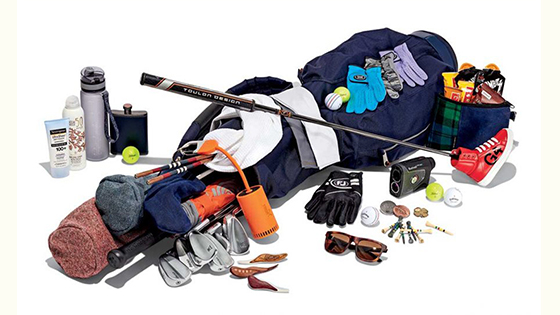
Now is the time to empty out the golf bag and see what you’re missing. Are you all stocked up on tees, ball markers, sunscreen (make sure it hasn’t expired), permanent markers (we’ll get to this one in a moment) and koozies? If you’re missing one of the above, now is a great time to make sure it’s in the bag for the new season.
What about golf gloves? If you’re anything like me, you have a few fresh options in a Ziploc bag. Also, consider throwing a pair of rain gloves in the mix if you play in the elements, or want to do your best Phil Mickelson impression.
Something else to consider? It wouldn’t be a bad idea to air out your gain gear if it’s regularly stored in the side pocket of your bag. Also, most bags have a small side zipper that allows you to access the bottom in the event something falls between the club dividers. I’ve found an old peanut butter and jelly sandwich and $20 by simply doing a semi-regular check. You never know what you’re going to find.
5. Mark your golf balls
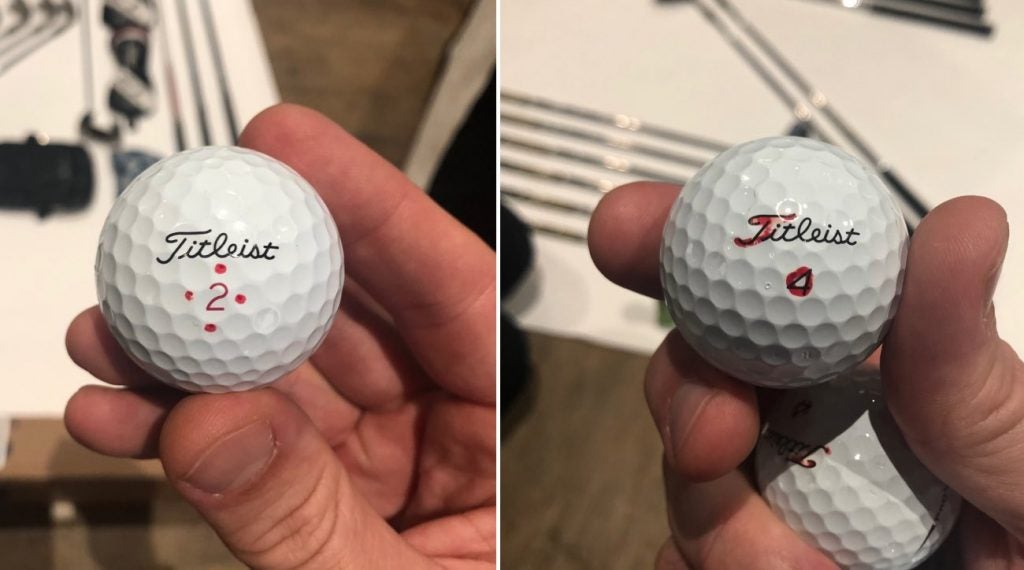
Please don’t be the guy in your foursome who continually asks, “Is it you or me who’s playing the Titleist red 3?” That guy is the worst. Just mark your golf ball and save everyone the headache. If you’ve never marked your ball before, you could always go “Justin Thomas style” and add four red dots around the play number. There’s also “Castaway style,” if you have a bit more time.
If you mark your balls now, you won’t have to worry about doing it right before you tee off. Simple stuff.
And if you’re looking for a specific marker, I’d recommend the Milwaukee Inkzall. Did you know it’s Tiger Woods’ marker of choice? Yes, that’s really a thing. It works great for not only marking the ball but the scorecard as well with pinpoint precision.
By Jonathan Wall
This article originally appeared on Golf.com.
Golf Hacks
The Smart Player’s Guide to Shaving Strokes Without Changing Your Swing
Learn what it takes to shave strokes without changing your swing.
Every golfer has spent countless hours on the driving range, grinding away in pursuit of a technically perfect swing. But what if the secret to consistently lower scores isn’t found in a swing change, but in a mind change? What if you could shave 3, 5, or even 7 strokes off your handicap without altering your mechanics at all? Welcome to the world of course management—the art and science of thinking your way around the golf course like a seasoned professional.
This is the strategy that allows Tour pros to post a solid score even when they don’t have their “A-game.” It’s how Viktor Hovland transformed into a FedEx Cup champion, crediting a renewed focus on course management for his ascent to the top of the golf world . After a comprehensive review of his statistics with Tour player and data analyst Eduardo Molinari, Hovland discovered he was being too aggressive with his approach shots and short-siding himself far too often. By adopting a more conservative, Tiger Woods-inspired strategy—birdie the par 5s, add a couple more birdies, and avoid mistakes—Hovland became one of the world’s best players.
This guide will break down the core principles of smart golf, giving you a professional-grade framework to make better decisions and, ultimately, shoot lower scores.
The Foundation: It All Starts with Knowing Your Game
Before you can manage the course, you must first manage yourself. The biggest disconnect between amateur golfers and professionals is a realistic understanding of their own abilities. Smart strategy is built on honest data, not wishful thinking or selective memory of that one perfect shot.
Know Your Actual Distances: The most common mistake amateur golfers make is overestimating how far they hit the ball . For every club in your bag, you need to know your carry distance (how far the ball flies in the air) on a typical, 75% effort swing. This number is far more important than your total distance, as it dictates how you navigate hazards and approach greens. Spend a session on a launch monitor or use a GPS device to get honest numbers for each club. Write them down. Commit them to memory. These numbers are the foundation of every strategic decision you will make on the course.
Understand Your Shot Pattern: No golfer hits the ball perfectly straight every time. Every player has a shot dispersion pattern—a grouping of where their shots tend to land. Do you typically miss left? Right? Is your miss a hook or a slice? Understanding your pattern is critical. If you know your 7-iron has a 30-yard wide dispersion, you can aim in a way that keeps both your good shots and your common misses in a safe position. The goal of course management isn’t to hit more perfect shots, but to make your misses less destructive .

Tour professionals use launch monitors and statistical tracking to understand their dispersion patterns in granular detail. If a player knows that 70% of their shots with a particular club will land within a certain cone, they can pick a target that ensures even the edges of that cone avoid serious trouble. This approach transforms the mental game. When you’re standing over a shot and you know your strategy allows for almost all the possible outcomes with that club, you’re going to swing a lot more freely and with far less tension.
A Pro’s Game Plan: Hole-by-Hole Strategy
Armed with an honest assessment of your game, you can now approach each hole like a chess match, thinking one or two moves ahead. The best players in the world don’t just react to what’s in front of them; they plan the entire hole backward from the green.
From the Tee Box: Setting Up Success
The goal of the tee shot is not always maximum distance; it’s to set up the ideal approach shot. Before you even pull a club, ask yourself: “Where is the best place to hit my next shot from?” This simple question will revolutionize your strategy.
Use the Angles: Don’t automatically tee up in the middle of the tee box. If there’s trouble down the right side of the hole, tee up on the far right side of the box and aim up the left. This creates a better angle away from the hazard and visually opens up the fairway . Conversely, if the trouble is on the left, tee up on the left side and aim right. This is one of the simplest yet most underutilized tactics in amateur golf.

Golf course architects are masters of visual deception. They design holes to make fairways look narrower than they actually are from ground level. One of the best pre-round preparation techniques used by Tour professionals is to study aerial views of the course using yardage books or Google Earth imagery . From above, you can see the true size of landing areas, which often reveals significantly more room than what the designer wants you to see from the tee. This knowledge allows you to swing more freely, trusting that you have plenty of space to accommodate your shot pattern.
Club Selection Isn’t About Ego: A par-4 isn’t automatically a driver. If a 3-wood or hybrid leaves you in the fairway with a comfortable full swing into the green, it’s often the smarter play than a driver that brings bunkers, water, or out-of-bounds into play. Remember, the goal is to set up the easiest possible approach shot, not to impress your playing partners with distance.
The Approach Shot: Playing the Percentages
This is where most amateurs lose strokes by chasing glory. Tour professionals, on the other hand, play a disciplined game of percentages. They understand that the cumulative effect of many smart decisions far outweighs the occasional hero shot.
The Golden Rule: Aim for the Center of the Green. The middle of the green is your best friend. Even for the best players in the world, this is the primary target for any club longer than a 9-iron . Despite what you might think from watching television coverage, Tour pros rarely aim directly at pins. When you see those shots that land close to the pin, it’s usually because the ball landed at the very edge of their shot dispersion. Their actual target was the safe side of the green to avoid being short-sided or bringing a big number into play.

Avoid the “Sucker Pin”: When a pin is located just over a bunker or water hazard, it’s called a “sucker pin” for a reason. The risk far outweighs the reward. The difference between a 15-foot birdie putt and a 30-foot birdie putt is negligible compared to the difference between a 30-foot putt and a bunker shot. Aim for the fat part of the green, take your two-putt par, and walk to the next tee without a big number on your scorecard.
Know Your “Good Miss”: Before every approach, identify the “safe” place to miss. For every shot you play, there is a good miss and a bad miss . If the pin is on the right side of the green with a bunker guarding it, the safe miss is almost always to the left, leaving you with more green to work with for your chip or pitch. Being “short-sided” (missing on the same side as the pin with little green to work with) is one of the fastest ways to make a bogey or worse. Tour professionals meticulously mark their yardage books with safe zones and danger zones for every pin position, ensuring they always know where they can afford to miss.
Around the Green: The Art of the Easy Up-and-Down
Not every short game shot requires a high-spinning, flop-shot miracle. In fact, the best short game strategy is often the simplest one. The goal is to get the ball on the green and rolling as quickly as possible, minimizing the variables that can lead to a poor outcome.
Play to Your Strengths: Golf is not a static game. On some days, your chipping will be sharp; on others, it will be shaky. The smartest players adapt their short game choices based on what’s working that day . If your chipping is letting you down, don’t be afraid to use your putter from farther off the green than you normally would. The worst putt is often better than the worst chip. This kind of honest self-assessment and tactical flexibility is a hallmark of intelligent course management.
Prioritize Uphill Putts: When chipping or pitching, always try to leave yourself an uphill putt. They are significantly easier to judge for speed and line than slippery downhill putts. This principle should influence your target selection on approach shots as well. Staying below the hole is one of the most valuable yet underappreciated strategies in golf.
The Data Revolution: Thinking Like a Tour Analyst
The modern professional game is driven by data. Statistics like Strokes Gained, developed by Columbia Business School professor Mark Broadie, have revolutionized how players approach strategy . This metric analyzes every shot a player hits and compares it to the PGA Tour average, revealing exactly where a player is gaining or losing strokes relative to the field.
What has this data overwhelmingly proven? The fastest way to lower your score is to avoid big numbers. A single triple-bogey can undo the benefit of three birdies. Data-driven systems like Scott Fawcett’s DECADE Golf, used by numerous Tour pros, are built on this principle. They use statistical probabilities to map out the highest-percentage play on every shot, which almost always involves a more conservative strategy than most amateurs instinctively employ. Fawcett’s system assigns a negative value to different miss locations, helping players move their target to minimize potential damage.
Situation The Amateur Play The Pro (Smart) Play Tee Shot Automatically pulls driver to hit it as far as possible. Chooses the club that best avoids hazards and sets up the ideal approach angle. Approach Shot Aims directly at the flag, regardless of its location. Aims for the center of the green, ensuring the worst-case miss is still playable. Trouble Shot Tries the low-percentage hero shot through the trees. Takes their medicine, punches out sideways to the fairway, and relies on their short game. Putting Tries to make every long putt, often leaving a tricky 6-footer back. Lags long putts to a 3-foot circle, guaranteeing a stress-free two-putt.
The statistics also reveal another critical insight: course knowledge can be worth up to five strokes per round for a golfer who typically shoots in the 80s, and even more for higher handicappers . This advantage is magnified on courses with forced carries, tight fairways, and severe green undulations. The more you understand about a course before you play it, the better your strategic decisions will be.
Assessing Risk: The Green, Orange, Red System
One of the most sophisticated elements of professional course management is the ability to dynamically assess risk based on how you’re playing on a given day. On some days you will have your “A game,” where you are more in control of your ball, but on others you might have your B, C, or even D game. The key is recognizing which game you have and adjusting your strategy accordingly .
Many Tour professionals use a simple traffic light system to evaluate shots:
Green Light: You’re playing well, feeling confident, and can take on more risk. This is the time to aim at a tucked pin or attempt a more aggressive line off the tee.
Orange Light: You’re playing reasonably well but not at your best. Stick to standard, percentage-based strategy. Aim for centers of greens and safe sides of fairways.
Red Light: You’re struggling with your ball-striking. Assume a wider dispersion pattern and choose safer targets. Don’t try to force birdies to catch up—this almost always leads to more mistakes and bigger numbers.
The worst thing you can do when you’re not playing well is to become more aggressive in an attempt to make up ground. This adds pressure, increases tension, and typically makes the situation worse. The smartest players know when to play defensively and grind out a respectable score with the game they have that day.
Your Action Plan for the Next Round
Improving your golf game doesn’t have to mean a complete swing overhaul or months of intensive practice. By adopting the same strategic principles used by the best players in the world, you can make an immediate and lasting impact on your scores. It requires discipline, an honest assessment of your skills, and a willingness to prioritize a lower score over a single heroic shot.
For your next round, commit to these three fundamental principles:
Pick a specific, conservative target for every single shot. Vague targets like “the fairway” or “the green” are not sufficient. Choose a precise spot—a tree in the distance, a specific section of the fairway, or the center of the green—and commit to it.
Aim for the center of every green. Unless you’re inside 9-iron distance and the pin is in a safe location, your default target should always be the middle of the putting surface. This single change can save you multiple strokes per round.
After a bad shot, take a deep breath and focus entirely on the next one. Don’t compound one mistake by trying a low-percentage recovery shot. Play smart, get back into position, and move on.
You may be shocked at how a simple shift in mindset can lead to your best scores yet. That’s the power of smart course management. The golf course is a puzzle to be solved, not a battle to be won through brute force. Start thinking like a strategist, and watch your handicap drop.
References
[3] USGA. (2024, March 18). Importance of Strokes Gained Statistic.
[4] Reddit r/golf. (2024). How many strokes do you attribute to course knowledge?
Blog
5 Sneaky Hacks to Crush Your Spring Golf Game in 2025
Gear up, swing smart, and snag pre-season deals with ClickitGolf to kick off your 2025 golf season like a pro!
Spring’s creeping up, golfers! The fairways are shaking off winter, and it’s time to get your game dialed in for 2025. Whether you’re chasing pars or just happy to keep it on the grass, here’s your chill guide to hitting the ground swinging. Let’s go!
Hack 1: Gear Check—Don’t Let Last Year’s Clubs Hold You Back
Dust off your bag and give it a look. Grips feeling like a slip-n-slide? Swap ‘em out—control’s king. And if your driver’s ancient, maybe peek at something fresh. We’ve got the lowdown on the Mizuno OMOI putters—heavier heads, smoother rolls, pure magic. Read the full review; it might just fix your green woes.
Hack 2: Swing Smarter, Not Harder
No need to rebuild your swing from scratch—just polish it. Try the “One-Club Challenge”: grab a 7-iron, hit the range, and mix it up—high, low, whatever. It’s all about feel over force. You’ll be outfoxing courses before the grass turns green.
Hack 3: Mindset Matters
Golf’s a mental game, and winter’s your prep window. Get inspired with some Pebble Beach greatness—like this hole-by-hole flyover narrated by Jim Nantz from Golf Digest. It’s a quick tour of every iconic shot at Pebble, perfect for daydreaming your spring opener. Visualize your ball sticking the green—you’ll be ready.
Hack 4: Score Early Deals
ClickitGolf’s serving up pre-season heat. The shop has deals flowing—Check out all the cool products. Grab ‘em now before the snowbirds invade. Road trip on the brain? Our HotelPlanner Travel partnership cuts costs on hotels and flights. More golf, less cash—done.
Hack 5: Ryder Cup Hype – Channel the Pros
Keegan Bradley captaining the 2025 Ryder Cup at Bethpage? Unexpected and awesome. Start channeling that Team USA energy—watch Pebble Beach’s greatest moments on our video page for some clutch inspo. September’s gonna be a party; we’ll keep you posted on the news page.
Tee It Up!
Gear up, swing smart, snag deals, and get hyped—2025’s your year to own the course. What’s your spring prep go-to? Drop it in the comments—let’s get this crew fired up!
For amateur golfers seeking to enhance their game, stay updated on golf news, or simply enjoy engaging discussions, podcasts offer a convenient and informative medium. Based on recommendations from reputable sources and golf communities, here are some top golf podcasts tailored for non-professional enthusiasts:

Hosted by CBS commentator Mark Immelman, this podcast features weekly interviews with instructors, coaches, players, and other golf experts. With over 700 episodes, it provides in-depth discussions aimed at helping golfers improve their skills.
A favorite among golf enthusiasts, No Laying Up offers a mix of tour coverage, player interviews, and discussions on various golf topics. It’s known for its insightful commentary and engaging content.
Featuring European Tour player Eddie Pepperell, this podcast provides a blend of tour insights and personal experiences, offering listeners a unique perspective on the professional golf scene.
This podcast chronicles the journey of two amateur golfers striving to achieve a scratch handicap. It’s relatable for many non-professional players and offers both entertainment and insights into the challenges of improving one’s game.
Hosted by golf coach Mark Crossfield, this podcast delves into various aspects of the game, from equipment reviews to swing techniques, providing practical advice for amateur golfers.

Hosted by Rick Shiels, a former golf teaching professional from Bolton, this podcast covers a wide range of topics, including equipment reviews, interviews with golf personalities, and discussions on current events in the golf world.
Hosted by popular golfer Andrew “Beef” Johnston and comedian John Robins, this podcast offers a light-hearted take on the game, discussing various golf topics and sharing personal anecdotes.
This podcast explores the highs and lows of being a golf enthusiast, sharing stories and experiences that many amateur golfers can relate to.
Featuring instructors Mark Crossfield, Greg Chalmers, and Lou Stagner, this podcast discusses various aspects of the game, offering insights and tips to help golfers improve.
Hosted by Peter Finch, this podcast features discussions with various guests, covering a wide range of golf-related topics, from equipment to personal experiences.

These podcasts offer a variety of content tailored to amateur golfers, from instructional advice to entertaining discussions. Whether you’re looking to improve your game or simply enjoy golf-related conversations, there’s likely a podcast on this list that suits your interests.
-
Product Review6 years agoThe Perfect Practice Putting Mat Review by Jason Tenzer
-
Blog4 years agoLoophole Rule Offers PGA Tour Pros a Mulligan
-
Blog4 years ago2021 Buyer’s Guide: The Top 10 Value Golf Balls For Distance & Feel
-
Blog5 years agoGolf Marriage Counselor
-
Blog6 years ago9 Biggest Chokes Of The Past Decade
-
Product Review6 years agoTHE ADJUSTABLE IRONS: WALKING STICKS GOLF CLUBS
-
Blog4 years agoWhat Your Golf Clubs Say About You
-
Equipment6 years agoOHK Sports Interview by Jason Tenzer