Connect with us

PGA News

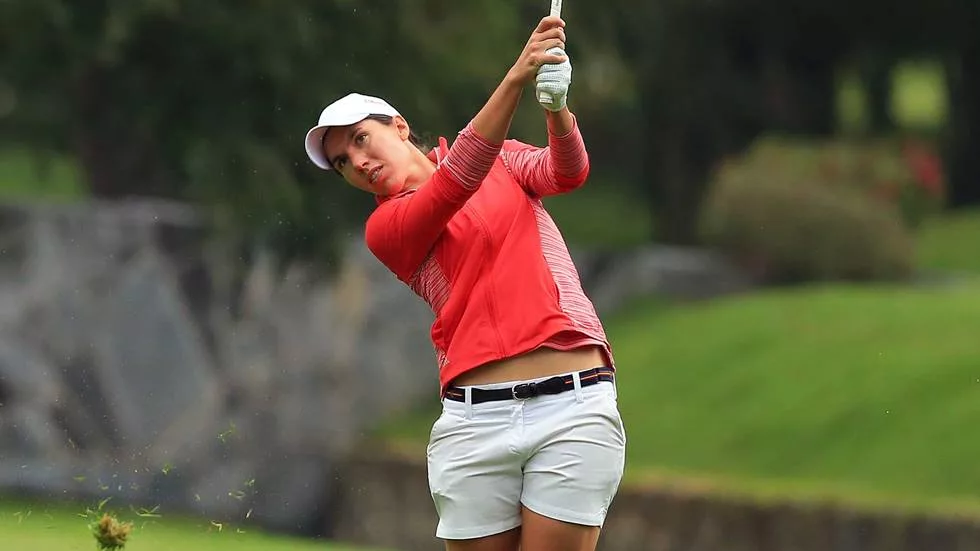
Golfer DQ’d From Championship Over Slow Play Dispute & Incorrect Scorecard

Avatar photo

Published

on

DQ’d after refusing to add penalty strokes for a slow-play violation…What Really? – Here’s How It Went Down:

Carlota Ciganda was disqualified from the Evian Championship on Friday following the conclusion of her second round at Evian Resort after she signed for an incorrect scorecard. Here’s the rub. I kinda side with the golfer on this one… You be the judge –

The two-time LPGA Tour winner failed to add a two-stroke slow play penalty to her 1-over score of 72, after disputing the penalty with rules officials and being “heard and denied.”

According to an LPGA spokesperson, Ciganda’s pace violated the LPGA Tour’s Pace of Play Policy, and even after her appeal against the ruling was rejected, the Spanish tour pro signed her scorecard without including the two-stroke penalty and left the scoring area. 

ADVERTISEMENT

PING Hoofer

The LPGA provided a statement on the incident to Sports Illustrated via email. 

“Group 14, who started on No. 10 at 8:27 a.m., received a warning on No. 7 after being out of position. The group failed to make up time through the seventh hole, therefore the group was timed starting on No. 8. On the ninth hole, Carlota Ciganda’s shot times prompted a two-stroke penalty per the LPGA Tour’s Pace of Play Policy. Ciganda was allowed an appeal with the advance and lead rules officials before returning her scorecard, which was heard and denied. Therefore, a two-stroke penalty was upheld.” Needless to say by the end of the day outcome, she did not agree and did not accept the ruling…

“Ciganda opted not to add the two-stroke penalty to her signed scorecard. She was told that leaving the official recording area with a signed score lower (without the penalty strokes) would lead to disqualification, and left on her own accord.

“Rule 3.3b(3) states that if a returned score is lower than the actual score, the player is disqualified from the competition. The exception to this Rule does not apply because Ciganda was aware of the penalty strokes received and upheld before signing her scorecard and leaving the recording area,” the statement read. 

Ciganda was playing with Anna Nordqvist and Celine Herbin when she was penalized. Players battled tougher conditions at Evian Resort Golf Club on Friday, with the winds picking up and tricky pin positions. 

The 33-year-old has been penalized for slow play before. At the 2021 Bank of Hope LPGA Match Play, she lost a match due to a bad time, receiving a slow-play penalty on the final hole of the day.

Alright my golfer elite – my fellow weekend warriors and my loyal golf comrades: what’s the verdict – comment below ???? on what you think of the situation and if it was handled properly. Did they get this right or was it a blown call?


Continue Reading
Advertisement

News

The 6 Most Ridiculous Rules in Golf

Avatar photo

Published

on

Let’s get these changed ASAP huh Fellas?

Remember Dustin Johnson pleading to a rules official during the final round of the 2016 U.S. Open. I had his back and most of the world did too.

They say you can’t fix stupid, but you are able to complain about it and hopefully get it changed. Golf, this game we love, there is plenty of senselessness to go around. Witness the Rules of Golf, an encyclopedic catalog of do’s and don’ts that often fall beyond the bounds of reality

For argument’s sake, here’s our take on six of the dumbest rules in the most beloved sport on the planet. OK, maybe I am biased, but the game is pretty old and may need a little botox here and there. Just Sayin’

1. The Dreaded “DJ Rule

In the official ledger, it’s Rule 18-2. But ever since the 2016 U.S. Open, it’s more widely recognized as that *&%$!!!-ing Dustin Johnson Rule. You know, that nonsensical one under which the eventual tournament winner was slapped with a one-shot penalty for supposedly causing his ball to move a nano-millimeter on the 5th green. Never mind that he clearly didn’t intend to set the ball in motion, or that the micro-movement gave him no discernible advantage. The punishment stood. But we shouldn’t have to stand for it in the future. How about this? Next time around, no harm, no foul. Move the ball back, end of story!

2. No Relief from Sand-Filled Divots – In the fairway?

ADVERTISEMENT

Let’s see if we understand correctly: if we spray a tee shot off-line and our ball winds up in the ground under repair zone, we’re entitled to relief. But if we smoke one down the middle and it settles in a sand-filled crater left behind by another golfer, we’re doomed to play it as it lies. That ground we landed in happened to be damaged. Someone tried to repair it. Sounds to us like… the ground is under repair. Now Im no genius, but are you following me here?

2. The “DROP”

You’d think that hitting a shot into a hazard would be punishment enough. But you’d be wrong. Under the Rules of Golf, the dogged victim then has to go through the tedious ritual known as the drop, which brings other potential rules infractions into play. If the dropped ball moves closer to the hole (as it so often does) twice, the player gets to place it. So why not just allow placement from the start? It would spare the player undue pain, and save the rest of us a lot of time.

3. Stroke & Distance

In American jurisprudence, it’s known as double jeopardy, a procedural defense that protects us from being prosecuted twice for the same crime. Sounds reasonable, right? No such safeguard exists for a golfer who bangs a ball into oblivion, only to be slapped with a stroke penalty on top of loss of distance. That’s two punishments for one misdeed, and it’s unjust by any measure. We, the people, call for a one-stroke penalty and lateral relief. Motion Carries!

4. Sprinkler Head in Your Putting Line

Your approach shot lands pin high, just on the collar, and a straightforward putt awaits, with just one problem: a sprinkler head lies in your putting line. Common sense suggests that you should get relief, no closer to the hole; a sprinkler head, after all, is a man-made impediment. But common sense apparently has no place here. Your only hope is that the course you’re playing has a local rule that allows line-of-play relief from immovable obstructions within two club lengths of the green, which, let’s be reasonable here, should really be the rule that governs all play.

5. Five Minutes for a Lost Ball – Really?

That lax allowance dates back to a bygone era, when life moved at a pastoral pace and golfers had the luxury of lollygagging. This is the modern age. Chop, chop, time’s a-wasting. We’ve got cat videos to watch and vapid tweets to send. The game needs to adapt. And besides, if you can’t find that errant ball in two minutes, you probably don’t want to in the first place. It will be under a rock or in a bush but with just enough clearance that those 9 deadly words are uttered “I think I can get a club on it”

6. Cant move a ball from a footprint in a bunker – This one Grinds my Gears

It might make sense on Tour, where players all have caddies and the grounds are as well-groomed as the gardens of Versailles. But many of the courses we mortals play are under-tended and trod upon by etiquette-flouting chops who don’t even attempt to rake up their mess, creating hazards within hazards. The more sensible alternative: if your ball lands in a footprint in a bunker, move it and place it elsewhere in the sand. Done, End of rant. You may go about your business.

Continue Reading

Blog

One of the Greatest Putts in U.S. Open History?

JJ Spaun’s 64-Foot Walk-Off

Avatar photo

Published

on


When JJ Spaun stood over a 64-foot birdie putt on the 72nd hole of the 2025 U.S. Open at Oakmont, few could have predicted what would come next. The ball meandered across the slick green, trickling over every contour, picking up speed at the crest, and then—like it had GPS—dropped center cup. Spaun dropped his putter, raised his arms, and the crowd erupted. With that single stroke, he claimed his first major title in one of the most dramatic finishes in U.S. Open history.

But how does Spaun’s putt stack up against other legendary finishes in the tournament’s storied past? Let’s break down some of the most iconic moments and see where this one lands.


1. Payne Stewart – 1999 U.S. Open at Pinehurst

Perhaps the most iconic putt in U.S. Open history came from Payne Stewart, who nailed a 15-footer for par on the 18th to win by one over Phil Mickelson. The pose—fist pump and outstretched leg—has since been immortalized in a statue at Pinehurst. What made it legendary wasn’t just the putt—it was the context: Stewart’s final major before his tragic death just months later.

Verdict: Iconic and emotional. Spaun’s putt was longer, but Stewart’s was more poetic.


2. Tiger Woods – 2008 U.S. Open at Torrey Pines

Woods drained a 12-foot birdie on the 72nd hole to force a playoff with Rocco Mediate—while basically playing on one leg. That tournament went to sudden death after an 18-hole playoff, and Tiger prevailed. This was peak Tiger drama, pain and all.

ADVERTISEMENT

Verdict: Spaun’s putt was longer, but Tiger’s win was sheer willpower and mystique.


3. Jack Nicklaus – 1972 U.S. Open at Pebble Beach

With a 1-iron shot that hit the flagstick on 17 and a crucial birdie putt on 18, Jack sealed a dominant win. His precision and timing under pressure showed why he’s the GOAT.

Verdict: Not a putt for the win, but a signature finishing statement from Jack. Spaun’s was more electric in terms of pure putter drama.


4. Ben Hogan – 1950 U.S. Open at Merion

Hogan’s 1-iron into the 18th fairway and the par to force a playoff—just 16 months after a near-fatal car crash—remain legendary. He won the playoff and completed one of golf’s great comeback stories.

Verdict: Larger-than-life comeback. Spaun’s putt had more flair, but Hogan’s win was heroic.


5. JJ Spaun – 2025 U.S. Open at Oakmont

Let’s not underestimate what Spaun accomplished. The pressure was immense. He wasn’t the favorite. And on the most treacherous greens in golf, he buried a 64-foot bomb—a putt most players would be happy to lag to within 5 feet—to win the U.S. Open outright.

Verdict: For distance, surprise, and drama, Spaun’s putt may be the most shocking winning stroke in U.S. Open history.


Final Thoughts

JJ Spaun may not have the résumé of a Nicklaus or Woods, but for one Sunday afternoon in June 2025, he created a moment that will live in golf lore forever. Spaun’s putt was longer than Stewart’s, more unexpected than Tiger’s, and more dramatic than any final-hole finish in recent memory.

In terms of pure clutch putting? It might just be the greatest walk-off in U.S. Open history.


Continue Reading

Blog

Meet The Canadian Open Qualifier Tied To ClickIt Golf!

“This week was incredible,” he said. “A dream come true.”

Avatar photo

Published

on

Josh Goldenberg doesn’t plan to quit his day job. But he had a great time dabbling in his old career.

ADVERTISEMENT

He gave up on pro golf, then qualified for his first PGA Tour event.

Read the full story here
https://golf.com/news/josh-goldenberg-rbc-canadian-open/?amp=1

Continue Reading

Trending

Click here to get all the latest golf news

Close