Golf Drills / Practice
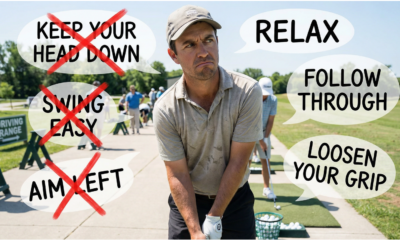
Stop Doing This: The Most Overrated Swing Tips and Better Drills
Tired of hearing the same old clichés at the driving range? The Golf Hacker breaks down the most overrated golf tips that are actually ruining your scorecard. From the myth of the perfectly still head to the dangers of slowing down your swing, find actionable drills that actually work.


Look, I’m not going to pretend I’ve never fallen for the latest YouTube swing secret or the advice of the local range rat who hasn’t broken ninety since the Clinton administration. We’ve all been there, standing on the range and trying to juggle five different swing tips because some “expert” told us it was the key to unlocking a scratch game. Here’s the deal: a lot of the advice floating around the practice tee is, quite frankly, the most overrated garbage you’ll ever hear. We spend hours grinding on things that actually make us worse golfers, all while neglecting the simple movements that actually move the needle.
I’ve spent a lot of time (and far too much money) chasing these myths. I’ve tried to keep my head still until my neck cramped, and I’ve tucked my elbow so hard I looked like a T-Rex trying to hit a wedge. It didn’t work. Modern equipment and today’s golfers have evolved, but the clichés we shout at each other on the weekend haven’t. If you want to actually lower your scores this season, we need to separate the timeless fundamentals from the fluff. Let’s break down why some of the most common advice is actually holding you back and look at the golf drills / practice routines that will actually help you find the center of the face.
Why “Keep Your Head Still” Is Among the Most Overrated Swing Tips
If I had a nickel for every time I heard a frustrated playing partner yell “Keep your head down!” after a topped shot, I’d be playing at Augusta every weekend. Let’s be honest: this is probably the most overrated of the swing tips in the history of the game. When you try to keep your head perfectly still or pinned down, you aren’t helping your contact; you’re actually killing your ability to rotate. For most of us average Joes, a “still head” leads to a collapsed follow-through and a massive loss of power. You end up looking like you’re trying to swing inside a phone booth, and the result is usually a thin shot or a nasty slice.
The reality is that almost every great pro allows their head to move slightly off the ball during the backswing and certainly allows it to rotate toward the target after impact. If you force your head to stay down, your shoulders can’t turn, your weight stays on your back foot, and you’ll never find any consistency. Instead of focusing on your head, focus on your sternum. As long as your center stays relatively stable, a little head movement is actually a good thing for a natural, athletic motion. Trust me on this, trying to be a statue is a one-way ticket to a back injury and a 105 on the scorecard.
The “Eyes to the Sky” Drill
To fix the rigidity caused by this overrated tip, try this in your next golf drills / practice session. When you hit half-swing wedges, allow your head to turn with your chest. As you strike the ball, let your eyes follow the flight immediately. Don’t stare at the grass where the ball used to be. By letting your head move naturally with your torso, you’ll find that your weight transfers more easily to your lead side. This leads to that crisp, ball-first contact we’re all chasing. It feels weird at first, but once you stop trying to be a gargoyle, the game gets a lot easier.
The Myth of the “Tucked” Lead Elbow
Another contender for the most overrated piece of swing advice is the idea that you must keep your trailing elbow pinned to your ribs throughout the entire swing. People tell you to put a towel under your armpit and keep it there. While this can help some people feel “connected,” for the average golfer, it usually results in a swing that is way too flat and stuck behind the body. When you get stuck, you have no choice but to flip your hands at the bottom to try and save the shot. Hello, snap hooks!
Today’s golfers need width. If you look at the best players in the current season, their arms have plenty of room to move. They aren’t strangling themselves by pinning their elbows to their sides. You want your arms to feel like they are swinging in front of your chest, not wrapped around it. When you create width, you create a larger arc, which translates to more speed without having to swing “harder.” It’s about efficiency, not restriction. Let those arms breathe a little bit, and you’ll find that your swing tips actually start resulting in longer drives.
The “Wide Arc” Practice Routine
Instead of the towel drill, try the “Push Away” drill. During your takeaway, focus on feeling like your hands are as far away from your right ear as possible. At the top of the swing, check to see if there is daylight between your elbow and your torso. This golf drills / practice technique ensures you aren’t collapsing. A wide swing is a powerful swing. If you’re worried about losing control, just shorten the backswing slightly while maintaining that width. You’ll hit it further with a three-quarter wide swing than a full-depth “stuck” swing every single day of the week.
Why “Slow Down Your Swing” is Often Bad Advice
We’ve all heard it after a bad hole: “You’re just swinging too fast, man. Slow it down.” This is arguably the most overrated way to fix a tempo issue. Here’s the deal: most amateurs don’t actually swing too fast; they swing with bad sequencing. When you try to “slow down,” you usually just end up decelerating through the ball, which is the kiss of death for any golf shot. Deceleration leads to chunks, thins, and a complete lack of confidence. You don’t need to be slower; you need to be smoother.
The problem is usually that the transition from the backswing to the downswing is too jerky. If you try to swing the whole club slowly, you lose the natural athletic rhythm required to hit a golf ball. You’ll see modern equipment is designed to be swung with a certain amount of force to activate the shaft’s kick. By slowing down to a crawl, you’re basically fighting the technology you paid hundreds of dollars for. Stop trying to move in slow motion and start focusing on a consistent rhythm that allows for acceleration through the hitting zone.
The 3-2-1 Tempo Drill
To improve your rhythm without losing speed, incorporate the 3-2-1 drill into your golf drills / practice. As you start your backswing, count “one, two” to yourself. The transition and the strike should happen on “three.” This creates a 2:1 or 3:1 ratio that keeps your move fluid. It’s not about how fast the total time is; it’s about the relationship between the backswing and the downswing. You can have a fast tempo like Nick Price or a slow one like Ernie Els, as long as the rhythm is consistent. This is one of those golf hacks that actually works because it focuses on timing rather than speed restriction.
The Danger of “Keep Your Left Arm Straight”
If you’re looking for the most overrated instruction that causes the most physical pain, it’s the “straight lead arm” rule. Yes, a relatively straight arm helps with consistency, but many amateurs take this to mean “lock your elbow until it turns white.” Locking your lead arm creates immense tension in your shoulders and neck. Tension is the absolute enemy of a good golf swing. When you’re tense, you can’t release the club properly, and your swing speed drops through the floor.
Look at many of the legends of the game; a slight soft bend in the lead arm at the top of the swing is perfectly fine. As long as the arm isn’t collapsing completely, you’re in good shape. The goal is a “long” arm, not a “stiff” arm. By relaxing that lead side just a fraction, you allow your wrists to hinge properly, which is where all your power comes from. If you’re struggling with a slice, check your tension levels. A rigid arm often leads to an over-the-top move because the body has to heave the club forward rather than letting it fall into the slot.
The “Rope Swing” Drill
One of my favorite golf drills / practice methods for curing a stiff arm is the imaginary rope swing. Imagine your golf club is a heavy piece of rope. If you try to manhandle a rope with a stiff, locked arm, it won’t move smoothly. You have to use a fluid, rhythmic motion to get the weight of the rope moving. Practice making swings with this “soft” feeling in your arms. You’ll notice the clubhead actually feels heavier. That’s a good thing! It means you’re finally letting the centrifugal force do the work instead of trying to muscle the ball into the next fairway with your triceps.
Pick up some practice gear for yourself.
Conclusion: Focusing on What Swing Tips Actually Matter
At the end of the day, golf is hard enough without trying to follow the most overrated advice that doesn’t fit your natural body movement. We’ve covered why keeping your head still can ruin your rotation, why pinning your elbow kills your width, why slowing down can lead to deceleration, and why a stiff lead arm is a recipe for tension. The key takeaways are simple: stay fluid, create width, maintain a consistent rhythm, and let your body move athletically. Forget the clichés you hear at the local muni and focus on these golf drills / practice routines that prioritize sequence and impact over “positions.”
I’ve wasted years trying to look like a textbook, only to realize the textbook was written for someone with a lot more flexibility and a lot more free time than I have. Start practicing with intent and stop listening to the “overrated” swing tips that keep you stuck in the triple digits. What are your favorite swing tips that actually worked for you? Or better yet, what’s the worst piece of advice you’ve ever been given on the course? Share your stories in the comments below—I’d love to hear I’m not the only one who’s been led astray by a well-meaning playing partner!






































Stop Doing This: The Most Overrated Swing Tips and Better Drills

Best Golf Ball by Swing Speed (85–95, 95–105, 105+): A Practical Fit Guide

The 30-Day Plan Guaranteed to Lower Your Handicap Before Spring




-
 Product Review6 years ago
The Perfect Practice Putting Mat Review by Jason Tenzer
-
 Blog5 years ago
Loophole Rule Offers PGA Tour Pros a Mulligan
-
Blog5 years ago
2021 Buyer’s Guide: The Top 10 Value Golf Balls For Distance & Feel
-
Blog5 years ago
Golf Marriage Counselor
-
 Product Review7 years ago
THE ADJUSTABLE IRONS: WALKING STICKS GOLF CLUBS
-
 Blog7 years ago
9 Biggest Chokes Of The Past Decade
-
Blog5 years ago
What Your Golf Clubs Say About You
-

 Golf News3 months ago
The latest news in golf