Performance Lab
How to Hit a Fade on Command Now
Learn how to hit a fade on command? Our Resident PGA Pro breaks down the exact grip, setup, and swing thought that makes a fade easy and repeatable.


Learning how to hit a fade on command is one of the most liberating feelings in golf. Most amateur golfers spend their entire lives fighting a slice, which makes the idea of intentionally curving the ball left-to-right seem like dark magic. But there is a massive difference between a weak, glancing slice and a powerful, controlled fade. The fade is the shot of choice for the best players in the world because it lands soft, stays in the fairway, and eliminates the left side of the golf course. Today, I am going to give you the exact blueprint to hit this shot whenever you need it — no fluff, no overly complex biomechanics, just the practical setup and swing changes that work.
What Is a Fade in Golf? (And Why You Want One)
Before we get into the mechanics of how to hit a fade, we need to define what it actually is. A fade is a golf shot that starts slightly to the left of your target (for a right-handed golfer) and gently curves back to the right, landing softly on the target line.
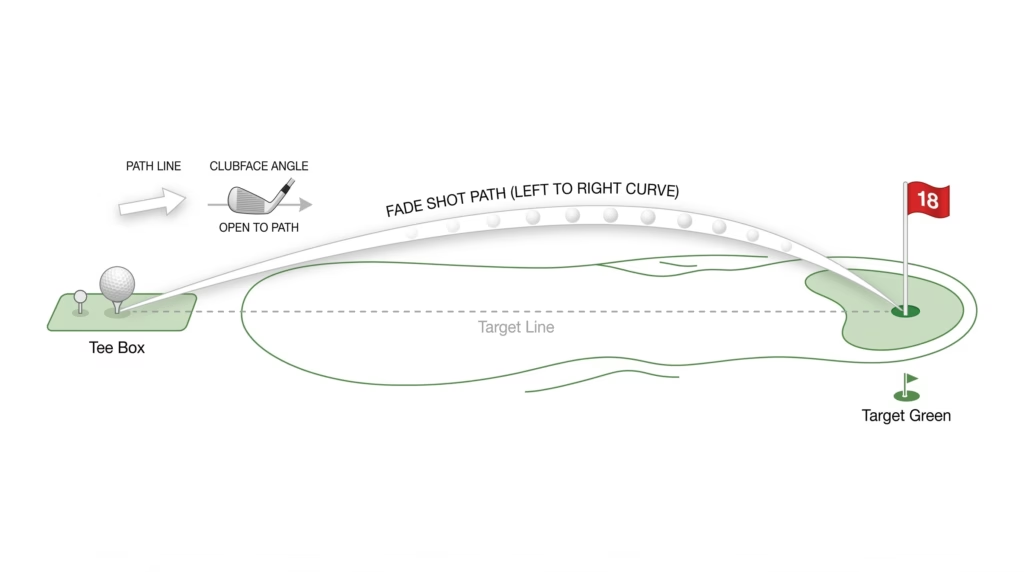
how to hit a fade
Why do so many professionals prefer a fade? Control. A draw (which curves right-to-left) tends to have less backspin and more topspin-like characteristics when it hits the ground, meaning it rolls out further. That is great for distance off the tee, but terrible when you are trying to hold a firm green with a 5-iron. A fade spins slightly more, flies a bit higher, and stops much faster. Furthermore, when you learn how to hit a fade consistently, you take one side of the golf course completely out of play. You can aim down the left side of the fairway and swing aggressively, knowing the ball is only going to move one direction.
How to Hit a Fade: The Setup Changes You Need
The secret to hitting a fade on command is that 80 percent of the work is done before you even take the club back. If you set up correctly, the swing itself barely has to change. Here is the step-by-step setup adjustment.

golfer open stance setup for how to hit a fade
1. Open Your Stance
To hit a fade, you need the club to travel on an out-to-in path relative to the target line. The easiest way to encourage this path without manipulating your hands is to open your stance. Aim your feet, hips, and shoulders slightly to the left of your ultimate target. How much? For a gentle fade, a few degrees is enough. For a more pronounced curve, open it a bit more — but never more than 10–15 degrees or you risk losing too much power.
2. Aim the Clubface at the Target
This is where most golfers get confused. While your body is aimed to the left, your clubface must remain aimed directly at your final target. This creates a discrepancy between your swing path (which will follow your body line to the left) and your clubface (which is pointing right of your path). This relationship — a clubface that is open relative to the swing path — is the exact physics required to put left-to-right spin on the golf ball.
3. Ball Position
Move the golf ball about half an inch further forward in your stance (closer to your lead foot). Moving the ball forward ensures you strike it slightly later in the swing arc, when the clubhead has already started moving back to the inside (left), further encouraging that out-to-in path.
How to Hit a Fade: The Grip Adjustment
If you have a strong grip (hands rotated away from the target), hitting a fade will be a constant struggle because a strong grip naturally promotes a closed clubface. To hit a fade on command, you need to neutralize or slightly weaken your grip.
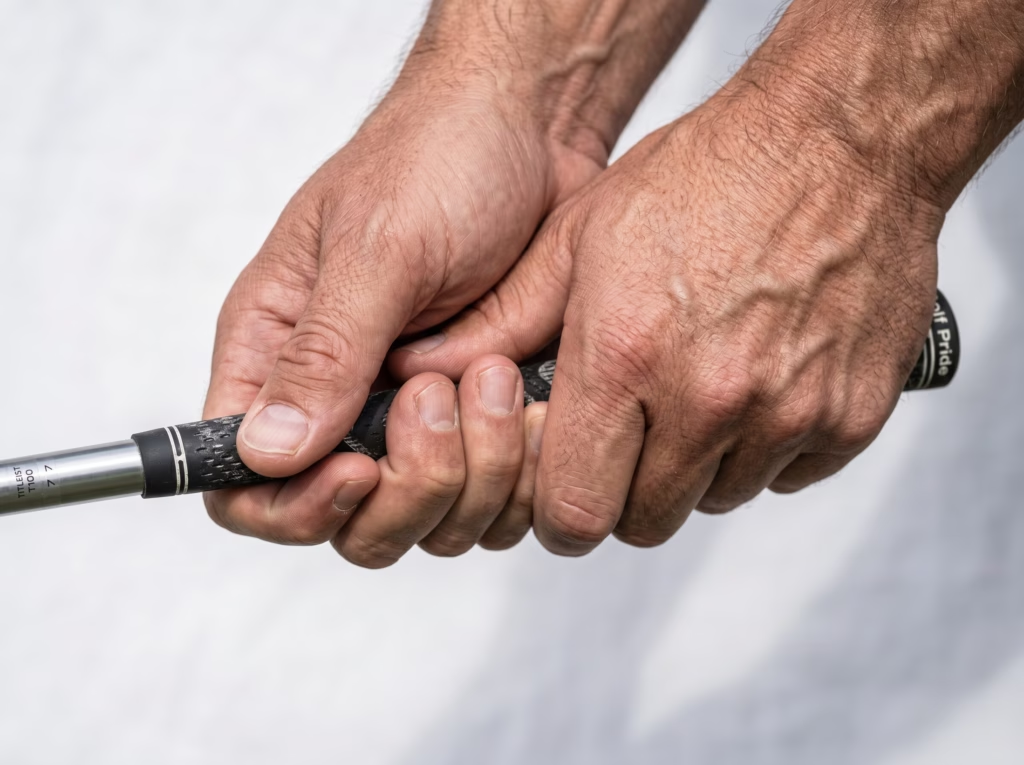
neutral golf grip for how to hit a fade
Rotate both hands slightly toward the target (to the left for a right-handed golfer). When you look down at your lead hand, you should only see one or maybe two knuckles, rather than three or four. This weaker grip prevents the clubface from snapping shut through impact, allowing it to stay slightly open relative to your swing path — which is the engine of the fade.
A quick check: take your grip and hold the club out in front of you at waist height. The leading edge of the clubface should be roughly vertical, or even slightly open (leaning away from you). If it is pointing toward the ground, your grip is too strong for a fade.
How to Hit a Fade: The Swing Thought That Makes It Click
You have the setup. You have the grip. Now, what do you actually do during the swing?
The biggest mistake amateurs make when trying to learn how to hit a fade is trying to steer the ball with their hands. Do not do that. Because you have altered your setup, you can make your normal, aggressive golf swing. However, if you need a swing thought to tie it all together, focus on this: hold the finish.














When you swing through the ball, feel like the back of your lead hand (your left hand) is pointing at the sky for as long as possible through impact. You want to feel like you are preventing the clubface from rolling over. Another great visualization is to imagine you are hitting a tennis backhand with a slight slice — you are cutting across the ball while keeping the face stable. Swing along the line of your feet (left of the target) and hold that face off. If you do this correctly, the ball will start left and drift right. That is your fade.
How to Hit a Fade vs. How to Fix a Slice: What’s the Difference?
I hear this in my lesson tee all the time: “Pro, I already hit a fade — it just goes 40 yards right into the trees.” That is not a fade. That is a slice.
Understanding the difference is crucial. Here is a quick comparison:
Fade Slice Starting Direction Left of target Right of target or at target Curve Gentle, controlled right Aggressive, uncontrolled right Clubface at Impact Open to path, closed to target Open to both path and target Ball Speed Full, powerful Weak, glancing Landing Soft, controlled Hard, unpredictable
A true fade is a controlled, powerful shot. The ball starts left of the target and gently falls back to the right. The key difference is the clubface. In a fade, the clubface is open to the path, but closed to the target line at impact. If you are struggling with a weak slice, you need to learn how to fix a slice before you try to master the power fade. You have to learn to control the clubface first.
How to Hit a Fade With Every Club in the Bag
The mechanics of hitting a fade remain the same whether you are holding a pitching wedge or a driver, but the execution feels slightly different.
With Irons: The fade is easiest to execute with mid-to-short irons. Because these clubs have more loft, they naturally generate more backspin, which stabilizes the ball flight and minimizes side spin. You can be quite aggressive with your setup changes here. A 7-iron fade is a great starting point when you are learning the shot.
With Long Irons and Hybrids: These clubs have less loft, so the side spin effect is more pronounced. Keep your setup adjustments subtle — a few degrees of open stance is plenty. Focus on the grip and the “hold the finish” swing thought.
With the Driver: Hitting a fade with the driver requires a bit more finesse. Because the driver has very little loft, any side spin is magnified. If you overdo the out-to-in path or leave the face too open, a controlled fade quickly turns into a destructive slice. Make your setup adjustments much more subtle with the big stick. If you are a player who naturally slices the ball and you are looking for equipment help, check out our guide on the best golf drivers for high handicappers.
Drills to Hit a Fade Consistently on the Course
Taking this from the driving range to the golf course requires practice. Here are two drills I use with my students to ingrain the fade.

golfer practicing how to hit a fade with alignment stick drill on driving range
The Alignment Stick Gate
Place an alignment stick in the ground about 10 yards in front of you, directly on your target line. Your goal is to start the golf ball to the left of the stick, and have it curve back to the right side of the stick. This provides immediate visual feedback on your starting line and your curvature. If the ball starts right of the stick, your clubface was too open. If it starts left and stays left, your clubface was closed relative to your path.
The “Cut the Legs” Drill
Take a mid-iron and tee the ball up slightly. Make swings where you intentionally try to hit a low, slicing shot — imagine you are trying to cut the legs out from under a table. This exaggerated feeling of swinging left and holding the clubface open will help your body understand the mechanics of the fade. Once you feel it, you can dial it back to a normal, controlled shot. Most students feel the fade for the first time within five swings of this drill.
Mastering the fade takes time, but by focusing on your setup, neutralizing your grip, and swinging aggressively along your body line, you will add one of the most reliable shots in golf to your arsenal. Remember, the golf swing basics always apply — stay balanced, maintain your rhythm, and trust the setup. The fade is not a trick shot. In the right hands, it is the most dependable ball flight in the game.
FAQ
Does hitting a fade lose distance?
Yes, a fade will typically travel slightly shorter than a draw with the same club. This is because a fade generates more backspin and has a slightly more glancing blow at impact. Expect to lose about half a club of distance when hitting a fade intentionally.
Should high handicappers try to hit a fade?
If a high handicapper naturally hits a draw, learning a fade is a great way to understand clubface control. However, since most high handicappers already struggle with a slice, it is usually better to focus on neutralizing their path before trying to intentionally shape the ball left-to-right.
Why do pros prefer a fade?
Professionals prefer a fade because it offers more control. The higher spin rate and steeper descent angle mean the ball stops much faster on firm greens. It is also considered a more predictable shot under pressure because the margin for error is smaller.
Can I hit a fade with a strong grip?
It is possible, but it requires significant manipulation of the hands and wrists through impact to hold the clubface open. It is much easier and more consistent to weaken your grip slightly when setting up for a fade.
Where should the ball be positioned for a fade?
Move the ball slightly forward in your stance (closer to your lead foot). This allows the clubhead more time to begin traveling back to the inside, promoting the necessary out-to-in swing path.
Is a fade better than a draw?
Neither is objectively better — they are different tools. A draw generates more distance and roll. A fade offers more control and a softer landing. Most tour professionals prefer a fade for approach shots and a draw for maximum distance off the tee.
Related Reading:
•How to Finally Eliminate Your Slice (Without Rebuilding Your Swing)
•The 5 Fundamentals Golf Swing Basics You Must Know
•Best Golf Drivers for High Handicappers 2026: Tested & Ranked