Performance Lab
How to Increase Swing Speed: 8 Proven Drills
Want to know how to increase swing speed? These 8 club head speed drills add real mph fast — no new clubs required. Start gaining distance today.


Most amateur golfers leave 20 to 30 yards on the table, and it has absolutely nothing to do with their equipment. The real issue is an untrained neural speed ceiling — your body has decided how fast it’s willing to swing, and without deliberate training, it won’t budge. If you want to know how to increase swing speed, the answer isn’t buying a lighter driver or a stiffer shaft. It’s training your nervous system and mechanics to move faster. These 8 club head speed drills require zero new gear to get started. Pick two, do them three times a week, and track the number.
Disclosure: This article contains affiliate links. If you buy through these links, ClickitGolf may earn a commission at no additional cost to you.
Why Swinging Harder Doesn’t Make You Faster
The biggest mistake golfers make when trying to gain swing speed is falling into the effort trap. They grip the club tighter, tense up their forearms, and try to muscle the ball down the fairway. The result is almost always less speed, not more.
Tension is the enemy of club head speed. When you grip the club with a death grip, you restrict your wrists from hinging and unhinging naturally. Your forearms lock up. Your shoulders tighten. Every one of those responses acts as a brake on the clubhead right at the moment you need it to be accelerating.
Your body also has a natural neural speed ceiling — a self-imposed limit on how fast it will allow you to swing. The good news is that ceiling is highly trainable. The mechanism behind this is the stretch-shortening cycle (SSC): muscles that are stretched just before they contract produce significantly more force than muscles starting from a static position. A structured speed training protocol takes advantage of this. Research from Par4Success found that golfers following a structured 6-week speed program gained an average of 3 mph in club head speed — three times the baseline gain of untrained golfers. That’s roughly 8 to 9 extra yards off the tee from six weeks of focused work.
The fix isn’t effort. It’s mechanics and neural training — and that’s exactly what these eight drills target.
How to Increase Swing Speed: 8 Club Head Speed Drills
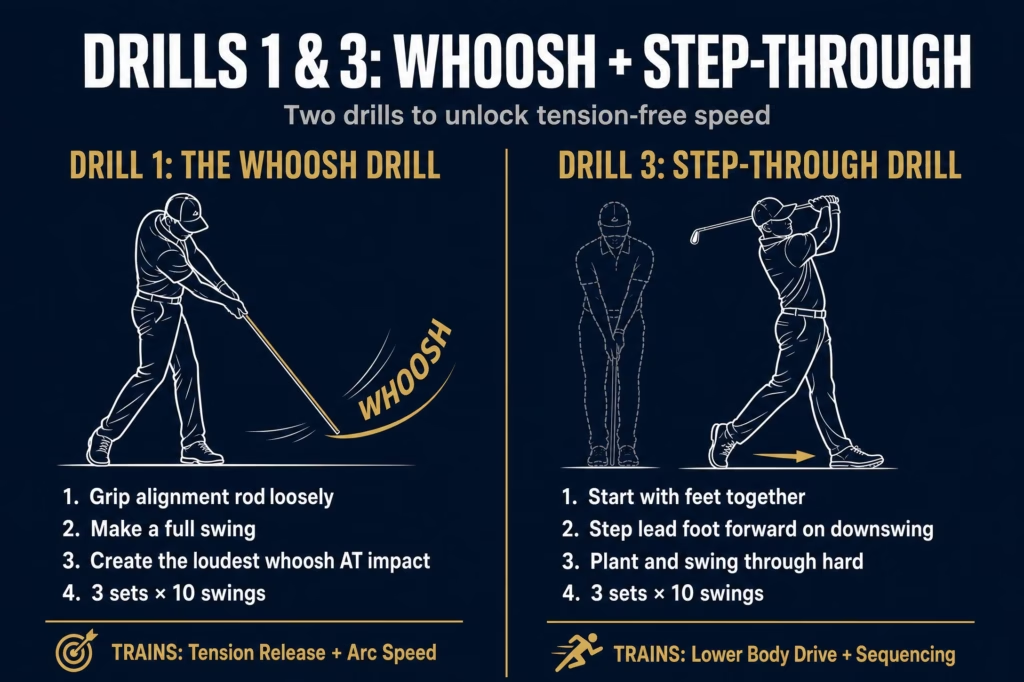
Drill 1: The Whoosh Drill
What It Trains: Tension release, wrist hinge, and arc speed.
Flip your driver upside down so you’re gripping the shaft just below the clubhead, or grab an alignment rod. Take your normal stance and grip it loosely — this is important. Make a full swing and focus entirely on making the loudest “whoosh” sound possible. The critical detail: the whoosh must happen at or just past the impact zone, not at the top of your backswing or near your trail leg.
If the whoosh happens early, you are casting the club and burning off speed before the ball. Keep your wrists soft and let the rod accelerate naturally through the bottom of the arc.
Reps/Sets: 3 sets of 10 swings. Use this as a warm-up before every speed session.
Drill 2: The Overspeed Swing
What It Trains: Neural speed ceiling reset.
This is the single most effective drill for gaining swing speed quickly. Use a lighter implement — a dedicated speed training stick like the SuperSpeed Golf training system is ideal, but an old shaft without a clubhead works fine. Swing the light stick as fast as humanly possible. Don’t worry about mechanics here. The only goal is raw speed.
Critically, swing on both sides. If you’re right-handed, take 8 swings right-handed, then switch your grip and take 8 swings left-handed. Training your non-dominant side stabilizes your core and actually raises the speed ceiling on your dominant side. This is one of the most counterintuitive and most effective principles in speed training.
Reps/Sets: 3 sets of 8 swings per side.
Drill 3: The Step-Through Drill
What It Trains: Lower body drive, weight transfer, and ground forces.
Start with your feet completely together. As you begin your backswing, step your lead foot forward toward the target — exactly like a baseball batter stepping into a pitch. Plant the lead foot and swing through aggressively. The feet-together starting position forces your lower body to initiate the downswing. Your hips have to shift before your arms drop, creating natural lag and sequencing that generates serious speed.
Most amateur golfers who struggle to gain swing speed are arm-dominant. This drill physically prevents that. The lower body has to go first.
Reps/Sets: 3 sets of 10 swings.
Drill 4: The Foot-Flare / Wider Stance Drill
What It Trains: Longer backswing arc and hip mobility.
















Take your normal driver stance, then flare both toes outward by about 20 to 30 degrees. Drop your trail foot back away from the target line by 2 to 3 inches, creating a slightly closed stance. Now make a full swing.
Flaring the feet allows your hips to rotate deeper in the backswing without your trail knee collapsing inward. Dropping the trail foot back gives your shoulder turn more room. The result is a longer hand path — and a longer hand path means more time and distance to build speed on the downswing before the club reaches the ball. Think of it as lengthening your runway.
Reps/Sets: 3 sets of 10 swings.
Drill 5: The Hip-to-Chest Speed Drill
What It Trains: Lower body sequencing and spine extension through impact.
Set up without a ball. Take the club back only to hip height. Then swing through explosively to chest height, focusing on two things: straightening your legs as you swing through, and keeping the grip end of the club moving upward and toward the target. Do not let the handle stop moving.
This drill, popularized by GolfTec coaches, targets a specific speed killer — the moment where golfers stop driving with their lower body and let their arms take over. When the grip stops moving, the clubhead slows down. Keeping the handle moving through the zone is what creates effortless speed.
Reps/Sets: 3 sets of 10 swings. No ball required.
Drill 6: Pull-Down & Stop (P6 Acceleration Drill)
What It Trains: Downswing acceleration and lag retention.
Grab an alignment stick or a light club. Make a full backswing to the top. Then explosively pull your hands down and stop the swing abruptly when the shaft is parallel to the ground on the downswing — this position is called P6. The key word is explosively. You are training your fast-twitch muscles to fire hard at the very start of the downswing, not gradually build speed as the club approaches impact.
Most recreational golfers accelerate too late. This drill rewires the timing of your downswing acceleration to happen earlier, which creates more lag and more speed at the bottom.
Reps/Sets: 3 sets of 8 reps.
Drill 7: Hit Hard, Stop Quick
What It Trains: Impact acceleration and wrist flip prevention.
Take a normal backswing with an iron or driver. Accelerate through the impact zone as hard as you can — then intentionally stop your swing completely, just past where the ball would be. No follow-through. Just a hard stop.
Stopping the club abruptly forces all the energy out of the shaft and into the clubhead right at the impact zone rather than dissipating it through a lazy follow-through. It also prevents the wrist flip: if you’re flipping your wrists through impact, you’ll feel it immediately when you try to stop the club cleanly. Repeat until you can do 10 consecutive reps without losing balance or flipping.
Reps/Sets: 3 sets of 10 swings.
Drill 8: The Forearm Release Drill
What It Trains: Full post-impact release and forearm rotation.
Put your feet completely together. This removes your lower body from the equation and isolates your arms and wrists. Make half-swings and focus entirely on your forearms aggressively rotating and crossing immediately after impact. Your lead hand should turn down and be visible from behind after the strike. Your forearms should “kiss” or cross.
A restricted release is one of the most common speed leaks in amateur golf. Golfers who are afraid of hooking the ball learn to hold the face open through impact — which also holds the brakes on. This drill teaches your arms to release fully and freely.
Reps/Sets: 3 sets of 10 swings.
How to Structure Your Speed Training Sessions
Speed training is a completely different activity from ball-striking practice, and mixing them is one of the most common mistakes golfers make. When you’re hitting balls, your brain is in “control mode” — it’s managing contact, direction, and trajectory. When you’re speed training, you need your brain in “maximum output mode.” These two modes conflict. Do your speed work separately.
Warm up first. Never swing at 100% cold. Spend five minutes doing hip circles, torso rotations, and arm swings before you touch a club.
The 6-Week Protocol — three sessions per week, 20 to 25 minutes each:
Week Drills Focus 1–2 Whoosh + Overspeed Swing + Step-Through Foundation: tension release and neural priming 3–4 Add Hip-to-Chest + Pull-Down & Stop Sequencing and downswing acceleration 5–6 Full 8-drill rotation Integration and speed consolidation
Track your progress with a launch monitor or a phone radar app. If you stay consistent, expect a 3 to 7 mph gain in club head speed by the end of week 6. That translates to 9 to 21 yards of extra carry distance — from six weeks of 20-minute sessions.
The Mistakes That Are Killing Your Club Head Speed
Even with the right drills, these five errors will cap your progress:
The Death Grip. Squeezing the club tightens your forearms and shoulders, restricting the natural hinging and unhinging of your wrists. Hold the club like an open tube of toothpaste — firm enough that it won’t fly out, loose enough that your forearms stay soft.
Rushing the Transition. Jerking the club down from the top causes you to cast it early, burning off lag before the club reaches the impact zone. A patient, deliberate transition — letting the lower body shift before the arms drop — creates the lag that becomes speed.
Mixing Speed and Technique. Hitting golf balls while doing overspeed training confuses your nervous system. It defaults to control mode and you never reach true maximum speed. Keep them separate.
Skipping the Non-Dominant Side. Swinging left-handed (if you’re a righty) is not optional. It balances your core musculature and raises your overall speed ceiling. Skipping it leaves real mph on the table.
Ignoring Mobility. If your hips and thoracic spine are tight, your backswing arc will be short. A short arc means less time to build speed. Five minutes of mobility work before each session pays compounding dividends over six weeks.
Quick Recap: 8 Drills to Gain Swing Speed
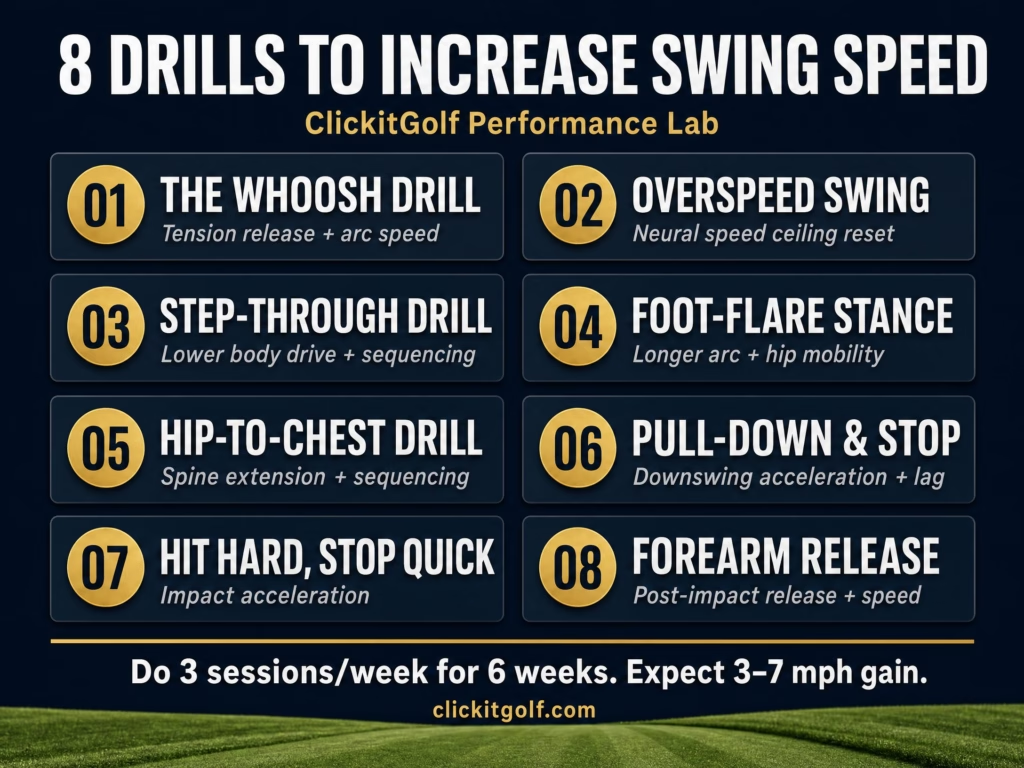
| # | Drill | What It Trains |
| 1 | The Whoosh Drill | Tension release, wrist hinge, arc speed |
| 2 | Overspeed Swing | Neural speed ceiling reset |
| 3 | Step-Through Drill | Lower body drive, weight transfer, ground forces |
| 4 | Foot-Flare / Wider Stance Drill | Longer backswing arc, hip mobility |
| 5 | Hip-to-Chest Speed Drill | Lower body sequencing, spine extension |
| 6 | Pull-Down & Stop | Downswing acceleration, lag retention |
| 7 | Hit Hard, Stop Quick | Impact acceleration, wrist flip prevention |
| 8 | Forearm Release Drill | Full post-impact release, forearm rotation |
FAQ
How long does it take to increase swing speed?
With a structured speed training protocol done three days per week, most golfers see a noticeable increase of 3 to 5 mph within the first four to six weeks. The gains are real and measurable — use a launch monitor or radar app to track your numbers from session one.
Can I increase swing speed without going to the gym?
Yes. While strength training raises your long-term speed ceiling, overspeed training and mechanical drills work by retraining your nervous system — no gym required. The eight drills above can all be done on a driving range or in a backyard with an alignment rod.
What is the fastest way to gain club head speed?
Overspeed training with a light implement is the fastest way to reset your central nervous system’s speed limit. By swinging something lighter than your driver as fast as possible, your muscles and nervous system learn to move faster — and that speed transfers when you return to your normal club.
Does grip pressure affect swing speed?
Massively. A tight grip creates tension in the forearms and shoulders that restricts the natural hinging and unhinging of the wrists, acting as a direct brake on the clubhead. Loosening your grip pressure is one of the fastest free speed gains available to any golfer.
Should I use a speed trainer like SuperSpeed Golf?
Purpose-built speed trainers are highly effective because they provide precisely calibrated light, medium, and heavy implements designed for a progressive overspeed protocol. They’re not required to get started, but if you’re serious about gaining swing speed, they accelerate the process meaningfully.
How much swing speed do I need to hit the ball farther?
Every 1 mph increase in club head speed translates to roughly 2.5 to 3 yards of extra carry distance, assuming solid contact. Gaining just 4 mph — a realistic 4-week target — can give you a full club less into the green on a par 4.
Start Swinging Faster
Knowing how to increase swing speed is only useful if you act on it. Pick two drills from this list — start with the Whoosh Drill and the Step-Through Drill — and commit to doing them three times a week for the next six weeks. Track your club head speed from day one. The number will move.
Once you’ve built that new speed, make sure the rest of your game is set up to use it. Start with the golf swing fundamentals to make sure your mechanics are sound, then check our guide to the best driver for your swing speed and match your ball to your new swing speed — because a faster swing with the wrong equipment is just a faster miss.
Written by The Golf Hacker | Performance Lab
References
[1] Par4Success. “Overspeed Training Low Volume Protocol Research.”