Performance Lab
The 6-Week Offseason Plan: Fix One Thing Before You Put the Clubs Away
Build a golf offseason practice plan around one scoring leak with a 6-week diagnostic, home drills, and pressure tests. Start your focused reset today.


The golf offseason practice plan that changes your scorecard is narrow: one leak, one baseline, one test. Golfers who spend six weeks changing driver, wedges, putting stroke, grip, and gym routine finish winter with plenty of reps and no proof that anything improved.
Pick the shot that keeps showing up at the wrong time. Build a pattern when the stakes are low. Then make that pattern survive a score, a consequence, and one ball. That is a much better use of an offseason than collecting drills.
Disclosure: This article contains affiliate links. If you buy through these links, ClickitGolf may earn a commission at no additional cost to you.
The problem most golfers face in the offseason
Golfers rarely lack offseason effort. They lack a decision rule. A bad round can make it seem as if the problem was a slice, thin wedges, missed short putts, poor tempo, and a weak body. It may be. Still, that list does not tell you what to practice first.
Choose the leak that repeated in the last five rounds and either cost shots or forced defensive play. A tee shot that brings penalty or recovery shots is a better project than a technically imperfect backswing that never harms a hole.
Start your golf offseason practice plan with a one-page diagnostic
Take a sheet of paper and draw three columns: driver accuracy, wedge distance control, and putting speed. Pull up the last five scorecards, GPS round summaries, or the notes you keep in your phone. For each round, answer the three questions below with a tally, not a story.
Question from the last five rounds Mark this column What counts as evidence Which tee-shot miss created a penalty, punch-out, reload, or a hole where you stopped using driver? Driver accuracy Record left, right, heel, toe, or strike uncertainty. Which approach from your scoring-wedge range finished on the wrong shelf, short-sided, or well beyond your first-putt target? Wedge distance control Record the club, intended carry, and whether the miss was long or short. Which first putts left a second putt outside a comfortable make range, or turned into three putts? Putting speed Record the first-putt length, finish distance, and slope if you remember it.
Circle the column with the most marks. If two columns tie, choose the one that produced the larger damage, such as penalties over a routine two-putt. Write one sentence below the tally: “For six weeks, I am improving ______.” If you cannot finish that sentence without adding “and,” the target is still too broad.

What should a golf offseason practice plan focus on?
A golf offseason practice plan should focus on the single mistake that repeated most often in your last five rounds and created the biggest scoring cost. Establish a baseline in weeks one and two, use low-stress repetitions to build a pattern in weeks three and four, then test it with one-ball, consequence-based practice in weeks five and six.
Weeks 1 and 2: diagnose, then set a baseline
Week one is observation, not repair. Use the same setup and record an outcome after each rep: driver start direction and strike, wedge intended versus actual carry, or where a first putt stops. Do not rewrite anything after every shot.
Repeat the same test in week two, using the same surface, target, and ball when possible. Complete records are the goal. “I sprayed it” is useless; “14 of 30 starts leaked left through a two-foot gate” is a baseline.
Set a personal success window from that data. Do not borrow a Tour-player standard. If six of 20 putts finish in your intended zone, a sensible first target might be eight of 20. The job is to make an observable improvement, then make it reliable.
Weeks 3 and 4: build the new pattern indoors
These two weeks are where winter has an advantage. There is less temptation to chase ball flight all over the range. You can slow down, rehearse the exact setup, and give yourself immediate feedback from a mirror, phone video, alignment stick, painter’s tape, or a marked mat.














Keep the task small. Three sets of 10 purposeful reps beat a rushed bucket. Film one angle and check one pre-selected item. A driver session about start line cannot become a hunt for speed.
A net can give you a safe, contained strike. If your garage has proper clearance, a stable mat, and a safe impact area, the Spornia SPG-7 Golf Practice Net is practical for single-ball full-swing work. It will not show curve or carry, so the target and record matter more.
Do not confuse a clean-looking block of practice with learning. Research on golf practice under pressure notes that repeated, blocked work can feel better in the moment, while appropriately varied challenge is important for transfer. Use the indoor weeks to make the pattern clear, then change target, club, distance, or consequence before the session gets comfortable.
Weeks 5 and 6: pressure-test one ball at a time
By week five, put the second ball away. Pick a target, take your full routine, hit one ball, and record it. Add a small consequence: miss the window and restart the set, or finish with a short putting make.
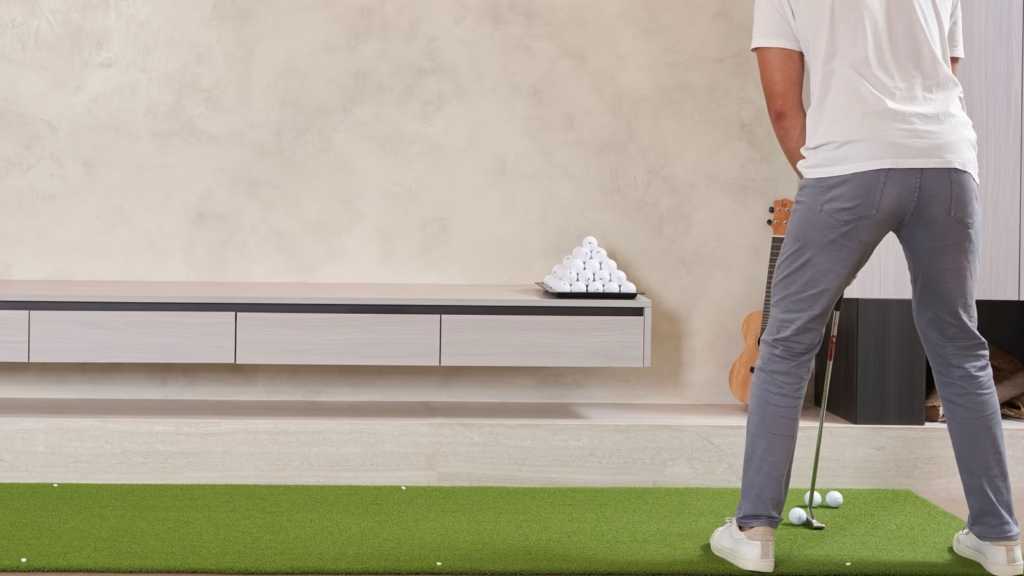
The point is to make decision, routine, and execution look more like golf. Appropriate challenge may produce more practice mistakes than a comfortable block, yet improve later performance. Ask: “Could I produce my pattern after the previous ball failed?”
Track 1: driver accuracy
Choose this track if your tee shot brought penalties, recovery shots, reloads, or defensive club choices into the last five rounds. The first goal is not a new draw. It is a predictable starting line and a repeatable setup that lets you aim with conviction.
The home drill: the start-line gate
With a safe net and full-swing room, create a gate just wider than the intended start line with sticks, pool noodles, or painter’s tape. Use foam balls if real ones are not safely contained. The gate reveals a poor start without a long flight.
Set up behind the ball, call the target side, then swing. Record only through the gate, left, or right. Add face spray only when strike location is part of the leak.
Week Session target Measurable weekly outcome 1 30 baseline drives through a safe start-line gate. Log all 30 by start direction and strike location. 2 Repeat the same 30-ball test. Set a personal gate-hit baseline from the better of the two sessions. 3 Three sets of 10 with one setup cue. Clear the gate on at least 7 of 10 in two sets. 4 Alternate left-center-right target calls. Clear the declared gate on 14 of 20 balls. 5 Hit 12 one-ball “tee shots” with a full routine. Meet your personal gate baseline in at least 8 of 12 attempts. 6 Play 18 simulated tee shots, one ball only. Record at least two more “fairway” starts than in week two.
Confirm the result outdoors. A net shows start line and strike, not full curve or course trouble. Pair this with our iron-play system for hitting more greens in regulation, rather than asking a driver drill to solve every approach problem.
Track 2: wedge distance control
Choose this track if the same scoring club keeps finishing short, long, or on the wrong tier. Your first job is to separate carry from total distance. Green firmness and wind change total distance. The number that lets you choose the correct swing is carry.
The home drill: three-length rehearsal and strike map
Use tape or three markers beside your stance for waist-high, chest-high, and stock-full wedge lengths. Rehearse without a ball, then make controlled strikes into a safe net or with low-flight balls. Mark strike with face spray if needed.
Indoor work teaches motion and contact, not carry. Once each week, take the three swings to a range, simulator, or launch monitor and write a carry window for each. A repeatable five-yard range is better than a perfect number you cannot find again.

Week Session target Measurable weekly outcome 1 Hit 10 shots with each of three wedge lengths outdoors or on a monitor. Record all 30 intended and actual carries. 2 Repeat the carry test with the same club and ball. Write a personal carry window for each length. 3 Rehearse 30 dry swings, 10 at each length. Stop at the chosen marker on 24 of 30 rehearsals. 4 Call lengths in random order, then hit 20 safe-net or range reps. Match the intended length and centered strike on 14 of 20. 5 Hit 15 random carry calls at the range. Finish inside your personal window on 10 of 15. 6 Play nine simulated approach situations with one ball. Choose the correct length and record two more acceptable carries than in week two.
Keep the scoring-wedge project in its lane. It will improve the approach choices inside your preferred distance, but it is not the same work as a broad nine-week plan for breaking 90. When the six weeks end, carry your new windows into that larger scoring structure.
Track 3: putting speed
Choose this track if a reasonable first putt keeps becoming a nervy second putt. Speed control is the right target when your read was sensible but the first ball finished too far from the hole. Make percentage matters. First, you need to give yourself a putt you can make.
The home drill: the finish-zone ladder
On a mat or flat carpet, put a tape line or towel beyond the target. Create a finish zone one to two putter-head lengths deep. Putt from three distances and score only balls that reach the target line and stop in the zone.
PGA of America distance-control guidance makes the same distinction: use markers at different distances and judge the finish. A straight mat cannot teach every green, but it can expose a player with only one speed.
Week Session target Measurable weekly outcome 1 Hit 10 putts from each of three start distances. Record all 30 finishes as short, in-zone, or long. 2 Repeat the 30-putt test. Set your personal in-zone baseline from the better session. 3 Work in three sets of 10 with one tempo cue. Finish in-zone on 7 of 10 in two sets. 4 Alternate the three distances in random order. Finish in-zone on 14 of 20. 5 Play 12 one-ball putts with a full read-and-routine pause. Meet your personal baseline on at least 8 of 12. 6 Run an 18-putt ladder without repeating a distance. Beat week two’s in-zone total by at least two putts. 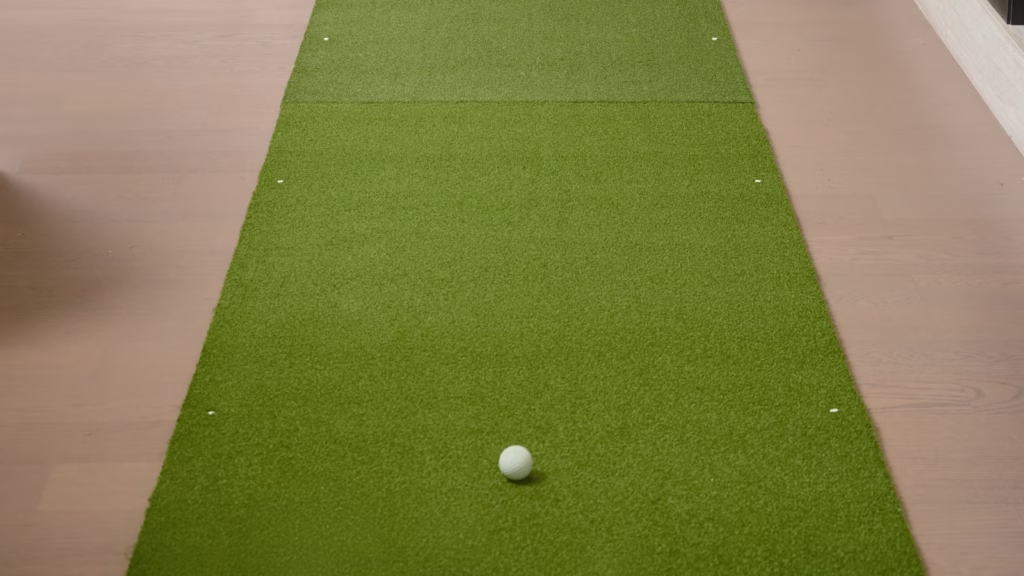
After six weeks, take this to a real green with slopes and changing speeds. Then layer it into the separate work in our drills to stop three-putting on any green. Speed practice is the foundation, not the whole putting course.
Common mistakes that flatten a six-week plan
- Changing the project after one bad session. Keep the target until the week-six test unless your diagnostic was plainly wrong.
- Using a net as a launch monitor. A net is excellent for safe repetition and strike feedback. It cannot confirm carry, curve, or on-course dispersion by itself.
- Recording only good shots. The miss pattern tells you what to train. Log it without explaining it away.
- Practicing until attention disappears. Finish when you stop following the routine. Ten focused balls are worth more than another indifferent bucket.
- Ignoring the body that produces the pattern. If mobility or stability prevents a repeatable setup, use this 20-minute golf fitness workout for more distance as separate support work, not a second swing project.
Quick recap: the six-week offseason plan
Use weeks one and two to count the leak. Use weeks three and four to repeat one pattern with feedback. Use weeks five and six to make it survive one-ball practice and consequence. The best golf offseason practice plan gives you one shot you can trust more by spring.
Want more golf every Friday? Join 800,000+ golfers on The 19th Hole. Subscribe at clickitgolf.com/newsletter
Frequently asked questions
How often should I practice during a six-week offseason plan?
Two or three focused sessions per week are enough if you record the result and keep the task specific. Add short dry-swing or setup rehearsals on other days if they are useful. Avoid turning every spare minute into full-swing volume, especially when fatigue makes the movement less organized.
Can I improve driver accuracy indoors?
Yes, if the space is genuinely safe and the goal is narrow. An indoor gate, mirror, and impact feedback can improve setup, start line, and centered contact. Confirm the result outdoors before trusting it on the course, because a net cannot show full ball flight, curve, or where a miss finishes.
How do I find my wedge carry distances in winter?
Use a range session, simulator, or launch monitor to record actual carry for one wedge and three swing lengths. Indoors, rehearse those lengths and contact patterns. Keep the same ball type when possible, then work with a carry window rather than one exact number that conditions will rarely reproduce.
What is a pressure test in golf practice?
A pressure test is one ball, one target, a complete routine, and a recorded result. Add a small consequence, such as restarting the set after a miss. It is not punishment. It prevents you from relying on immediate mulligans and asks the new pattern to hold up after an imperfect shot.
What if my biggest leak changes after two weeks?
Check the notes before changing tracks. If the original tally was incomplete or the chosen problem is no longer creating the biggest scoring cost, switch once and write down why. If the only reason is a rough practice day, stay with the plan. The week-six pressure test is designed to reveal the truth.