Field & Culture
Is the PGA Tour Transitioning into a Team Format?


The PGA Tour plans to create a series of lucrative, international tournaments that will offer guaranteed money to the world’s best players, we can reveal.
The Tour intends to stage between four and six events annually outside of the United States, in Europe, Asia and the Middle East. The series will begin in the fall of 2023 at the earliest, though possibly not until 2024. Details of the plan were confirmed to Golfweek by an industry executive familiar with the ongoing discussions. The executive requested anonymity because they are not authorized to discuss the matter publicly.
The move will be seen as an effort by the PGA Tour to thwart the threat posed by the Super Golf League, a proposed splinter circuit financed by the Saudi Arabian regime that has been trying to lure players to global events with promises of huge signing bonuses and guaranteed cash. The Super League has tried to attract players for at least seven years with no success. PGA Tour commissioner Jay Monahan made clear he will ban any member who signs on to a rival circuit, but has worked behind the scenes to devise ways to further reward his star players and dilute the risk of their splitting with the Saudis.
In April, Golfweek revealed the existence of an unannounced $40 million Player Impact Program, which will award bonuses to PGA Tour members deemed to most move the needle in terms of fan engagement. The annual program began measuring players’ impact based on a range of criteria in January. The player found to be most impactful at year’s end will receive $8 million, with decreasing amounts awarded to another nine stars.
Monahan also announced a strategic alliance with the European Tour (since rebranded as the DP World Tour) as they sought to unify their product against potential rivals. It is unclear what role the European circuit will play in the new overseas events staged by the PGA Tour but it is thought the two organizations will be aligned to not undermine Europe’s season-ending Race to Dubai.
A spokesperson for the PGA Tour declined to confirm specifics of the new series when contacted by Golfweek.
“We’re absolutely always looking at our future product and schedule, with all options on the table as to fields, formats and tournament locations, especially considering our advancing Strategic Alliance with the European Tour,” the spokesperson said. “No details or decisions have been made at this time.”
While internal discussions are continuing on specifics, tentative plans call for between four and six events, with fields limited to 50 or 60 competitors and no halfway cut. It has not been decided if the fields will be determined by the Official World Golf Ranking or FedEx Cup standings. A range of format options are being considered, including the possibility of a team component.
“Nothing firm on formats yet,” the well-placed executive said, “but a team format is certainly one of the ideas on the table.”
A team element — albeit an ill-defined one — has been one of the Super League’s marketing pitches as it sought to gain traction with players and golf fans.
Asked to specify just how lucrative the new series will be for elite players, the executive said no cash figure has been finalized and that the focus is on providing guaranteed money rather than a traditional prize fund that players would compete for a piece of. The source likened the new events to an amped-up World Golf Championships swing that will ensure riches for elite players regardless of how they perform.
The new international tournaments will not replace the existing fall schedule on the PGA Tour — currently, nine events that begin in September after the conclusion of the FedEx Cup playoffs and run through mid-November. Those fall stops typically draw less than stellar fields as star players often take a break from competition after the playoffs before ramping up their schedules in the New Year.
A PGA Tour source told Golfweek that a mechanism will be devised to ensure players who compete in the overseas series will not be disadvantaged in the FedEx Cup points race as a result of having skipped the U.S. schedule.
“Top guys want to have a break from the FedEx Cup,” the source explained. “The setup would be so they don’t have to worry. If they play in these big events, the idea is they don’t fall behind in the FedEx Cup.”
The manager for one top 10 star who has been briefed on the plans welcomed the news. “The big guys will all perform and all get rewarded,” he said.
This article originally appeared on Golfweek.


























Entertainment
Confessions of a Weekend Golfer: The Shots We All Lie About
Every golfer lies to themselves on the course. From “that was my practice swing” to “I usually make that putt,” Ty Webb confesses the universal lies we all tell—and why it’s perfectly okay.


We need to talk. Not about swing mechanics or course management or the latest driver technology. We need to talk about something more fundamental, more universal, more deeply human: the lies we tell ourselves on the golf course. And I’m not talking about the big lies—”I could go pro if I had more time” or “I’m definitely a ten handicap.” I’m talking about the small, everyday lies. The ones we tell ourselves on every single round. The ones that make golf bearable, and occasionally, magical.
I’m guilty of all of them. You are too. Your buddy who claims he shoots in the seventies? He’s lying about at least three things per round, minimum. And that’s okay. Because golf is hard, and life is short, and sometimes a little self-deception is what keeps us coming back. So consider this my confession. A truth-telling about all the lies. A public admission of the creative accounting, selective memory, and optimistic scorekeeping that make this beautiful, frustrating game possible.
Let’s get into it.
The Lie: “That Was My Practice Swing”
You know the one. You step up to the ball, full of confidence. You take a swing. The ball dribbles fifteen yards into the rough. There’s a brief moment of silence. Then, without missing a beat, you say, “That was my practice swing.” You tee up another ball and hit it two hundred yards down the middle.
We’ve all done it. And here’s the thing: nobody believes you. Your playing partners know it wasn’t a practice swing. You know it wasn’t a practice swing. The golf gods know it wasn’t a practice swing. But we all go along with it, because tomorrow, it might be us. Golf karma is real, and we’re all in this together.
The best version of this lie is when you don’t even say it out loud. You just shake your head, tee up another ball, and hit it like nothing happened. The silent practice swing. A masterclass in denial.
The Lie: “I Never Play That Well on the Range”
This is the lie we tell after a terrible round. You shot a hundred and three. You lost six balls. You four-putted twice. And as you’re walking off the eighteenth green, someone asks how it went, and you say, “Eh, I was hitting it great on the range this morning. Just couldn’t figure it out on the course.”
The truth? You were hitting it exactly the same on the range. Maybe worse. But admitting that would mean admitting that your range session was pointless, and we can’t have that. So we create this alternate reality where we were striping it on the range, and something mysterious happened between the range and the first tee that caused everything to fall apart.
It’s a comforting lie. It suggests that your real game—the good one—is still in there somewhere, just waiting to come out. And who knows? Maybe it is.

The Lie: “The Wind Really Got That One”
Ah yes, the wind. Golf’s most convenient scapegoat. You pull your drive forty yards into the trees, and before anyone can say anything, you’re shaking your head and muttering, “Wind really got that one.”
Never mind that it’s a calm day. Never mind that the flag on the green isn’t moving. Never mind that your ball started left and stayed left. The wind got it. End of story.
The beauty of the wind lie is that it’s impossible to disprove. Sure, it doesn’t feel windy right now, but maybe there was a gust. Maybe it was a micro-burst. Maybe it was a localized weather phenomenon that only affected your ball. Who’s to say? Not your playing partners, that’s for sure. They’re too busy preparing their own wind-related excuses.
The Lie: “I’m Just Playing for Fun Today”
This is the lie we tell on the first tee when we’re trying to manage expectations. “I’m just out here for fun today. Not worried about my score.” Translation: I’m about to play terribly, and I’m getting ahead of it.
The problem with this lie is that nobody who says it actually means it. You say you’re playing for fun, but by the third hole, you’re grinding over a five-footer like it’s for the Masters. You say you don’t care about your score, but you’re definitely counting every stroke and doing the math in your head after every hole.
Golf has a way of making liars out of all of us. We tell ourselves we’re playing for fun, and then we spend four hours being deeply, personally offended by a small white ball.
The Lie: “I Usually Make That Putt”
You’re standing over a six-footer. It’s a straight putt, slightly uphill. You hit it. It misses. And immediately, without thinking, you say, “I usually make that.”
Do you, though? Do you really? Because if you usually made six-footers, you’d be a scratch golfer. The stats say that even tour pros only make about sixty-five percent of putts from six feet. So unless you’re secretly Scottie Scheffler, you probably don’t “usually” make that putt.
But we say it anyway. Because in our minds, we’re better putters than we actually are. We remember the putts we make and forget the ones we miss. It’s selective memory, and it’s what keeps us believing that we’re one good putting day away from shooting our best round ever.

The Lie: “I Didn’t See Where It Went”
You hit your ball into the woods. Deep into the woods. You know exactly where it went. You watched it the whole way. But when your playing partner asks, “Did you see where it went?” you say, “Nope. Lost it.”
Why? Because if you admit you saw it, you have to go look for it. And nobody wants to spend ten minutes searching through poison ivy and thorns for a ball that cost you three dollars. So you take the stroke-and-distance penalty, drop a new ball, and move on with your life.
The “I didn’t see where it went” lie is an act of self-preservation. It’s not about cheating—it’s about maintaining your sanity and keeping pace of play. The golf gods understand.
The Lie: “That’s Good”
This is the lie we tell our playing partners, and they tell us. You’re three feet from the hole. Your buddy says, “That’s good.” You pick up your ball without putting it. Everyone’s happy.
Except here’s the thing: that putt wasn’t good. Not really. You might have made it. You also might have missed it. We’ll never know, because we didn’t putt it out. But we all agree to pretend it was a gimme, because nobody wants to watch you line up a three-footer for five minutes.
The “that’s good” lie is the social contract that makes recreational golf possible. Without it, rounds would take six hours, and we’d all hate each other. So we give each other putts, we accept them graciously, and we pretend we would have made them anyway.
The Lie: “I’m Going to Play More This Year”
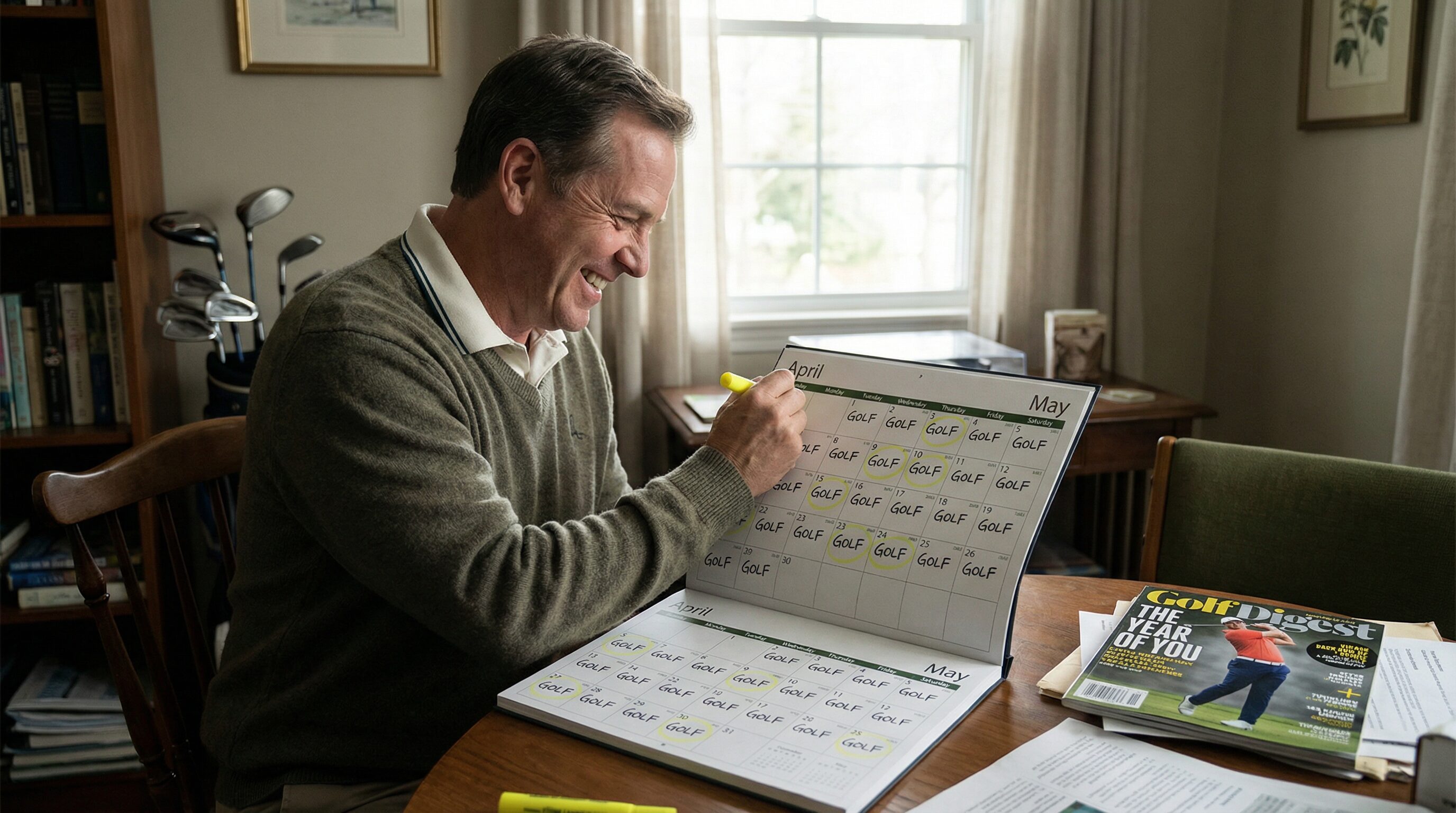
This is the lie we tell ourselves in January. “This is the year. I’m going to play twice a week. I’m going to practice. I’m going to get my handicap down to single digits.”
And then life happens. Work gets busy. The weather doesn’t cooperate. Your back starts hurting. By June, you’ve played six times, and you’re already revising your goals. “Okay, maybe not twice a week. But definitely once a week.” By September, you’re down to once a month, and you’re telling yourself, “Next year. Next year I’ll play more.”
We all do this. We all have grand plans for our golf game that reality refuses to accommodate. And yet, every January, we make the same promise. Because hope springs eternal, and golf is nothing if not a game of hope.
The Lie: “I Just Need to Figure Out One Thing”
This is the lie that keeps golf instructors in business. “I’m so close. I just need to figure out one thing, and it’s all going to click.” Maybe it’s your grip. Maybe it’s your takeaway. Maybe it’s your weight shift. Whatever it is, you’re convinced that once you figure it out, you’ll unlock your true potential.
The truth? There is no “one thing.” Golf is a thousand things, all working together in a complex, fragile system that falls apart the moment you think about it too hard. But we can’t accept that, because it’s too overwhelming. So we tell ourselves it’s just one thing. One fix away. One lesson away. One range session away.
And you know what? Sometimes it works. Not because there really was one thing, but because believing there was one thing gave us the confidence to play better. Golf is weird like that.
The Lie: “I’m Going to Lay Up”
You’re two hundred and twenty yards from the green. There’s water in front. Trees on the right. Bunkers on the left. Your playing partner says, “What are you hitting?” You say, “I’m going to lay up. Play it safe.”
And then you pull out your three-wood.
We all know how this ends. You go for it. You don’t make it. The ball finds the water, or the trees, or the bunkers. And as you’re walking up to take your drop, you’re already explaining to yourself why going for it was actually the smart play. “I hit it pretty good. Just came up a little short.” Or, “I had the distance. Just pulled it a bit.”
The “I’m going to lay up” lie is aspirational. It’s the golfer we want to be—smart, strategic, disciplined. But it’s not the golfer we are. We’re the golfer who goes for it, because going for it is fun, and golf is supposed to be fun. Even when it’s not.
The Lie: “I Don’t Care About My Handicap”
Sure you don’t. That’s why you update it after every round. That’s why you get excited when it goes down and defensive when it goes up. That’s why you’re constantly checking the GHIN app to see where you stand.
Look, it’s okay to care about your handicap. It’s a measure of progress. It’s a way to compete with your friends. It’s a number that represents all the hours you’ve spent working on your game. Caring about it doesn’t make you shallow or obsessed. It makes you human.
But we pretend we don’t care, because caring too much feels vulnerable. What if we try really hard and don’t improve? What if we’re stuck at this level forever? So we act casual. “Oh, my handicap? I don’t really pay attention to that.” Meanwhile, we’re checking it three times a day.

Why We Do It
So why do we lie to ourselves? Why do we engage in this elaborate theater of self-deception every time we step onto a golf course?
Because golf is hard. Really hard. And if we were completely honest with ourselves about how hard it is, and how little control we have, and how much luck is involved, we’d probably quit. So we lie. We tell ourselves we’re better than we are. We blame external factors. We give ourselves the benefit of the doubt. We create a version of our golf game that’s just slightly better than reality.
And here’s the thing: it works. Those little lies keep us motivated. They keep us hopeful. They keep us coming back. Because if we truly accepted that we’re a twenty handicap who’s going to stay a twenty handicap no matter how much we practice, what would be the point? But if we believe we’re one swing thought away from being a fifteen, or one lesson away from being a ten, then we have a reason to keep playing.
The lies aren’t about cheating. They’re about hope. They’re about maintaining the belief that improvement is possible, that the next round will be better, that we’re capable of more than we’ve shown. And in a game as humbling as golf, hope is everything.
Why It’s Okay
Here’s what I’ve learned after years of lying to myself on the golf course: it’s not just okay to do this. It’s necessary. Golf is a game that will break you if you let it. It will expose every flaw, every weakness, every limitation. It will make you question your intelligence, your coordination, and your life choices. If you approach it with complete, brutal honesty, you’ll be miserable.
So we lie. We soften the edges. We give ourselves grace. We remember the good shots and forget the bad ones. We tell stories that make us sound better than we are. And in doing so, we make golf bearable. We make it fun. We make it something we want to keep doing.
The best golfers I know aren’t the ones who are hardest on themselves. They’re the ones who can laugh at their mistakes, shrug off bad shots, and find joy in the process. They’re the ones who understand that golf is supposed to be fun, and sometimes fun requires a little creative interpretation of reality.
So if you need to call that a practice swing, go ahead. If you need to blame the wind, be my guest. If you need to believe you usually make that putt, I’m not going to argue with you. We’re all just trying to enjoy this ridiculous game, and if a few harmless lies help us do that, then who’s really getting hurt?
The Truth About the Lies
I’ll leave you with this: the lies we tell ourselves on the golf course aren’t really about golf. They’re about life. They’re about how we cope with failure, how we maintain hope, how we keep trying even when the odds are against us. Golf just happens to be the arena where these lies play out most obviously.
In life, we tell ourselves we’re going to start eating better, exercising more, being more patient with our kids. We tell ourselves we’re going to finish that project, learn that skill, make that change. And most of the time, we don’t. But we keep telling ourselves we will, because the alternative—accepting that we’re not going to change—is too depressing to consider.
Golf is the same. We tell ourselves we’re going to practice more, play smarter, stay calm. We tell ourselves we’re better than our last round, that we’re improving, that we’re capable of greatness. And sometimes we are. But most of the time, we’re just out there, doing our best, lying to ourselves just enough to keep it interesting.
And you know what? That’s beautiful. That’s human. That’s why I love this game.
So the next time you’re on the course, and you hit a terrible shot, and you hear yourself saying, “That was my practice swing,” or “The wind got it,” or “I usually make that,” just smile. Because you’re part of a long tradition of golfers who’ve been lying to themselves since the game was invented. You’re in good company. And you’re doing exactly what you need to do to keep loving this maddening, magnificent game.
Now if you’ll excuse me, I have a tee time. And I’m definitely going to break eighty this time. I can feel it.
Entertainment
What Your Handicap Really Says About Your Game
What does your golf handicap really say about your game? A thoughtful, non-judgmental exploration of handicap ranges, strengths, weaknesses, and how to use your handicap productively.


Your handicap is just a number. But somehow, it’s also so much more than that. It’s a badge of honor, a source of frustration, a conversation starter, and sometimes, a point of embarrassment. We compare our handicaps to our friends, to strangers on the first tee, to the golfers we see on social media. We obsess over lowering it, celebrate when it drops, and feel discouraged when it creeps back up. But here’s something worth considering: most of us don’t really understand what our handicap actually says about our game.
I’ve been playing golf for more than twenty years, and I’ve had just about every handicap you can imagine. I’ve been a thirty, a twenty, a fifteen, a ten, and everywhere in between. And through all those years and all those numbers, I’ve learned that a handicap is less about how “good” you are and more about where you are on your golf journey. It’s a snapshot, not a judgment. A tool, not a trophy. And once you understand what your handicap really represents, you can use it to improve your game instead of just worrying about what other people think of it.
Misconceptions About Handicap
Let’s start by clearing up some common misconceptions, because there’s a lot of confusion out there about what a handicap actually means.
Misconception #1: Your Handicap Defines Your Worth as a Golfer
This is the big one. Somewhere along the way, we started treating handicaps like grades in school. A five handicap is an A. A fifteen is a C. A twenty-five is failing. But that’s not how it works. Your handicap doesn’t measure your worth as a golfer—it measures your current scoring potential relative to par. That’s it. It doesn’t account for how much you love the game, how much fun you have playing, how good of a playing partner you are, or how much you’ve improved over the years. It’s just a number that helps level the playing field in competition.
Misconception #2: Lower Is Always Better
Yes, a lower handicap generally means you shoot lower scores. But “better” is subjective. I know scratch golfers who are miserable on the course because they put so much pressure on themselves. I also know twenty handicappers who have more fun playing golf than anyone I’ve ever met. If your goal is to compete at a high level, then yes, lowering your handicap matters. But if your goal is to enjoy the game, spend time with friends, and challenge yourself in a healthy way, then your handicap is just one small piece of the puzzle.
Misconception #3: Your Handicap Is Fixed
Your handicap is a moving target. It goes up and down based on your recent scores, and it’s designed to reflect your current ability, not your best ability or your worst ability. Some golfers get discouraged when their handicap goes up, but that’s just part of the game. Life gets busy. You don’t play as much. Your swing gets rusty. Your handicap adjusts. That’s what it’s supposed to do. It’s not a failure—it’s a reflection of where you are right now.
Misconception #4: Handicap Is About Consistency
Here’s a subtle one: many golfers think a handicap measures how consistently you play. But that’s not quite right. Your handicap is based on your best scores, not your average scores. The USGA handicap system takes your best eight scores out of your last twenty rounds, which means it’s designed to reflect your potential, not your typical performance. This is important because it means your handicap might be lower than what you usually shoot. And that’s okay. It’s supposed to be.

What Different Handicap Ranges Typically Indicate
Now that we’ve cleared up some misconceptions, let’s talk about what different handicap ranges actually tell us about a golfer’s game. Remember, these are generalizations. Every golfer is different, and there are always exceptions. But if you’re trying to understand what your handicap says about your strengths and weaknesses, this is a good place to start.
30+ Handicap: The Beginner or Casual Golfer
If you’re a thirty handicap or higher, you’re likely either new to the game or you play very casually. And that’s perfectly fine. At this stage, you’re still learning the basics—how to make solid contact, how to control direction, how to get the ball airborne consistently. You probably have a few clubs in your bag that you feel comfortable with, and a few that you avoid at all costs. Your scores are inconsistent, and you have a lot of big numbers on your scorecard.
What this means for your game: focus on fundamentals. Work on your grip, your setup, and your swing basics. Don’t worry about advanced techniques or course management strategies yet. Just try to make consistent contact and keep the ball in play. And most importantly, have fun. This is the stage where you’re falling in love with the game, so enjoy it.
20-29 Handicap: The Developing Golfer
In this range, you’ve moved past the beginner stage. You can make solid contact most of the time, and you have a general sense of where the ball is going. But you still struggle with consistency. You might hit a great drive followed by a terrible approach shot. You might make par on a tough hole and then triple-bogey an easy one. Your short game is probably your biggest weakness, and you lose a lot of strokes around the green.
What this means for your game: it’s time to focus on your short game. Chipping, pitching, and putting are where you’ll see the fastest improvement. Also, start thinking about course management. You don’t need to hit driver on every hole. Sometimes laying up or playing safe is the smarter play. The goal at this stage is to eliminate the big numbers and start shooting more consistent scores.
10-19 Handicap: The Solid Recreational Golfer
This is where a lot of golfers settle in, and it’s a great place to be. You’re a legitimate golfer. You can break ninety consistently, and on a good day, you might break eighty. You have a reliable swing, a decent short game, and a good understanding of course management. You’re not going to wow anyone with your distance or your shot-making, but you’re steady. You don’t make a lot of big mistakes, and you capitalize on your good shots.
What this means for your game: you’re at a crossroads. If you want to keep improving, you’ll need to identify your specific weaknesses and work on them deliberately. Maybe it’s driving accuracy. Maybe it’s approach shots from a hundred and fifty yards. Maybe it’s lag putting. Whatever it is, you need to be honest with yourself about where you’re losing strokes and commit to fixing it. If you’re happy where you are, that’s great too. This is a handicap range where you can enjoy competitive golf with friends and still have fun.
5-9 Handicap: The Advanced Amateur
If you’re a single-digit handicap, you’re in rare company. Only about twenty percent of golfers ever reach this level. You have a repeatable swing, a solid short game, and good course management skills. You can shoot in the seventies on a regular basis, and you rarely have blow-up holes. You’re the kind of golfer that other golfers look up to.
What this means for your game: at this level, improvement is about refinement, not overhaul. You’re working on small details—shaving a stroke here, tightening up your dispersion there. You’re also dealing with the mental side of the game more than ever. Pressure, expectations, and the desire to get even better can be both motivating and frustrating. The key is to stay patient and keep working on the fundamentals.
0-4 Handicap: The Elite Amateur
Scratch golfers and plus handicappers are in the top one percent of all golfers. You can shoot par or better on a regular basis, and you have the skills to compete at a high level. Your swing is efficient, your short game is sharp, and your mental game is strong. You rarely make mistakes, and when you do, you recover quickly.
What this means for your game: you’re playing a different game than most golfers. At this level, it’s all about consistency, mental toughness, and maximizing your strengths. You’re also probably thinking about whether you want to pursue competitive golf more seriously. If not, enjoy being one of the best players at your course. You’ve earned it.

Strengths vs. Weaknesses: What Your Handicap Doesn’t Tell You
Here’s the thing about handicaps: they tell you how well you score, but they don’t tell you why you score that way. Two golfers with the same handicap can have completely different games. One might be a long hitter with a shaky short game. The other might be short off the tee but deadly with a wedge. Your handicap is the result, but it doesn’t explain the process.
This is why it’s so important to understand your own strengths and weaknesses. If you’re a fifteen handicap who drives the ball great but can’t putt, your path to improvement is different than a fifteen handicap who struggles off the tee but has a great short game. You need to know where you’re gaining strokes and where you’re losing them.
The best way to do this is to track your stats. Not obsessively, but consistently. Keep track of your fairways hit, greens in regulation, putts per round, and up-and-downs. After ten or twenty rounds, patterns will emerge. You’ll see where you’re strong and where you need work. And that information is far more valuable than your handicap alone.
For example, let’s say you’re a twelve handicap. You look at your stats and realize you’re only hitting six greens in regulation per round, but you’re getting up and down fifty percent of the time. That tells you that your short game is actually a strength, and your ball-striking is the weakness. So instead of spending all your practice time chipping and putting, you should focus on your iron play. Your handicap didn’t tell you that—your stats did.
How to Use Your Handicap Productively
So now that we understand what a handicap is and what it isn’t, let’s talk about how to use it productively. Because a handicap can be a powerful tool for improvement if you approach it the right way.
1. Use It as a Benchmark, Not a Judgment
Your handicap is a starting point. It tells you where you are right now. Use it to set realistic goals. If you’re a twenty handicap, aiming to be a five handicap by next year probably isn’t realistic. But aiming to be an eighteen or a sixteen? That’s doable. Set incremental goals, celebrate when you hit them, and don’t beat yourself up if progress is slow.
2. Track Trends, Not Individual Rounds
One bad round doesn’t define your game, and one great round doesn’t mean you’ve figured it all out. Look at trends over time. Is your handicap gradually coming down? Great. Is it stuck in the same range for months? That’s a sign you need to change your approach. Are you seeing more volatility than usual? Maybe it’s time to focus on consistency.
3. Use It to Find the Right Competition
One of the best things about a handicap is that it allows golfers of different skill levels to compete fairly. If you’re a fifteen handicap, you can play a match against a five handicap and have a legitimate chance to win. Use your handicap to find competitive opportunities that are fun and challenging. Join a league. Play in a club championship. Set up matches with friends. Golf is more fun when there’s something on the line.
4. Don’t Let It Define You
This is the most important one. Your handicap is a tool, not an identity. You’re not “just a twenty handicap” or “only a fifteen.” You’re a golfer who’s working on your game, enjoying the challenge, and spending time doing something you love. Some days you’ll play great. Some days you’ll play terrible. Your handicap will go up and down. That’s golf. Don’t let a number determine how you feel about yourself or the game.

The Real Measure of a Golfer
I want to share something I’ve learned over the years: the best golfers I know aren’t necessarily the ones with the lowest handicaps. They’re the ones who love the game, respect their playing partners, handle adversity with grace, and keep coming back no matter how frustrating it gets. They’re the ones who celebrate their friends’ good shots, offer encouragement after bad ones, and never take themselves too seriously.
I’ve played with scratch golfers who were miserable to be around. I’ve also played with thirty handicappers who made every round a joy. The difference wasn’t their skill level—it was their attitude.
So yes, work on your game. Try to lower your handicap. Set goals and track your progress. But don’t forget why you started playing golf in the first place. It wasn’t to impress people with a number. It was because you love the challenge, the competition, the camaraderie, and the simple pleasure of being outside on a beautiful day, trying to hit a little white ball into a hole.
Your handicap is part of your golf story, but it’s not the whole story. It’s a chapter, not the book. And the best part? You’re still writing it.
Moving Forward: Rethinking How You Judge Your Game
If you take one thing away from this article, let it be this: your handicap is a tool for understanding and improving your game, not a measure of your worth as a golfer. Use it to set goals, track progress, and find competitive opportunities. But don’t let it define you, stress you out, or take the fun out of the game.
The next time you step onto the first tee, don’t worry about what your handicap says about you. Instead, focus on playing your game, enjoying the challenge, and appreciating the opportunity to be out on the course. Because at the end of the day, golf is about so much more than a number. It’s about the journey, the friendships, the moments of triumph and frustration, and the endless pursuit of improvement.
Your handicap will go up and down. Your game will have peaks and valleys. But if you approach it with the right mindset—using your handicap as a tool, not a judgment—you’ll not only play better golf, you’ll enjoy it more. And isn’t that the whole point?
So go ahead. Rethink how you judge your game. Focus on your strengths, work on your weaknesses, and remember that every golfer, from the thirty handicap to the scratch player, is on their own unique journey. Yours is just as valid as anyone else’s. Play your game, enjoy the process, and let the handicap take care of itself.
Entertainment
The Etiquette Guide Every Golfer Needs (But Nobody Teaches)
Learn golf etiquette in this friendly, non-judgmental guide. From tee box behavior to pace of play, discover the unwritten rules that make golf enjoyable for everyone.

Let me tell you about my first round of golf on a real course. I was nervous, excited, and completely clueless about the unwritten rules of the game. I didn’t know when to walk, when to talk, or where to stand. I felt like everyone was watching me, judging my every move. Looking back, most of that anxiety was in my head, but I wish someone had pulled me aside and explained the basics in a friendly, non-judgmental way. That’s exactly what I’m going to do for you today. Consider this your friendly guide to golf etiquette—the stuff that makes the game more enjoyable for everyone, including you.
Why Golf Etiquette Actually Matters
Golf etiquette isn’t about being stuffy or following arbitrary rules from some country club handbook. It’s about three simple things: keeping the game moving, showing respect for your fellow golfers, and taking care of the course so the next group can enjoy it too. That’s it. When everyone follows these basic principles, golf becomes more fun, less stressful, and way more welcoming for players of all skill levels.
Here’s the truth: nobody expects you to be perfect, especially if you’re new to the game. We’ve all been beginners. We’ve all hit bad shots, lost balls, and felt overwhelmed by the pace of play. What matters is that you’re making an honest effort to be considerate and keep things moving. That’s the spirit of golf etiquette, and it’s something anyone can do regardless of their handicap.

Tee Box Etiquette: Starting Your Round Right
The tee box is where every hole begins, and it sets the tone for the entire experience. The first rule is simple: whoever had the best score on the previous hole gets “honors” and tees off first. On the first tee, you can decide honors by flipping a tee or just agreeing on an order. It’s not a big deal—just pick something and stick with it for the round.
While someone is teeing off, stand quietly to the side or behind them. You don’t need to be silent like you’re in a library, but avoid talking, moving around, or standing directly in their line of sight. It’s just common courtesy. Once they’ve hit their shot, feel free to offer a quick compliment if it was a good one, or a supportive “you’ll get the next one” if it wasn’t. Golf is hard, and a little encouragement goes a long way.
One more thing about the tee box: be ready when it’s your turn. Have your club selected, your ball teed up, and your glove on. You don’t need to rush, but you also don’t want to be fumbling around while everyone waits. Think of it like being ready to order when it’s your turn at a coffee shop—just a little preparation that keeps things flowing smoothly.
Fairway and Green Behavior: Respect and Awareness
Once you’re off the tee, the key to good etiquette is awareness. Pay attention to where other players are and what they’re doing. If someone is hitting a shot, pause and give them space. If you’re looking for a lost ball, don’t spend more than a couple of minutes searching—the rules allow three minutes, but honestly, if you haven’t found it in two, it’s time to drop another ball and keep moving.
When you get to the green, that’s where things can feel a bit more formal, but it doesn’t have to be intimidating. The basic principle is to avoid stepping on someone else’s putting line—the imaginary path between their ball and the hole. Walk around it, not through it. If you’re not sure where their line is, just ask. Nobody will mind.
Mark your ball with a small coin or ball marker when you’re on the green, especially if it’s in someone else’s way. This is just good manners and helps everyone see their lines clearly. And when you’re done with the hole, replace the flagstick carefully and move off the green promptly. The next group is probably waiting, and they’ll appreciate you keeping things moving.

Cart and Course Care: Leave It Better Than You Found It
If you’re using a golf cart, follow the cart path rules posted at the course. Some days it’s “cart path only,” which means you drive on the path and walk to your ball. Other days you might have “90-degree rule,” where you can drive out to your ball but must return to the path at a right angle. These rules exist to protect the course, especially when it’s wet or the turf is stressed.
Course care is one of those things that separates thoughtful golfers from careless ones. Always replace your divots—those chunks of grass you take out when you hit a shot. Most courses provide a sand-and-seed mixture in the carts, or you can replace the actual piece of turf if it came out cleanly. Either way, take five seconds to fix it. The next golfer who lands in that spot will thank you.
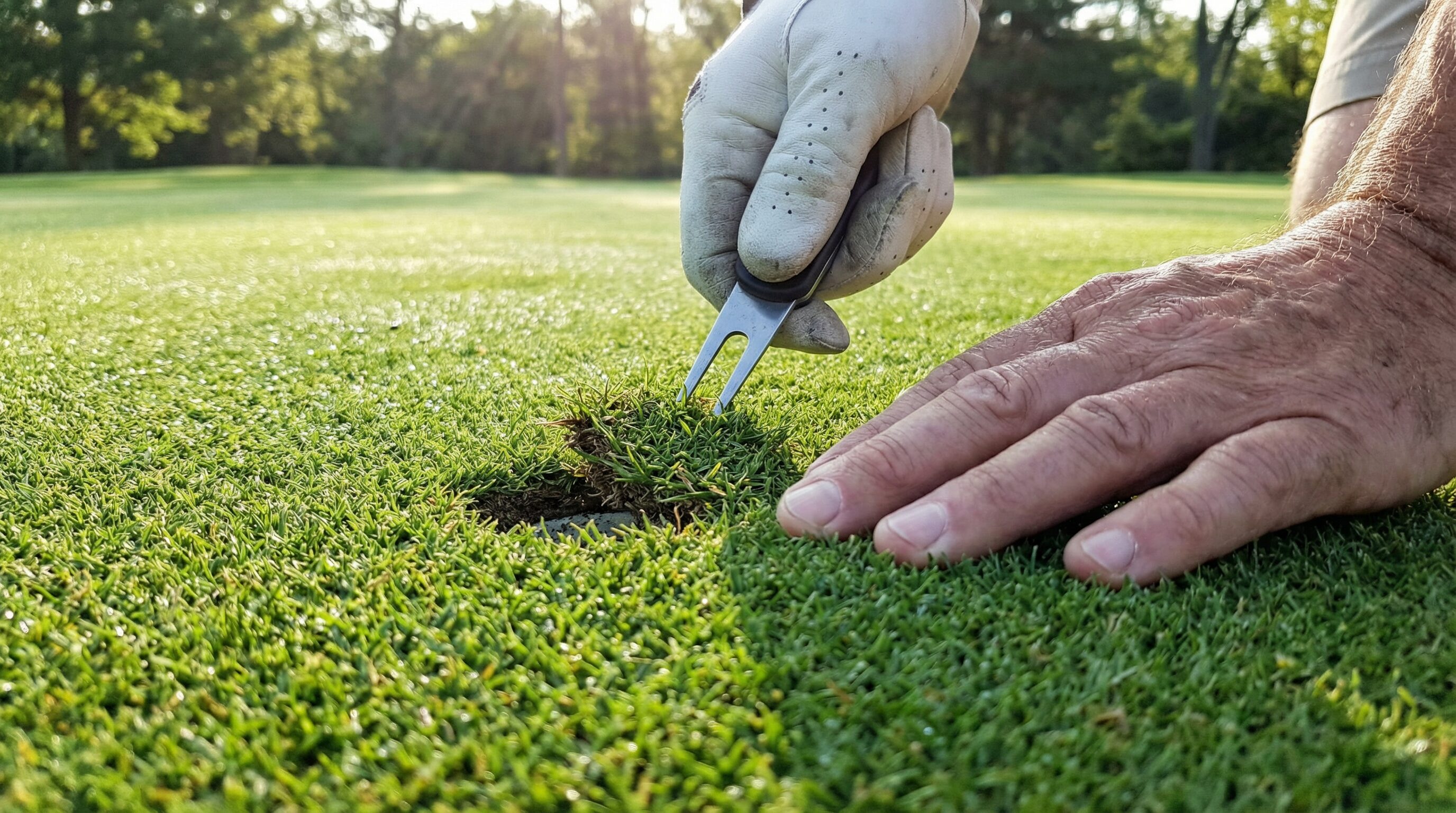
On the greens, repair your ball marks. When your ball lands on the green, it often leaves a small indentation. Use a divot repair tool (or a tee in a pinch) to gently lift the turf back to level. This takes about ten seconds and makes a huge difference in the quality of the greens. If you see another ball mark nearby, fix that one too. It’s good karma, and it helps the course stay in great shape.
Pace of Play: The Golden Rule of Golf
Let’s talk about the elephant on the course: pace of play. This is the number one complaint among golfers, and it’s also the most misunderstood aspect of etiquette. Here’s the deal: you don’t need to play fast, but you do need to play efficiently. There’s a difference.
Playing efficiently means being ready when it’s your turn, making decisions quickly, and not wasting time between shots. It means walking with purpose, not dawdling. It means having a plan for your shot before you get to your ball. You can still take your time over the ball and make a good swing—nobody is asking you to rush that part. But everything else should keep moving.
If you’re playing slower than the group behind you and there’s open space in front of you, it’s courteous to let them play through. This isn’t an admission of failure or a sign that you’re a bad golfer. It’s just being considerate. Wave them up, step aside, and let them pass. They’ll appreciate it, and you’ll feel less pressure to hurry. It’s a win-win.
One practical tip: if you’re new to golf or still learning, consider playing from the forward tees. This makes the course shorter and easier, which naturally speeds up play. There’s no shame in this—it’s actually the smart move. You’ll have more fun, hit more greens, and keep pace with the group in front of you.
Bunker Etiquette: Rake Your Mess
When you hit out of a bunker, always rake your footprints and the area where you took your swing. The rake is usually nearby, either in the bunker or just outside it. This takes about fifteen seconds and ensures the next golfer doesn’t have to deal with your mess. Enter the bunker from the low side when possible, take your shot, rake thoroughly, and exit. Simple as that.
Some golfers debate whether the rake should be left in the bunker or outside it. Honestly, it varies by course, and there’s no universal rule. Just put it back where you found it or in a spot that makes sense. The important thing is that you used it.
Sound and Distractions: Keep It Chill
Golf is a game that requires concentration, so be mindful of noise. You don’t need to whisper, but avoid loud conversations, phone calls, or music when others are hitting. If you want to listen to music in your cart, keep it low enough that it doesn’t carry to other groups. And please, put your phone on silent. Nobody wants to hear your ringtone echo across the fairway.
That said, golf is also a social game. Enjoy the company of your playing partners. Share a laugh, tell a story, celebrate good shots. Just be aware of timing. There’s a time for conversation and a time for quiet focus. You’ll figure out the rhythm pretty quickly.

What to Do When You Make a Mistake
Here’s the most important thing I can tell you: everyone makes etiquette mistakes. You’re going to forget to replace a divot, accidentally step on someone’s line, or take too long on a shot. It happens. When it does, just apologize briefly and move on. Nobody is keeping score of your etiquette errors, and most golfers are incredibly forgiving, especially if they see you’re making an effort.
If someone corrects you or offers advice about etiquette, don’t take it personally. They’re trying to help, not criticize. Say “thanks for letting me know” and adjust your behavior. That’s how we all learn. I’ve been playing for years, and I still pick up new etiquette tips from time to time. It’s part of the game.
The Spirit of Golf Etiquette
At its core, golf etiquette is about kindness and consideration. It’s about recognizing that you’re sharing the course with other people who love this game as much as you do. It’s about leaving the course in good shape for the next group. It’s about keeping the game moving so everyone can enjoy their round. And it’s about creating an environment where golfers of all skill levels feel welcome and respected.
You don’t need to memorize a hundred rules or stress about doing everything perfectly. Just focus on being considerate, staying aware of your surroundings, and making an honest effort to follow the basics. That’s ninety percent of golf etiquette right there. The rest you’ll pick up naturally as you play more rounds and observe other golfers.
A Final Word for New Golfers
If you’re new to golf, please don’t let etiquette anxiety keep you off the course. Yes, there are unwritten rules, but they’re not complicated, and they’re not designed to exclude you. They exist to make the game better for everyone. Most golfers are incredibly welcoming and happy to see new people taking up the game. If you’re making an effort to be respectful and keep pace, you’re doing just fine.
Bookmark this guide and review it before your next round. Bring a divot tool and a ball marker. Be ready when it’s your turn. Fix your ball marks. Rake your bunkers. Keep moving. That’s the foundation of good golf etiquette, and it’s something anyone can do.
Golf is a wonderful game with a rich tradition of respect and sportsmanship. By following these simple guidelines, you’re not just being a good playing partner—you’re becoming part of that tradition. And that’s something to be proud of. Now get out there and enjoy your round. We’ll see you on the course.













How to Permanently Fix a Slice in Golf (2026 Guide)

How to Master What Makes Augusta So Difficult

How To Know When To Get A Club Fitting




-
 Gear Intelligence6 years ago
The Perfect Practice Putting Mat Review by Jason Tenzer
-
 Field & Culture5 years ago
Loophole Rule Offers PGA Tour Pros a Mulligan
-
Performance Lab5 years ago
2021 Buyer’s Guide: The Top 10 Value Golf Balls For Distance & Feel
-
Entertainment5 years ago
Golf Marriage Counselor
-
 Gear Intelligence7 years ago
THE ADJUSTABLE IRONS: WALKING STICKS GOLF CLUBS
-
 Entertainment7 years ago
9 Biggest Chokes Of The Past Decade
-
Gear Intelligence5 years ago
What Your Golf Clubs Say About You
-

 Field & Culture3 months ago
The latest news in golf