Gear Intelligence
Jack Nicklaus applauds the rollback of golf balls AND also suggests one more BIG change…
Tell us in the comments if you are a fan or not so much… We reveal our insider take below ? – Spoiler Alert… Nah – Gotta read on to find out…

The legend. Undisputable. I mean come on, With 18 major championships under his belt, it’s safe to say that when Jack Nicklaus weighs in on hot topics surrounding the sport, people listen. I know I do…
Back in March, the USGA and R&A announced their plan to roll back the ball for professional golfers, a controversial move that would come into effect from January 2026.

One supporter of the move is the most successful major championship golfer of all time, with Nicklaus praising the decision this week while speaking with legend Annika Sorenstam on her SiriusXM show, Annika.
“It’s what I call a good start. What they’ve done with the golf ball, you know, it’s gonna affect the Rory McIlroys and Justin Thomases maybe 14 or 15 yards. And they certainly can afford that. The average golfer maybe four or five yards. And of course, they can adjust themselves easily by moving their tee-up. It’s bifurcation right now, but I mean, ultimately I think they all will be playing the same golf ball.”
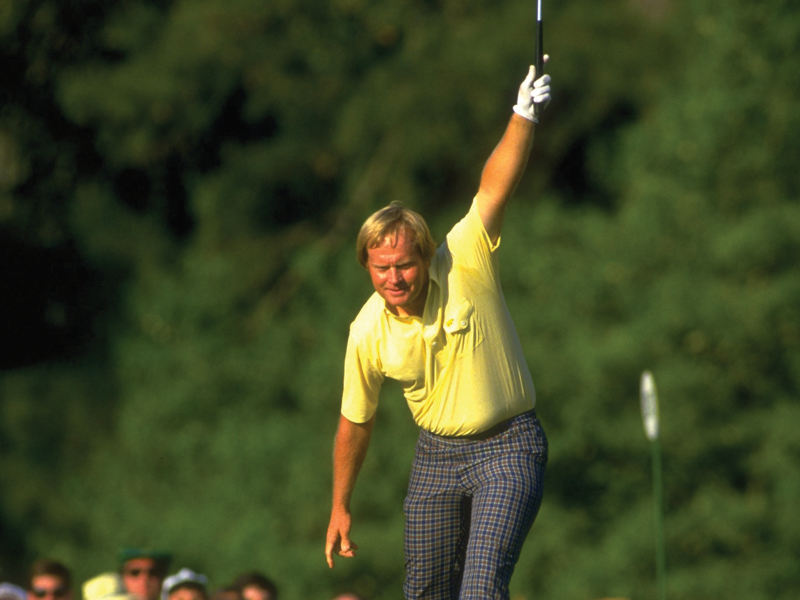
Off-topic, well kinda, I simply couldn’t resist – I love this every time I watch it. In yo face Mr. Logo AKA Johnny Miller. Sooooo if you haven’t seen this iconic moment where Jack nonchalantly walks up, takes a single look, and mic drops a 2000-foot put (OK – you got me – it was 102 feet with multiple tiers and breaks) you have to watch it!
However, here’s the rub…Ol’ Jackie boy is calling for more and has shared his wish that the governing bodies now turn their attention to the sweet spot on the driver. Now, you’re playing with our emotions Jack – Look we get you were playing with baby spoon drivers and balata balls but adjusting the ball to go less far and making it harder to stripe one off the 1st tee at the 4-man scramble, maybe, just maybe, are we trying to move the needle too far too soon. Just sayin’! The goal is to make things more fun, to make this game grow (and it has by staggering amounts since Covid), oh yeah, and probably most importantly get new players, and new viewers, not to protect records… Rant over. Shall we continue… Ok let’s do it – Buckle up!
“And, you know, the one thing they haven’t done, which I would certainly like to see ’em do, is reduce the size of the sweet spot on the driver, which is one thing they talked about doing and they didn’t end up making it happen. By reducing the sweet spot, it will make the guys have to be a little bit more precise and they just can’t just stand back, wail at it, and hit it anywhere on the club head and still see the ball go 300-something yards. They have to be a little bit more precise. And when they connect on it and hit it in the right spot then they deserve to get their yardage.”
What do you think of the Golden Bear’s suggestion, Insiders? I for one couldn’t disagree more. Addition by subtraction math doesn’t sit well with the kid.
YES – that just happened. I just referred to myself as the kid… Admittedly, I am not Ken Griffey Jr., but I do have a T-shirt that says “The Kid” on it with Griffs’ image. So, Yeah, I am kind of a big deal. Pics or it didn’t happen – copy that ghost rider, Alrighty then – Boom Done. Kid Out!

Equipment
When It’s Worth Getting A Club Fitting (And When It’s Not)
Is a professional club fitting the secret to lower scores or just an expensive distraction? The Golf Hacker breaks down when it’s actually worth the investment and when you should save your cash for lessons and used gear.
Look, I’m not going to pretend I haven’t spent hours staring at the latest $600 drivers like they’re the missing piece of my soul. We’ve all been there, standing in the middle of a big-box golf store, listening to the rhythmic thwack of someone in the hitting bay, wondering if a professional club fitting is the magic pill that finally cures our slice. But here’s the deal: golf marketing is designed to make you feel like your current gear is a collection of prehistoric sticks. The truth about when it’s actually worth dropping the extra cash on a club fitting is a bit more complicated than the sales guy wants you to believe. If you’re shooting 110 and can’t find the face of the club consistently, a custom-tuned stiff shaft isn’t going to save you—it’s just going to make your misses more expensive.
Let’s be honest, most of us are out here grinding with a swing that changes more often than the weather. One day we’re channeling our inner Rory, and the next we’re hitting hosel-rockets that threaten the safety of the beverage cart. In this guide, I want to break down the golf hacks of gear acquisition. We’re going to look at the cold, hard reality of custom fitting. Trust me on this, I’ve wasted enough money on “tour-spec” gear that I had no business swinging to know where the line is drawn. We’ll explore the specific scenarios where a fitting is a game-changer and the times when you’re better off spending that money on a bucket of balls and a lesson from the local pro.
Understanding When It’s Actually Time to Upgrade
The first thing we need to address is the “new shiny object” syndrome. We see a pro on TV hoisting a trophy with a specific brand of irons, and suddenly our perfectly functional cavity backs feel like they’re made of lead. But when it’s actually a matter of performance rather than ego, the signs are usually in your ball flight. If you are consistently hitting the ball well but seeing a flight that doesn’t match your effort—think ballooning shots that die in the wind or a persistent low hook despite a decent path—then your equipment might be fighting you. Modern equipment is incredibly forgiving, but it’s not sentient. It can’t fix a fundamental swing flaw, but it can stop punishing you for a swing that’s actually decent.
Here’s a simple rule of thumb: if you’ve reached a point where your handicap has plateaued for six months and your “good” shots aren’t yielding the results they used to, you’re in the club fitting zone. I remember when I finally got fitted for a driver after years of playing a hand-me-down from my uncle. I thought I was just a short hitter. Turns out, I was playing a shaft that was way too soft for my aggressive (read: chaotic) transition. The fitting didn’t give me a new swing, but it gave me a tool that didn’t buckle under the pressure of my mistakes. That’s one of the best golf tips I can give: stop trying to adapt your body to the club; make the club adapt to you once you have a repeatable motion.
However, if you’re still in the phase where you’re topping every third shot, a fitting is a waste of your Saturday. You need a consistent impact point before a launch monitor can tell you anything useful. If the data points are scattered all over the screen like a Jackson Pollock painting, the computer can’t find a baseline to optimize. Save that fitting fee for a three-pack of lessons. Once you can hit the center of the face at least 60% of the time, then we can talk about loft, lie angles, and spin rates.
The Myth of the ‘Standard’ Club
One of the biggest golf hacks the industry doesn’t talk about is that “standard” doesn’t actually exist. Every manufacturer has a different idea of what a standard length, loft, and lie should be. A 7-iron from one brand might be an inch longer or two degrees stronger than a 7-iron from another. This is where when it’s actually beneficial to get checked out comes into play. If you are exceptionally tall or on the shorter side, playing off-the-rack clubs is like trying to run a marathon in shoes two sizes too small. You’ll make it to the finish line, but it’s going to be miserable and you’re going to develop some nasty habits along the way.
I once played with a guy who was 6’4” and using standard-length clubs he bought at a garage sale. He had to hunch over so much he looked like he was trying to find a lost contact lens in the grass. By the back nine, his back was screaming, and his swing was a mess of compensations. A simple static fitting—measuring your wrist-to-floor height—can tell you if you need your clubs lengthened or shortened. This isn’t even a full “performance fitting,” but it’s a crucial piece of golf advice for anyone who doesn’t fit the “average” mold. You can’t build a consistent swing on a foundation of poor posture caused by ill-fitting tools.
Static vs. Dynamic Club Fitting
It’s important to distinguish between the two. A static fitting is just measurements. A dynamic fitting involves you actually hitting balls while a professional (or a very smart computer) tracks what the ball and club are doing. For the average hacker, a static fitting is often enough to get you 90% of the way there. If you’re budget-conscious, look for shops that offer free static checks when you buy grips or minor accessories. It’s a low-cost way to ensure you aren’t fighting physics before you even take a backswing.

When It’s Actually Worth A Club Fitting For Your Short Game
We all want the 300-yard drive, but let’s be real: we live and die by the wedge and the putter. This is an area where most amateurs completely ignore fitting, and it’s arguably where it matters most. Think about it—you use your putter on almost every single hole. If the lie angle of your putter is off, the face might be slightly open or closed at impact even if you make a perfect stroke. This is when it’s actually worth spending an hour with a specialist. A putter fitting can reveal if you need a blade or a mallet based on your stroke arc. I used to pull every putt left until I realized my putter was too long, forcing my hands into a position that shut the face.
Wedges are another story. Most of us just grab a 52, 56, and 60 degree off the shelf and call it a day. But “bounce” is the most misunderstood word in golf. Depending on whether you play at a course with firm, tight lies or lush, soft turf, the bounce on your wedges can be the difference between a crisp chip and a chunked disaster. Getting fitted for wedges isn’t just about distance; it’s about how the club interacts with the ground. If you’re a “digger” who takes big divots, you need more bounce. If you’re a “picker,” you need less. This kind of golf advice can save you three to five strokes a round effortlessly.
Is it worth the $100 club fitting fee? If you’re serious about breaking 90, yes. The short game is about precision and feel. If your equipment is working against the physics of your local turf, you’re playing with a handicap you didn’t ask for. Plus, a putter fitting is usually cheaper than a driver fitting and the results show up on the scorecard immediately. It’s the ultimate budget-friendly move for the golfer who wants to see real improvement without rebuilding their entire swing from scratch.
The ‘Used Club’ Hack: Club Fitting on a Budget
Here’s a secret from The Golf Hacker’s playbook: you don’t have to buy brand-new $1,200 irons to benefit from a fitting. One of my favorite golf hacks is to go get a professional fitting to find out your specs—shaft lean, lie angle, shaft flex, and weight—and then go hunt for those exact specs on the used market. There are thousands of clubs from two or three years ago sitting in warehouses and garages that match your needs perfectly. You get the benefit of the data without the “new car smell” price tag that depreciates the moment you hit your first range ball.
Modern launch monitors like Trackman and GCQuad are incredible, but they don’t care if the club you’re swinging was made in 2026 or 2023. The physics of launch angle and spin remain the same. If a fitter tells you that you need a 65-gram stiff shaft with a mid-launch profile, you can find that in a dozen different models from the last five years. Don’t let the marketing hype convince you that when it’s actually time to get fitted, you have to buy the latest release. Use the fitting as a diagnostic tool for your game, not just a shopping trip.
Also, don’t be afraid to ask for your data. You paid for the club fitting session; that data belongs to you. Take a photo of the spec sheet. This allows you to be a savvy consumer. You can check secondary markets, look for sales, or even see if a local club builder can retro-fit your current set to those specs. Often, a simple lie-angle adjustment on your current irons (which usually costs about $5 per club) can produce the same results as a brand-new set of custom irons. That’s the kind of value we like to see.
There are many ways to get a club fitting. Stay tuned for more on this subject and check out this really cool modern tech from Groove Golf.
Conclusion: Making the Call
At the end of the day, deciding when it’s actually worth getting fitted comes down to your goals and your consistency. If you’re out there once a month just to drink a few beers and escape the house, don’t sweat the specs. Just enjoy the walk. But if you’re grinding at the range, watching YouTube drills until 2 AM, and genuinely trying to shave strokes off your game, equipment that fits your body is a non-negotiable. It removes the doubt from your mind. When you stand over a shot knowing the club is built for your swing, you can focus on the target instead of wondering if the ball is going to balloon into the wind.
Remember, a fitting isn’t a cure for a bad swing, but it is a cure for bad results on good swings. Start with the putter, move to the wedges, and only tackle the big sticks once you have a swing you can rely on. What are your experiences with club fitting? Did it actually change your game, or did you find it was mostly hype? Share your stories in the comments below—I want to know if that $500 driver actually kept you in the fairway or if it’s just a shiny new way to find the woods!
Entertainment
What Your Handicap Really Says About Your Game
What does your golf handicap really say about your game? A thoughtful, non-judgmental exploration of handicap ranges, strengths, weaknesses, and how to use your handicap productively.
Your handicap is just a number. But somehow, it’s also so much more than that. It’s a badge of honor, a source of frustration, a conversation starter, and sometimes, a point of embarrassment. We compare our handicaps to our friends, to strangers on the first tee, to the golfers we see on social media. We obsess over lowering it, celebrate when it drops, and feel discouraged when it creeps back up. But here’s something worth considering: most of us don’t really understand what our handicap actually says about our game.
I’ve been playing golf for more than twenty years, and I’ve had just about every handicap you can imagine. I’ve been a thirty, a twenty, a fifteen, a ten, and everywhere in between. And through all those years and all those numbers, I’ve learned that a handicap is less about how “good” you are and more about where you are on your golf journey. It’s a snapshot, not a judgment. A tool, not a trophy. And once you understand what your handicap really represents, you can use it to improve your game instead of just worrying about what other people think of it.
Misconceptions About Handicap
Let’s start by clearing up some common misconceptions, because there’s a lot of confusion out there about what a handicap actually means.
Misconception #1: Your Handicap Defines Your Worth as a Golfer
This is the big one. Somewhere along the way, we started treating handicaps like grades in school. A five handicap is an A. A fifteen is a C. A twenty-five is failing. But that’s not how it works. Your handicap doesn’t measure your worth as a golfer—it measures your current scoring potential relative to par. That’s it. It doesn’t account for how much you love the game, how much fun you have playing, how good of a playing partner you are, or how much you’ve improved over the years. It’s just a number that helps level the playing field in competition.
Misconception #2: Lower Is Always Better
Yes, a lower handicap generally means you shoot lower scores. But “better” is subjective. I know scratch golfers who are miserable on the course because they put so much pressure on themselves. I also know twenty handicappers who have more fun playing golf than anyone I’ve ever met. If your goal is to compete at a high level, then yes, lowering your handicap matters. But if your goal is to enjoy the game, spend time with friends, and challenge yourself in a healthy way, then your handicap is just one small piece of the puzzle.
Misconception #3: Your Handicap Is Fixed
Your handicap is a moving target. It goes up and down based on your recent scores, and it’s designed to reflect your current ability, not your best ability or your worst ability. Some golfers get discouraged when their handicap goes up, but that’s just part of the game. Life gets busy. You don’t play as much. Your swing gets rusty. Your handicap adjusts. That’s what it’s supposed to do. It’s not a failure—it’s a reflection of where you are right now.
Misconception #4: Handicap Is About Consistency
Here’s a subtle one: many golfers think a handicap measures how consistently you play. But that’s not quite right. Your handicap is based on your best scores, not your average scores. The USGA handicap system takes your best eight scores out of your last twenty rounds, which means it’s designed to reflect your potential, not your typical performance. This is important because it means your handicap might be lower than what you usually shoot. And that’s okay. It’s supposed to be.

What Different Handicap Ranges Typically Indicate
Now that we’ve cleared up some misconceptions, let’s talk about what different handicap ranges actually tell us about a golfer’s game. Remember, these are generalizations. Every golfer is different, and there are always exceptions. But if you’re trying to understand what your handicap says about your strengths and weaknesses, this is a good place to start.
30+ Handicap: The Beginner or Casual Golfer
If you’re a thirty handicap or higher, you’re likely either new to the game or you play very casually. And that’s perfectly fine. At this stage, you’re still learning the basics—how to make solid contact, how to control direction, how to get the ball airborne consistently. You probably have a few clubs in your bag that you feel comfortable with, and a few that you avoid at all costs. Your scores are inconsistent, and you have a lot of big numbers on your scorecard.
What this means for your game: focus on fundamentals. Work on your grip, your setup, and your swing basics. Don’t worry about advanced techniques or course management strategies yet. Just try to make consistent contact and keep the ball in play. And most importantly, have fun. This is the stage where you’re falling in love with the game, so enjoy it.
20-29 Handicap: The Developing Golfer
In this range, you’ve moved past the beginner stage. You can make solid contact most of the time, and you have a general sense of where the ball is going. But you still struggle with consistency. You might hit a great drive followed by a terrible approach shot. You might make par on a tough hole and then triple-bogey an easy one. Your short game is probably your biggest weakness, and you lose a lot of strokes around the green.
What this means for your game: it’s time to focus on your short game. Chipping, pitching, and putting are where you’ll see the fastest improvement. Also, start thinking about course management. You don’t need to hit driver on every hole. Sometimes laying up or playing safe is the smarter play. The goal at this stage is to eliminate the big numbers and start shooting more consistent scores.
10-19 Handicap: The Solid Recreational Golfer
This is where a lot of golfers settle in, and it’s a great place to be. You’re a legitimate golfer. You can break ninety consistently, and on a good day, you might break eighty. You have a reliable swing, a decent short game, and a good understanding of course management. You’re not going to wow anyone with your distance or your shot-making, but you’re steady. You don’t make a lot of big mistakes, and you capitalize on your good shots.
What this means for your game: you’re at a crossroads. If you want to keep improving, you’ll need to identify your specific weaknesses and work on them deliberately. Maybe it’s driving accuracy. Maybe it’s approach shots from a hundred and fifty yards. Maybe it’s lag putting. Whatever it is, you need to be honest with yourself about where you’re losing strokes and commit to fixing it. If you’re happy where you are, that’s great too. This is a handicap range where you can enjoy competitive golf with friends and still have fun.
5-9 Handicap: The Advanced Amateur
If you’re a single-digit handicap, you’re in rare company. Only about twenty percent of golfers ever reach this level. You have a repeatable swing, a solid short game, and good course management skills. You can shoot in the seventies on a regular basis, and you rarely have blow-up holes. You’re the kind of golfer that other golfers look up to.
What this means for your game: at this level, improvement is about refinement, not overhaul. You’re working on small details—shaving a stroke here, tightening up your dispersion there. You’re also dealing with the mental side of the game more than ever. Pressure, expectations, and the desire to get even better can be both motivating and frustrating. The key is to stay patient and keep working on the fundamentals.
0-4 Handicap: The Elite Amateur
Scratch golfers and plus handicappers are in the top one percent of all golfers. You can shoot par or better on a regular basis, and you have the skills to compete at a high level. Your swing is efficient, your short game is sharp, and your mental game is strong. You rarely make mistakes, and when you do, you recover quickly.
What this means for your game: you’re playing a different game than most golfers. At this level, it’s all about consistency, mental toughness, and maximizing your strengths. You’re also probably thinking about whether you want to pursue competitive golf more seriously. If not, enjoy being one of the best players at your course. You’ve earned it.

Strengths vs. Weaknesses: What Your Handicap Doesn’t Tell You
Here’s the thing about handicaps: they tell you how well you score, but they don’t tell you why you score that way. Two golfers with the same handicap can have completely different games. One might be a long hitter with a shaky short game. The other might be short off the tee but deadly with a wedge. Your handicap is the result, but it doesn’t explain the process.
This is why it’s so important to understand your own strengths and weaknesses. If you’re a fifteen handicap who drives the ball great but can’t putt, your path to improvement is different than a fifteen handicap who struggles off the tee but has a great short game. You need to know where you’re gaining strokes and where you’re losing them.
The best way to do this is to track your stats. Not obsessively, but consistently. Keep track of your fairways hit, greens in regulation, putts per round, and up-and-downs. After ten or twenty rounds, patterns will emerge. You’ll see where you’re strong and where you need work. And that information is far more valuable than your handicap alone.
For example, let’s say you’re a twelve handicap. You look at your stats and realize you’re only hitting six greens in regulation per round, but you’re getting up and down fifty percent of the time. That tells you that your short game is actually a strength, and your ball-striking is the weakness. So instead of spending all your practice time chipping and putting, you should focus on your iron play. Your handicap didn’t tell you that—your stats did.
How to Use Your Handicap Productively
So now that we understand what a handicap is and what it isn’t, let’s talk about how to use it productively. Because a handicap can be a powerful tool for improvement if you approach it the right way.
1. Use It as a Benchmark, Not a Judgment
Your handicap is a starting point. It tells you where you are right now. Use it to set realistic goals. If you’re a twenty handicap, aiming to be a five handicap by next year probably isn’t realistic. But aiming to be an eighteen or a sixteen? That’s doable. Set incremental goals, celebrate when you hit them, and don’t beat yourself up if progress is slow.
2. Track Trends, Not Individual Rounds
One bad round doesn’t define your game, and one great round doesn’t mean you’ve figured it all out. Look at trends over time. Is your handicap gradually coming down? Great. Is it stuck in the same range for months? That’s a sign you need to change your approach. Are you seeing more volatility than usual? Maybe it’s time to focus on consistency.
3. Use It to Find the Right Competition
One of the best things about a handicap is that it allows golfers of different skill levels to compete fairly. If you’re a fifteen handicap, you can play a match against a five handicap and have a legitimate chance to win. Use your handicap to find competitive opportunities that are fun and challenging. Join a league. Play in a club championship. Set up matches with friends. Golf is more fun when there’s something on the line.
4. Don’t Let It Define You
This is the most important one. Your handicap is a tool, not an identity. You’re not “just a twenty handicap” or “only a fifteen.” You’re a golfer who’s working on your game, enjoying the challenge, and spending time doing something you love. Some days you’ll play great. Some days you’ll play terrible. Your handicap will go up and down. That’s golf. Don’t let a number determine how you feel about yourself or the game.

The Real Measure of a Golfer
I want to share something I’ve learned over the years: the best golfers I know aren’t necessarily the ones with the lowest handicaps. They’re the ones who love the game, respect their playing partners, handle adversity with grace, and keep coming back no matter how frustrating it gets. They’re the ones who celebrate their friends’ good shots, offer encouragement after bad ones, and never take themselves too seriously.
I’ve played with scratch golfers who were miserable to be around. I’ve also played with thirty handicappers who made every round a joy. The difference wasn’t their skill level—it was their attitude.
So yes, work on your game. Try to lower your handicap. Set goals and track your progress. But don’t forget why you started playing golf in the first place. It wasn’t to impress people with a number. It was because you love the challenge, the competition, the camaraderie, and the simple pleasure of being outside on a beautiful day, trying to hit a little white ball into a hole.
Your handicap is part of your golf story, but it’s not the whole story. It’s a chapter, not the book. And the best part? You’re still writing it.
Moving Forward: Rethinking How You Judge Your Game
If you take one thing away from this article, let it be this: your handicap is a tool for understanding and improving your game, not a measure of your worth as a golfer. Use it to set goals, track progress, and find competitive opportunities. But don’t let it define you, stress you out, or take the fun out of the game.
The next time you step onto the first tee, don’t worry about what your handicap says about you. Instead, focus on playing your game, enjoying the challenge, and appreciating the opportunity to be out on the course. Because at the end of the day, golf is about so much more than a number. It’s about the journey, the friendships, the moments of triumph and frustration, and the endless pursuit of improvement.
Your handicap will go up and down. Your game will have peaks and valleys. But if you approach it with the right mindset—using your handicap as a tool, not a judgment—you’ll not only play better golf, you’ll enjoy it more. And isn’t that the whole point?
So go ahead. Rethink how you judge your game. Focus on your strengths, work on your weaknesses, and remember that every golfer, from the thirty handicap to the scratch player, is on their own unique journey. Yours is just as valid as anyone else’s. Play your game, enjoy the process, and let the handicap take care of itself.
Equipment
Why You Don’t Need New Clubs to Play Better Golf
A humorous, honest look at why new golf clubs won’t fix your game—and what will actually improve your scores. Read this before your next gear impulse buy.
I was standing in the pro shop last Tuesday, holding a driver that cost more than my first car, when I had what you might call an epiphany. Or maybe it was just the price tag that snapped me back to reality. Either way, I put the club down and walked out without buying anything, which might be the most mature thing I’ve done all year. Here’s the thing about golf equipment: we all know, deep down in that place where we keep our honest thoughts, that new clubs aren’t going to fix our slice or magically shave ten strokes off our handicap. But we buy them anyway, because hope is a powerful drug, and the pro shop is the dealer.
The Pro Shop: Where Dreams Are Sold by the Dozen
There’s something almost spiritual about walking into a pro shop. The smell of new grips, the gleam of polished clubheads, the promise of technology that will finally unlock your potential. It’s like church, except instead of salvation, you’re buying the possibility that this driver—this one right here with the carbon fiber shaft and the adjustable hosel—will be the one that turns you into the golfer you’ve always imagined yourself to be.
And look, I get it. I’ve been there. I’ve stood in front of that wall of drivers like a kid in a candy store, convincing myself that the difference between my current game and scratch golf is just a matter of finding the right equipment. I’ve read the marketing copy about “explosive distance” and “tour-proven performance” and nodded along like it was gospel. I’ve handed over my credit card with the quiet confidence of someone who believes that this purchase will change everything.
Spoiler alert: it never does. Oh, the new driver feels amazing for about three rounds. You hit a couple of good shots and think, “This is it. This is the club that’s going to take me to the next level.” But then reality sets in. You still slice it into the woods on the fifth hole. You still chunk your approach shots. You still three-putt from twelve feet. Because here’s the uncomfortable truth that nobody in the golf industry wants you to know: your clubs are fine. It’s your swing that needs work.

The Psychology of New Clubs: Why They Feel So Good
Let’s talk about why new clubs feel so good, because there’s actually some interesting psychology at play here. When you buy a new driver or a new set of irons, you experience what psychologists call the “placebo effect.” You believe the clubs will help you play better, so you swing with more confidence, and that confidence actually does improve your performance—for a little while. It’s not the clubs that are making you hit better shots; it’s your belief in the clubs.
There’s also something called the “honeymoon effect.” Everything is better when it’s new. That new driver feels lighter, more responsive, more forgiving. You’re paying attention to every shot, analyzing every swing, because you want to see if the investment was worth it. And that attention, that focus, actually does help you play better. But it’s not sustainable. After a few rounds, the new driver becomes just another club in your bag, and you’re back to your old habits and your old scores.
Here’s the kicker: the clubs you’re using right now are probably perfectly fine. Unless you’re playing with clubs from the nineteen-eighties or your current set is wildly mismatched to your swing, the equipment isn’t your problem. Modern golf clubs are incredibly well-engineered. Even mid-range clubs from five or ten years ago are more than good enough for the average golfer. The difference between a five-hundred-dollar driver and a six-hundred-dollar driver is marginal at best, and it’s certainly not going to be the difference between shooting ninety-five and shooting eighty-five.
What Actually Improves Your Scores
So if new clubs aren’t the answer, what is? I hate to be the bearer of boring news, but the answer is the same thing it’s always been: practice, lessons, and course management. I know, I know. That’s not nearly as fun as buying a shiny new driver. But it’s the truth.
Let’s start with practice. And I don’t mean going to the range and mindlessly hitting balls until your hands blister. I mean deliberate, focused practice with specific goals. Work on your short game, because that’s where most strokes are lost. Spend time on the putting green. Practice hitting different trajectories and shot shapes. The range isn’t just a place to hit drivers and feel good about yourself—it’s a place to work on your weaknesses.
Next, lessons. I know, lessons aren’t sexy. They’re not as immediately gratifying as walking out of the pro shop with a new club. But a good teaching pro can identify the flaws in your swing and give you specific things to work on. One lesson can be worth more than a thousand dollars in new equipment. And here’s the thing: once you fix your swing, your current clubs will suddenly feel a lot better. It’s amazing how much more forgiving your seven-iron becomes when you’re actually hitting it on the sweet spot.
Finally, course management. This is the most overlooked aspect of improving your scores, and it’s also the easiest to implement. Stop trying to hit hero shots. Play to your strengths. If you can’t carry the water hazard, don’t try. Lay up, hit a wedge, and move on. Accept that you’re going to make bogeys, and focus on avoiding double bogeys. Golf is a game of minimizing mistakes, not maximizing brilliance. The sooner you accept that, the better you’ll score.

When New Clubs Actually Do Make Sense
Now, before you think I’ve gone completely anti-equipment, let me be clear: there are times when new clubs do make sense. If you’re playing with clubs that are fifteen or twenty years old, an upgrade will probably help. Golf technology has improved significantly in that time, especially in terms of forgiveness and distance. If your clubs are too long, too short, or too heavy for your swing, getting properly fitted can make a real difference. And if you’re a beginner playing with a hand-me-down set that doesn’t fit you at all, then yes, investing in a decent starter set is a smart move.
But here’s the key: if you’re going to buy new clubs, do it for the right reasons. Get fitted by someone who knows what they’re doing. Don’t just buy the clubs that look cool or that your favorite tour pro uses. And for the love of all that is holy, don’t buy new clubs thinking they’re going to fix your swing. They won’t. They can’t. Only you can fix your swing, and you do that through practice and instruction, not through retail therapy.
Also, consider buying used clubs. I know, it’s not as exciting as buying new ones, but you can get incredible deals on barely-used equipment. Golfers are constantly upgrading their clubs, which means there’s a thriving market for high-quality used gear. You can get last year’s model for half the price of this year’s model, and I promise you, you won’t be able to tell the difference. The only thing you’ll notice is the extra money in your bank account.
The Zen of Playing with What You Have
Here’s where I’m going to get a little philosophical on you, so bear with me. There’s something liberating about accepting that your clubs are fine and that the only thing holding you back is you. It removes the excuses. It forces you to take responsibility for your game. And paradoxically, once you stop blaming your equipment, you often start playing better.
Best Golf Balls For Average Golfers
I’ve played some of my best rounds with clubs that were ten years old and a putter I found in a garage sale. I’ve also played some of my worst rounds with brand-new, top-of-the-line equipment. The clubs don’t make the golfer. The golfer makes the golfer. And the sooner you internalize that truth, the sooner you can focus on what actually matters: enjoying the game, improving your skills, and spending time outdoors with people you like.
Golf is a journey, not a destination. It’s a game you can play for your entire life, and part of the beauty of that is that there’s always something to work on, always room for improvement. But that improvement doesn’t come from the pro shop. It comes from within. It comes from the hours you spend on the range, the lessons you take, the rounds you play where you focus on course management instead of trying to bomb every drive.

The Gear Trap: A Cautionary Tale
Let me tell you about my buddy Steve. Steve is a classic gear junkie. Every year, he buys a new driver. Every year, he convinces himself that this is the one that’s going to unlock his potential. He’s got a garage full of clubs, each one representing a moment of hope and optimism, and each one now gathering dust because it didn’t deliver on its promise.
Steve’s handicap has been stuck at eighteen for the past five years. Not because he doesn’t have good equipment—he’s got the best equipment money can buy. But because he spends all his time and money on clubs instead of lessons. He’d rather buy a new driver than spend an hour with a teaching pro. He’d rather tinker with his equipment than work on his short game. And as a result, he’s trapped in a cycle of buying hope and being disappointed.
Don’t be like Steve. Steve is a cautionary tale. Steve is what happens when you believe the marketing instead of the fundamentals. Steve is a good guy, and I love playing golf with him, but he’s never going to get better until he realizes that the answer isn’t in the pro shop—it’s in the practice facility.
What to Do Instead of Buying New Clubs
So you’ve got the itch to spend some money on your golf game. That’s great. Golf is an investment, and there are plenty of smart ways to invest in your improvement. Here are some alternatives to buying new clubs that will actually make a difference in your scores.
First, invest in lessons. Find a good teaching pro and commit to a series of lessons. Work on your fundamentals. Get your swing on video and analyze it. This is the single best investment you can make in your golf game, bar none.
Second, invest in your short game. Buy a good wedge if you don’t have one. Get a quality putter that fits you. Spend money on practice aids like alignment sticks, a putting mirror, or a chipping net for your backyard. The short game is where you’ll see the fastest improvement, and it’s also where most golfers lose the most strokes.
Third, play more golf. Instead of spending five hundred dollars on a new driver, use that money to play ten extra rounds. The more you play, the better you’ll get. Experience is the best teacher, and there’s no substitute for time on the course.
Fourth, consider a club fitting—not to buy new clubs, but to make sure your current clubs are properly fitted to you. Sometimes a simple adjustment to your lie angle or grip size can make a big difference. A good fitter can also tell you if your current clubs are actually holding you back or if they’re fine as they are.

The Bottom Line: It’s Not the Arrow, It’s the Indian
There’s an old saying: “It’s not the arrow, it’s the Indian.” In golf terms, it’s not the clubs, it’s the golfer. I know that’s not what you want to hear. I know you’d rather believe that the solution to your golf woes is waiting for you in the pro shop, wrapped in plastic and smelling like new rubber grips. But it’s not. The solution is in the mirror.
Your clubs are fine. They’re more than fine. They’re probably better than you deserve, if we’re being honest. What you need isn’t a new driver—it’s a better swing. What you need isn’t a new putter—it’s better green-reading skills. What you need isn’t a new set of irons—it’s better course management.
And here’s the beautiful part: all of those things are within your control. You can improve your swing. You can get better at reading greens. You can make smarter decisions on the course. None of those things require spending hundreds or thousands of dollars. They just require time, effort, and a willingness to be honest with yourself about where you need to improve.
A Final Thought
The next time you find yourself in the pro shop, mesmerized by the latest driver or the newest irons, ask yourself this question: “Am I buying this because I genuinely need it, or am I buying hope?” If the answer is the latter, put the club down and walk away. Take that money and invest it in something that will actually make you a better golfer. Take a lesson. Play an extra round. Buy a dozen range balls and spend an hour working on your wedge game.
Golf is a beautiful, frustrating, humbling game. It’s a game that will test your patience, challenge your ego, and occasionally reward you with a shot so pure that you forget about all the bad ones that came before it. But it’s not a game that can be solved with a credit card. It’s a game that requires dedication, practice, and a willingness to accept that improvement is a slow, gradual process.
So embrace the clubs you have. Learn to love them. Work on your swing. Take some lessons. Play more golf. And most importantly, enjoy the journey. Because at the end of the day, that’s what golf is really about—not the equipment, not the scores, but the experience of being out on the course, challenging yourself, and spending time in the great outdoors.
Now if you’ll excuse me, I’m going to go hit some balls with my ten-year-old driver. It’s not the newest or the fanciest, but it’s mine, and I’ve learned to make it work. And that, my friends, is the secret to golf—not finding the perfect clubs, but learning to play with the ones you have.
-
Gear Intelligence6 years agoThe Perfect Practice Putting Mat Review by Jason Tenzer
-
Field & Culture5 years agoLoophole Rule Offers PGA Tour Pros a Mulligan
-
Performance Lab5 years ago2021 Buyer’s Guide: The Top 10 Value Golf Balls For Distance & Feel
-
Entertainment5 years agoGolf Marriage Counselor
-
Gear Intelligence7 years agoTHE ADJUSTABLE IRONS: WALKING STICKS GOLF CLUBS
-
Entertainment7 years ago9 Biggest Chokes Of The Past Decade
-
Gear Intelligence5 years agoWhat Your Golf Clubs Say About You
-
Field & Culture3 months agoThe latest news in golf