Performance Lab
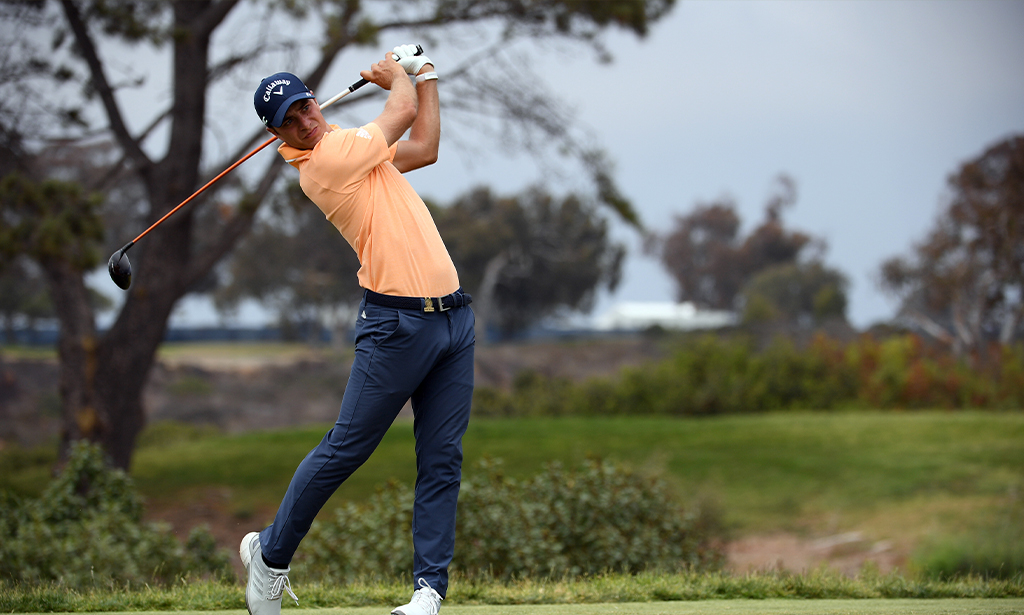
Incredible Stroke of Luck After Out of Bounds Shot
Talk about luck! There is a well-known trick to playing number 18 at St. Andrews. While the wide fairway may make you think that you have plenty of room to play, it is an illusion. It is an unwritten rule of the hole, try to stay on the right to avoid going out of bounds.
This weekend at the Alfred Dunhill Links Championship, golfer Guido Migliozi found out the hard way. While he had no chance of reaching the first place, the pressure was on to finish in the top-20. His previous hole was a disappointing one as he carded a bogey on 17. He needed to stay on track here in order to hang at 3-under.

The 24-year old Italian golfer hit his ball of the tee and it headed right where it bounced on the pavement out of bounds. The golf gods must have been looking out for Migliozzi as the ball continued to bounce two more times before heading back in play.
Luckily there is video evidence of this incredible stroke of luck at a course that can be unforgiving. Check out the video below:
Migliozzi finished up the hole with a birdie putt and finished with a 68 to grab the T17 spot.
Golf Drills / Practice
How to Master What Makes Augusta So Difficult (And What You Can Learn From It): A Complete Guide
Master what makes Augusta National a timeless masterpiece with expert insights from Robert Greenfield. Learn the proven techniques the world’s best players use to navigate its treacherous greens, avoid its strategic pitfalls, and transform your game with actionable tips to apply to your home course.
In the early days of golf course architecture, a prevailing philosophy was to penalize the poor shot. But when Bobby Jones and Dr. Alister MacKenzie envisioned Augusta National in the early 1930s, they championed a more enlightened approach: to reward the well-played shot. This fundamental distinction is the key to understanding what makes Augusta National both a timeless masterpiece and one of the most formidable challenges in golf. It is a course that invites you to play, but it demands that you think.
Today, we’re diving deep into the architectural genius and strategic nuances that make Augusta National so difficult, and I’m excited to share proven techniques and historical insights that will not only deepen your appreciation for the Masters but also help transform your own game. The lessons of Augusta are universal, and understanding them can unlock a new level of strategic thinking on any course you play.
The Soul of the Challenge: Understanding Augusta’s Core Principles
When it comes to what makes Augusta National a perennial puzzle for the world’s best, the answer lies not in brute force, but in its strategic soul. The course was designed to be a mental examination as much as a physical one. Too many golfers, both amateur and professional, overcomplicate their approach by focusing on singular swing thoughts, when the truth is that success at Augusta is about understanding the core principles that make everything click.
The Illusion of Space
The first thing you notice about Augusta is its apparent openness. The fairways are wide, there is no traditional rough, and the landscape is manicured to perfection. This creates an illusion of space, a sense of comfort that can lull a player into a false sense of security. But as Geoff Ogilvy, a major champion and astute student of course architecture, once noted, “Nearly every time you hit it to the wrong side of the green or the wrong side of the fairway you have no chance, but you are given a lot of space to find out for yourself.”
This is the essence of MacKenzie’s strategic design. The course gives you room to play, but it relentlessly punishes the poorly positioned shot. A drive that finds the fairway but ends up on the wrong side can leave an impossible angle to a tucked pin, turning a birdie opportunity into a fight for par. This is the first lesson Augusta teaches us: where you are is more important than how far you are.
The Treacherous Greens: A Masterclass in Contouring
The true defense of Augusta National lies in its greens. They are, without exaggeration, some of the most complex and severely contoured putting surfaces in the world. Originally designed to be played at much slower speeds, the evolution of agronomy has turned them into lightning-fast, multi-tiered marvels that can make even the best putters in the world look foolish.
| Feature | Description | Impact on Play |
|---|---|---|
| Severe Undulations | Greens are composed of multiple tiers, ridges, and bowls. | A shot landing on the wrong tier can roll 50 feet away. |
| Extreme Speed | Often running at 13-15 on the Stimpmeter during the Masters. | Downhill putts are incredibly difficult to control; some are nearly impossible. |
| Firmness | Greens are firm and fast, making it difficult to hold approach shots. | Players must land the ball with precision on the correct spot to get it close. |
| Subtle Breaks | Many breaks are invisible to the naked eye, influenced by Rae’s Creek. | Local knowledge is paramount; even caddies can be fooled. |
These greens demand absolute precision. A shot that is just a few feet off its intended target can be the difference between a tap-in birdie and a 60-foot putt with 10 feet of break. This is the second, and perhaps most important, lesson from Augusta: your approach shot is setting up your first putt, not just your next shot.
Key Techniques to Master: Lessons from the Legends
To conquer Augusta, or at least survive it, players must master a set of skills that go beyond simple ball-striking. These are the techniques that separate the champions from the contenders.
1. The Art of the Lag Putt
On greens as fast and undulating as Augusta’s, two-putting from long distance is a victory. The key is not to try and make every long putt, but to ensure your first putt leaves you with a simple tap-in. This requires exceptional speed control and the ability to read the overall contour of the green, not just the line to the hole.
What You Can Learn: On your home course, dedicate practice time to long-distance putting. Instead of aiming for the hole, try to putt to a three-foot circle around it. This shifts your focus from making the putt to controlling your speed, which will dramatically reduce your three-putts.
2. Mastering Uneven Lies
There are very few flat lies at Augusta National. The fairways roll and tumble, meaning players are constantly hitting shots with the ball above or below their feet, or on an uphill or downhill slope. This requires exceptional balance and the ability to adjust your setup and swing on the fly.
What You Can Learn: Don’t just practice on the flat ground of the driving range. Find a sloped area and practice hitting shots from different lies. Learn how an uphill lie will make the ball go higher and shorter, and how a downhill lie will make it go lower and longer. This will prepare you for the variety of shots you’ll face on any course.
3. Strategic Course Management
Augusta is a course that requires a game plan. Players and their caddies spend days mapping out the course, identifying the ideal spots to land their drives and the areas to avoid at all costs. They know which pins to attack and which to play safely away from.
What You Can Learn: Before your next round, take a few minutes to look at the scorecard and the course map. Think about the ideal position to be in on each hole. Identify the trouble spots and make a plan to avoid them. A little bit of strategic thinking can save you several strokes per round.
Common Mistakes to Avoid: The Augusta Trap
For every moment of glory at the Masters, there are a dozen tales of woe. These are the common mistakes that have derailed countless dreams of a green jacket.
1. Chasing the “Sunday Pin”
Augusta’s pin positions are famously difficult, especially on Sunday. Many are tucked behind bunkers or on tiny shelves. The mistake many players make is getting too aggressive and firing directly at these pins, rather than playing to the safe side of the green.
The Lesson: Know your limits. If a pin is tucked, play to the center of the green and give yourself a 20-foot putt. A two-putt par is always better than a double bogey from a greenside bunker.
2. Disrespecting the Par-3 12th, “Golden Bell”
It is only 155 yards, but the 12th hole has been the site of more meltdowns than any other at Augusta. The swirling winds, the shallow green, and the presence of Rae’s Creek make club selection a nightmare. The biggest mistake is misjudging the wind and coming up short.
The Lesson: Trust your instincts, but always take enough club. It is almost always better to be long than short on a hole with water in front. And if you’re unsure, a safe shot to the middle of the green is never a bad play.
3. The Downhill Putt of Death
At Augusta, a downhill putt is often more difficult than a 40-foot uphill one. The greens are so fast that even the slightest touch can send the ball rolling 10 feet past the hole. Players who don’t give these putts the respect they deserve will pay the price.
The Lesson: When facing a slick downhill putt, your goal is to simply get the ball started on the right line and let gravity do the rest. Think of it as a long tap, not a stroke. Focus on dying the ball into the hole.

Putting It All Together: The Augusta Mindset
The journey to improving your golf game is exactly that – a journey. The lessons from Augusta National are not about rebuilding your swing or buying new equipment. They are about adopting a new mindset, one that prioritizes strategy, patience, and intelligence over brute force.
Remember: progress isn’t always linear, but every round is an opportunity to learn and get better. Stay patient, stay focused, and trust the process. The same principles that have crowned champions at the Masters can help you become a better golfer, no matter what course you play.
What lessons have you learned from watching the Masters that you’ve applied to your own game? Share your experiences in the comments below!
Game Improvement
Best Golf Balls for 95–105 MPH Swing Speed (2026)
If your swing speed is 95–105 mph, you can compress a tour ball — but which one is right for your game? Our lab-tested rankings of the 9 best golf balls for this swing speed, from the Pro V1 to the best budget pick.
Affiliate Disclosure: Some links in this article are affiliate links. If you buy through these links, ClickitGolf may earn a small commission at no extra cost to you. We only recommend products we genuinely stand behind.
If your driver is sitting somewhere between 95 and 105 mph, you are in a genuinely interesting spot. You have enough speed to properly compress most tour-level golf balls, but you are not quite in the territory where maximum compression is the only variable that matters. The best golf balls for 95 mph swing speed are those that deliver real distance without punishing you on feel, and that give you enough greenside spin to actually score.
The problem is that this swing speed range gets a lot of generic advice. “Play a tour ball” is technically correct but completely unhelpful. There are meaningful differences between the Titleist Pro V1 and the Bridgestone Tour B RX for a player at this speed, and those differences will show up in your scorecard if you pick the wrong one.
This guide cuts through the noise. We looked at compression ratings, cover technology, construction, real-world performance data, and price to give you a clear, honest ranking of the nine best options for 2026.

Not Sure What Your Swing Speed Is?
If you’re unsure whether your driver speed falls in the 95–105 mph range, start with our full guide:
Best Golf Ball by Swing Speed: Practical Fit Guide
Quick Picks
| Ball | Best For | Compression | Price Range | Lab Score |
| Titleist Pro V1 | Overall Performance | 87 | $$$ | 98/100 |
| Callaway Chrome Tour | Soft Feel & Control | 87 | $$$ | 96/100 |
| TaylorMade TP5 | Complete Game Performance | 88 | $$$ | 95/100 |
| Bridgestone Tour B RX | Distance & Forgiveness | 79–83 | $$$ | 94/100 |
| Srixon Z-Star | Greenside Spin | 84 | $$$ | 93/100 |
| Vice Pro | Best Value Tour Ball | 90 | $$ | 92/100 |
| Maxfli Tour | Budget Tour Performance | 85 | $$ | 91/100 |
| Snell Prime 3.0 | Direct-to-Consumer Value | 85–90 | $$ | 90/100 |
| Wilson Staff Model | Underrated Premium Option | ~95 | $$$ | 89/100 |
How We Chose These Products
Selecting the right golf ball for a specific swing speed is not a matter of reading a spec sheet and calling it done. We cross-referenced compression data from independent lab testing, performance reviews from MyGolfSpy’s annual ball test, manufacturer specifications, and real-world feedback from golfers who play in this exact swing speed range.
For the 95–105 mph bracket, the key performance variables we evaluated were driver ball speed and launch conditions, iron spin rates, greenside spin and stopping power, feel off the putter face, and overall consistency. We also factored in price-to-performance ratio, because a ball that performs at 98 percent of a Pro V1 for 60 percent of the cost is a legitimate recommendation.
Every ball on this list has been through independent testing. None of these picks are here because of a marketing budget.

1. Titleist Pro V1 — Best Overall
Summary: The Pro V1 is the benchmark. It has been the most-played ball on tour for over two decades, and the 2026 version continues to justify that dominance. For players in the 95–105 mph range, the Pro V1 hits a near-perfect balance of distance, feel, and greenside control.
Why It Works:
•Compression Sweet Spot: At 87 compression, the Pro V1 is firm enough to generate strong ball speed at 95+ mph but soft enough to provide a responsive, controlled feel on partial shots and putts.
•Penetrating Ball Flight: The aerodynamic design produces a mid-trajectory flight that holds its line in the wind — critical for players who want predictability on approach shots.
•Tour-Grade Greenside Spin: The soft urethane cover engages the grooves of your wedges aggressively, giving you the stopping power to attack pins rather than play for the middle of the green.
Tradeoffs:
•The Pro V1 carries a premium price that adds up quickly if you are prone to losing balls or playing in conditions where you go through several sleeves per round.
•Players at the lower end of this swing speed range (closer to 95 mph) may find the Pro V1x or firmer options generate slightly more ball speed.
Who It’s For: Golfers who want the most complete, proven tour ball available and are willing to pay for it.
Who Should Skip: Budget-conscious players or those who lose more than a sleeve per round.
Lab Score: 98/100
2. Callaway Chrome Tour — Best for Soft Feel and Control
Summary: The 2026 Chrome Tour is Callaway’s most refined tour ball to date. It has quietly become one of the most popular balls on the PGA Tour, and for good reason. The combination of a fast core, precision urethane cover, and consistent flight makes it a legitimate alternative to the Pro V1 for players in this swing speed range.
Why It Works:
•Hyper-Fast Soft Core: Callaway’s core technology is engineered to maximize energy transfer at impact, which translates to competitive ball speeds even at moderate swing speeds.
•Precision Tour Urethane Cover: The cover is designed for high-friction engagement with wedge grooves, delivering excellent spin on approach shots and chips without feeling boardy off the putter.
•Consistent Flight Characteristics: The Chrome Tour produces a reliable, mid-to-high ball flight that works well for players who want to carry the ball into greens rather than running it up.
Tradeoffs:
•The Chrome Tour is not the longest ball on this list. Players who prioritize raw distance over feel and control may find the Chrome Tour X a better fit.
•As a newer model, it has less long-term performance data than the Pro V1 or TP5.
Who It’s For: Players who want a soft-feeling tour ball with excellent short game performance and a slightly higher flight.
Who Should Skip: Distance-first players who are willing to trade feel for extra yards.
Lab Score: 96/100
3. TaylorMade TP5 — Best for Complete Game Performance
Summary: The 2026 TP5 is TaylorMade’s most significant update to the ball in several years. The new, larger tour core reduces contact time at impact for better energy retention, and the updated Microcoating on the cover is designed to improve spin consistency in wet conditions. For players at 95–105 mph, the TP5 is one of the most technically sophisticated options available.
Why It Works:
•5-Layer Construction: Each layer of the TP5 is engineered to optimize a different phase of the shot — from the explosive energy of the core to the soft, high-spin response of the urethane cover. No other ball on this list has this level of engineering depth.
•Tri-Fast Core: The low-compression inner core transitions to progressively firmer outer layers, which helps produce a high launch with low driver spin — a combination that maximizes carry distance for this swing speed.
•Dual-Spin Cover: The combination of a soft urethane outer cover and a firmer inner cover creates a unique spin profile: lower spin off the driver, higher spin on wedge shots.
Tradeoffs:
•The 5-layer construction gives the TP5 a slightly different feel than a traditional 3-piece ball. Some players love it; others find it takes adjustment.
•At the same price point as the Pro V1, the TP5 is competing against a deeply entrenched standard. It earns its place, but the comparison is unavoidable.
Who It’s For: Technically-minded players who want a ball engineered to perform at every stage of the game.
Who Should Skip: Players who prefer a simpler, more traditional ball feel.
Lab Score: 95/100
4. Bridgestone Tour B RX — Best for Distance and Forgiveness
Summary: Bridgestone built the Tour B RX specifically for players with swing speeds under 105 mph, and that intentionality shows in how it performs. The 2026 version introduces the VeloSurge cover technology, which Bridgestone claims delivers best-in-class MOI for improved distance and forgiveness on off-center hits.
Why It Works:
•REACTIV iQ Cover: This is the Tour B RX’s signature technology. The cover is designed to react differently based on the force of impact — firmer on high-speed driver strikes for more distance, softer on lower-speed wedge shots for more spin. It is a genuinely clever piece of engineering.
•Gradational Compression Core: The core transitions from soft in the center to firm on the outside, which helps generate ball speed while keeping spin manageable off the driver.
•Designed for This Swing Speed: Most tour balls are engineered for players swinging 105+ mph. The Tour B RX is one of the few that is explicitly built for the 95–105 mph range, which gives it a meaningful advantage in this category.
Tradeoffs:
•The Tour B RX has a compression rating of approximately 79–83, which is on the softer end of this list. Players at the upper end of this swing speed range (closer to 105 mph) may find they generate slightly more ball speed with a firmer option.
•The greenside spin, while good, is not quite at the level of the Pro V1 or Z-Star.
Who It’s For: Players at 95–100 mph who want maximum distance and forgiveness without sacrificing feel.
Who Should Skip: Players at 103–105 mph who need a firmer ball to maximize energy transfer.
Lab Score: 94/100
5. Srixon Z-Star — Best for Greenside Spin
Summary: The Srixon Z-Star is the choice for players who want to attack pins. It consistently ranks among the highest-spinning balls in independent testing, and its 84 compression makes it very accessible for players in the 95–105 mph range. If your scoring comes from your short game, the Z-Star deserves serious consideration.
Why It Works:
•Spin Skin with SeRM: Srixon’s proprietary urethane coating creates a flexible molecular bond with wedge grooves, generating exceptional spin on partial shots and full wedge approaches. In testing, the Z-Star consistently produces among the highest wedge spin rates of any ball in this category.
•FastLayer Core: The dual-gradient core is soft at the center and gradually firms up toward the outside, providing a great combination of distance off the tee and soft feel on touch shots.
•338 Speed Dimple Pattern: The aerodynamic design reduces drag for a more penetrating flight, which helps the Z-Star hold its own off the tee despite its softer construction.
Tradeoffs:
•The Z-Star is one of the softer balls on this list, which means players at the top of this swing speed range may not generate quite as much ball speed as they would with a firmer option.
•The soft feel that makes the Z-Star great around the greens can feel a bit muted off the driver for players who prefer a more responsive impact sensation.
Who It’s For: Players whose scoring depends on their short game and who want maximum spin and control on approach shots.
Who Should Skip: Players who prioritize distance off the tee above all other performance metrics.
Lab Score: 93/100

6. Vice Pro — Best Value Tour Ball
Summary: The Vice Pro is the answer to a question a lot of golfers are asking: can I get tour-level performance without paying tour-level prices? For players in the 95–105 mph range, the answer is yes. The Vice Pro is a 3-piece urethane ball with a 90 compression rating that competes directly with the Pro V1 in most performance categories at a significantly lower price.
Why It Works:
•Cast Urethane Cover: Vice uses a cast urethane cover rather than the injection-molded covers found on some budget balls, which provides a softer feel and better spin engagement around the greens.
•High-Energy Speed Core (HESC): The core is engineered to generate fast ball speeds, and at 90 compression it is well-suited to players in this swing speed range who want a responsive, lively feel off the driver.
•Competitive Performance Data: In independent testing, the Vice Pro consistently performs within a few percentage points of the Pro V1 in ball speed, spin rates, and distance — at roughly half the price.
Tradeoffs:
•Vice is a direct-to-consumer brand, which means you cannot pick up a sleeve at the pro shop before a round. You need to plan ahead.
•The Vice Pro is a 3-piece ball, which means it does not have the same level of construction complexity as the TP5 or other 4- and 5-piece options.
Who It’s For: Performance-focused players who want tour-quality results without the tour-quality price tag.
Who Should Skip: Players who need to be able to buy balls on the spot at a course pro shop.
Lab Score: 92/100
7. Maxfli Tour — Best Budget Tour Performance
Summary: The Maxfli Tour is one of the most underrated golf balls on the market. Available exclusively at Dick’s Sporting Goods and Golf Galaxy, it offers 4-piece urethane construction and performance data that closely mirrors the Titleist Pro V1 — at a price that makes it one of the best value propositions in golf. For players in the 95–105 mph range who want to play a premium ball without the premium price, the Maxfli Tour is a compelling choice.
Why It Works:
•Center of Gravity Balancing: Maxfli’s manufacturing process ensures the core is perfectly centered within the ball, which produces a more consistent and accurate ball flight. This is a legitimate performance advantage, not just a marketing claim.
•4-Piece Urethane Construction: The 4-layer design provides a level of performance complexity that rivals balls costing significantly more, with a soft urethane cover for greenside spin and a responsive core for driver distance.
•Proven Performance Data: MyGolfSpy’s 2025 ball test showed the Maxfli Tour performing at or near the level of the Pro V1 in multiple categories, making it one of the most credible value recommendations in this guide.
Tradeoffs:
•Availability is limited to Dick’s Sporting Goods and Golf Galaxy, which means you cannot find them at most pro shops or online retailers.
•The Maxfli brand does not carry the same prestige as Titleist or TaylorMade, which matters to some golfers.
Who It’s For: Players who want tour-level performance at a mid-range price and do not mind shopping at Dick’s.
Who Should Skip: Players who need to buy balls at a traditional pro shop or who place significant value on brand prestige.
Lab Score: 91/100
8. Snell Prime 3.0 — Best Direct-to-Consumer Value
Summary: Dean Snell spent decades developing some of the most successful golf balls in history, including the original Titleist Pro V1 and the TaylorMade TP5. When he launched Snell Golf, the premise was simple: build tour-quality balls and sell them directly to consumers at a fair price. The Prime 3.0 delivers on that promise, offering a 3-piece urethane ball with a compression in the 85–90 range that performs well for players in the 95–105 mph window.
Why It Works:
•Pedigree Engineering: The Prime 3.0 is designed by someone who literally invented the balls it competes against. That is not a marketing story — it is a genuine performance credential.
•3-Piece Urethane Construction: The soft urethane cover provides excellent greenside spin, while the low-spin core helps keep driver spin manageable for more distance.
•Competitive Pricing: At roughly $32–35 per dozen, the Prime 3.0 offers tour-quality construction at a price that is meaningfully lower than the Pro V1 or TP5.
Tradeoffs:
•Like Vice, Snell is online-only, which requires planning ahead and eliminates the option of grabbing a sleeve at the course.
•The Prime 3.0 is a 3-piece ball, which means it does not have the same level of construction sophistication as the TP5 or other multi-layer options.
Who It’s For: Players who trust the engineering pedigree, want a tour-quality ball, and are comfortable buying online.
Who Should Skip: Players who want to buy balls at a pro shop or prefer established major-brand options.
Lab Score: 90/100
9. Wilson Staff Model — Best Underrated Premium Option
Summary: The Wilson Staff Model does not get the attention it deserves. It is a 4-piece urethane tour ball with a compression rating of approximately 95, which makes it one of the firmer options on this list and a strong fit for players at the upper end of the 95–105 mph range. Wilson’s V-COR technology and finished urethane cover deliver genuine tour-level performance, and the price is competitive with other premium options.
Why It Works:
•V-COR Advanced Performance Core: Wilson’s proprietary core technology is designed to maximize energy transfer at impact, generating competitive ball speeds for players who can fully compress the ball at 100+ mph.
•4-Piece Construction: The layered design provides a distinct performance profile at each stage of the game, from the explosive energy of the core off the driver to the soft, high-spin response of the urethane cover on wedge shots.
•Finished Urethane Cover: The painted urethane cover provides a clean, classic look and excellent groove engagement for greenside spin.
Tradeoffs:
•At approximately 95 compression, the Staff Model is on the firmer end of this list. Players at 95–98 mph may find it slightly harder to fully compress compared to softer options.
•The Staff Model sits in the shadow of the Staff Model X in Wilson’s own lineup, which can make it harder to find reviews and performance data.
Who It’s For: Players at 100–105 mph who want a firmer, more responsive ball with a classic feel and legitimate tour performance.
Who Should Skip: Players at the lower end of this swing speed range who need a softer compression to maximize energy transfer.
Lab Score: 89/100
Buying Guide: How to Choose the Right Ball for Your Swing Speed

Understanding Compression for 95–105 MPH Players
Compression is one of the most misunderstood concepts in golf ball selection. The old advice — slow swing speed means low compression, fast swing speed means high compression — is an oversimplification that has been largely challenged by modern robotic testing data. Research consistently shows that higher-compression balls often produce faster ball speeds across a range of swing speeds, because firmer balls deform less at impact and transfer energy more efficiently.
For players in the 95–105 mph range, a compression rating between 84 and 95 is generally the sweet spot. This range is firm enough to generate strong ball speed and distance, while still offering the feel and responsiveness that makes a ball enjoyable to play. Balls below 80 compression may feel too soft and lose energy at impact for players at the upper end of this range. Balls above 100 compression are typically better suited to players swinging 105+ mph.
Cover Material: Why Urethane Matters
Every ball on this list uses a urethane cover, and that is not a coincidence. Urethane is the material of choice for tour-level golf balls because it provides a softer, more friction-rich surface that engages wedge grooves more aggressively than the Surlyn covers found on distance and value balls. The result is more spin on approach shots, pitches, and chips — which translates directly to more stopping power and more scoring opportunities.
If you are playing a Surlyn-covered ball at 95–105 mph, you are leaving greenside spin on the table. The upgrade to a urethane cover is one of the most impactful equipment changes a player in this swing speed range can make.
Construction: Layers and What They Mean
The number of layers in a golf ball determines how it performs across different clubs. A 3-piece ball has a core, a mantle layer, and a cover. A 4-piece ball adds an additional mantle layer. A 5-piece ball, like the TaylorMade TP5, adds yet another layer.
More layers generally means more performance differentiation — the ball can behave differently with a driver than it does with a wedge, which is the goal. However, more layers also means more complexity and, typically, a higher price. For most players in the 95–105 mph range, a 3- or 4-piece urethane ball will provide excellent performance. The 5-piece TP5 is worth considering if you want the most technically sophisticated option available.
Price and Value
Premium tour balls — the Pro V1, Chrome Tour, TP5 — typically retail for $50–55 per dozen. Direct-to-consumer options like the Vice Pro, Snell MTB Prime, and Maxfli Tour offer comparable performance for $30–40 per dozen. The performance gap between these tiers has narrowed significantly in recent years, and for most amateur golfers, the direct-to-consumer options represent excellent value.
The most important thing is to find a ball that suits your game and stick with it. Consistency in ball selection allows you to calibrate your distances, develop a feel for spin rates, and make better decisions on the course.
FAQ

What compression golf ball should I use at 95 mph swing speed?
For a 95 mph swing speed, a compression rating between 80 and 90 is generally ideal. The Titleist Pro V1 (87), Callaway Chrome Tour (87), and Srixon Z-Star (84) are all excellent choices in this range. These balls are firm enough to generate good ball speed without requiring you to swing harder to compress them.
What is the difference between the Pro V1 and Pro V1x for a 95–105 mph swing speed?
The Pro V1 has a compression of 87 and produces a mid-trajectory flight with a softer feel. The Pro V1x has a compression of 96 and produces a higher trajectory with more spin. For most players in the 95–105 mph range, the Pro V1 is the better fit — the Pro V1x is better suited to players swinging 105+ mph who can fully compress the firmer ball.
Are direct-to-consumer golf balls like Vice and Snell actually as good as Pro V1?
In independent testing, yes — they are very close. The Vice Pro and Snell MTB Prime consistently perform within a few percentage points of the Pro V1 in ball speed, spin rates, and distance. The primary differences are brand prestige and availability, not performance. For value-focused players, these are legitimate alternatives.
Should I play a lower compression ball if I want more distance at 95 mph?
Not necessarily. Modern testing data shows that higher-compression balls often produce faster ball speeds across a range of swing speeds because they deform less at impact and transfer energy more efficiently. A ball in the 84–90 compression range is likely to give you more distance than a ball in the 60–70 range at 95 mph.
How often should I change my golf ball?
For tour-level urethane balls, most players should consider replacing their ball every 18–36 holes, or whenever they notice visible scuffs or cuts in the cover. A damaged cover affects spin rates and flight consistency. If you are playing a premium ball, protect your investment by inspecting it regularly.
Does the Bridgestone Tour B RX really perform better for under-105 mph swing speeds?
Yes, and this is one of the more credible marketing claims in golf. Bridgestone has invested significantly in fitting technology and player data, and the Tour B RX is genuinely engineered for the 95–105 mph range. The REACTIV iQ cover technology is designed to react differently at different impact speeds, which is a meaningful advantage for players in this bracket.
Is the Maxfli Tour really comparable to the Pro V1?
Based on MyGolfSpy’s 2025 ball test data, the Maxfli Tour performs at or near Pro V1 levels in multiple categories, including ball speed, iron spin, and distance. It is one of the most credible value recommendations in this guide. The primary difference is availability and brand recognition, not performance.
Final Recommendation

For most golfers swinging between 95 and 105 mph, the Titleist Pro V1 remains the most complete option on the market. Its combination of distance, feel, and greenside spin is hard to match, and the 2026 version continues to justify its position at the top of the category.
If you want the best value for your swing speed, the Vice Pro and Maxfli Tour are the two most compelling alternatives. Both offer tour-level performance at a significantly lower price, and both have the independent testing data to back up that claim.
If your game lives and dies by your short game, the Srixon Z-Star deserves a serious look. Its greenside spin numbers are among the best in this category, and it is priced competitively with the other premium options.
Whatever ball you choose, the most important thing is to commit to it. Play the same ball consistently, calibrate your distances, and let the equipment work for you. The best golf balls for 95 mph swing speed are the ones that match your game — not just your swing speed.
Golf Drills/Practice
How to Build a Practice Routine for Real On-Course Scoring
Learn how to build a professional-grade practice routine that actually lowers your scores. PGA Pro guidance on block vs. random practice, course simulation, and scoring drills.
We have all been there before. You spend an hour at the practice facility flushing 7-irons into the sunset, feeling like you have finally unlocked the secrets of the swing. Your posture is perfect, your timing is impeccable, and your confidence is soaring. Then, you step onto the first tee the following morning and reality hits. That pure strike vanishes, replaced by a nervous twitch and a ball that refuses to find the fairway. The frustration is palpable because there is a massive disconnect between your practice and your performance. Today, I want to show you how to build a practice routine that actually bridges that gap and translates to lower scores when the pressure is on.
The key is understanding that the driving range is often a controlled environment that bears little resemblance to the game of golf itself. On the range, you have a flat lie, no consequences, and the ability to hit the same club twenty times in a row until you find a rhythm. On the course, you get one shot, a different club every time, and a lie that is rarely level. As your Resident PGA Pro, I can tell you that the secret to improvement isn’t hitting more balls; it’s hitting better balls. Let’s work through this together and transform your range time into a high-performance training session that yields results.
The Architecture of Improvement: How to Build a Purposeful Practice Routine
Most amateurs start their session by pulling the driver out of the bag and swinging for the fences. This is the fastest way to develop bad habits and potentially injure yourself. When we look at how to build a foundation for a good session, we must start with a physical and technical ramp-up. Think of this as the “calibration” phase of your practice. You aren’t trying to fix your swing here; you are trying to find your center and get your body moving in sync with the clubhead.
I always recommend starting with a high-lofted wedge. Don’t even try to hit full shots. Start with small, 30-yard pitches, focusing entirely on the quality of contact and the rhythm of your rotation. This teaches your hands and body to work together without the violent force of a full swing. Gradually increase the length of your swing until you are hitting full wedges, then move through your bag in increments—perhaps a 9-iron, then a 7-iron, then a hybrid. By the time you reach the long clubs, your tempo is established and your muscles are warm.
During this phase, keep your internal dialogue simple. Focus on one fundamental, such as maintaining your spine angle or ensuring a smooth transition at the top. The goal is to build a sense of awareness. If you start your session by spraying balls everywhere with a driver, your brain enters a state of panic. By starting small and successful, you build the neurological confidence needed for the harder work ahead. This is the first step in how to build a session that lasts.
The 15-Ball Calibration Drill
Try this specific exercise during your next warm-up: take 15 balls and divide them into three groups of five. With the first five, hit half-swing wedges focusing on a stable lower body. The next five, hit 7-irons at 75% speed, focusing on hitting the center of the face. Now the final five, hit your preferred “safety” club—the one you trust most on the course—and visualize a wide fairway. This structured start ensures you aren’t just wasting energy but are actually preparing your nervous system for the demands of the game.

How to Build Pressure Through Block and Random Practice
To truly understand how to build a transferrable skill set, we have to talk about the difference between block practice and random practice. Block practice is hitting the same shot to the same target repeatedly. It is great for making mechanical changes, but it is terrible for learning how to play golf. Random practice, on the other hand, involves changing your club, your target, and your yardage on every single swing. This forces your brain to “retrieve” the necessary movement pattern each time, which is exactly what happens on the golf course.
In a typical 60-ball bucket, I suggest spending no more than 20 balls on block practice. Use these to work on a specific technical feel your instructor has given you. Once those 20 balls are gone, the “training” is over and the “playing” begins. For the remaining 40 balls, you should never hit the same club twice in a row. If you hit a 5-iron, your next shot should be a driver or a wedge. This constant shifting prevents you from falling into a mindless groove and forces you to stay mentally engaged with every swing.
The key is to simulate the stakes of a real round. If you hit a poor shot during this random phase, don’t just grab another ball and try to fix it. Walk away, reset your grip, and choose a different club and target. This teaches you how to recover from a mistake, a skill that is far more valuable than being able to hit ten perfect 7-irons in a row. When you learn how to build this variety into your practice, the golf course starts to feel much more familiar and much less intimidating.
The Simulation Phase: Playing the Course During Your Practice Routine
This is my favorite part of any lesson and where the real magic happens. Once you are warm and have done some random practice, it is time to play a “virtual round.” Pick a course you know well—perhaps your home course or a local muni—and play the first few holes right there on the range. Visualize the first tee box. Is there out-of-bounds on the left? Is there a bunker on the right? Pull the club you would actually use and go through your full pre-shot routine.
If you hit a great drive, imagine where you would be in the fairway and pull the appropriate iron for your approach shot. If you miss the green in your mind, grab your wedge and try to hit a specific target on the range that represents the pin. This level of visualization is critical. It bridges the gap between the “range swing” and the “course swing” because it introduces the element of consequence. You aren’t just hitting a ball into an open field; you are trying to navigate a specific corridor of space.
I often see players skip their pre-shot routine on the range because it feels tedious. However, your routine is the anchor that keeps you grounded under pressure. If you have a 30-second routine on the course but a 2-second routine on the range, you are practicing two different games. Part of knowing how to build a professional-grade practice session is realizing that the routine is just as important as the swing itself. Every shot in this simulation phase must include your full process: pick the target, visualize the flight, take your breath, and execute.

Incorporating Skill-Based Challenges and Scoring
Golf is a game of scoring, yet we rarely keep score on the range. To make your practice more effective, you need to introduce objective benchmarks. This adds a layer of healthy stress that mimics the feeling of needing to make a par on the 18th hole. I like to use the “Fairway Challenge” and the “Green Challenge.” For the Fairway Challenge, pick two flags on the range about 30 yards apart. You have 10 balls with your driver. If the ball lands between the flags, you get a point. If it misses, you lose two points. Try to finish with a positive score.
These types of golf drills / practice routines are essential because they force you to focus on the result rather than the mechanics. In the middle of a round, you cannot be thinking about your left wrist or your weight shift; you have to think about getting the ball to the target. By gamifying your range sessions, you train your brain to prioritize the target over the technique. This is a hallmark of elite players and something every amateur should strive to emulate.
Another excellent drill is the “Up and Down Challenge” if your range has a short game area. Take one ball and move to different spots around the green. You have to get the ball into a three-foot circle to “save par.” If you fail, you have to start the sequence over. This creates a sense of urgency that is impossible to find when you are just mindlessly chipping a bag of 50 balls to a hole. Learning how to build these competitive elements into your day will sharpen your mental toughness and make you a much more formidable opponent on the weekends.
Build a practice range at home.
Conclusion: Mastering the Art of Practice
Building a range session that transfers to the course requires a shift in mindset from quantity to quality. By starting with a structured warm-up, moving into random practice, and finishing with course simulation and scoring challenges, you ensure that every ball you hit is serving a purpose. Remember, the goal of practice isn’t to feel good on the range; it’s to play better on the course. Focus on the fundamentals, stay disciplined with your routine, and don’t be afraid to make your practice difficult. The harder your practice is, the easier the game becomes.
Now that you know how to build a more effective practice routine, I want to hear from you. Which of these phases do you struggle with the most—the discipline of a slow warm-up or the mental effort of course simulation? Have you tried playing a virtual round on the range before? Let’s discuss your experiences in the comments below and help each other get better. What’s your biggest challenge with taking your range game to the first tee? Tell us below!
-
Gear Intelligence6 years agoThe Perfect Practice Putting Mat Review by Jason Tenzer
-
Field & Culture5 years agoLoophole Rule Offers PGA Tour Pros a Mulligan
-
Performance Lab5 years ago2021 Buyer’s Guide: The Top 10 Value Golf Balls For Distance & Feel
-
Entertainment5 years agoGolf Marriage Counselor
-
Gear Intelligence7 years agoTHE ADJUSTABLE IRONS: WALKING STICKS GOLF CLUBS
-
Entertainment7 years ago9 Biggest Chokes Of The Past Decade
-
Gear Intelligence5 years agoWhat Your Golf Clubs Say About You
-
Field & Culture3 months agoThe latest news in golf